Connect with us

Business

Turning risk into resilience – Spotlighting C&I projects tackling South Africa’s (SA) biggest water challenges

Published

on

resilience

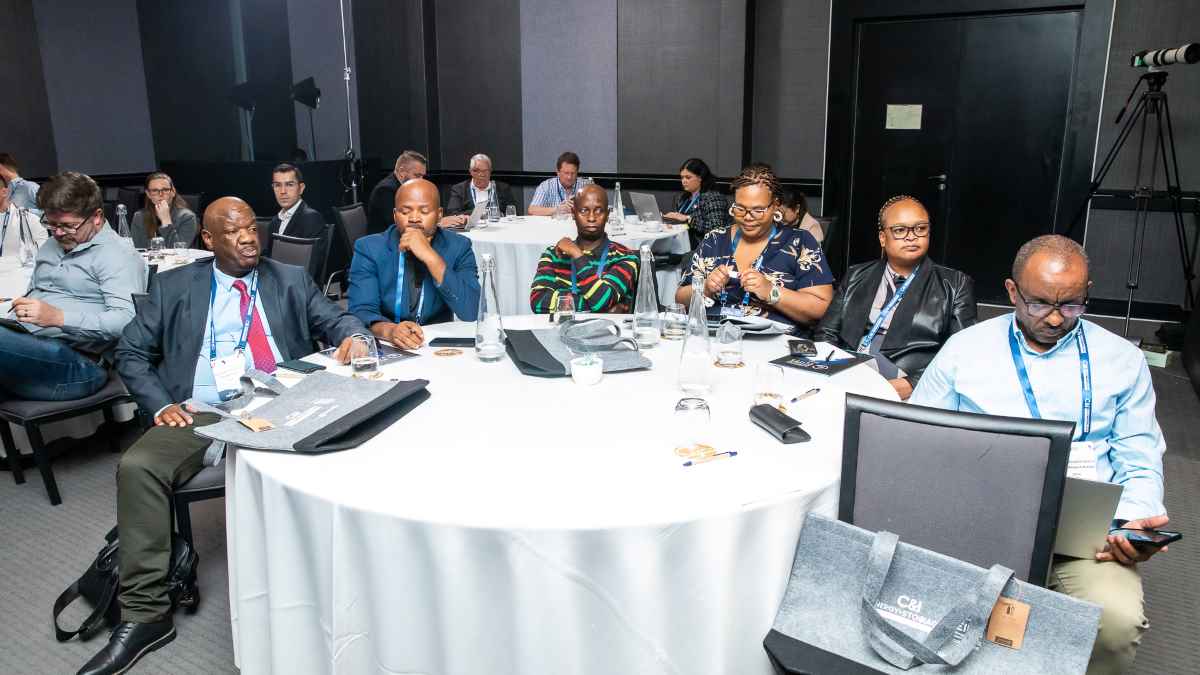
The multifaceted challenges of water management, governance and infrastructure financing were robustly addressed in a dynamic Turning risk into resilience – Spotlighting C&I Projects tackling SA’s biggest water challenges session at the recent Water Security Africa Johannesburg conference (http://apo-opa.co/4hLpIoh), co-located with C&I Energy+Storage Summit, featuring leaders from mining, engineering and digital innovation sectors. Discussions covered visionary planning, on-the-ground implementation and transformative financing tools, yielding fresh perspectives on water security for both private and public operators.


Harmony Gold’s roadmap: operational vision for water resiliency

Thigesh Vather, Senior Environment Officer-Water (Sustainable Development Department) Harmony Gold, opened the session by outlining the group’s “water ambition roadmap”—a strategic framework designed to drive improved communication, accountability and performance measurement in water management. With operations across South Africa, Australia and Papua New Guinea, Harmony faces the universal mining challenge: water- and energy-intense production with heightened resource risk.

Their approach targets not only operational efficiency but also sustainability, emphasizing reduction in potable water dependency and elevated recycling rates. Critical investments include installing several reverse osmosis (RO) plants, collectively treating over 20 mega litres daily and offsetting considerable reliance on external supplies. A blend of clear metrics, such as tracking potable water dependency as a percent of total use and a focus on asset lifecycle risk (including mine closure and acquisition impacts) underline a forward-thinking strategy. Notably, from 2016 to 2024, Harmony achieved a substantial decrease in potable water dependency—primarily via recycling and sophisticated RO deployment.

Digital water governance: Innovation meets opportunity

Benoit Le Roux, co-founder of the South African Water Chamber, delivered a compelling presentation detailing the transformative potential of digital tools and market instruments for water governance. He highlighted two central threats: widespread water loss (non-revenue water) and persistent pollution—problems compounded by aging infrastructure and governance gaps.

Le Roux emphasized how digital transformation, using IoT sensors, big data analytics and distributed ledger (blockchain) systems, brings real-time transparency to both water systems and financing. Through tokenisation—the conversion of water savings or mitigation actions into secure, blockchain-based “digital assets”—water performance can be audited, traded and used to attract new investment. This model, proven in the US and Australia, holds promise for countries like South Africa where traditional municipal finances are constrained and require “de-risking” to attract pension funds and bond issuers.

The creation of ring-fenced, project-based entities (special purpose vehicles) ensures investments directly support tangible infrastructure, rather than vanishing into broader government coffers. Transparent digital markets and protocols allow for performance tracking, incentivizing both improved compliance and stakeholder trust.

Bridging Public-Private gaps: Stakeholder engagement and PPP models

The session also saw industry experts from mining and academia raise nuances around operational resilience, regulatory shifts and stakeholder engagement. Thiara Ratshibvumo, Environmental Manager, South Deep Gold Mine discussed the build-own-operate funding model for water plants—a contract structure where private operators build, finance and run assets, while the mine pays for actual water processed. This reduces up-front capital demands and operational risk for the mining company, providing flexibility and resilience in a volatile operating landscape.

Panellists underscored the importance of aligning water management with catchment requirements, climate resilience and community impact—factors that are drawing increasing investor scrutiny. The incorporation of digital performance measurement, contractual guarantees and transparent reporting is equipping the private sector and PPPs to better attract and manage blended infrastructure funding.

Towards a new water investment paradigm

The session’s robust exchange distilled key lessons for water sector leaders: marry technology with transparent governance; build creative, risk-minimized funding models; and prioritize measurable outcomes over rhetoric. As digital tools proliferate, the potential to unlock both local and international capital for resilient water infrastructure is increasingly within reach. Public sector actors, industrial water users and financiers alike were called upon to harness these innovations to meet the evolving challenges of water security and sustainability.


Distributed by APO Group on behalf of VUKA Group

Home  Facebook

Business

Afreximbank Backs DOTT Services Limited, Uganda with a US$28 Million Facility for Regional Engineering, Procurement and Construction (EPC) Projects

Published

on

The financing will enhance DOTT’s capacity to execute strategic projects across the continent, facilitate intra-African trade in goods and services and strengthen regional value chains

CAIRO, Egypt, November 4, 2026/APO Group/ –African Export-Import Bank (Afreximbank) (www.Afreximbank.com) has activated and approved a US$28 million dual-tranche facility for DOTT Services Limited, the leading Uganda-based engineering, procurement and construction (EPC) contractor, and has begun disbursing funds to support the execution of its EPC projects pipeline, valued at more than US$550 million.


Provided under Afreximbank’s EPC Contract Promotion Initiative, the facility is designed to strengthen the capacity of African EPC champions to secure and execute large-scale infrastructure projects across the continent. Specifically, the financing will support DOTT Services Limited in executing contracts and pursuing near-term opportunities valued at approximately US$550 million across Uganda, Tanzania, Kenya and the Democratic Republic of Congo.

Commenting on the transaction, Mr. Humphrey Nwugo, Director of Regional Operations at Afreximbank’s Eastern Africa office, said:

Through the initiative, the Bank provides support, including financing, twinning and matchmaking

“This facility reflects Afreximbank’s commitment to building strong African EPC champions capable of delivering the infrastructure that underpins Africa’s industrialisation, trade and economic integration. By supporting DOTT Services Ltd, a well-established regional contractor with operations across five African countries, we are addressing a critical financing gap that has historically constrained the ability of African firms to participate meaningfully in large-scale, cross-border infrastructure projects.

The financing will enhance DOTT’s capacity to execute strategic projects across the continent, facilitate intra-African trade in goods and services and strengthen regional value chains. It also advances Afreximbank’s EPC Contract Promotion Initiative, which seeks to increase African participation in the development and delivery of Africa’s infrastructure.

Through partnerships such as this, we are ensuring that greater value, expertise, employment opportunities and economic benefits are retained within Africa while fostering the emergence of globally competitive African contractors.”

Mr. Nwugo further noted that most local commercial banks lacked the capacity to support intra-African and regional projects because they were poorly placed to absorb the associated cross-border risks, while international banks tended to prioritise non-African contractors. As a result, African entities were often left without adequate financial support.

He said: “Afreximbank’s EPC Initiative was therefore designed to address this challenge by supporting African EPC contractors in securing and executing a greater share of infrastructure contracts across the continent. Through the initiative, the Bank provides support, including financing, twinning and matchmaking, as well as issuing letters of support, among others”, he explained.

DOTT Services Limited presence in Africa spans 28-years, with operations in Uganda, Tanzania, South Sudan, Zambia, and the Democratic Republic of Congo (DR Congo). It also has European offices in Italy and the UK, and a workforce of over 6,000 people. The company procures from, and distributes to, African countries goods such as bitumen, asphalt, steel and spare parts, as well as yellow goods equipment and services, making it a significant player in intra-African trade. Its track record of promoting trade-supporting infrastructure across the continent makes it a natural partner for Afreximbank’s EPC Contract Promotion Initiative, which seeks to build African EPC champions capable of delivering the infrastructure that underpins intra-African trade.

Distributed by APO Group on behalf of Afreximbank.


Continue Reading

Business

Coca-Cola Beverages Africa (CCBA) invests in Africa’s leadership potential through EDGE

Published

on

Developed in partnership with Henley Business School Africa, the programme equips high-potential leaders with the skills, experiences and perspectives needed to drive growth, create value and deliver impact across the business

JOHANNESBURG, South Africa, November 4, 2026/APO Group/ –Thirty-one leaders from across 12 African countries have graduated from Coca-Cola Beverages Africa’s (CCBA) (https://www.CCBAgroup.com) EDGE Senior Leadership Acceleration Programme, marking the completion of the programme’s second generation and the first pan-African EDGE cohort.


Created by CCBA, EDGE is the company’s flagship senior leadership development programme. Building on previous participation from The Coca-Cola Company, the programme was further expanded in 2026 to include leaders from Equatorial Coca-Cola Bottling Company and Coca-Cola Hellenic Bottling Company, creating a broader pan-African learning experience across the Coca-Cola system.

Developed in partnership with Henley Business School Africa, the programme equips high-potential leaders with the skills, experiences and perspectives needed to drive growth, create value and deliver impact across the business.

The 2026 cohort marks an important milestone for EDGE as the programme brought together leaders from across the Coca-Cola system

The graduating cohort represented leaders from multiple countries and business functions. Through classroom learning, business projects, mentoring and coaching, participants gained practical experience in addressing real business opportunities and challenges.

With CCBA serving more than 840,000 customers across Africa, the company requires leaders who can navigate complexity and create value in diverse markets. EDGE helps build these capabilities through practical, business-focused learning.

“People are at the heart of everything we do, and programmes like EDGE demonstrate our commitment to investing in their growth and future success,” said Natasa Prodanovic, Chief People and Culture Officer at CCBA.

“The 2026 cohort marks an important milestone for EDGE as the programme brought together leaders from across the Coca-Cola system. By learning alongside colleagues from The Coca-Cola Company, Equatorial Coca-Cola Bottling Company and Coca-Cola Hellenic Bottling Company, participants were able to build meaningful connections, share diverse perspectives and strengthen collaboration across our markets.”

The curriculum focused on strategy, value creation, transformation, commercial decision-making, leading self and leading teams. Participants also presented business projects aligned to organisational priorities as part of the programme’s graduation requirements.

EDGE forms part of CCBA’s broader commitment to developing future leaders and building the capabilities needed to drive sustainable growth and impact across Africa.

Distributed by APO Group on behalf of Coca-Cola Beverages Africa.


Continue Reading

Business

Africa and Caribbean trade potential could reach $1.65 billion annually by 2030: International Trade Centre (ITC)-Afreximbank report

Published

on

The report finds that around 80% of Africa’s annual goods export potential to the Caribbean remains untapped

ST. JOHN’S, Antigua and Barbuda, November 3, 2026/APO Group/ –Annual trade in goods and services between Africa and the Caribbean could reach up to $1.65 billion by 2030, excluding mineral fuels, according to a new report launched today by the International Trade Centre (ITC) and African Export-Import Bank (Afreximbank) (www.Afreximbank.com) on the sidelines of the Commonwealth Heads of Government Meeting in Antigua and Barbuda.


The report, Reshaping Africa-Caribbean Trade: Opportunities for Economic Transformation, (https://apo-opa.co/4eiz62u) finds that while Africa and the Caribbean share deep historical and cultural links, trade between the two regions continues to represent only a small share of each region’s overall trade, despite complementarities across sectors ranging from agribusiness and manufacturing to services and the creative economy.

A look at the numbers

The report finds that around 80% of Africa’s annual goods export potential to the Caribbean remains untapped, with are significant opportunities for export growth if trade and investment is actively promoted and facilitated.

Africa and the Caribbean must transform a shared history into shared prosperity

Caribbean export potential lies in the services sector, reaching $481 million. The report identifies business opportunities across several priority sectors, including processed food and animal feed, chemicals, minerals and metals, apparel and textiles, leather and footwear, tourism, transport services and creative industries.

These findings – and more – are based on trade and export potential analysis, detailed sector assessments and a survey of 1,175 businesses and business support organizations across Africa and the Caribbean.

Tapping into priority sectors

ITC Executive Director Pamela Coke-Hamilton (https://apo-opa.co/3WHHZMU), in launching the report, said: ‘At a time of major shifts in global trade, countries need to strengthen regional ties and invest in value addition, to build resilience. We know the major trade opportunities between Africa and the Caribbean – and now we can focus on helping businesses take advantage of those opportunities through better market intelligence, improved logistics and greater access to finance.’

Commenting on the report, Denys Denya, Senior Executive Vice President at Afreximbank, said: ‘Africa and the Caribbean must transform a shared history into shared prosperity. With our CARICOM office in Barbados, about $1 billion in approved transactions and a $5 billion regional financing commitment, Afreximbank is advancing this vision through financing, deposit mobilization under CENDEP, business links through the annual Afri-Caribbean Trade and Investment Forum, local-currency payments through CAPSS and creative-industry collaboration through CANEX. This report offers a practical roadmap to turn untapped potential into bankable opportunities across agribusiness, manufacturing, tourism and the creative economy. Through targeted financing, stronger transport and logistics links and strategic partnerships, we can build a Global Africa connected by heritage, trade, investment and shared opportunity.’

The report finds that businesses continue to face significant challenges, including high transport costs, limited direct shipping links, regulatory barriers, limited access to finance and difficulties in identifying trusted commercial partners. It highlights that future economic cooperation should extend beyond traditional trade in goods, including through joint investment ventures, digital services, creative industries and tourism. It also calls for targeted action to improve market intelligence and business matchmaking; expand access to trade finance and payment solutions; strengthen transport and logistics connectivity; support sector-specific value chain development; improve regulatory cooperation and market access; and foster stronger partnerships among business support organizations.

Read the full report HERE (https://apo-opa.co/4exHBH9)

Distributed by APO Group on behalf of Afreximbank.


Continue Reading

Trending

Exit mobile version