



Business
Somalia’s Minister of Petroleum and Mineral Resources to Discuss Exploration Opportunities at AEW


The Minister of Petroleum and Mineral Resources of the Republic of Somalia will be back at African Energy Week 2022 to showcase developments and opportunities within the country’s hydrocarbons market
JOHANNESBURG, South Africa, March 31, 2022/ — H.E. Abdirashid Mohamed Ahmed, the Minister of Petroleum and Mineral Resources of Somalia, will return to Africa’s premier event for the energy sector, African Energy Week (AEW), which will take place from 18 – 21 October 2022 in Cape Town. Representing one of Africa’s most underexplored markets, H.E. Ahmed remains focused on frontier exploration as he seeks global investment to kickstart the country’s high potential sector.
An engineer by profession, H.E. Ahmed is leading efforts by the Somalian government to increase oil and gas exploration through investment as well as the participation of international oil companies (IOC). Due to Somalia’s close proximity to hydrocarbon-rich Arab countries such as Yemen and Saudi Arabia, stakeholders are highly optimistic about the country’s potential reserves. What’s more, past seismic data processed by energy insight company, TGS, have indicated the presence of up to 30 billion barrels of oil reserves in blocks 152, 153, 164, 165, 177, 178, and 204, which the Ministry of Petroleum and Mineral Resources offered for exploration in 2020 under the country’s first offshore licensing round. The country is also estimated to house an estimated 0.20 trillion of natural gas reserves, however, exploration and production has been hindered by political instability and a lack of adequate investments.


As a result, the Ministry of Petroleum and Mineral Resources, under the leadership of H.E. Ahmed aims to change this and has in recent years focused on reforming the country’s regulatory framework with the introduction of the Somali Petroleum Law in 2020 which is designed to maximize the exploration and exploitation of hydrocarbons and to promote increased cooperation between IOCs and consortiums. In addition, the ministry established the Somali National Oil Company and the Somali Petroleum Authority to operate and regulate the sector – in line with the government’s strategy to develop an investment-attractive regime. Furthermore, the Revenue-Sharing Agreement was developed to detail how revenues generated from oil and gas would be supervised and managed.
In the wake of these regulatory reforms, Somalia’s oil market has recorded impressive growth rates and increasing stability in recent years. In this regard, the government is optimistic that global oil majors such as Shell and ExxonMobil will resume their operations in key offshore basins– the two majors had declared force majeure, but in 2019 paid $1.7 million to lease offshore blocks for the next 30 years. The ministry is also expected to award exploration licenses for the remaining eight blocks that were part of the country’s first offshore licensing round in 2020 but were delayed due to the pandemic and calls by industry stakeholders to extend the bidding period.
With statutory bodies now in place to negotiate oil exploration and production deals, the ministry is now prioritizing bringing companies with the right expertise and capabilities on board. By exploiting its energy resources, Somalia could become a regional, continental and international energy hub. With only 36% of Somalia’s population having access to electricity in 2019, according to the Energy Progress Report, hydrocarbon resources present a huge opportunity for the country to address its domestic energy needs.
With H.E. Ahmed once again attending and participating at AEW in 2022, an opportunity has risen for the minister, investors and energy companies to discuss opportunities within Somalia’s energy sector and to negotiate and sign deals that can completely change the country’s energy and economic trajectory.
“The progress made by H.E. Abdirashid Mohamed Ahmed and his ministry in reforming Somalia’s energy policies in recent years is remarkable,” states NJ Ayuk, Executive Chairman of the AEC, adding that, “The next phase now needs to be the rapid signing of deals and exploitation of hydrocarbons. With the investment window for hydrocarbons quickly closing, AEW 2022 provides the perfect platform for the Somalian government and companies and investors interested in maximizing the significant opportunities present within the country to discuss, negotiate and close deals.”
Distributed by APO Group on behalf of African Energy Chamber.









Business
AFRICLOUD Opens Lagos Region and Local-Currency Payments in African Markets

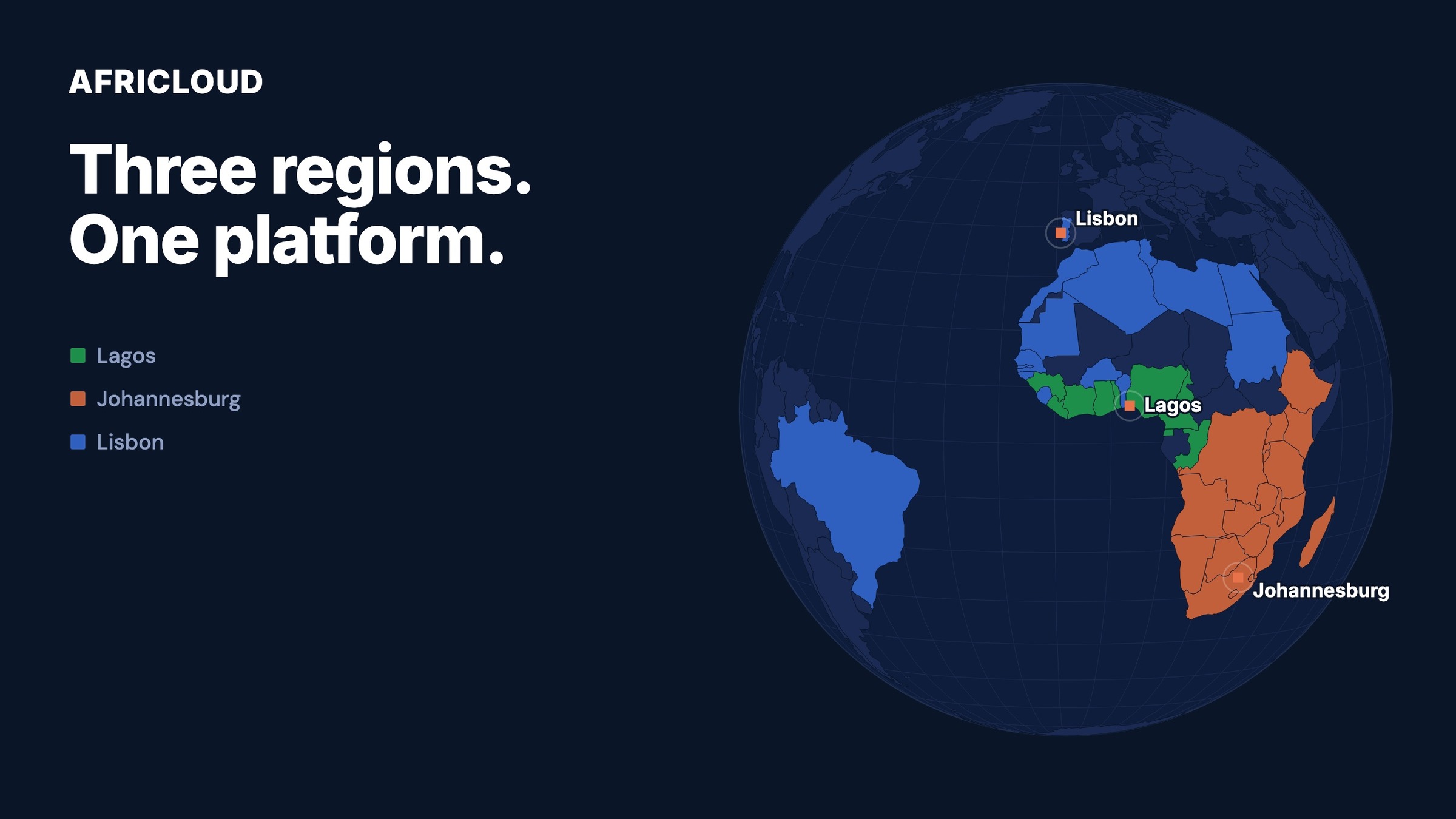
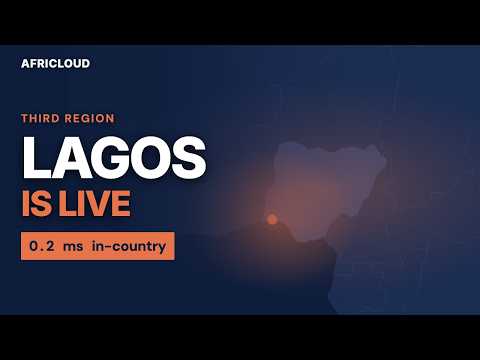
The company’s third African region keeps Nigerian workloads in Nigeria, and customers from Abidjan to Nairobi can now pay in the currency they earn, without an international card

Download document (1): https://apo-opa.co/4Ardfz9
Download document (2): https://apo-opa.co/46FWH8Y
Buying cloud infrastructure in Africa has meant living with three compromises: traffic that leaves the continent and comes back, payment in dollars behind a card many businesses do not hold, and data sitting under somebody else’s law.
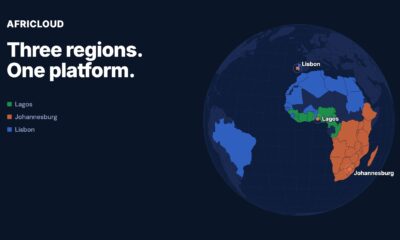
Lagos answers the first. Compute and storage for Nigerian customers stay in Nigeria, and the region also serves Accra, Abidjan, Lome, Douala and Ouagadougou. Traffic from landlocked West Africa that once reached comparable infrastructure by way of Europe now stays on terrestrial West African fibre. Johannesburg serves Southern and East Africa. Lisbon serves North Africa and Europe, and reaches Brazil over a direct subsea route. Across the three regions, AFRICLOUD’s own continent-wide measurements place 42 of the 53 African countries measured within a best-case round trip of 70 milliseconds, countries home to about 1.28 billion people.
A company in Accra or Abidjan now reaches West African infrastructure without leaving the region, and pays for it in the currency it earns
Payment answers the second. Customers across West, Central, East and Southern Africa pay in their own currency, including the naira, the cedi, the shilling and the CFA francs, by local card, bank transfer, USSD or mobile money, with no international card needed. Mobile money is live in twelve African countries, and cards, PayPal and more than 300 cryptocurrencies are accepted everywhere. The GSMA reports that 74 per cent of the world’s mobile money activity by transaction count took place in Africa in 2024.
Residency answers the third. Nigerian data runs under the Nigeria Data Protection Act, South African data under POPIA and European workloads under EU law, chosen server by server from the same dashboard.
“African businesses have been asked to choose between infrastructure that is close, infrastructure they can actually pay for, and infrastructure that keeps their data under their own law,” said Oluniyi Ajao, Founder of AFRICLOUD. “Removing that choice is the reason we built this.”
“Lagos is the piece that completes the map,” he said. “A company in Accra or Abidjan now reaches West African infrastructure without leaving the region, and pays for it in the currency it earns.”
All three regions run the same platform: AMD EPYC processors with all-NVMe storage, IPv4 and IPv6 on every server, and a new server online in about two minutes. Dedicated Servers are built to order in all three regions. Support is available around the clock by chat and email.
Cloud Servers are available now at https://AFRICLOUD.com.
Distributed by APO Group on behalf of AFRICLOUD LLC.
Business
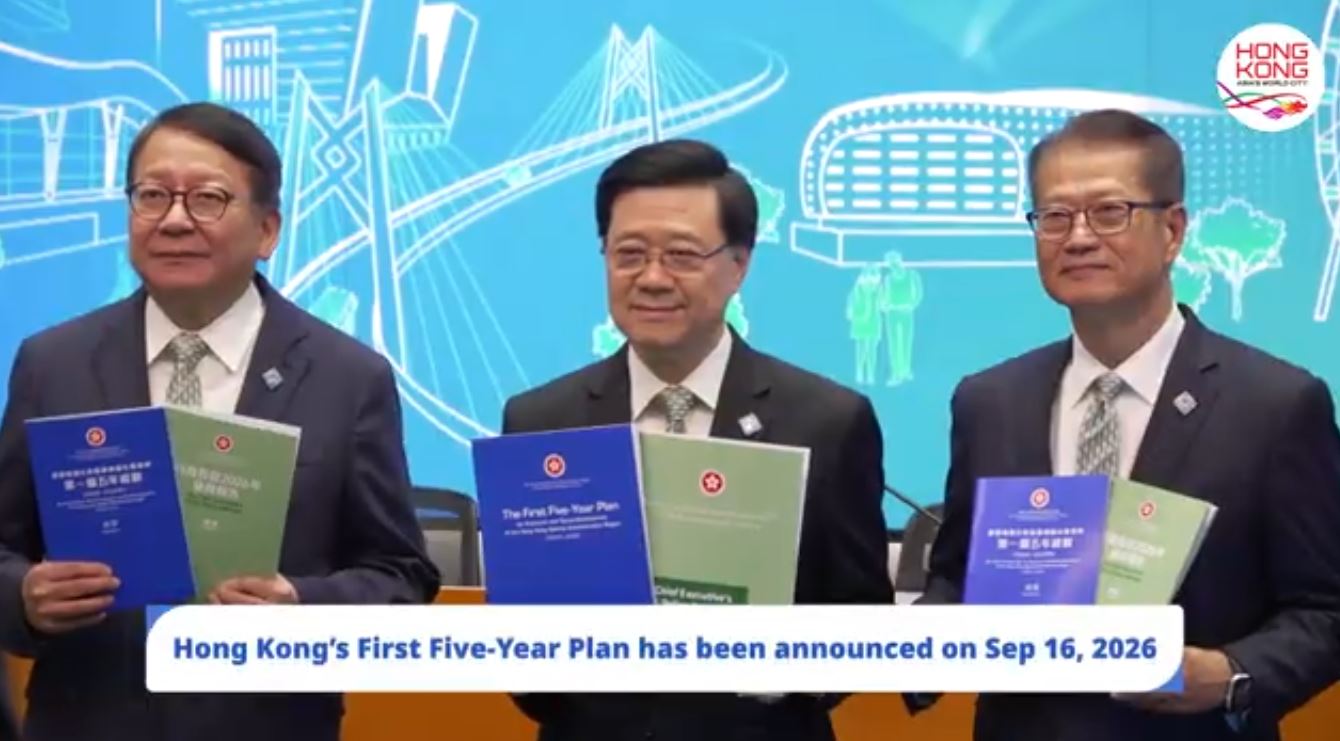
Hong Kong outlines strategies for deepening development of the Guangdong-Hong Kong-Macao Greater Bay Area and enhancing green transformation

Business
Alamein Africa Forum to bring together key political and business leaders

-

 Business2 days ago
Afreximbank, Ghana Infrastructure Investment Fund (GIIF) and Ghana’s 24-Hour Economy Authority launch project preparation partnership to accelerate 24H+ projects
-

 Events2 days ago
Huawei Cloud Rolls Out Enterprise AI Products Across the Board, Building an Open Agentic Cloud
-
 Business2 days ago
Hong Kong sets out strategies to enhance the appeal and add value to the city’s tourism industry
-

 Energy2 days ago
Deals, Drilling and New Entrants Define Angola Oil & Gas 2026
-

 Business2 days ago
Former DAMAC Senior Vice President Paulo J. Cruz Appointed Founding CEO of African Collaboration Group (ACG) to Spearhead Sports and Entertainment District Development Across Africa
-

 Business2 days ago
Hong Kong sets out initiatives to secure long-term development of pillar industries
-

 Business2 days ago
Africa Makes its Case for a Bigger Role on the Global Stage
-
 Business2 days ago
South Africa’s water challenges are reshaping how businesses plan for resilience