Connect with us
Anglostratits

Business

OPPO Ads Connect 2025 Southeast Asia Salon: Unlocking New Marketing Growth and Drafting a Business Blueprint

Published

on

OPPOAds

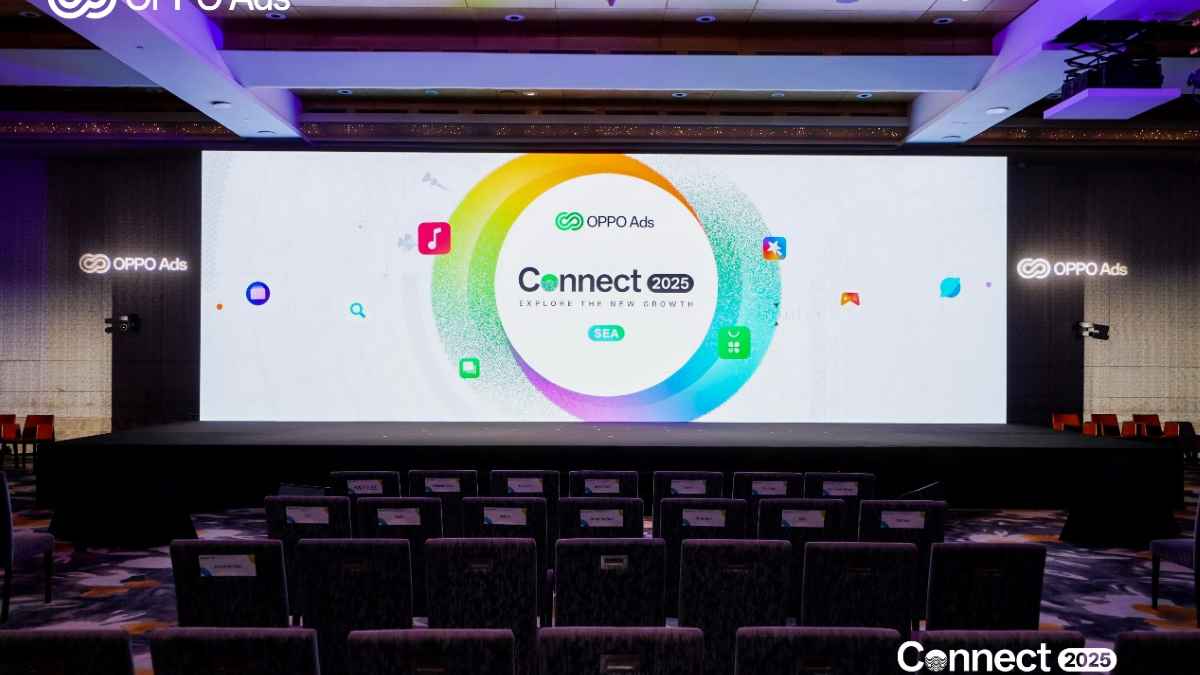
SINGAPORE – Media OutReach Newswire – 26 February 2025 – On February 20, the “Exploring New Growth” OPPO Ads Connect 2025 Southeast Asia Salon was successfully held in Singapore alongside the launch of OPPO Ads’ new Device+ Marketing Solution. This is OPPO Ads’ first platform-level event abroad, showcasing its strategic capabilities, creative accomplishments, market insights, and marketing product solutions. Attended by marketers, service providers, developers, industry practitioners, and other stakeholders, the salon promoted industry development and innovation. Expert speakers sparked discussion of leading-edge market development opportunities and helped to foster commercial growth.

An important link between OPPO Ads and partners, Connect provides a new platform that aggregates multiple ecosystems. The salon event marks the first public engagement of OPPO Ads in the Southeast Asian market and is an important part of its globalization strategy. During the event, Head of OPPO Ads Overseas Sales and Operations Tim Chen, Product Director of OPPO Ads Kevin Wu, and AM Director of OPPO Ads Gavin Zou shared their perspectives on the long-term commercial capability building and innovative marketing solutions of OPPO Ads, and empowering advertisers in user acquisition, efficiency improvement, and long-term operations with a one-stop solution.

Enhancing the Terminal OS Ecosystem and Unlocking New Market Vitality

Tim Chen stated that in addition to solidifying its foothold in the Southeast Asian market, OPPO has continued to roll out significant advancements through its robust product matrix, channel strengths, and user influence. The Find X8 series has doubled its sales compared to its predecessor. Furthermore, OPPO’s international shipments continue to surge, securing the top spot in Southeast Asian markets in 2024. These achievements underscore OPPO’s strong market position and sway in Southeast Asia.

At the same time, OPPO Ads is becoming the preferred platform for international advertisers aiming to expand due to its unique commercial marketing value for three reasons:
First, with its competitive pricing, OPPO Ads uses more proactive scenarios to help advertisers reach a large number of users more efficiently and maximize the advertising value.
Second, advertisers can easily transition from reach to conversion, enhancing user value throughout the life cycle, and greatly boosting user engagement and retention by utilizing OPPO’s robust OS ecosystem.
Finally, OPPO Ads offers a range of marketing solutions for advertisers in different industries and with different needs. These span pre-load cooperation and targeted delivery, as well as light-touch scenarios and deep engagements, satisfying the unique needs of advertisers and significantly increasing delivery efficiency and effectiveness.

OPPO Ads has dramatically expanded commercial use cases and traffic supply as the business has grown. In 2024, OPPO Ads’ request volume increased by 300% with the introduction of new commercial applications such as PUSH, global search listing, Shelf card, and local video Feeds, with 140 million monthly active users on Southeast Asia’s OS. In 2025, OPPO Ads will see significant advancements and growth in terms of shipment and traffic, as well as commercialization capabilities. The vast active user base provides a broad space for advertising placement and brings more marketing opportunities to advertisers.

Unlocking The “Retention” Code Through Product Iteration and Upgrade Hard Power

At the commercial product level, Kevin Wu introduced that OPPO Ads is leveraging cutting-edge technologies and innovation to iterate and update product capabilities across three key dimensions:

Marketing Platform Capability Upgrade: OPPO Ads has comprehensively upgraded its marketing platform to include new features like splash screens, enabling advertisers to engage users across all scenarios and manage all types of promotions. During the mid-investment phase, the platform supports RTA (Real-Time API) optimization and utilizes multiple bidding strategies to help ensure backend conversion costs, effectively increasing backend ROI by over 10%. In the post-advertising phase, enhanced attribution capabilities and OS data monitoring cater to advertisers’ needs for effect attribution, making marketing results quantifiable.
Programmatic Ad Efficiency Improvements: OPPO Ads has intensified efforts to boost the effectiveness of programmatic ads, facilitating DSP (demand-side platform) participation and optimizing advertising features across the board, greatly increasing exposure, winning bids, and engagement. It also allows DSP access to all traffic, leading to more than a 200% increase in request volume.
PUSH Marketing Solution: OPPO Ads has explored the diverse applications of system scenarios and built a variety of commercial capabilities based on PUSH capabilities. Through capability upgrades such as “sticky on the top” and empowerment of style rights, the click-through rate and backend effects were greatly improved.

Along with offering advertisers more effective marketing options to improve target user reach, these iterations have helped OPPO’s business expand in terms of technology and innovation.

Device+: A Solution for One-Stop User Management

During the event, Gavin Zou unveiled the Device+ Marketing Solution, designed to help advertisers efficiently acquire large numbers of high-quality users, conduct user operations on the OPPO platform, and expand business boundaries. Based on OPPO’s massive mobile Internet ecosystem, Device+ offers global clients a one-stop user management service through preload, advertising, and ecosystem cooperation. It covers new user acquisition, user activity improvement, and user conversion, among other things, to meet clients’ user operation needs at various stages.

Device+ preload cooperation: OPPO Ads can reach 24 million new device users in Southeast Asia annually through preload and PAI services. The services streamline the registration process, offer a special quick open feature for notifications, and increase the activation rates by over 20% by detecting the activation status of preload apps on the device side and promptly engaging with users.
Device+ APP distribution: For users who have not installed the application, OPPO can flexibly reach them through effect advertising, and based on the system’s unique ADD download capability, we improve download and installation efficiency, as well as overall user acquisition efficiency by more than 30%.
Device+ massive touchpoints: With the help of system-level data insights and user churn warning models, OPPO can activate each potential user promptly, reducing user churn rate by 10%, and optimizing network and application performance through LinkBoost and HyperBoost to improve user experience.
Device+ pre-positioning: User conversion is one of the important indicators that advertisers care about in long-term management. Using OPPO’s unique system scenarios, users can use services without opening apps, such as search listing, shelf cards, and OPUSH, which attracts users as soon as they see them, improving user retention, transaction conversion rate, and click-through rates.

Future Outlook: Collaborating for Long-Term Success

The OPPO Ads Connect 2025 Southeast Asia Salon marks a significant step for OPPO Ads in the Southeast Asian market and serves as a vibrant platform for industry exchanges. During the roundtable, Jenny Wang, OPPO Ads Sales Director of Southeast Asia Area, Nita Wang, OPPO Ads Sales Director, and guests from leading companies such as Agoda, AIDC, DTI and AppsFlyer exchanged insights on Southeast Asian industry trends and marketing needs. They identified key challenges, strategized effective solutions, and discussed leveraging OPPO’s comprehensive advertising solutions to enhance user acquisition and user engagement.

This event demonstrates OPPO Ads’ innovative marketing value, outstanding OS system capabilities, and diversified solutions in commercial marketing, providing advertisers with more comprehensive support and more boundless business opportunities. Whether it is the development of emerging markets or the deep cultivation of mature markets, OPPO Ads is helping clients grow their businesses.

Looking ahead, OPPO Ads will continue to enhance its commercial capabilities and collaborate with ecosystem partners to explore new cooperative opportunities and promote ongoing industry growth and prosperity.

For more information, please follow the official OPPO Ads accounts on Facebook and Linkedin.

Business

In Africa’s Creative Economies, Women Are Claiming Ownership (By Libby Allen)

Published

on

APO

Each March, International Women’s Day fills the calendar with campaigns, flowers, and carefully timed announcements. The day has real historical weight – born from early twentieth century demands for the right to work, vote, and organise. The question it rarely reaches is the one worth asking: not who is being celebrated, but who controls what they have built.

In African creative industries in 2026, that question has instructive answers. They’re economic, not symbolic. And they’re being written by women.

The ownership argument

In Senegal, Diarra Bousso grew up in a home where art and style were a daily language. She went on to study mathematics, worked on Wall Street, and came back to Dakar with a model for a fashion and lifestyle brand: nothing gets made until someone has asked for it.

DIARRABLU, the brand she built from her parents’ rooftop, uses proprietary mathematical algorithms to generate designs, puts them to a community vote before a single garment is cut, and produces entirely on demand – achieving a 60% reduction in waste, and cutting excess stock. Her supply chain is almost entirely Senegalese artisans. The IP – the algorithms, the methodology, the design system – is entirely hers. The value is in Bousso’s process, and the process is owned.

In South Africa, game studio Nyamakop spent years building something hard to copy. Relooted, released last month, is a heist adventure set in a futuristic Johannesburg in which the player recovers 70 real African artefacts from Western museums and private collections. The game was built by a team drawn from more than ten African countries. Mohale Mashigo – its narrative director, a novelist, and comic book writer who has also worked for Marvel and DC – is precise about ownership. Every artefact in the game maps to a real object with a documented history belonging to a named people.

That specificity isn’t just artistic rigour. The world of Relooted is built so it can’t be detached from its own context and repurposed elsewhere. Culture travels differently when it’s self-authored.

Women’s creative output is feeding systems they don’t own

In Nigeria, Mo Abudu applies the same logic to distribution. EbonyLife Media – the production house and TV network she founded in 2012, whose films and series have drawn millions of viewing hours – launched EbonyLife ON Plus in November last year. It’s a membership-based platform designed to keep the value of African storytelling on the continent. The platform is new; the strategy is not: own the infrastructure, or someone else sets the terms.

Three countries. Three creative sectors. Find the point in the chain where value is captured. Own it.

Owned but exposed

AI-generated content has intensified the pressure. GenAI models are trained, in large part, on creative output they don’t pay for – and whether that output counts as a compensable input is now being tested in courtrooms and policy chambers. In African creative economies, where the volume of visual, narrative, and cultural material is vast and formal IP infrastructure is uneven, exposure is significant. Women’s creative output is feeding systems they don’t own.

The AI question and the infrastructure question aren’t separate. One is playing out in courtrooms. The other is playing out in markets.

Narrative control

Reaching the right markets requires a different kind of ownership. Africa isn’t a single market. It is 54 distinct countries, each with its own media landscape, languages, cultures, and decision-makers. Many communications partners offer visibility but don’t know the nuances of each market; they’re not present on the ground – so they offer approximation, which costs while the narrative is diluted.

The same logic that drives Bousso to keep her algorithms proprietary, that drove Mashigo and Nyamakop to build a game precisely, that led Abudu to build her own platforms rather than license outward – it applies here too. Who tells the story, in which markets, in whose language, through which channels: this is where narrative control is either held or lost. For brands to reach across Africa, brand communications must be African.

What happens next? 

International Women’s Day will generate thousands of posts this March. It’s worth watching what happens in the days after – whether the women building ownership across African creative industries control more of their work, their distribution, and their narrative than they did the year before. That is the only measure that matters.

Distributed by APO Group on behalf of APO Group Insights.


Continue Reading

Business

Equatorial Guinea to Showcase 2026 Licensing Round to Global Investors at Invest in African Energy (IAE)

Published

on

Energy Capital

Minister of Mines and Hydrocarbons Antonio Oburu Ondo will deliver a keynote at the Invest in African Energy Forum, unveiling strategic licensing opportunities tied to EG Ronda 2026

PARIS, France, March 6, 2026/APO Group/ –Reflecting a renewed drive for growth and upstream revitalization, Equatorial Guinea’s Minister of Mines and Hydrocarbons, Antonio Oburu Ondo, will deliver a keynote address at the Invest in African Energy Forum, scheduled for April 22–23, 2026, in Paris. Designed to connect African energy opportunities with institutional and private capital, the forum provides a strategic platform for governments to present bankable projects directly to global investors.


At the center of Equatorial Guinea’s investor outreach is EG Ronda 2026, an upcoming licensing round expected to offer 24 upstream blocks across offshore and onshore basins. First announced at African Energy Week, the round will run through late 2026 and features updated fiscal terms and a competitive open-door framework aimed at attracting both majors and independents. In preparation, the Ministry has advanced seismic data acquisition and reprocessing programs, strengthening the technical dataset available to bidders and materially reducing exploration risk.


Equatorial Guinea’s strategy extends beyond licensing. In early 2026, the government signed a reconnaissance license agreement with Eni to support renewed upstream evaluation and field revitalization efforts. At the same time, cross-border collaboration on the Yoyo-Yolanda gas fields continues to advance, with a recent unitization agreement between Equatorial Guinea and Cameroon paving the way for joint development. The move reinforces the country’s ambition to deepen regional integration, optimize shared resources and accelerate monetization through coordinated infrastructure planning.


Project-level momentum further supports this positioning. The Aseng Gas Project, backed by Chevron, represents an estimated $690 million investment aligned with Equatorial Guinea’s flagship Gas Mega Hub initiative – a multi-phase strategy to strengthen domestic processing capacity and position the country as a regional gas hub. National oil company GEPetrol recently increased its stake in Aseng to more than 32%, signaling deeper national participation alongside international operators and a clearer pathway to execution.


For capital providers focused on the Gulf of Guinea and broader African energy markets, Minister Ondo’s address in Paris will provide direct insight into fiscal reforms, licensing mechanics, partnership models and infrastructure expansion plans through 2026 and beyond. As global capital becomes more selective, IAE 2026 offers a critical space for engagement, due diligence and deal origination – helping convert announced opportunities into executed transactions.

Distributed by APO Group on behalf of Energy Capital & Power.


Continue Reading

Business

African Development Bank Group (AfDB) Unveils Africa-Wide Aviation Financing Platform to Turn Growth into Sustainable Profit

Published

on

AfDB

The priority now is execution—aligning policy, capital and infrastructure to ensure aviation becomes a durable driver of inclusive growth and regional integration across the continent

NAIROBI, Kenya, March 5, 2026/APO Group/ –With Africa poised to become the world’s fastest-growing aviation market, policymakers and industry leaders are focused on a central challenge: how to translate rising demand into sustainable connectivity, competitiveness, and financial viability.

This question anchored deliberations at the two-day Airlines, Capital and Connectivity Forum convened in Nairobi on 25–26 February 2026 by the African Development Bank Group in partnership with the African Airlines Association (AFRAA).

Despite strong demand fundamentals, Africa’s aviation sector continues to face structural constraints, including high costs of capital, fragmented regulatory regimes, infrastructure gaps, and limited access to long-term financing. To address these challenges, the Bank is advancing the Integrated Aviation Transformation Program (IATP), a continent-wide platform designed to modernise the aviation ecosystem and mobilise private, institutional, and concessional capital at scale. The programme seeks to align policy reform, innovative financing instruments, and project execution within a single, bankable framework.

The Forum brought together airline executives, transport ministers, regulators, investors, manufacturers, and development partners to explore how the IATP can accelerate coordinated delivery across the sector. Participants underscored aviation’s role as a strategic enabler of regional integration, trade facilitation, tourism, and economic diversification.

Opening the Forum, the Bank’s Director for Infrastructure and Urban Development, Mike Salawou, noted that while Africa’s aviation demand outlook ranks among the strongest globally, supply-side capacity and investment readiness have lagged. The IATP, he said, seeks to de-risk priority investments, support early pilot transactions, and restore confidence among commercial and institutional financiers.

Africa represents nearly 18 percent of the global population but accounts for less than three percent of worldwide air traffic

From the industry’s perspective, AFRAA Secretary General Abderahmane Berthé highlighted the scale of the opportunity and the imbalance confronting the continent. “Africa represents nearly 18 percent of the global population but accounts for less than three percent of worldwide air traffic, reflecting structural and regulatory barriers rather than weak demand,” he said.

Remarks delivered on behalf of Kenya Airways described Africa as the largest structural aviation opportunity of the 21st century. Over the next two decades, one in four new global air travellers is expected to originate from Africa, driven by rapid urbanisation, a growing middle-income population, and a youthful demographic profile.

However, the industry’s financial performance remains constrained. According to the International Air Transport Association (IATA), African airlines are projected to generate net margins of only 1–2 percent, below the global average forecast of 3.9 percent in 2026. High fuel costs, heavy taxation, incomplete liberalisation and limited hub infrastructure continue to undermine profitability.

Connectivity remains a critical bottleneck. Intra-African traffic accounts for only about a quarter of total air travel, with many passengers required to transit outside the continent. Participants emphasised that full implementation of the Single African Air Transport Market is essential to unlock efficient intra-continental connectivity.

A keynote address delivered by Eric Ntagengerwa, Head of Transport and Mobility at the African Union Commission (AUC) on behalf of Lerato Dorothy Mataboge, Commissioner for Infrastructure and Energy, framed aviation reform as an imperative for sovereignty, integration, and competitiveness. He observed that the Single African Air Transport Market is the designated African Union Theme for the Year 2027.

Discussions over two days focused on practical delivery, including strengthening airline bankability, advancing climate-aligned aviation, developing cargo and logistics, building skills, and deploying innovative risk-sharing mechanisms under the IATP. Country experiences from Nigeria, Kenya, and Ethiopia illustrated how continental objectives can translate into coordinated national reforms and near-term investment opportunities.

Samuel Obafemi Bajomo, Senior Adviser to Nigeria’s aviation ministry, emphasised that forward-looking, pro-investment policy frameworks are critical to strengthening connectivity and unlocking Africa’s growth potential and positioning aviation as a catalyst for trade, tourism, and shared prosperity.

The Forum concluded with a clear message: Africa’s aviation demand is real, accelerating, and irreversible. The priority now is execution—aligning policy, capital and infrastructure to ensure aviation becomes a durable driver of inclusive growth and regional integration across the continent.

Distributed by APO Group on behalf of African Development Bank Group (AfDB).

Continue Reading

Trending