Connect with us
Anglostratits

Business

Oando Achieves 63% Production Growth, Posts ₦1.72 Trillion Revenue in H1 2025

Published

on

Oando

Oando (www.OandoPLC.com), Africa’s leading indigenous energy solutions provider has published its unaudited results for the six months ended 30 June 2025. The company’s upstream business recorded strong production performance with a 63% year-on-year growth averaging 37,012 boepd in H1 2025. This includes crude oil production up 77% to 10,479 bopd, gas volumes up 54% to 25,399 boepd, and NGL production up 375% to 1,135 bpd. The company attributes this performance to the consolidation of the NAOC JV interest and improved uptime across key assets

The Group reported revenue of ₦1.72 trillion, representing a 15% decline driven by lower trading activity and weaker realised prices, despite stronger upstream contributions. Gross Profit fell by 28% to ₦59 billion reflecting both a topline contraction and changing segment mix.  Nevertheless, the company maintained a Profit-After-Tax of N63 billion, consistent with the result recorded in H1, 2024.

Following, its recent acquisition of Nigerian Agip Oil Company (NAOC) from Italian oil giant, Eni, the company has focused heavily on infrastructure upgrades, production optimisation, and integration of the NAOC asset base leading to increased capital expenditure increase of ₦44 billion. Additionally, Oando’s commitment to safety is demonstrated by achieving zero lost-time injuries (LTIs) and recording 12.3 million LTI-free hours, underscoring its continued excellence in HSE performance.

The Trading subsidiary increased its crude oil liftings to 14 cargoes (12.9 MMbbl) in H1 2025, compared to 10 cargoes (10.6 MMbbl) in H1 2024, reflecting improved offtake execution.

With a focused strategy and a clear execution roadmap, we remain committed to delivering sustained value to our shareholders

Speaking on the 2025 half year results, Group Chief Executive, Oando PLC, Wale Tinubu CON, commented “In H1 2025, we advanced our growth agenda in our upstream division, the primary driver of the Group’s performance, by achieving a 63% year-on-year increase in production volumes. This was driven by the successful consolidation of NAOC’s assets, early gains from our optimization programme and our assumption of operatorship, which enabled us implement holistic security measures amid improved community relations, resulting in enhanced infrastructure reliability, higher production volumes, and greater operational resilience.”

“Our trading segment faced headwinds which exerted pressure on the entity’s revenue and the Group’s topline as a result of declining PMS imports into the country due to rising local refining capacity from Dangote Refinery, a positive development that enhances Nigeria’s energy security and self-sufficiency. In response, we diversified our crude offtake sources, optimized trade flows, and expanded into LNG and metals. These initiatives are already gaining traction and will support stronger performance in H2.” He added.


Similarly, another independent player Aradel Holdings Plc, released its H1, 2025 unaudited financials and reported revenue of ₦368.1 billion, up 37.2% and Profit after Tax of ₦146.4 billion, up 40.2% driven by stable average production volumes.

Additional highlights in the first half of the year include the company securing operatorship of Block KON 13 in Angola, marking its strategic entry into the Kwanza Basin and a significant step in expanding its upstream footprint Africa. Looking ahead, the company is preparing for capital restructuring initiatives, including an equity raise and debt conversions, which it plans to present at the upcoming Annual General Meeting and Extraordinary General Meeting scheduled to hold in August. These plans follow the successful upsizing of the RBL 2 facility to $375 million, strengthening its financial flexibility to accelerate development of the Group’s expanded 1 billion boe upstream portfolio.

Looking forward, Tinubu remarked “As we enter the second half of the year, our priorities are clear: accelerate upstream monetization through drilling and production assurance, strengthen trading performance, and execute our capital restructuring initiatives to restore balance sheet flexibility. With a focused strategy and a clear execution roadmap, we remain committed to delivering sustained value to our shareholders.”

Oando has set its sights on maintaining full-year production of 30,000–40,000 boepd, driven by a balanced capital program of 3 new wells and 6 rig-less interventions. The company’s trading guidance includes 25–35 MMbbl crude oil and 750,000–1,000,000 MT refined products. Additionally, Oando projects capex of $250–270 million focused on drilling, infrastructure, and ESG projects, with a 20% cost reduction goal.

Distributed by APO Group on behalf of Oando PLC.

Energy

U.S.-Africa Energy & Minerals Forum Expands to Critical Minerals and Supply Chain Security

Published

on

Africa

This year’s U.S.-Africa Energy & Minerals Forum in Houston signals a strategic shift toward integrated energy and critical minerals investment, strengthening U.S. partnerships across Africa’s resource and industrial value chains

HOUSTON, United States of America, February 26, 2026/APO Group/ –The U.S.-Africa Energy & Minerals Forum (USAEMF) has relaunched with a dedicated focus on critical minerals, marking an important evolution in its role as a platform for U.S.-Africa commercial engagement. Building on its foundation in energy, power and industrial projects, the forum’s expanded scope positions it at the center of investment conversations shaping the future energy economy.


Scheduled for July 21–22, 2026, in Houston, Texas, USAEMF comes at a time of surging global demand for copper, cobalt, lithium, manganese and rare earth elements, driven by electrification, battery storage, AI infrastructure and advanced manufacturing. Africa is increasingly critical to securing these materials, highlighting how energy and minerals are now interconnected pillars of industrial growth, geopolitical stability and decarbonization.

The forum’s minerals mandate deepens engagement with African producers – particularly the Democratic Republic of Congo (DRC), home to some of the world’s largest copper and cobalt reserves. Momentum is building through the U.S.–DRC strategic minerals framework and the U.S.-backed Orion Critical Mineral Consortium, a major investment platform supported by the DFC and private partners. The consortium is pursuing a 40% stake in the Mutanda and Kamoto copper-cobalt operations in a $9 billion transaction, securing long-term supply for allied markets while reinforcing cooperation on infrastructure, security and supply-chain governance.

Placing critical minerals at the center while maintaining strong hydrocarbons engagement strengthens U.S.-Africa commercial ties

U.S. financing is also expanding across the region, with the DFC managing a continental portfolio exceeding $13 billion to support mining, processing and transport infrastructure for critical mineral supply chains. Recent commitments include rare earth, graphite and potash projects in Malawi, Mozambique and Gabon; broader investments in Uganda, Tanzania, Zambia and South Africa; and $553 million linked to the development of the Lobito Corridor. The DFC is also a major backer of TechMet, a U.S.-supported investment firm valued at over $1 billion, which is raising up to $200 million to expand copper, cobalt, lithium and rare earth assets and pursue new opportunities across the DRC and Zambia. Together, these initiatives underscore Washington’s push to diversify battery-mineral supply while positioning Africa as a long-term partner in clean energy and industrial value chains.

Houston’s role as host city reflects the alignment between American industrial capacity and African resource development. Long established as a global energy hub, the city is expanding into energy transition technologies, advanced materials, carbon management and industrial innovation. By convening African governments with U.S. private equity, development finance institutions, exporters, insurers and technical service providers, the forum creates a commercial platform capable of converting mineral potential into bankable projects.

“The evolution from USAEF to USAEMF reflects a broader shift toward integrated energy and mineral development,” states Nadine Levin, Portfolio Director at Energy Capital & Power, forum organizers. “Placing critical minerals at the center while maintaining strong hydrocarbons engagement strengthens U.S.-Africa commercial ties and advances projects that deliver long-term shared value.”

While critical minerals define the forum’s strategic expansion, the U.S.’ longstanding role in Africa’s energy sector remains central to the platform’s value proposition. American energy companies continue to advance exploration and development across key upstream markets, support gas monetization in the Gulf of Guinea and revitalize mature production in North Africa. U.S. export credit and development finance are also helping unlock large-scale LNG capacity in Mozambique while supporting optimization and expansion across existing gas infrastructure in West Africa – demonstrating how American capital, engineering expertise and risk-mitigation tools convert resource potential into delivered energy systems.

USAEMF is the leading platform connecting U.S. capital and technical expertise with Africa’s energy and minerals sectors. For more information or to participate at the upcoming forum, please contact sales@energycapitalpower.com

Distributed by APO Group on behalf of Energy Capital & Power.

Continue Reading

Business

Pesalink and Pan-African Payment and Settlement System (PAPSS) Unlock Cross-Border Payments in Local Currencies in Kenya

Published

on

Pesalink

The Pesalink–PAPSS partnership will reduce costs, speed up settlements, and help individuals, SMEs and businesses send money more efficiently across borders

NAIROBI, Kenya, February 26, 2026/APO Group/ —

  • Instant 24/7 bank-to-bank transfers across African borders in local currencies.
  • Simpler cross-border payments for individuals, businesses, and SMEs.
  • 80 plus Pesalink network participants now linked to 160 plus PAPSS participating banks.


Pesalink, Kenya’s de facto instant payment network, has partnered with the Pan-African Payment and Settlement System (PAPSS) to ease cross-border payment and speed up regional financial integration.


The partnership enables instant 24/7 cross-border payments from PAPSS participants into banks and mobile money operators within the Pesalink network in Kenya, all settled in local currencies. This reduces complex correspondent banking requirements and reliance on foreign reserve currencies.


Kenyan banks will now be able to offer faster, cheaper cross-border payments

PAPSS, an initiative of the African Export-Import Bank (Afreximbank) in collaboration with the African Union and the AfCFTA Secretariat, enables cross-border payments between African countries. Pesalink is now a Technical Connectivity Provider. It means that 80 plus Kenyan bank, fintech, SACCO and telco participants on the Pesalink network will be connected to 160 plus commercial banks and fintechs on the PAPSS platform.


Cross-border payments remain expensive and slow for many African businesses. The 2023 (http://apo-opa.co/4baDSh7) World Bank Remittance Prices report indicates that sending money across African borders incurs on average 7-8% of the total value sent (above the global average of 6–7%). Settlement can also take three to seven business days.


The Pesalink–PAPSS partnership will reduce costs, speed up settlements, and help individuals, SMEs and businesses send money more efficiently across borders.


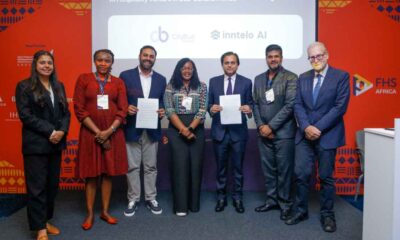
Speaking during the partnership signing held at Pesalink offices in Nairobi, PAPSS CEO Mike Ogbalu III said, “For PAPSS to deliver true impact, collaboration with national and private switches like Pesalink is essential. Pesalink is the first switch we’ve piloted for transaction termination in Kenya, and we are already seeing greater adoption by opening more channels for seamless, local-currency cross-border payments across Africa.”


Pesalink CEO, Gituku Kirika, said “Kenyan banks will now be able to offer faster, cheaper cross-border payments. They will be helping their customers grow more regional trading relationships and thrive in a more integrated digital economy.”

Distributed by APO Group on behalf of Afreximbank.

Continue Reading

Events

Africa Trade Conference Returns to Cape Town with Esteemed Speakers Driving Africa’s Trade Agenda

Published

on

Africa

Second edition convenes global policymakers, business leaders, and innovators to accelerate Africa’s integration into global trade

CAPE TOWN, South Africa, February 26, 2026/APO Group/ –Access Bank Plc (www.AccessBankPLC.com) is proud to announce the distinguished line-up of speakers for the second edition of the Africa Trade Conference (ATC 2026), scheduled to take place on March 11, 2026, at the Cape Town International Convention Centre, Cape Town, South Africa. Building on the strong foundation of its inaugural edition, ATC 2026 will convene an exceptional assembly of global and African leaders, policymakers, investors, and business executives committed to shaping the future of trade on the continent.

The Africa Trade Conference has rapidly emerged as a premier platform for advancing dialogue and action around Africa’s evolving role in global commerce. The 2026 edition will feature influential voices from across finance, government, development institutions, and the private sector, who will share insights on unlocking trade opportunities, strengthening intra-African commerce, enabling business expansion, and positioning African enterprises for global competitiveness.

The confirmed speakers represent a powerful cross-section of leaders driving Africa’s economic transformation.

Building on the momentum of its maiden edition, which convened senior decision-makers from 28 countries, the 2026 conference with the theme “Turning Vision into Velocity: Building Africa’s Trade Ecosystem for Real-World Impact”, will have the keynote address delivered by Kennedy Mbekeani, Director General, Southern Africa Region, African Development Bank (AfDB), alongside Kwabena Ayirebi, Managing Director, Banking Operations at the African Export-Import Bank. Their joint keynote will address the evolving financing landscape for African trade and the strategic pathways for unlocking continental prosperity.

The welcome address will be delivered by Roosevelt Ogbonna, CEO/GMD, Access Bank Plc, who will set the tone for discussions centered on trade transformation, financial inclusion, and regional competitiveness, while Tolu Oyekan, Managing Director & Partner at Boston Consulting Group, will deliver insights on “Africa Trade Outlook 2026”, examining emerging macroeconomic trends, supply chain shifts, and growth opportunities across key sectors.  The CEO of Pan-African Payment and Settlement System, Mike Ogbalu, will be engaging the conference participants on the topic, “Building a Connected Africa Through Trade, Payments & Technology”, focusing on how payment interoperability and digital infrastructure can accelerate the African Continental Free Trade Area (AfCFTA) agenda.

The calibre of speakers confirmed for this year’s conference underscores the urgency and opportunity before us

The conference will also host a High-Level Ministerial Panel that features Elizabeth Ofosu-Adjare, the Minister for Trade, Agribusiness & Industry, Ghana; Tiroeaone Ntsima, Minister of Trade and Entrepreneurship, Botswana; Mr. Florian Witt, Divisional Head, International & Corporate Banking Oddo-BHF, Ms. Nathalie Louat – Global Director, International Finance Corporation (IFC), Dr Isaiah Rathumba – Head of Department, Limpopo Economic Development, Environment and Tourism and Mr. Alfred Idialu – Chief Rep Officer, Deutsche Bank among other policymakers shaping trade policy across the continent.

Commenting on the announcement, Roosevelt Ogbonna, Managing Director/Chief Executive Officer of Access Bank Plc, said:
“The Africa Trade Conference reflects our unwavering commitment to advancing Africa’s economic transformation by creating a platform that brings together the leaders, institutions, and ideas shaping the future of trade. The calibre of speakers confirmed for this year’s conference underscores the urgency and opportunity before us. Africa is not only participating in global trade, it is helping to redefine it. Through this convening, we aim to catalyse partnerships, unlock new opportunities for businesses, and accelerate Africa’s integration into global value chains.”

“At Access Bank, we see ourselves not just as financiers, but as connectors of markets, ideas, and opportunities. Our role is to help African businesses move from ambition to impact, from local relevance to global competitiveness.”

With operations in 24 countries globally, including 16 across Africa, Access Bank’s expansive footprint places it in a unique position to facilitate cross-border trade, unlock regional value chains, and simplify the complexities of doing business across markets.

“Our presence across Africa and key global corridors gives us a front-row seat to the realities of trade. It also gives us the responsibility to design solutions that are inclusive, scalable, and future facing. ATC 2026 is part of that commitment, Ogbonna added.

ATC 2026 is expected to catalyze partnerships, enable policy dialogue, and provide actionable strategies for businesses operating within and beyond the continent.

The Access Bank Chief puts it thus, “Africa will not be a spectator in the remaking of global trade. We will be one of its architects. ATC 2026 is where those blueprints will be drawn.”

For more information and registration, please visit https://apo-opa.co/4sdXWF7

Distributed by APO Group on behalf of Access Bank PLC.


Continue Reading

Trending