



Business
Network International delivers strong H1 2023 results across Middle East and Africa (MEA) markets


Underlying free cash flow was USD 65 million, up 63% y.o.y.; and cash flow from operating activities was USD 107 million, supported by strong underlying business performance
DUBAI, United Arab Emirates, August 15, 2023/APO Group/ —
First half revenue increased 19% (CCY1) y.o.y. to USD 239 million, supported by a 33% (CCY1) rise in the total value of consumer payments processed by merchant customers (TPV); Underlying EBITDA grew 23% to USD 94 million reflecting strong revenue growth and cost control; Deployed on-soil technology in South Africa, unlocking revenue opportunities and enhancing competitive positioning; Significant new customer wins with eight new financial institution signings including Vodacom Financial Services, a leading MNO in Africa; Good reception for recently launched merchant services in Egypt, having signed over 700 merchants.
Network International Holdings Plc (LSE:NETW) has announced its interim financial results for the half year ended 30 June 2023.
The company reports good H1 2023 results with total revenue growing 19% in constant currency year-on-year (y.o.y.) demonstrating broad-based growth across all regions and business lines, with the total value of consumer payments processed with merchants across the group, including African markets, growing 33% in constant currency y.o.y. In the Middle East, the value of merchant payments processed from domestic consumers and international visitors grew significantly, increasing 28% and 53% year on year respectively.
Profit for the period was USD 34 million, up 9% y.o.y. Underlying free cash flow was USD 65 million, up 63% y.o.y.; and cash flow from operating activities was USD 107 million, supported by strong underlying business performance. Revenue in Africa represented 28% of the Group’s total revenue across the Middle East and Africa during this period.
Nandan Mer, Chief Executive Officer, commented: “Network saw another good trading period, delivering 19% constant currency revenue growth in the first half of the year. Our performance continues to be supported by the acceleration of digital payments growth across key markets but is also evidence of our successful strategic execution, competitive services and product offering. Performance in our home market of the UAE has been particularly good, where we have seen consistent market share gains in direct-to-merchant services through 2022 and into 2023, supported by our continued focus on high growth strategic areas such as SME, online and hospitality. We have made good progress in new market opportunities, having secured another three new financial institutions in the Kingdom of Saudi Arabia and signed over 700 merchants since our direct-to-merchant service was launched in Egypt earlier this year. Whilst overall Africa performance was slower on the back of tough macro-economic conditions, we have recently deployed on-soil technology capabilities in South Africa, positioning Network to better serve customers locally and providing excellent foundations for future growth. We remain encouraged by performance across the Group and I thank our colleagues for their expertise and delivery of such good results.”


New business remained healthy, especially among financial institutions. Network secured eight new customers across acquirer and issuer processing including Vodacom Financial Services, one of Africa’s most renowned Mobile Network Operators (MNOs) to provide merchant acquirer processing services in South Africa. In addition, it renewed its contract with Polaris Bank, one of Nigeria’s leading retail banks, for another five years. Network also continued to attract a significant number of key account and SME merchants and became the payments partner of choice for the Namibian government, enabling digital payments for e-visas and passport applications.
Capabilities grew with a widening range of payment acceptance methods and Value Added Services. Enhancing its mobile money capabilities in Africa through its partnership with Ecocash, a MNO in Zimbabwe, African merchants can now accept more mobile money payments. New services for financial institutions and credential issuing customers included expanding its N-GeniusTM online platform’s regional footprint. Rolling out the white label online payment solutions to a further four financial institutions for online acquirer processing services, the platform is now live across 26 African countries. The launch of SmartView Merchant reports further expands its insights and analytics proposition in Africa, providing merchants with in-depth actionable information on their business, including sales and transaction performance, dynamic currency conversion and loyalty analysis.
New market opportunities have been unlocked for outsourced payment services. Network deployed its on-soil technology in South Africa, unlocking revenue opportunities and enhancing its competitive positioning by aligning with new regulatory legislations to better serve customers in the region. Its Broad-Based Black Economic Empowerment (B-BBEE) score in South Africa has also improved significantly from level 8 in December 2022 to Level 5 in June 2023, having committed to supporting and enhancing its local workforce.
Network successfully launched direct-to-merchant services in Egypt at the start of the year and has already secured over 700 merchants, including Tradeline, who are Apple’s authorised resellers. The entry into direct-to-merchant services in Egypt builds on Network’s already well-established presence as a processing services provider in the country.
| Group Financial Summary (USD‘000) | H1 2023 | H1 2022 | y.o.y. change |
| Total revenue | 239,290 | 205,032 | 16.7% (19% ccy1) |
| Merchant Services | 111,355 | 85,673 | 30.0% (33% ccy1) |
| Outsourced Payment Services | 125,990 | 117,926 | 6.8% (9% ccy1) |
| Other revenue | 1,945 | 1,433 | 35.7% |
| Underlying EBITDA2 | 94,009 | 76,216 | 23.3% |
| Underlying EBITDA margin2 | 39.3% | 37.2% | 210bps |
| Profit for the period | 34,916 | 31,997 | 9.1% |
| Underlying free cash flow2 | 65,364 | 39,975 | 63.5% |
| Cash flow from operating activities | 107,199 | 90,604 | 18.3% |
| Leverage3 | 0.6x | 0.7x (FY22) | (0.1)x |
[1] Ccy – Constant currency terms.
[2] This is an Alternative Performance Measure (APM), financial definitions and further details on financial disclosures are available in the company’s regulated RNS on the London Stock Exchange.
[3] Leverage ratio computation and reconciliations are available in the company’s regulated RNS on the London Stock Exchange.
[4] TPV: Total Processed Volumes – the aggregate monetary volume of purchases processed by the Group within its Merchant Services business line.
[5] Domestic TPV represents spending from consumers domiciled in the region.
[6] International TPV represents consumer spending by overseas visitors.
Distributed by APO Group on behalf of Network International.














Business
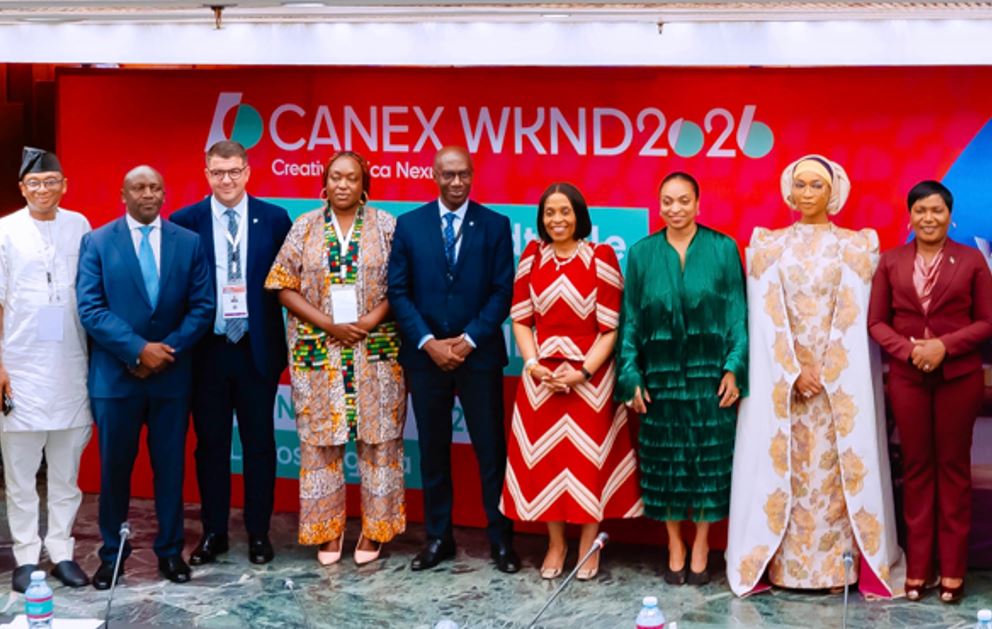
Creative Africa Nexus (CANEX) WKND 2026 opens in Lagos, bringing together leading African and diaspora creatives, investors and policymakers

Business
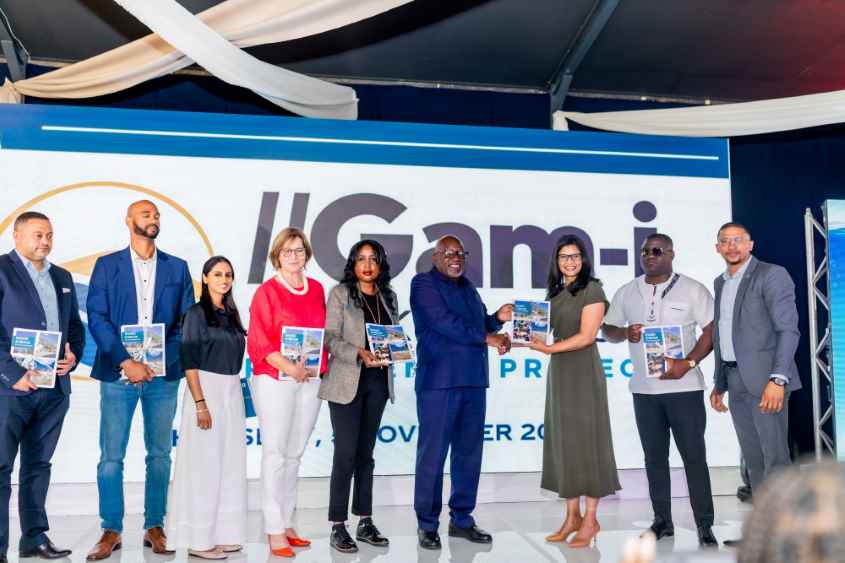
Coca-Cola system invests USD 1.22 million to strengthen water security in Namibia

Business
‘Power, Protect, Purchase’: Africa Made It unveils blueprint to capture USD 34B in GDP and accelerate African industrial sovereignty

Africa Practice research shows that Africa exports up to 98% of its raw cotton overseas and captures only 2% of its total value while incurring a USD 35 billion annual trade deficit


African culture, design, and storytelling influence global fashion, music, and media like never before
Africa Made It is driven by a consortium of leading pan-African organisations, advocacy groups, and media organisations who are positioning Africa as a global investment hub. Its flagship campaign, spotlighting the fibre-to-fashion value chain, presents a clear roadmap for continental industrialisation: securing competitive energy power for local industrial mills, enacting policy measures to protect emerging domestic manufacturers from unfair foreign imports, and rallying African consumers to purchase locally manufactured apparel. Together, these three pillars ensure that value created from African resources remains on African soil.
Africa Practice research shows that Africa exports up to 98% of its raw cotton overseas and captures only 2% of its total value while incurring a USD 35 billion annual trade deficit. Building the continent’s domestic processing capacity in spinning, weaving, and sewing locally produced cotton will sustain nearly two million permanent industrial jobs and inject approximately USD 33 billion directly into domestic household incomes every year, in addition to a recurring contribution of USD 34 billion to the continent’s GDP.
While these figures reveal the immense macro-economic potential of the value chain, the true heart of this transformation lies in its human impact. Industrial wages and local lint purchases leading to increased capital circulation in rural communities can drive community micro-economic vitality and contribute to rural poverty reduction. Additionally, formal employment opportunities can expand drastically for women, as they currently make up between 70-90% of garment factory workers on the continent.
Realising this vision and changing the lives of millions of people requires a deliberate combination of targeted investments, supportive trade policies, and consumer mobilisation. A USD 1.8 billion capital allocation toward critical structural enablers for garment transformation is the foundation for bridging Africa’s missing middle in the fibre-to-fashion value chain.
Marie Wilke, editor-in-chief of the Africa Made It magazine, said, “African culture, design, and storytelling influence global fashion, music, and media like never before. Yet, without domestic manufacturing infrastructure, Africa’s creative authority yields very little economic return. Linking raw cotton harvest directly to local processing ensures that the intellectual property, commercial margins, and industrial jobs remain on the continent. It is time to wear our power.”
To learn more about the potential of Africa’s fibre to fashion value chain, watch the campaign video (https://apo-opa.co/4BKAIvY) or read the Africa Made it (https://apo-opa.co/4zvA5VF)magazine (https://apo-opa.co/4zvA5VF). Access the campaign website and resources in English (https://apo-opa.co/4zvA5VF) and French (https://apo-opa.co/4zrK8e2).
Distributed by APO Group on behalf of Africa Made It.
-

 Business5 days ago
Afreximbank supports Veenocks’ US$145 million project for industrial expansion and regional growth
-
 Business5 days ago
Visa and Senegal join forces to accelerate digital transformation and the development of digital payments
-
Business5 days ago
Afreximbank Country Brief Explores Gabon’s Reform Momentum and Diversification Drive
-
 Business5 days ago
5 Investment Opportunities Putting Congo Energy & Investment Forum (CEIF) 2027 on the Map for Central Africa
-

 Business5 days ago
Oando Production Hits 42,985 boepd as Revenue Grows 9% in 9M 2026
-

 Energy5 days ago
Energy costs, storage value and industrial competitiveness led Day 2 of C&I Energy + Storage Summit
-
 Business4 days ago
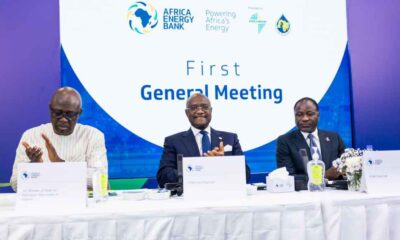
Joint Statement: Afreximbank and African Petroleum Producers’ Organisation (APPO) formally establish Africa Energy Bank
-
Business5 days ago
Afreximbank Country Brief Charts Côte d’Ivoire’s Rise as a Regional Growth Leader in West Africa