Connect with us

Energy

Morocco Gas Plan Reset Could Open Door to New Investment Models

Published

on

Energy Capital

As Morocco recalibrates its LNG strategy, the country’s evolving approach to gas infrastructure and investment will be in focus at the Invest in African Energy Forum in Paris next month

PARIS, France, April 7, 2026/APO Group/ –Morocco’s decision earlier this year to pause elements of its long-anticipated LNG import strategy marks less a delay than a strategic reset – one that reflects both shifting global market dynamics and a more pragmatic approach to infrastructure development.

In January 2026, the Ministry of Energy Transition and Sustainable Development suspended tenders for a planned LNG import terminal at Nador West Med and associated pipeline infrastructure, just weeks after launching the process in December 2025. The proposed project was ambitious: a floating terminal with regasification capacity of around 5 billion cubic meters (bcm) per year – more than four times Morocco’s current gas demand of roughly 1 bcm – designed to anchor a national gas network linking industrial hubs from Nador to Kenitra and Mohammedia.

While global LNG market volatility, rising financing costs and uncertainty around long-term demand have complicated the economics of large-scale import infrastructure, Morocco’s decision to reassess both timing and structure reflects a measured and forward-looking approach. Rather than locking into a capital-intensive model, the country is creating space to align infrastructure development more closely with market realities.

This comes at a critical moment. Gas demand is projected to rise to around 8 bcm by 2027, driven by power generation and industrial growth as Morocco reduces coal dependence while targeting renewables to account for 52% of installed capacity by 2030. Meeting this demand will require new infrastructure, but increasingly in forms that offer flexibility, scalability and improved risk allocation.

One area gaining traction is the development of modular LNG solutions. Phased infrastructure – particularly floating storage and regasification units – offers a pathway to bring capacity online more quickly while reducing upfront capital exposure. Such models allow supply to scale alongside demand and provide greater resilience in a volatile pricing environment.

At the same time, Morocco is advancing reforms to strengthen market structure and enhance competitiveness. Policymakers have emphasized the need for greater private sector participation, alongside ongoing reforms to state entities including ONHYM, aimed at improving pricing transparency and market efficiency. As ONHYM transitions toward a more commercial framework, its role in facilitating partnerships and enabling investment across midstream and gas-to-power segments is expected to expand.

Morocco’s existing infrastructure further supports this transition. Since 2022, the country has imported LNG via Spanish terminals using reverse flows through the Maghreb-Europe Gas Pipeline, providing interim supply without the need for immediate large-scale domestic regasification. While limited in capacity, this system offers flexibility and allows Morocco to optimize the timing and structure of future investments.

For investors, this reset broadens the opportunity set. Rather than a single large-scale LNG terminal, there is now scope to participate across a more diversified value chain – from storage and regasification to downstream industrial use and power generation. Smaller, phased projects are not only more adaptable but also better aligned with current financing conditions, supporting more efficient capital deployment.

Morocco’s evolving strategy will be a key focus at the Invest in African Energy (IAE) Forum in Paris next month, where the country will be featured in a dedicated Country Spotlight session. With participation from ONHYM and other senior stakeholders, including Managing Director Amina Benkhadra, the forum will provide a platform to outline Morocco’s revised gas roadmap and engage directly with investors on emerging opportunities across the value chain.

With gas demand projected to reach up to 12 bcm by 2030, Morocco’s long-term fundamentals remain strong. What is changing is the model – shifting toward more flexible, commercially driven solutions that reflect both market conditions and investor priorities.

As Morocco refines its LNG strategy, its approach highlights a broader trend across emerging markets: in a volatile global energy landscape, adaptability is increasingly defining investment success.

IAE 2026 (http://apo-opa.co/4c5P4Li) is an exclusive forum designed to connect African energy markets with global investors, serving as a key platform for deal-making in the lead-up to African Energy Week. Scheduled for April 22–23, 2026, in Paris, the event will provide delegates with two days of in-depth engagement with industry experts, project developers, investors and policymakers. For more information, visit www.Invest-Africa-Energy.com. To sponsor or register as a delegate, please contact sales@energycapitalpower.com

Distributed by APO Group on behalf of Energy Capital & Power.

Energy

Transnet Freight Rail Chief Executive Officer (CEO) to Spotlight South Africa’s Rail Reform at African Mining Week (AMW) 2026

Published

on

As South Africa accelerates freight rail reforms and private sector participation to unlock mining investment, Transnet Freight Rail CEO Russell Baatjies will outline the company’s infrastructure modernization strategy and opportunities for investors at African Mining Week 2026

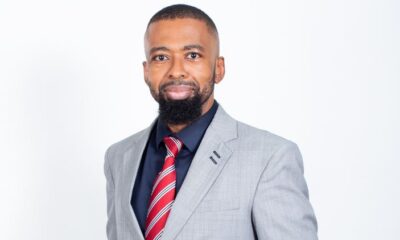
CAPE TOWN, South Africa, August 20, 2026/APO Group/ –Russell Baatjies, Group Chief Executive of Transnet Freight Rail, has been confirmed as a speaker at African Mining Week (AMW) 2026 – Africa’s premier gathering for the mining industry – taking place October 14-16 in Cape Town.


Baatjies will participate in the Regional Connectivity: Financing Africa’s Mineral Infrastructure panel, where he is expected to discuss Transnet’s strategy to modernize South Africa’s freight rail network, expand private sector participation and strengthen regional logistics corridors to support mining growth and cross-border trade.

His participation comes as South Africa accelerates sweeping logistics reforms aimed at removing infrastructure bottlenecks and unlocking greater investment across its mining sector. As the country seeks to mobilize R2 trillion to develop its critical minerals industry – including an estimated R40 trillion in untapped iron ore resources – expanding rail and port capacity has become central to increasing exports of coal, platinum group metals, manganese, chrome and iron ore while improving regional trade connectivity.

In May 2026, Transnet signed rail access agreements with 11 Train Operating Companies (TOCs) serving the coal, manganese, container, fuel and general freight sectors, marking a major step toward opening the national freight rail network to private operators. The agreements are expected to add 24 million tons of annual freight capacity, with the potential to increase to 52 million tons over the next five years, supporting South Africa’s goal of increasing annual rail volumes from approximately 180 million tons to 250 million tons by 2030.

Building on these reforms, Transnet launched the procurement process in June 2026 for The Leasing Company, a rolling stock leasing platform designed to improve access to locomotives and wagons for both established and emerging TOCs. The initiative is expected to increase asset utilization, strengthen freight capacity and attract greater private investment into Southern Africa’s rail sector.

The company is also reinforcing its financial position to accelerate infrastructure modernization through major financing agreements, including a €300 million loan from Agence Française de Développement, a €350 million loan from the European Investment Bank, a $278 million facility from the New Development Bank, a $1 billion loan from the African Development Bank and a R94.8 billion government guarantee package supporting its long-term recovery and investment program.

Alongside infrastructure investment, Transnet is strengthening collaboration with the mining industry to improve export capacity through strategic agreements with Exxaro ResourcesUnited Manganese of KalahariHotazel Manganese Mines and Tshipi é Ntle Manganese Mining, reinforcing efforts to support higher mining production through more efficient logistics.

At AMW 2026, Baatjies is expected to examine how rail modernization, private sector participation and regional logistics integration can unlock new mining investment while strengthening Africa’s mineral value chains and improving access to global markets.


Distributed by APO Group on behalf of Energy Capital & Power.


Continue Reading

Business

Senegal’s President and Energy Minister Confirm Official Patronage at MSGBC Oil, Gas & Power 2026

Published

on

MSGBC Oil, Gas & Power 2026 will take place from 1-3 December in Dakar under the High Patronage of President Bassirou Diomaye Faye and in partnership with the Ministry of Energy and Petroleum of the Republic of Senegal

DAKAR, Senegal, August 18, 2026/APO Group/ —MSGBC Oil, Gas & Power 2026 has confirmed the official participation of Senegalese President Bassirou Diomaye Faye and Minister of Energy and Petroleum Dr. El Hadji Abdourahmane Diouf at this year’s event, set to take place 1-3 December at the Centre International de Conférences Abdou Diouf (CICAD) in Dakar.

Held under the High Patronage of President Faye and in partnership with the Ministry of Energy and Petroleum, MSGBC Oil, Gas & Power 2026 reflects the Senegalese government’s commitment to advancing energy sector investment and development across the MSGBC basin.

Minister Diouf assumed office in June 2026 following the formation of Senegal’s new government, which restructured the former Ministry of Energy, Petroleum and Mines into separate portfolios to place dedicated institutional focus on the country’s expanding hydrocarbons sector. He previously served as Minister of Higher Education, Research and Innovation and as Minister of the Environment and Ecological Transition.

Their participation comes as Senegal consolidates its position as a new oil and gas producer. The Sangomar field produced 17.9 million barrels in the first half of 2026, while the Greater Tortue Ahmeyim LNG project – shared with Mauritania – is now operating at full capacity following its first export cargo in early 2025.

Organized under the theme Powering Investment, Delivering Prosperity: Executing the Region’s Energy Strategy, MSGBC Oil, Gas & Power 2026 will convene heads of state, ministers, investors, operators and development partners to shape the next phase of energy investment across Mauritania, Senegal, The Gambia, Guinea-Bissau and Guinea-Conakry.

For more information and registration, visit www.msgbcoilgasandpower.com https://apo-opa.co/4xL10v4.

Distributed by APO Group on behalf of Energy Capital & Power.

Continue Reading

Energy

Energy Intensive Users Group of Southern Africa (EIUG) and VUKA Group announce joint EIUG Conference and C&I Energy + Storage Summit

Published

on

The EIUG Conference will provide a platform for open dialogue on electricity industry challenges and opportunities

JOHANNESBURG, South Africa, August 18, 2026/APO Group/ –The Energy Intensive Users Group of Southern Africa (EIUG), together with VUKA Group (https://WeAreVUKA.com/), will co‑host the EIUG Conference alongside the C&I Energy + Storage Summit, created by VUKA Group, on 28–29 October 2026 at The Maslow Hotel, Sandton.

The EIUG Conference is more than a gathering – it is a platform to shape South Africa’s industrial energy future

The EIUG Conference will provide a platform for open dialogue on electricity industry challenges and opportunities. It will bring together government, industry leaders, energy‑intensive consumers, and service providers to exchange perspectives, strengthen industrial competitiveness, and explore solutions for South Africa’s energy future.

The two‑day programme features ministerial and industry keynotes, panel discussions on tariff escalation, carbon tax, CBAM, and electricity market reforms, as well as masterclasses on financing, digitalisation, grid security, and hydrogen development.

Delegates will also benefit from networking functions, case study presentations, and practical workshops designed to accelerate the just energy transition.

“The EIUG Conference is more than a gathering – it is a platform to shape South Africa’s industrial energy future,” says Fanele Mondi, EIUG CEO. “ By bringing together government, industry, and service providers, we aim to foster open dialogue and practical solutions that support competitiveness, sustainability, and resilience.”

For more information, visit EIUG Conference (https://apo-opa.co/4x0Wzwd).

Distributed by APO Group on behalf of VUKA Group.

Continue Reading

Trending

Exit mobile version