Connect with us

Business

Libyan Islamic Bank Forges New Partnership with Backbase to Enhance Digital Customer Experience

Published

on

Libyan Islamic Bank

One of the main objectives of this collaboration is to increase digital adoption rates among LIB customers, enabling self-service options that are more aligned with the current market trends and customer demands

TRIPOLI, Libya, January 19, 2024/APO Group/ — 

In an effort to streamline its customer service operations and enhance its customers’ digital banking experience, Libyan Islamic Bank (LIB) has partnered with Backbase (www.Backbase.com), the renowned expert in engagement banking platform solutions worldwide. Established in 2017 with a primary focus on retail and corporate segments, LIB has been a steady presence in the financial landscape of Libya, abiding by the principles and legislations of Islamic Sharia.

As the banking industry continues to evolve, LIB recognizes the need to modernize and adapt to the changing preferences and expectations of its clientele. The initiative to revamp its existing mobile app for retail customers and introduce new digital apps for business users comes at a critical time. This move is expected to significantly reduce friction in customer onboarding and servicing processes, thereby promoting a smoother, more intuitive banking experience. Backbase stands out as a market leader with top-notch innovative digital platform capabilities, making it a preferred choice for this partnership.

Central to this transformation is the introduction of Backbase’s Engagement Banking Platform, a single omni-channel banking platform, that aligns well with LIB’s aspirations to adopt a customer-centric approach, orchestrate user journeys across all touchpoints, and innovate at the speed of digital. Recognized for its innovative digital capabilities, Backbase offers a tailored solution to meet the challenges encountered in modern banking operations. This collaboration marks a significant shift in LIB’s strategy, as it leverages Backbase’s expertise to facilitate quicker transitions to customer-centric platforms.

This partnership with LIB marks a significant step in the direction of creating more nuanced and customer-centric experiences in the banking sector

One of the main objectives of this collaboration is to increase digital adoption rates among LIB customers, enabling self-service options that are more aligned with the current market trends and customer demands. By enhancing the functionalities of its existing platforms, LIB aims to not only attract a larger customer base but also foster long-term relationships through improved service offerings.

A significant part of this endeavor involves reducing the bank’s reliance on branch-based operations, a move that is expected to not only streamline processes but also promote greater efficiency and cost-effectiveness. It necessitates the removal of legacy systems and manual paper-based processes which have long been recognized as impediments to swift and smooth service delivery.

 Mr. Adel Kashad, acting GM of LIB, remarked, “In these times of rapid technological advancements, it is vital for financial institutions to adapt and innovate continually. This partnership signifies our commitment to providing our customers with more streamlined and efficient banking solutions. By collaborating with Backbase, we aim to enhance our digital service offerings, bringing a new level of convenience and functionality to our clients, thus reiterating our position as a bank that is truly in sync with the needs of contemporary consumers.”

Mr. Matthijs Ejipe, Regional Vice President of Backbase, commented on the collaboration, stating, “This partnership with LIB marks a significant step in the direction of creating more nuanced and customer-centric experiences in the banking sector. Our Engagement Banking Platform is designed to facilitate seamless customer journeys, and we believe this initiative will set a new standard in the industry, fostering growth and innovation in the region.”

Distributed by APO Group on behalf of Backbase.

Energy

Algeria’s Hydrocarbons Minister Joins MSGBC 2026 as Sonatrach Eyes Senegal Partnerships

Published

on

Algiers and Dakar are preparing an energy agreement as Sonatrach pursues partnerships across the MSGBC basin

DAKAR, Senegal, October 19, 2026/APO Group/ –Mohamed Arkab, Algeria’s Minister of State and Minister of Hydrocarbons, will join the speaker lineup at MSGBC Oil, Gas & Power 2026 in Dakar this December, bringing one of the continent’s most senior energy ministers to a forum focused on investment and regional cooperation. His confirmation serves as a bridge between one of Africa’s longest-standing oil and gas producers and one of its newest, paving the way for greater collaboration across upstream exploration, infrastructure and power.


Algerian cooperation with MSGBC nations has already gained momentum. Minister Arkab hosted Senegal’s Minister of Energy and Petroleum, Dr. El Hadji Abdourahmane Diouf, in Algiers on October 4. The two-day visit produced a cooperation agreement between Senegalese utility Senelec and Algeria’s Sonelgaz, while Petrosen and Sonatrach held discussions on a potential partnership spanning upstream exploration and infrastructure.

Senegal’s government has said the visit sets the stage for an intergovernmental agreement to be signed in Dakar during MSGBC Oil, Gas & Power 2026. The two national oil companies first signed a memorandum of understanding in 2022, and Minister Arkab discussed putting it into effect with Senegal’s Minister of Foreign Affairs Cheikh Niang in July.

The potential partnership comes as MSGBC countries look toward the next phase of upstream development following the start of production at Senegal’s Sangomar oil field and the cross-border Greater Tortue Ahmeyim (GTA) LNG project. Regional priorities are now shifting toward advancing the next generation of projects, including Senegal’s Yakaar-Teranga gas development and Mauritania’s BirAllah discovery, while attracting fresh exploration investment across the wider basin. Moving these opportunities toward development will require capital, technical expertise and partnerships with established producers – creating scope for deeper cooperation with countries such as Algeria and companies such as Sonatrach.

Minister Arkab’s participation at the upcoming conference also arrives as Algeria advances its own exploration strategy. The event convenes shortly after bidding closes for the Algeria Bid Round 2026, which the National Agency for the Valorization of Hydrocarbon Resources launched in April with seven exploration blocks on offer. Submissions are due November 26, and Sonatrach expects to finalize contracts with successful bidders by the end of January 2027. Exploration and production will absorb three-quarters of the $60 billion Sonatrach intends to spend between 2026 and 2030, as the company works toward lifting annual gas output to 200 billion cubic meters within five years.

With a bilateral agreement potentially headed for signature on the conference sidelines, Minister Arkab’s participation promises to be one of the defining moments of the 2026 edition and reinforces MSGBC Oil, Gas & Power’s standing as the region’s leading meeting point for governments and investors.

Organized by Energy Capital & Power and held under the High Patronage of Senegalese President Bassirou Diomaye Faye, MSGBC Oil, Gas & Power 2026 takes place December 1–3 in Dakar and will convene heads of state, ministers, investors, operators and development partners from Mauritania, Senegal, The Gambia, Guinea-Bissau and Guinea-Conakry. Explore opportunities and secure your participation at www.MSGBCOilGasandPower.com.


Distributed by APO Group on behalf of Energy Capital & Power.


Continue Reading

Business

Afreximbank and partners advance Africa’s automotive investment agenda at Alamein Africa Forum

Published

on

The two-day Forum brought together high-level African automotive industry policymakers, private sector original equipment manufacturers (OEMs) and Africa-based component manufacturers

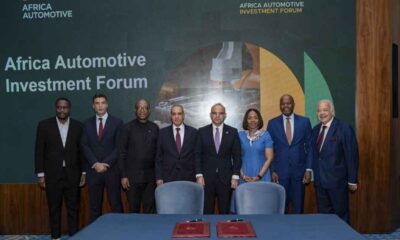
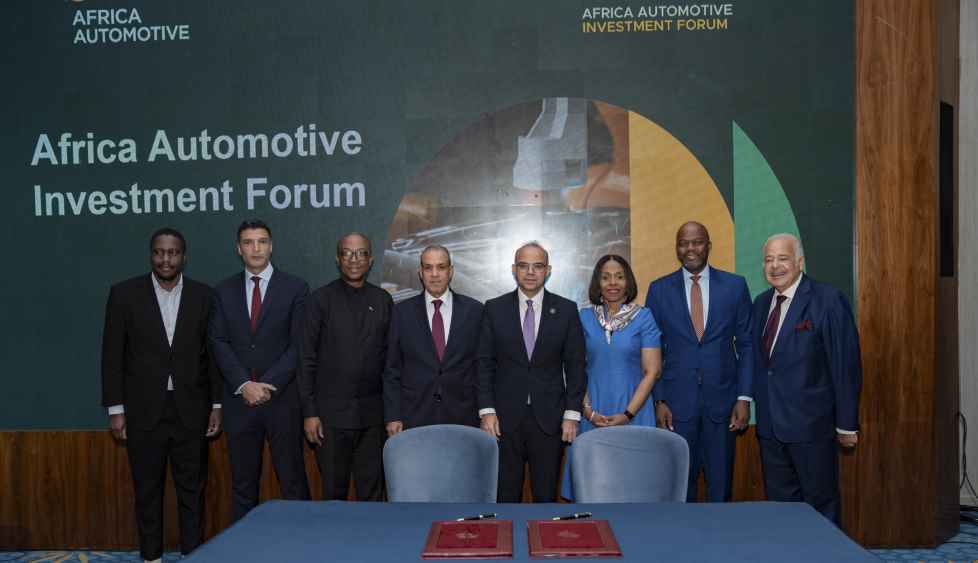
CAIRO, Egypt, October 19, 2026/APO Group/ –African Export-Import Bank (Afreximbank) (www.Afreximbank.com), in partnership with the African Association of Automotive Manufacturers (AAAM), the African Continental Free Trade Area (AfCFTA) Secretariat, the Ministry of Trade and Investment of Egypt, and the Department of Trade and Industry of South Africa, hosted the Africa Automotive Investment Forum on the sidelines of the Alamein Africa Forum held in El Alamein, Egypt recently.


The two-day Forum brought together high-level African automotive industry policymakers, private sector original equipment manufacturers (OEMs) and Africa-based component manufacturers.

The Forum sought to sensitise policymakers on the policy changes and reforms needed to develop the automotive sector, enable investors to engage directly with both policymakers and manufacturers, and facilitate potential joint ventures and supply agreements or engagements leading to future deals.

Afreximbank noted that the Forum prioritised joint ventures and technology transfer agreements between global auto giants and African enterprises with the expectation of creating highly skilled engineering, manufacturing and technical jobs for Africa’s growing youth demographic while significantly boosting local small and medium enterprises within the secondary supply tier.

It described the automotive sector as a strategic priority because it serves as a powerful catalyst for Africa’s industrialisation, intra-African trade and economic resilience, noting that several African countries were already making important strides in the development of a manufacturing sector that had attracted increasing investment into the emerging auto industry, including new energy vehicles.

Highlighting the significance of the Forum for Afreximbank, Mrs. Kanayo Awani, Executive Vice President, Intra-African Trade and Export Development, said:

“The automotive sector is a critical pillar for advancing Africa’s industrialisation and achieving the structural transformation championed by Afreximbank. By driving regional value chain integration, the automotive industry directly aligns with our mandate to foster intra-African trade under the AfCFTA framework. Supporting this sector allows Afreximbank to catalyse high-impact investments, stimulate manufacturing capabilities, create skilled employment, and significantly reduce the continent’s heavy reliance on vehicle imports. Investing in the African automotive ecosystem is not merely a financing opportunity, but a strategic imperative that accelerates economic diversification and establishes Africa as a competitive player in the global industrial economy.”

Mrs. Awani said that significant investment opportunities existed in Africa’s automotive manufacturing sector, including component manufacturing, leveraging the continent’s growing skills base and raw materials such as lithium, cobalt, manganese, nickel, copper, iron and steel. She added that Afreximbank was championing the development of a pan-African automotive manufacturing sector comprising an interrelated component and vehicle manufacturing ecosystem, supported by intra-African supply chains and trade.

The automotive sector is a critical pillar for advancing Africa’s industrialisation and achieving the structural transformation championed by Afreximbank

Mrs. Awani noted that Afreximbank had committed US$1 billion towards financing Africa’s automotive sector as part of its strategy to promote manufacturing, trade and industrial development across Africa.

The Forum witnessed the signing of a joint venture agreement between Malben Engineering from South Africa and Egypt-based industrial conglomerate El Araby Group to establish a joint platform for manufacturing components serving Egyptian, South African and broader African markets. The undertaking combines El Araby Group’s industrial, engineering, and technological capabilities with Malben Engineering’s experience spanning over 50 years in manufacturing and forming metal automotive components.  The joint venture illustrates the type of commercial partnership that will spur development of intra-African automotive supply chains and trade.

Mr. Tarek Mosaad, President of the African Association of Automotive Manufacturers (AAAM) said: “with the AfCFTA Rules of Origin now agreed, the foundation for a more integrated automotive industry is in place. Our focus must shift to turning ambition into action by creating factories, strengthening supplier ecosystems, generating jobs, and increasing intra-African trade.” He noted that “AAAM remains focused on three key priorities:

  • Growing local content through regional value chains
  • Making it easier to move automotive products across borders
  • Ensuring Africa plays a meaningful role in shaping the future of mobility|

In his call to action, he cautioned that “investors are not looking at 54 separate African markets. They are looking at one integrated opportunity.”

H.E. Wamkele Mene, Secretary-General of the AfCFTA Secretariat, echoed the sentiments expressed by Afreximbank and AAAM and outlined three priorities for advancing the Strategy for the African Automotive Sector under the AfCFTA framework, namely: “developing investment-ready projects and competitive production locations; strengthening regional supplier networks and deepening localisation; and establishing commercially viable regional production.”

In a further step towards advancing these priorities, the AfCFTA Secretariat and the African Association of Automotive Manufacturers (AAAM) signed a Memorandum of Understanding (MoU) to strengthen cooperation in developing Africa’s automotive industry.

The MoU provides a framework for cooperation in implementing the Strategy for the African Automotive Sector under the AfCFTA, covering automotive Rules of Origin, customs procedures and trade facilitation, automotive policy and standards, capacity building, regional supplier and value-chain development, mineral beneficiation, investment mobilisation and emerging automotive technologies.

The partnership will also support ongoing efforts by the AfCFTA Secretariat and Afreximbank to advance the AfCFTA Automotive Investment Plan, with a focus on mobilising investment and strengthening competitive regional automotive production networks.

The Forum also witnessed the establishment of a joint Egypt-South Africa Business Council designed to develop bilateral trade and investment projects across various priority sectors that include automotive, mining and mineral resources, renewable energy, agriculture and food production, pharmaceuticals, transport and logistics infrastructure – leveraging the Suez Canal and national ports in both countries to facilitate increased trade between northern and southern Africa.

For a more practical experience, delegates moved from policy discussion to industry exposure through curated site visits to OEMs Nissan Motor Corporation, General Motors Egypt, Al Mansour Automotive and components manufacturer Mobica in 6th of October City. The visits offered a first-hand view of Egypt’s automotive industrial base, showcasing the progression from vehicle assembly and localisation to supplier development, manufacturing capabilities and regional market reach, while illustrating the tangible opportunities for investment, technology transfer and cross-border value-chain integration that can help position Africa as a competitive automotive manufacturing hub.

With African vehicle demand expected to reach 5 million by 2035 as well as rising interest in new energy vehicles globally, industry stakeholders and policymakers are seeing opportunities to drive domestic industrialisation through the automotive sector and renewables, leveraging African raw materials. Forum participants emphasised that the policy incentives must be right and that the provision of affordable financing will help drive demand and capital investments.


Distributed by APO Group on behalf of Afreximbank.


Continue Reading

Business

The Detail Behind a Decade: Mala Lingappa Marks Ten Years at APO Group

Published

on

A decade of precision behind the measurement that proves APO Group’s performance across Africa

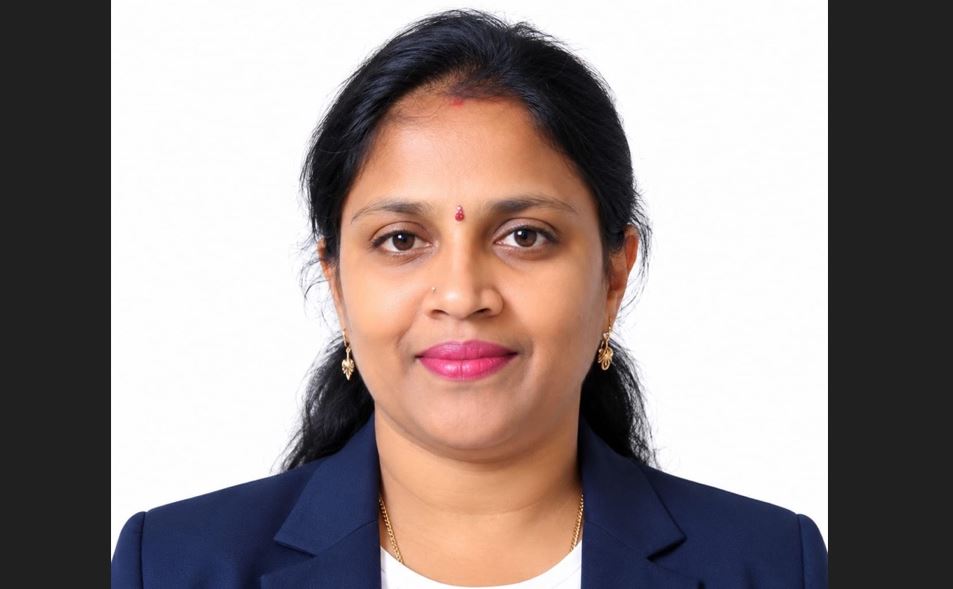
JOHANNESBURG, South Africa, October 19, 2026/APO Group/ –Mala Lingappa has marked ten years at APO Group (www.APO-opa.com), the pan-African communications consultancy integrating advisory, execution, and proprietary news distribution. She joined in 2016 as its first media monitoring specialist. Today, APO Group guarantees visibility in all 54 African markets, and Mala has helped make that visibility measurable.

“When I started, I wasn’t expecting to stay for a decade,” says Mala. “The chance to work in an international environment and learn from people with diverse backgrounds drew me in. The experience has been incredibly rewarding.”


Performance only counts when it can be proven. From the start, Mala built the expertise in search criteria and reporting that tracks client coverage and evidence results across the continent. She has adapted to every new system and service as the business evolved into an integrated model of strategic advisory, local execution and owned distribution.

“There have been challenging periods, but those moments pushed me to become more flexible, to keep learning and to step outside my comfort zone,” she says. “They gave me the confidence to handle new challenges.”

People stay where they feel trusted, respected and able to grow

APO Group builds performance through its people, giving them opportunities to learn, take on new responsibilities and grow their careers. For Mala, this has included training and professional development initiatives that helped her build new skills, broaden her perspective and expand her role.

As the longest-serving member of the media monitoring team, Mala brings precision to every search and every report. In a model where results are measured, accuracy is essential. Her experience helps the team resolve questions quickly, keep work moving and deliver reliable reporting for APO Group’s clients.

Mala has also helped shape the team around her, sharing the search and reporting expertise she has built over the past decade. Pooja Sanga, Team Leader of the Media Monitoring Team, says: “Mala is meticulous about process and highly skilled at search criteria. She is down to earth and approachable. She answers our questions quickly because of her depth of knowledge. That reliability makes a huge difference every day.”

Loanette Boshoff, Chief People Officer at APO Group, says: “Ten years is a choice Mala has made every single year. She could have taken her talent anywhere, and she kept bringing it to APO Group. People stay where they feel trusted, respected and able to grow. Our job is to be that place, for Mala and for everyone who joins us.”

Looking ahead, Mala is excited about the role that technology, training and people will play in the team’s next chapter. “Ten years went quickly,” she says. “I value the journey and the people who supported me. I’m looking forward to what comes next.”

Bas Wijne, Chief Executive Officer of APO Group, says Mala’s decade with the company shows the strategic value of experience and institutional knowledge. “Mala understands how the business works, why our processes matter and where detail makes a difference. That knowledge helps us work efficiently, support our teams and maintain the standards we expect as we grow.”

Distributed by APO Group on behalf of APO Group.


Continue Reading

Trending

Exit mobile version