Returning for its fifth edition, LEES 2027 will advance Libya’s $18 billion energy pipeline, targeting 1.6–2 million bpd, gas megaprojects and renewables
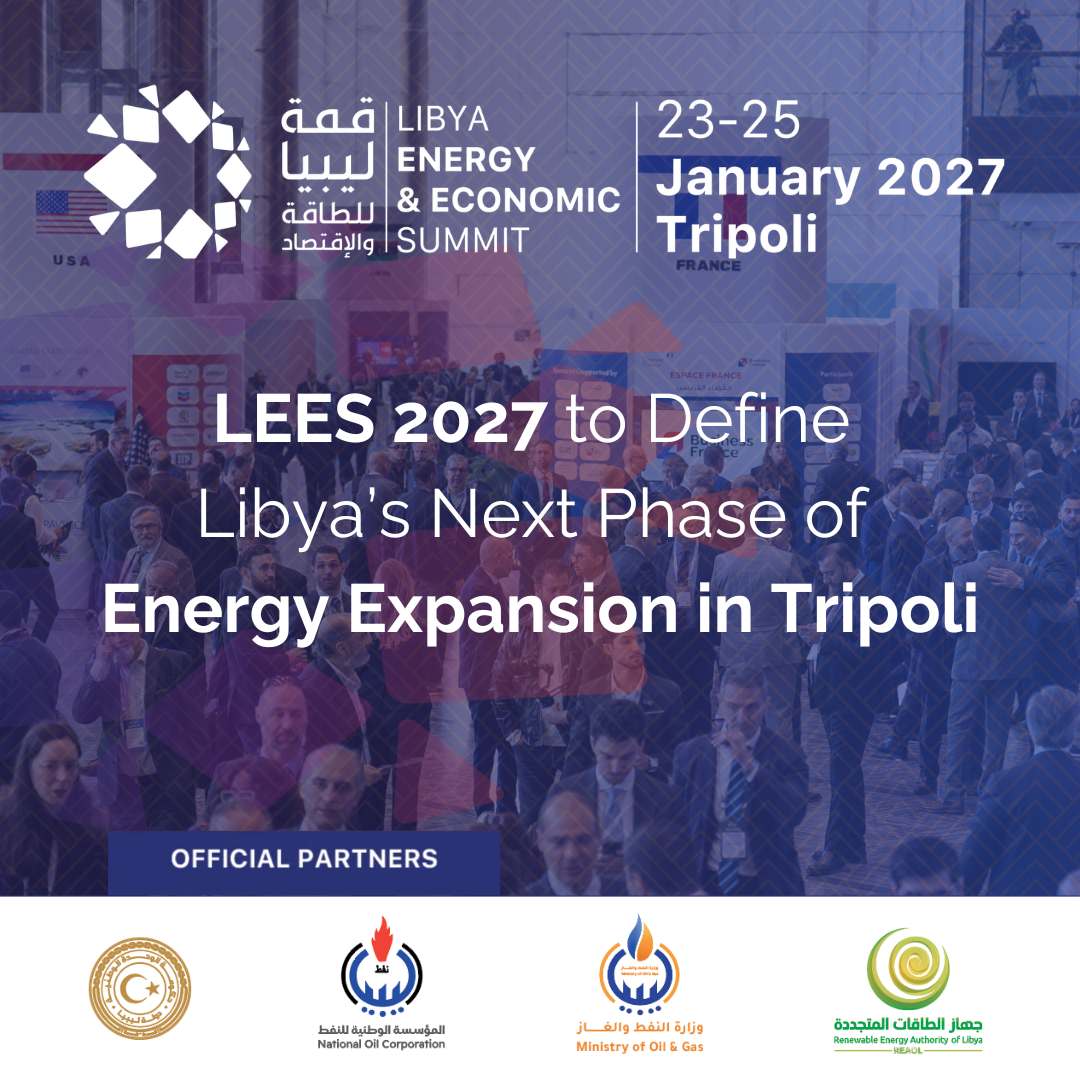
TRIPOLI, Libya, June 4, 2026/APO Group/ –The fifth edition of the Libya Energy & Economic Summit (LEES) 2027 returns to Tripoli on January 23–25. Positioned as Libya’s landmark energy event, LEES serves as the country’s premier international platform for investment, technical collaboration and private sector engagement across oil, gas, power and renewables.
LEES 2027 builds directly on the outcomes of LEES 2026, which marked Libya’s shift from post-recovery stabilization to execution-led development. The 2026 edition established an estimated $18 billion pipeline of energy and infrastructure projects and repositioned the sector from ambition to delivery, setting the foundation for the 2027 summit’s execution-focused agenda.
A central focus for 2027 is upstream acceleration. The National Oil Corporation’s (NOC) 2026 licensing round introduced 22 on- and offshore exploration blocks, the country’s first in 17 years, alongside a mandate to drill 70 to 100 new wells annually. With support from the Ministry of Oil & Gas, LEES 2027 will evaluate initial seismic results, contract awards and the transition from exploration rights into operational development phases.
Production expansion remains a core investment theme. Libya’s output stabilized at approximately 1.4 million barrels per day (bpd) in 2026, with LEES 2027 targeting pathways toward 1.6 million bpd in the near term and a long-term ambition of 2 million bpd. The summit – endorsed directly by the NOC – will focus on infrastructure bottlenecks, field optimization and midstream capacity required to support higher output levels.
Gas monetization and large-scale infrastructure development will also feature prominently. Eni’s $8 billion offshore Structures A&E project remains on track for completion by late 2027, while discussions around Chevron-linked shale studies highlight potential resources estimated at 123 trillion cubic feet of gas and 18 billion barrels of oil across key basins, including Sirte, Murzuq and Ghadames.
Moving from licensing and planning into large-scale execution and infrastructure delivery, LEES 2027 is a focal point for this critical transformation in Libya’s energy sector
The sector aims to attract an estimated $3–4 billion in annual drilling investment following unified drilling regulations announced in 2026. LEES 2027 will assess early implementation outcomes, including operational safety, fiscal predictability and contract execution efficiency across upstream assets.
Meanwhile, Libya’s 4 GW solar roadmap is advancing, anchored by TotalEnergies’ 500 MW Sadada solar project. Supported by the Renewable Energy Authority of Libya as an institutional partner, LEES 2027 is expected to focus on financial close milestones, construction timelines and the scaling of independent power purchase structures within the national grid strategy.
Human capital development will also remain a strategic pillar at next year’s event, with the Energy JEEL initiative having trained more than 900 youth participants aged 15–35 in engineering, digital systems and energy operations, forming a national talent pipeline aligned with Libya’s long-term energy transition and industrial expansion goals.
Against this backdrop, LEES 2027 – which takes place at the Tripoli International Convention Center – will serve as the sector’s execution benchmark, converting licensing frameworks, infrastructure commitments and production targets into operational outcomes across hydrocarbons, power generation and next-generation energy systems.
“Moving from licensing and planning into large-scale execution and infrastructure delivery, LEES 2027 is a focal point for this critical transformation in Libya’s energy sector,” says James Chester, CEO of LEES 2027 organizer Energy Capital & Power. “It will be a defining platform where investment commitments from 2026 are translated into measurable production, capacity expansion and long-term energy security outcomes.”
Join industry leaders at the Libya Energy & Economic Summit 2027 in Tripoli and explore investment opportunities in one of Africa’s most dynamic energy markets. LEES 2027 offers a premier platform for partnerships, innovation and sector growth. Visit www.LibyaSummit.com to secure your participation. To sponsor or participate as a delegate, please contact sales@energycapitalpower.com.
Distributed by APO Group on behalf of Energy Capital & Power.
The Congo Energy & Investment Forum will convene international investors, policymakers and industry leaders to advance energy partnerships and project development from June 1–3, 2027
BRAZZAVILLE, Congo (Republic of the), June 4, 2026/APO Group/ –The Republic of Congo will host the second edition of the Congo Energy & Investment Forum (CEIF) from June 1–3, 2027 at the Kintélé International Conference Center, under the official endorsement of the Ministry of Hydrocarbons, led by newly appointed Minister Stev Simplice Onanga. Organized by Energy Capital & Power (www.EnergyCapitalPower.com), the forum will bring together global investors, project developers and policymakers to accelerate investment across the country’s energy sector.
The event is expected to attract participation from leading international and regional institutions, including OPEC and African Petroleum Producers Organization, alongside energy ministers from across Africa. Delegations from Europe, Asia, the Middle East and the Americas, as well as national and international oil companies, financiers and technology providers, will be represented, positioning CEIF as a key platform for cross-border energy cooperation and deal-making.
As one of sub-Saharan Africa’s established oil producers and an emerging gas exporter, the Republic of Congo continues to expand its upstream and gas monetization activities. Growth is being driven by developments such as TotalEnergies’ Moho Nord and Marine XX assets, as well as ongoing activity by Trident Energy and Perenco across mature assets. In parallel, the phased rollout of Eni’s Congo LNG project, which targets up to 3 million tons of LNG per year, is strengthening the country’s position in global gas markets.
Alongside international operators, national oil company Société Nationale des Pétroles du Congo (SNPC), under the leadership of Director General Maixent Raoul Ominga, is advancing work on deepwater permits such as Nzombo, increasingly positioning itself as both a commercial operator and strategic partner in key developments, including mature asset redevelopment and emerging LNG-linked opportunities.
A central focus of CEIF 2027 will be deepening local content and in-country value creation, a key priority of Minister Onanga. With support from the African Energy Chamber, the forum will highlight policies and initiatives aimed at increasing participation by Congolese companies, building local workforce capacity and supporting technology transfer. Discussions will explore how international operators and service providers can partner with local businesses, ensuring that investment translates into long-term economic benefits and sustainable industry growth.
The Republic of Congo continues to enhance its investment framework through regulatory reforms supported by the Ministry and SNPC, including the implementation of a Gas Master Plan, the establishment of a national gas company and a new gas code designed to commercialize undeveloped resources and reduce flaring. These efforts are complemented by downstream and infrastructure developments, including refinery upgrades, petrochemical projects and expanding gas-to-power capacity.
With participation expected from more than 40 countries, hundreds of companies and over 3,000 delegates, CEIF 2027 will feature strategic conference sessions, technical workshops and high-level networking opportunities. The forum is set to play a central role in facilitating partnerships, advancing investment and reinforcing the Republic of Congo’s position as a competitive energy destination.
Prof. Benedict Oramah joins African Energy Week 2026 at a pivotal moment for African energy financing, industrial development and infrastructure investment
CAPE TOWN, South Africa, June 3, 2026/APO Group/ –Prof. Benedict Oramah, former President and Chairman of the African Export-Import Bank (Afreximbank) and current Chairman of Africa Trading Minerals (ATMIN), will chair the African Energy Week (AEW) 2026 Finance Summit, taking place from October 12–16 in Cape Town. Oramah’s participation places one of Africa’s most influential development finance leaders at the forefront of discussions on energy investment, infrastructure financing and industrial growth, reaffirming the event’s role as the continent’s premier deal-making platform.
Taking place within the main strategic conference program, the AEW 2026 Finance Summit will address one of the most pressing challenges facing Africa’s energy sector: a lack of investment. With an annual energy investment gap estimated between $31 billion and $50 billion, the Summit will explore tangible strategies to mobilize private capital, expand development financing and unlock new avenues for domestic funding across the energy value chain. Oramah’s participation ensures these discussions remain central to the event.
Having previously led Afreximbank, Oramah played a pivotal role in positioning the institution as one of the continent’s most active financiers of strategic infrastructure and energy projects. The bank has been instrumental in supporting African-led energy development, including backing refining infrastructure, advancing regional trade integration and facilitating capital access for major projects. In recent years, the bank increased its capital base by $25 billion, enhancing its capacity to finance large-scale energy and infrastructure initiatives. It has also played a leading role in the development of the Africa Energy Bank (AEB), which is expected to begin operations in 2026 and deploy billions in capital toward African energy projects.
Prof. Benedict Oramah represents the type of leadership Africa needs as the continent works to finance its own energy future
Recent developments underscore Afreximbank’s continued role in financing African projects and highlight the importance of development finance in accelerating infrastructure rollout. South Africa joined Afreximbank in 2026, unlocking an $8 billion country program focused on energy, manufacturing and trade, alongside a $3 billion Transformation Fund aimed at supporting black-owned businesses and SMEs. Meanwhile, a new trading house – ATMIN – was launched in 2025 by a group of former Shell traders, with financial backing from Afreximbank.
The bank has underwritten $2.5 billion of a $4 billion syndicated term loan for Nigeria’s Dangote Petroleum Refinery; launched the African Continental Free Trade Area Adjustment Fund; introduced its flagship Accelerator Program to boost intra-African trade; and committed financing packages to Ecobank Zimbabwe, Egypt’s SAMCO and Malawi’s NBS Bank.
Afreximbank has also expanded its developmental mandate through initiatives such as the African Medical Center of Excellence (AMCE), reflecting the growing recognition that energy, healthcare and industrialization are interconnected pillars of long-term economic growth. The $300 million tertiary medical facility was developed in partnership with King’s College Hospital London, offering world-class services across oncology, hematology, cardiology and general medicine. The center officially opened in 2025.
“Prof. Benedict Oramah represents the type of leadership Africa needs as the continent works to finance its own energy future. His participation at AEW 2026 comes at a defining moment, as Africa strengthens energy security, expands industrial capacity and builds financing institutions capable of supporting long-term growth,” states NJ Ayuk, Executive Chairman of the African Energy Chamber.
AEW 2026’s Finance Summit is expected to serve as a key platform for advancing new financing structures, facilitating investment partnerships and accelerating commercially driven dealmaking across Africa’s energy sector. The Summit will focus on project bankability, African-led financing mechanisms, infrastructure investment, risk mitigation strategies and the evolving role of development finance institutions in supporting the continent’s energy expansion.
Distributed by APO Group on behalf of African Energy Chamber.
Students from Arusha Technical University, the Institute of Accountancy Arusha, and the Nelson Mandela African Institution of Science and Technology participated in masterclasses, panel discussions, and a career exhibition
The expanding energy sector presents opportunities for young people, youth-owned SMEs, and entrepreneurs to engage across the value chain
ARUSHA, Tanzania, June 3, 2026/APO Group/ –The fourth edition of the Youth in the Energy Sector Students’ Conference was held on Saturday, 30th May 2026, at Mt. Meru Hotel in Arusha, bringing together over 200 students, industry leaders, and key stakeholders under the theme: “From Resource to Prosperity: How Tanzania Turns Energy into Development.”
Convened by EACOP and TotalEnergies in partnership with Ubuntu Impact Limited, the conference built on previous editions held in Dar es Salaam, Dodoma, and Zanzibar, further expanding its national reach. Government officials and energy executives, including representatives from key ministries, TPDC, TPS, and CPP, also participated. Students from Arusha Technical University, the Institute of Accountancy Arusha, and the Nelson Mandela African Institution of Science and Technology participated in masterclasses, panel discussions, and a career exhibition.
A keynote on “Energy Transition: African Youth and the Right to Develop” was delivered by Kenneth Mutaonga, Partner at Africa Investment Advisors and Co-Founder of Asilia Energy. Drawing on Africa’s evolving energy landscape, he challenged young professionals to see themselves not as beneficiaries of the sector but as architects of it.
Delivering the masterclass, Kenneth Mutaonga emphasized that youth have been recognized as critical drivers of innovation and socio-economic transformation across Africa. He noted that “The expanding energy sector presents opportunities for young people, youth-owned SMEs, and entrepreneurs to engage across the value chain, and called on them to build capacity and actively participate in shaping Africa’s energy future.
Panel discussions addressed how large-scale energy projects strengthen local economies and create employment, while a financial education segment explored how youth can access funding, build careers, and invest within the energy value chain. The East African Crude Oil Pipeline featured prominently throughout as a concrete example of how a single infrastructure project can generate thousands of direct and indirect opportunities, stimulate local enterprise, and anchor long-term economic development for host communities.
A career fair by EACOP Tanzania and TotalEnergies Marketing Tanzania provided direct exposure to graduate programs and professional development pathways, with testimonials from current trainees bringing the opportunities to life.
Speaking on the panel “How Energy Projects Can Strengthen Local Economies,” Marième-Sav Sow, Vice President Engagement & Advocacy at TotalEnergies, stated:
“Africa is not waiting for permission to develop. The question is no longer whether we have the resources, we do. The question is whether we are building the institutional and human foundations to turn those resources into lasting prosperity. Young Tanzanians are not the future of this sector. They are its present.”
The conference reflected a shared conviction: that the energy sector’s greatest asset is the generation now entering it. Through sustained partnerships between industry, academia, and civil society, EACOP and TotalEnergies remain committed to ensuring that Tanzania’s energy wealth translates into opportunity for the communities that host these projects, and for the young people who will carry them forward.
Distributed by APO Group on behalf of TotalEnergies.
We use cookies on our website to give you the most relevant experience by remembering your preferences and repeat visits. By clicking “Accept”, you consent to the use of ALL the cookies.
This website uses cookies to improve your experience while you navigate through the website. Out of these, the cookies that are categorized as necessary are stored on your browser as they are essential for the working of basic functionalities of the website. We also use third-party cookies that help us analyze and understand how you use this website. These cookies will be stored in your browser only with your consent. You also have the option to opt-out of these cookies. But opting out of some of these cookies may affect your browsing experience.
Necessary cookies are absolutely essential for the website to function properly. These cookies ensure basic functionalities and security features of the website, anonymously.
Cookie
Duration
Description
cookielawinfo-checkbox-analytics
11 months
This cookie is set by GDPR Cookie Consent plugin. The cookie is used to store the user consent for the cookies in the category "Analytics".
cookielawinfo-checkbox-functional
11 months
The cookie is set by GDPR cookie consent to record the user consent for the cookies in the category "Functional".
cookielawinfo-checkbox-necessary
11 months
This cookie is set by GDPR Cookie Consent plugin. The cookies is used to store the user consent for the cookies in the category "Necessary".
cookielawinfo-checkbox-others
11 months
This cookie is set by GDPR Cookie Consent plugin. The cookie is used to store the user consent for the cookies in the category "Other.
cookielawinfo-checkbox-performance
11 months
This cookie is set by GDPR Cookie Consent plugin. The cookie is used to store the user consent for the cookies in the category "Performance".
viewed_cookie_policy
11 months
The cookie is set by the GDPR Cookie Consent plugin and is used to store whether or not user has consented to the use of cookies. It does not store any personal data.
Functional cookies help to perform certain functionalities like sharing the content of the website on social media platforms, collect feedbacks, and other third-party features.
Performance cookies are used to understand and analyze the key performance indexes of the website which helps in delivering a better user experience for the visitors.
Analytical cookies are used to understand how visitors interact with the website. These cookies help provide information on metrics the number of visitors, bounce rate, traffic source, etc.
Advertisement cookies are used to provide visitors with relevant ads and marketing campaigns. These cookies track visitors across websites and collect information to provide customized ads.