Connect with us
Anglostratits

Business

Launch of My Tropical Timber, International Technical Association for Tropical Timber’s (ATIBT) platform for tropical timber professionals: off to a promising start

Published

on

ATIBT

A few weeks after its launch, the” My Tropical Timber” digital platform, developed by ATIBT, is seeing strong growth in its audience and confirming its potential as the go-to platform for tropical timber professionals

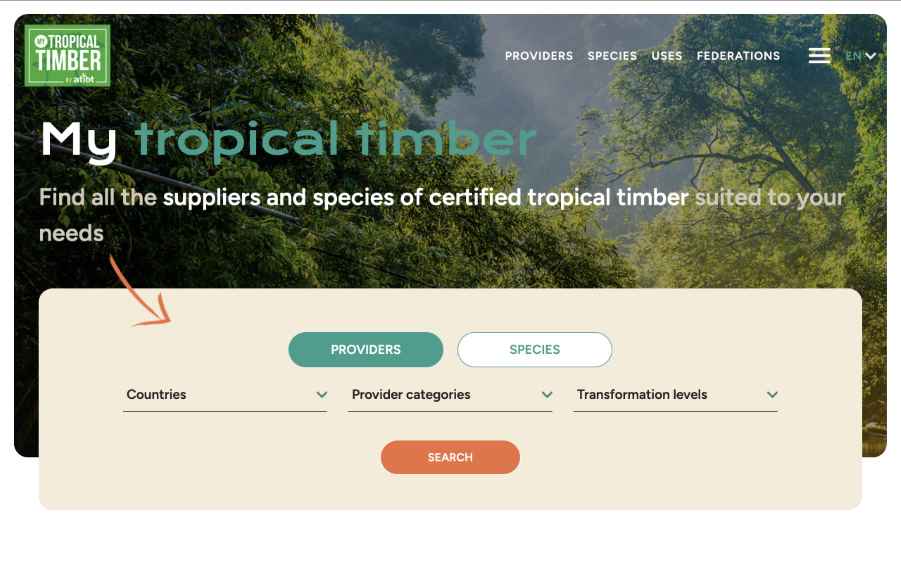
PARIS, France, July 2, 2026/APO Group/ –Launched by the International Technical Association for Tropical Timber (ATIBT) (www.ATIBT.org), the My Tropical Timber (www.MyTropicalTimber.org) digital platform is off to a particularly encouraging start. Designed to facilitate access to reliable information on tropical timber, identify suppliers, and promote a sustainable, legal, and responsible forestry and timber industry, it is already attracting professionals from several continents.

More than just a directory or technical database, My Tropical Timber was conceived as a true space for knowledge sharing and decision support, serving architects, traders, processors, manufacturers, specifiers, and buyers of tropical timber worldwide.

Encouraging results from the very first weeks

Initial usage data reflects growing interest in the platform and its increasing visibility among professionals.

Over the past 28 days, My Tropical Timber has recorded:

  • 585 active users, representing a 287% increase;
  • more than 2,500 page views;
  • 552 new visitors;
  • a 2,260% increase in visits from search engines;
  • an active audience across several continents, with a strong presence in Singapore, France, and Germany.

These results illustrate the need expressed by market stakeholders for a centralized, reliable, and accessible tool to better understand tropical timber species and companies committed to sustainable forest management.


A go-to platform for tropical timber professionals

My Tropical Timber provides professionals with a range of features designed to simplify their research and support informed decision-making:

  • identify tropical timber suppliers;
  • search for companies by location or certifications;
  • compare the technical characteristics of wood species;
  • discover lesser-known species and alternatives suited to their needs;
  • access reliable technical data on tropical wood species, particularly through the integration of Tropix reference sheets developed by CIRAD;
  • find FSC- and/or PEFC-PAFC-certified wood sourced from sustainably managed forests.

Available in French, English, Spanish, and Chinese, the platform is aimed at an international audience and helps promote the principle of “the right wood for the right use,” while encouraging better utilization of the diversity of tropical wood species.

For all company listing requests: https://apo-opa.co/4aAw6N4

A Launch Marked by Key Events

The official launch of My Tropical Timber was celebrated on May 10, 2025, during an international webinar held in French and English. This event provided an opportunity to showcase the platform’s features and the benefits it offers to industry professionals. Given the interest generated, ATIBT plans to organize additional sessions, notably in Spanish and Chinese, to support the platform’s expansion to new audiences.

The platform was also presented at the Carrefour International du Bois in Nantes, one of the industry’s leading European events. Extensive discussions with attending professionals confirmed the tool’s relevance and its potential to support companies’ technical and commercial decisions.

Outlook

Building on this momentum, ATIBT is continuing to develop My Tropical Timber with several objectives in mind:

  • regularly expanding the data available on the platform;
  • increasing the number of listed companies and suppliers;
  • developing new features that meet users’ needs;
  • enhancing its international visibility through webinars and professional events;
  • promoting greater awareness and more diverse use of tropical timber sourced from sustainably managed forests.

The goal is clear: to make My Tropical Timber an indispensable tool for all professionals seeking reliable information, promoting responsible practices, and ensuring the sustainable use of tropical forest resources.

A project made possible thanks to the support of its donors and partners

The development of My Tropical Timber is the result of a collective effort coordinated by ATIBT and made possible thanks to the support of its donors and financial partners: the Sustainable Tropical Timber Coalition (STTC), the European Timber Trade Federation (ETTF)the IDH Sustainable Trade Initiative, the “Support for the Private Forestry and Timber Sector” project (Cameroon Green Pact) funded by the EU; the ConForMa project funded by the FFEM; the Tropical Timber Trade Facility projectfunded by the German Federal Ministry for Economic Cooperation and Development (BMZ) and supported by the Deutsche Gesellschaft für Internationale Zusammenarbeit (GIZ) GmbH; and the Central African Forest Commission (COMIFAC).

CIRAD also contributes to the project by providing Tropix data and technical data sheets, which serve as an international reference for knowledge and the promotion of tropical tree species.

Their commitment to a sustainable, transparent, and responsible tropical forestry and timber sector has made it possible to turn this ambition into reality and to offer industry professionals an innovative, accessible, and internationally oriented tool.

Distributed by APO Group on behalf of Association Technique Internationale des Bois Tropicaux (ATIBT).


Business

Thailand Secures $43.6bn 1H 2026 Investment Surge as Big Tech Accelerates Southeast Asia AI Infrastructure Push

Published

on

Thailand

BANGKOK, THAILAND – Media OutReach Newswire – 23 July 2026 – Thailand’s foreign and domestic investment applications surged 37% year-on-year to hit $43.6 billion (approx. 1.47 trillion baht) across 1,299 projects in the first half of 2026, driven by a massive wave of capital flowing into digital infrastructure and artificial intelligence (AI) data centers.

The surge comes even as the global economy faces real headwinds — geopolitical tensions, energy price volatility, and the restructuring of global supply chains — with Thailand emerging as a preferred base for investment across Southeast Asia.
Leading the capital influx is the digital sector, which reached a commanding $33 billion (approx. 1.12 trillion baht) in investment applications.

“Thailand’s investment growth held steady even as the world economy faced real turbulence,” said Mr. Narit Therdsteerasukdi, Secretary General of the Thailand Board of Investment (BOI). “This reflects strong investor confidence in Thailand’s potential as a base for the industries of the future.”

This digital windfall was accompanied by robust capital commitments across other high-value industries. The electrical appliances and electronics sector drew $3.56 billion (approx. 120.2 billion baht) across 179 projects, while agriculture and food processing secured $1.82 billion (approx. 61.4 billion baht) across 131 projects. Additionally, logistics and high-value services attracted $1.19 billion (approx. 40.2 billion baht) across 170 projects, and the automotive sector drew $759.2 million (approx. 25.7 billion baht) across 122 projects.

Other notable sectors included mining, metals and materials at $603.5 million (approx. 20.4 billion baht) across 128 projects, chemicals and petrochemicals at $489.1 million (approx. 16.5 billion baht) across 110 projects, and machinery, automation and robotics at $387.4 million (approx. 13.1 billion baht) across 82 projects, signaling broad-based industrial modernization.

Foreign Direct Investment (FDI) applications drove the bulk of the growth, skyrocketing 80% year-on-year to $40.5 billion (approx. 1.37 trillion baht) across 877 projects.

Singapore emerged as the top source of FDI, filing applications worth $33.2 billion (approx. 1.12 trillion baht) across 158 projects. The United Kingdom followed as the second-largest investor at $1.40 billion (approx. 47.2 billion baht) across 11 projects, with China close behind at $1.35 billion (approx. 45.8 billion baht) across 321 projects, Taiwan at $1.12 billion (approx. 38.0 billion baht) across 47 projects, and Japan at $970.1 million (approx. 32.8 billion baht) across 123 projects.

These investments remain heavily concentrated in digital technology — including data centers, data hosting, and cloud services — followed by electronics and electrical appliances such as optical transceivers, printed circuit boards, hard disk drives, and data-center networking and cooling systems, along with humanoid robotics parts, automotive parts, food and beverage, and advanced materials. Geographically, Thailand’s industrialized Central region claimed the largest share of capital at $26.7 billion (approx. 903.8 billion baht) across 513 projects, followed by the Eastern region at $14.7 billion (approx. 495.7 billion baht). The Northeastern, Southern, Western, and Northern regions each drew smaller totals, but the North stood out with investment value up 93 percent year-on-year, led by energy and utilities, agriculture and food processing, and medical projects.

To support the massive power requirements of next-generation data centers, Thailand is seeing a parallel surge in renewable energy infrastructure. The energy and utilities sector recorded 221 projects worth $1.17 billion (approx. 39.5 billion baht) during the first half of the year, dominated by 198 clean energy initiatives—including solar, wind, biomass, and biogas power plants—valued at $779.7 million (approx. 26.4 billion baht).

Concurrently, manufacturers are investing in automation to remain competitive on the global stage. Under the BOI’s “Smart and Sustainable Industry” initiative, companies submitted 132 applications valued at $507.6 million (approx. 17.2 billion baht) to upgrade machinery, adopt digital technology, and integrate automation and robotics into production and services, raising productivity and moving Thai industry toward higher-value, sustainable manufacturing.

The projects approved by the BOI in the first half of 2026 will generate over 82,000 jobs for Thai workers and consume approximately $11.4 billion (approx. 386 billion baht) in domestic raw materials annually, accounting for 42 percent of the projects’ total raw material use, and is expected to boost the nation’s export capacity by more than $36.8 billion (approx. 1.24 trillion baht) per year.

The BOI approved investment promotion applications for 1,300 projects valued at $38.7 billion (approx. 1.31 trillion baht) in the first half of 2026.

“Investment value is not the only goal,” Mr. Narit said. “Real success means quality jobs, higher skills, and better income for Thai workers.” “It means real opportunities for Thai businesses inside the supply chain, and growth that reaches every region, not just a few. That is why we will keep pushing for actual investment to happen as quickly as possible through the Thailand FastPass mechanism, driving economic growth and letting Thai people share directly in the shift to the industries of the future.”
 

Continue Reading

Business

Cregis Expands into Africa, Bringing Enterprise Digital Asset Infrastructure to One of Crypto’s Fastest-Growing Regions

Published

on

Cregis

Cregis is bringing proven enterprise digital asset infrastructure to Africa at a time when the region is entering a more mature stage of digital asset development

HONG KONG, China, July 22, 2026/APO Group/ –Cregis (www.Cregis.com), an enterprise digital asset infrastructure platform, today announced its expansion into Africa, marking the company’s latest step in its global growth strategy. The move builds on Cregis’ expansion across Asia-Pacific, the Middle East and Latin America, as demand for enterprise digital asset infrastructure continues to grow worldwide.


Africa is one of the fastest-growing digital asset markets globally. According to Chainalysis, Sub-Saharan Africa received more than $205 billion in on-chain value between July 2024 and June 2025, up 52% year over year. Growth has been fueled by stablecoin payments, cross-border transactions and broader adoption of digital financial services. At the same time, regulatory frameworks are becoming clearer across several major markets, creating a stronger foundation for enterprise adoption.

For Cregis, those trends signal that the market is entering a new stage.

“We’ve seen this pattern before,” said Shawn Yan, Founder and CEO of Cregis. “Adoption comes first. As businesses grow, the focus shifts to operating digital assets securely, efficiently and in a way that can keep pace with evolving regulatory expectations. That’s where enterprise infrastructure becomes essential, and it’s the same transition we’re beginning to see across Africa.”

Cregis has already onboarded enterprise customers in the region and is expanding its local business development efforts across the continent, with particular attention to markets such as Nigeria, Kenya and South Africa, where digital asset ecosystems are among the most developed. The company is working with businesses including stablecoin payment providers, OTC desks, crypto exchanges and digital banks as demand for enterprise infrastructure continues to grow.

We’ve spent years helping businesses navigate periods of rapid market growth and regulatory change

To support those businesses, Cregis provides an integrated platform that helps enterprises manage the full lifecycle of digital assets, from wallet operations and fund flows to custody, governance and compliance. Its product portfolio includes Wallet-as-a-Service (WaaS) (https://apo-opa.co/4bC3Z0i), Payment Engine, (https://apo-opa.co/4warJRs) TronGas, and Crypto Off-Ramp, allowing businesses to scale digital asset operations without piecing together multiple infrastructure providers.

The expansion builds on nearly a decade of experience supporting enterprise customers across high-growth markets. In Asia-Pacific, Cregis worked with thousands of businesses in markets where digital asset adoption often outpaced regulation. That experience shaped the company’s approach to building infrastructure that balances operational flexibility with long-term compliance readiness.

The same strategy has since been validated in newer markets. In 2024, Cregis established Dubai as its Middle East hub, building a local team and expanding its compliance capabilities alongside regional growth. Today, the company supports more than 200 long-term enterprise deployments across the region and has built a strong presence in the brokerage, payments and fintech ecosystem. Earlier this year, Cregis expanded into Latin America and Europe, rapidly onboarding enterprise customers. In Europe, the company is also working with traditional financial institutions adopting digital asset infrastructure. Together, these experiences have given Cregis a proven framework for scaling across high-growth markets where enterprise demand and regulation are evolving together.

As more businesses adopt digital assets, infrastructure requirements are changing. Beyond secure wallet technology, enterprises increasingly need systems that bring together treasury operations, governance and compliance in one place. Cregis is designed to support businesses at different stages of growth, from fast-growing fintechs and crypto-native companies to institutions operating under stricter regulatory requirements, all on a unified platform. The company maintains a zero-security-incident record and holds internationally recognized certifications including SOC 2 Type I, SOC 2 Type II and ISO 27001.
Looking ahead, Cregis plans to deepen its presence across Africa through customer engagement, local partnerships and participation in leading industry events, including Blockchain Africa Conference and Blockfest Africa. The company sees Africa as an important long-term market as digital assets become more deeply integrated into financial services across the region.

“We’ve spent years helping businesses navigate periods of rapid market growth and regulatory change,” Yan said. “Africa is entering a similar phase. Our goal isn’t simply to bring technology into the region — it’s to help local businesses build digital asset operations that can grow with confidence over the next decade.”

Distributed by APO Group on behalf of Cregis Technology Limited.


Continue Reading

Energy

Viridien Brings Global Seismic Intelligence to Angola Oil & Gas (AOG) 2026 as Bronze Sponsor

Published

on

Etu Energias

Viridien is expanding advanced seismic coverage to support exploration decisions across Angola’s mature and frontier basins

LUANDA, Angola, July 22, 2026/APO Group/ –Global technology and data company Viridien is strengthening its presence in Angola through advanced seismic imaging, reprocessing and multi-client data programs designed to support the country’s next phase of exploration. The company has joined the Angola Oil & Gas (AOG) 2026 Conference and Exhibition, taking place September 9-10 with a pre-conference day on September 8, as a Bronze Sponsor, highlighting the growing role of subsurface intelligence as operators evaluate new acreage and pursue higher-confidence drilling targets.

Angola is accelerating exploration across offshore and onshore basins to replenish reserves and sustain crude production above one million barrels per day. This strategy is driving demand for higher-resolution seismic data that can help companies better understand complex geological structures, reduce uncertainty and identify prospective opportunities before committing capital to drilling.

Viridien maintains extensive 3D broadband seismic coverage across the Lower Congo and Kwanza basins, two of Angola’s most established offshore exploration regions. Its datasets support prospect generation and acreage evaluation across producing areas, as well as emerging deepwater and pre-salt plays.

A key component of Viridien’s Angolan portfolio is a regional 3D pre-stack depth migration dataset covering more than 7,200 km². The dataset delivers enhanced imaging of pre-salt and post-salt structures, where complex geology can make conventional interpretation challenging. These insights enable operators to refine geological models, prioritize prospects and better assess exploration opportunities.

Viridien expanded its portfolio in 2025 with the launch of a seismic reimaging program covering Block 22. The approximately 4,300 km² dataset is designed to support evaluation of underexplored structures along the Atlantic Hinge zone ahead of Angola’s upcoming licensing round. Final results are expected in the second half of 2026, providing prospective investors with updated subsurface insights as they assess potential participation in the block.

The program comes as Angola works to attract new entrants and encourage existing operators to increase exploration activity. Major developments in the Kwanza Basin, renewed interest in Namibe and Benguela, and upcoming licensing opportunities are expanding the range of acreage under evaluation. At the same time, operators are revisiting mature areas where improved seismic processing can reveal overlooked prospects close to existing infrastructure.

Viridien’s Bronze Sponsorship of AOG 2026 will connect the company with operators, regulators and investors assessing Angola’s next generation of exploration opportunities. By enabling more informed acreage evaluation and prospect selection, Viridien’s seismic technologies can help reduce exploration uncertainty and support the development of future drilling campaigns.

Distributed by APO Group on behalf of Energy Capital & Power.


Continue Reading

Trending