Connect with us

Business

Invictus Investment posts record results for 2025 as EBITDA increases nearly threefold, up 184% year-on-year

Published

on

EBITDA

Growth driven by strategic acquisitions, geographic expansion and product diversification

DUBAI, United Arab Emirates, February 20, 2026/APO Group/ —
  • EBITDA increased by an impressive 184% to AED 458.5 million in 2025, up from AED 161.4 million in 2024 – marking the company’s highest EBITDA performance since ADX listing in 2022
  • Revenue rose to an all-time high of AED 13.3 billion in 2025 from AED 8.9 billion in 2024
  • Net profit reached AED 227.6 million in 2025, up 37% year-on-year
  • Commodity transaction volumes increased by 73% year-on-year to 14.2 million metric tonnes
  • Total equity reached AED 1.4 billion in 2025, compared with AED 1.2 billion the previous year
  • The Board recommended a cash dividend of AED 40 million for 2025

Invictus Investment Company PLC (http://InvictusInvestment.ae/) (ADX: INVICTUS), a leading agro-food enterprise in the Middle East and Africa, today published its audited financial results for the 12 months ended December 31, 2025. The company delivered its strongest EBITDA performance since listing on ADX, soaring by a record 184% year-on-year to AED 458.5 million – an increase driven by the integration of recent acquisitions, enhanced supply chain capabilities and improved operational efficiencies across the business.

Revenue meanwhile grew by 49% to AED 13.3 billion in 2025, compared with AED 8.9 billion the previous year. This strong top-line performance helped underpin a 37% increase in net profit to AED 227.6 million, up from AED 166.3 million in 2024, while return on equity reached 18%, underscoring the company’s success in enhancing profitability while continuing to expand its operations across key markets. The Board has in turn recommended a cash dividend of AED 40 million.


Commodity transaction volumes also reached record levels, expanding 73% to 14.2 million metric tonnes in 2025, up from 8.2 million metric tonnes in 2024. At the same time, total equity increased 17% year-on-year to AED 1.4 billion in 2025 – a reflection of the company’s improving financial position as it continues to scale.


The year also saw a significant milestone in IHC’s increasing of its shareholding in Invictus Investment to 40% – highlighting continued confidence in the company’s strategic direction and growth trajectory. The deal involved the purchase of 196 million shares in a major block trade valued at 419.83 million. In parallel, Invictus Investment has progressed both equity and debt financing structures as part of a diversified and disciplined financial strategy. It most recently secured a financing package from the Mauritius Commercial Bank Limited (MCB) structured as an acquisition finance and revolving credit facility to fund growth across new African markets.

Our priorities are clear, and we have a strong pipeline of investment opportunities in midstream and downstream assets across our core markets


The company continued to deliver on its growth strategy in 2025 through a number of strategic investments. This included the acquisition of Merec Industries, Mozambique’s largest flour milling company, and the integration of its operations, as well as an agreement to acquire a 65.25% stake in Angata Limitada, a fertiliser blending company based in Angola, with the transaction being completed in January 2026. These developments, along with the operational consolidation of Moroccan agro-trading leader Graderco, in which Invictus Investment acquired a 60% stake in 2024, have further enhanced the company’s sourcing and processing capabilities across Africa. The Board has also approved the issuance of a binding offer to acquire a majority shareholding interest in an agro-food manufacturing company with its primary business in North Africa.


In addition, Invictus Investment entered 10 new markets during the year, including Iraq, Lithuania, Cameroon, Ghana, Madagascar, Liberia, Mauritania, Nigeria, South Africa and Zimbabwe, bringing its global presence to 65 countries. This was supported by strong organic growth across core markets, particularly in Africa, where demand for staple agro-food commodities continues to be strong. The company’s product portfolio was also expanded to more than 30 categories to meet the evolving needs of its global client base.


Commenting on the results, Amir Daoud Abdellatif, CEO of Invictus Investment, said: “2025 was a defining year for Invictus Investment as we delivered significant growth across our key metrics while making strategic acquisitions that have fundamentally strengthened our business. The biggest vote of confidence for us during the year came with IHC’s increasing of its stake in the company to 40% – a major development that both validates our growth journey to date and sets the tone for the strategic trajectory before us. Our priorities are clear, and we have a strong pipeline of investment opportunities in midstream and downstream assets across our core markets. All of this places us in a strong position to continue expanding the business and delivering added value for our shareholders as we work towards our goal of becoming a fully integrated agro-food enterprise and reaching AED 25 billion in revenue by 2028.”


In terms of its sustainability commitments, Invictus Investment continues to build upon the progress set out in the 2024 ESG report published in May 2025 across three core pillars: Environmental Stewardship; Social Empowerment; and Ethical Governance and Partnerships – priorities that are only on track to become more embedded across the business, including within the company’s newly acquired entities.


Looking ahead, Invictus Investment remains focused on furthering its long-term growth strategy through targeted investments in key African markets, with an emphasis on North Africa and coastal hubs, while advancing its goal of becoming a fully integrated agro-food enterprise that contributes to food security in the region.


*Please refer to https://apo-opa.co/3MADzmw for more information.

Distributed by APO Group on behalf of Invictus Investment Company PLC.


Energy

NOV Joins African Energy Week (AEW) 2026 as Gold Sponsor Amid Africa’s Offshore Expansion Push

Published

on

NOV’s Gold Sponsorship at African Energy Week 2026 reflects its ambitions to scale offshore oilfield services across the continent

CAPE TOWN, South Africa, May 26, 2026/APO Group/ –Global energy services and oilfield equipment provider NOV has joined the African Energy Week (AEW) (www.AECWeek.com) 2026 Conference and Exhibition as a Gold Sponsor, reinforcing the company’s commitment to supporting Africa’s upstream growth, offshore expansion and energy infrastructure development. NOV’s participation comes as African oil and gas producers accelerate drilling campaigns and fast-track project execution to strengthen energy security, industrialization and export revenues.


As demand for advanced oilfield technologies and drilling services grows across the continent, NOV is positioning itself at the forefront of Africa’s next phase of hydrocarbon development. The company’s portfolio spans drilling automation, digital well optimization, offshore rig systems, production technologies and FPSO-related equipment, placing it among the leading technology providers supporting increasingly complex African oil and gas projects.

NOV’s participation at AEW 2026 is particularly timely as mature producers such as Angola, Nigeria, Algeria, Libya, Gabon and Equatorial Guinea intensify drilling activity to sustain production and unlock additional reserves. At the same time, frontier markets, including Namibia, Mozambique and Sierra Leone, are advancing new offshore exploration campaigns that require advanced deepwater technologies and efficient project execution capabilities.

Africa’s economic stability will depend heavily on its ability to drill more wells, develop infrastructure faster and commercialize its oil and gas resources efficiently

In Egypt, NOV recently demonstrated the impact of its digital drilling technologies through the deployment of its Drilling Beliefs & Analytics solution in the Western Desert. By leveraging remote operations and real-time monitoring of machinery and well conditions, the operator achieved the longest bit run in the field’s history while improving drilling efficiency and reducing operational costs. The project eliminated the need for multiple in-person site visits, saving approximately $75,000, highlighting how automation is increasingly reshaping Africa’s upstream sector.

NOV’s NOVOS automation platform and Kaizen AI drilling optimization systems are expected to play an increasingly important role as African operators expand offshore drilling programs where efficiency, safety and reduced non-productive time have become critical priorities.

Beyond drilling optimization, NOV continues to strengthen its role in Africa’s gas monetization drive. In 2024, the company secured multiple orders for advanced gas processing and water treatment equipment packages for floating production storage and offloading units destined for operations in West Africa. The contracts reinforce NOV’s growing participation in offshore gas infrastructure projects supporting regional energy resilience, LNG expansion and export capacity growth.

“Africa’s economic stability will depend heavily on its ability to drill more wells, develop infrastructure faster and commercialize its oil and gas resources efficiently,” stated NJ Ayuk, Executive Chairman of the African Energy Chamber. “The digital transformation taking place across the global energy industry cannot be ignored, and NOV is bringing advanced innovation into African oil and gas operations to simplify processes, improve safety and accelerate project delivery.”

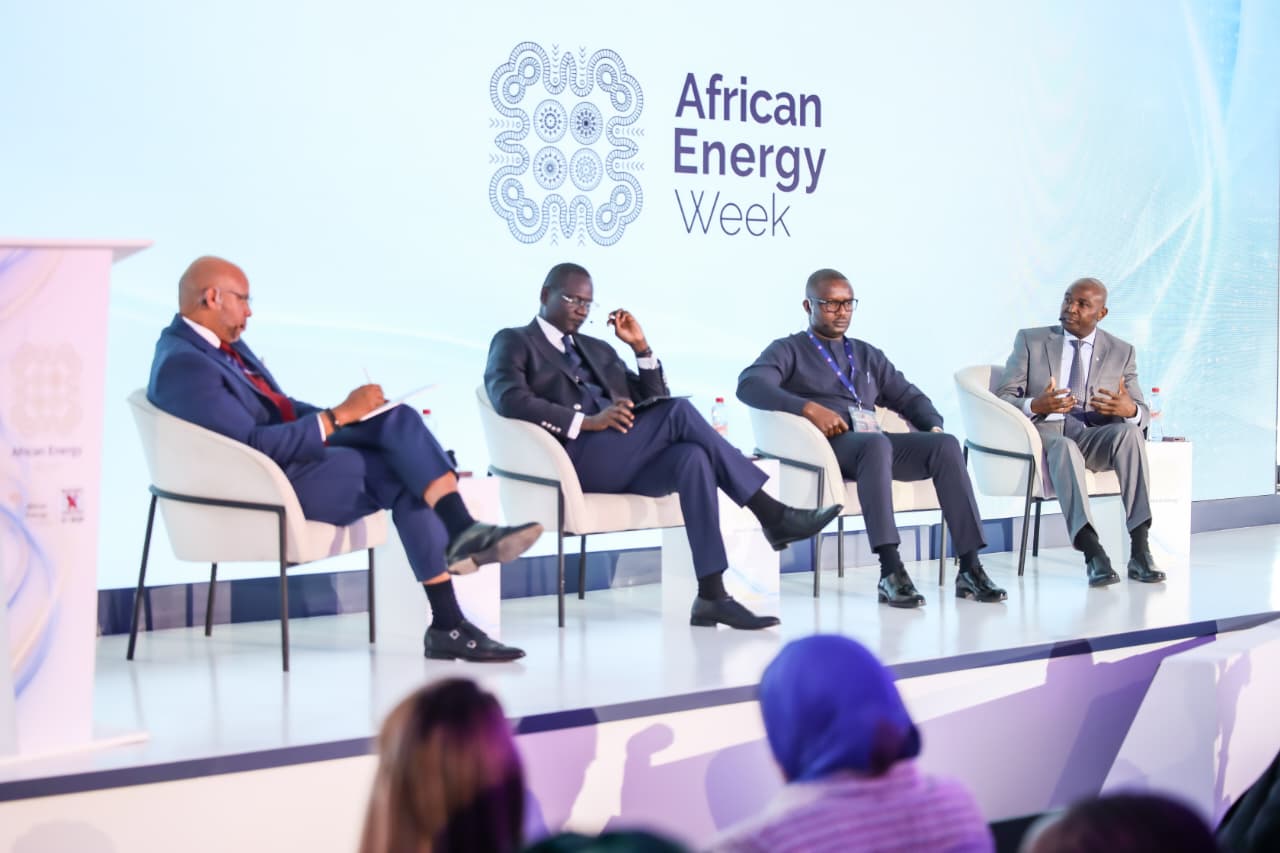
NOV’s participation at AEW 2026 reflects its broader ambitions to scale its services across the continent. As the largest energy gathering in Africa, the event convenes operators, investors, policymakers and service providers to discuss the future of the continent’s energy sector.


Distributed by APO Group on behalf of African Energy Week (AEW).


Continue Reading

Business

African Capital Looks to South America’s Next Wave of Energy Development

Published

on

Well-capitalized African investors are beginning to target Brazil’s pre-salt and Argentina’s infrastructure buildout as part of a broader push to diversify beyond domestic assets

BUENOS AIRES, Argentina, May 26, 2026/APO Group/ –Africa’s energy sector is entering a different phase of capital formation. For the past two decades, the focus has been on attracting international investment into the continent’s upstream oil and gas projects. Now, a growing base of African sovereign wealth funds, state-backed vehicles and independent operators have both the balance sheet strength and the strategic mandate to look beyond domestic opportunities.


This shift is already beginning to translate into outward-looking investment strategies, with South America emerging as a key target market. Africa’s oil and gas production is expected to reach 11.4 million barrels of oil equivalent per day in 2026, with upstream capital expenditure at $41 billion. At the same time, asset sales and farm-downs are creating entry points for new players, while transactions such as Vitol’s $1.65 billion acquisition of Eni assets in Ivory Coast and the Republic of Congo reflect a broader shift toward independents and trading houses taking a more prominent role.


As African players consolidate positions at home, attention is increasingly turning outward. South America offers large-scale, resource-rich opportunities with increasingly well-defined development pathways. Brazil’s pre-salt continues to deliver some of the most competitive deepwater barrels globally, while Argentina’s Vaca Muerta is moving into a new phase focused on infrastructure, LNG exports and long-term monetization. Beyond upstream, Brazil’s offshore gas infrastructure, FPSO-driven developments and subsea supply chains are creating opportunities across services and midstream segments, while Argentina’s LNG export ambitions, pipeline expansions and gas processing infrastructure are opening the door to long-term capital deployment.


The opportunity, however, is not one-directional. African investors are entering the market with relevant experience. Exposure to deepwater developments, LNG monetization and complex project structures is increasingly common among state-backed funds and their partners. This is particularly relevant in areas such as floating LNG and gas commercialization, where Africa has already demonstrated operational capability in markets like Congo, Nigeria, Cameroon and Mozambique. That expertise is directly transferable to South America’s next phase of gas and infrastructure development.


The Atlantic has historically been treated as a barrier between these two regions

A South Atlantic Energy Corridor is beginning to take shape, driven by capital flows, shared investment priorities and growing institutional ties. Africa and South America are often seen as competing for the same capital, technology and market access, but there is increasing scope for coordination. African capital is seeking diversification and scale, while South America is advancing projects that require long-term investment and experienced partners.


Institutional alignment will be critical to realizing this potential, and the groundwork is already in place. The African Energy Chamber (AEC) has developed bilateral engagement frameworks linking Latin American stakeholders with African governments, national oil companies and private sector players. In Venezuela, this has been formalized through cooperation with the Ministry of Hydrocarbons and PDVSA across upstream, gas and investment promotion, while similar structures have been advanced with Brazil. The objective is to move beyond ad hoc engagement toward structured South-South energy cooperation, leveraging the Chamber’s network across more than 40 African countries to create direct pathways for investment, partnerships and government-to-government collaboration.


“The Atlantic has historically been treated as a barrier between these two regions,” said NJ Ayuk, AEC Executive Chairman. “The reality is that it is a corridor – and the opportunity is to build the institutional and commercial relationships that allow capital, technology and expertise to move in both directions.”


There is also a broader strategic dimension. Both Africa and South America have taken clear positions on energy sovereignty, local content and the right to develop hydrocarbon resources in line with national priorities. Aligning those positions at a multilateral level – from the G20 to the International Energy Forum – strengthens their collective influence at a time when global energy policy remains contested.


The capital required to develop the next generation of energy projects will not come from traditional sources alone. As South America advances large-scale developments across deepwater, LNG and infrastructure, the opportunity lies in engaging that capital early, before investment relationships are locked in elsewhere.


Distributed by APO Group on behalf of African Energy Chamber.

Continue Reading

Energy

Republic of Congo’s Newly-Appointed Hydrocarbons Minister Stev Simplice Onanga to Speak at African Energy Week (AEW) 2026 Amid Major Gas Expansion Push

Published

on

As the Republic of Congo accelerates LNG exports, offshore development and local content reforms, Hydrocarbons Minister Stev Simplice Onanga will join African Energy Week 2026 to showcase the country’s next phase of energy growth

CAPE TOWN, South Africa, May 26, 2026/APO Group/ –The Republic of Congo is set to reinforce its position as one of Africa’s fastest-growing gas exporters at African Energy Week (AEW) 2026, with newly-appointed Hydrocarbons Minister Stev Simplice Onanga confirmed to speak at the event in Cape Town. His participation comes as Congo advances a broad investment drive centered on LNG expansion, upstream development and accelerated deal-making across its offshore sector.


Recently appointed to lead the Ministry of Hydrocarbons, Minister Onanga has already signaled a strong focus on fast-tracking projects, strengthening local content participation and positioning the Republic of Congo as a competitive regional gas hub. His agenda aligns with a period of rapid transformation in the country’s hydrocarbons sector, driven by major offshore gas developments and renewed investor momentum.


At the center of this growth is Eni’s Congo LNG project, which entered a major new phase in early 2026 with the launch of exports from the Nguya FLNG facility offshore Pointe-Noire. The startup of the second floating LNG unit has increased Congo’s liquefaction capacity to approximately 3 million tons per year, building on the earlier Tango FLNG development and reinforcing the country’s emergence as a strategic LNG exporter to international markets. Drawing gas from the offshore Nené and Litchendjili fields in the Marine XII permit, the project has become one of Africa’s most significant recent gas monetization successes and a cornerstone of Congo’s broader diversification strategy.

Congo is demonstrating how African producers can leverage gas resources to drive industrial growth, energy security and long-term economic value


Momentum is also building across the country’s upstream sector. TotalEnergies continues to expand its offshore footprint through exploration activity tied to the Nzombo permit, while Perenco is advancing redevelopment work at the Kombi-Likalala-Libondo II field to sustain production and improve gas recovery. Alongside these developments, Congo has been advancing regulatory reforms aimed at attracting new capital into both oil and gas projects, including efforts to strengthen the legal framework for gas development and support future licensing activity.


As global demand for diversified gas supply continues to rise, Congo is increasingly positioning natural gas not only as an export driver, but also as a catalyst for domestic industrialization, power generation and long-term economic growth. The country’s expanding FLNG infrastructure, combined with its established offshore production base and strategic Atlantic coastline, has elevated its profile within Africa’s evolving LNG landscape and strengthened its role in supporting energy security for both regional and international markets.


“Africa is entering a new era of gas development, and the Republic of Congo is emerging as one of the continent’s most important LNG and offshore growth stories,” said NJ Ayuk, Executive Chairman of the African Energy Chamber. “With major FLNG expansion, upstream investment and a renewed focus on local content and deal execution, Congo is demonstrating how African producers can leverage gas resources to drive industrial growth, energy security and long-term economic value.”

Distributed by APO Group on behalf of African Energy Chamber.

Continue Reading

Trending

Exit mobile version