Connect with us
Anglostratits

Business

Industry Executives Insist environmental, social, and governance (ESG) is Not Just Decarbonization or Renewables

Published

on

African Energy Week

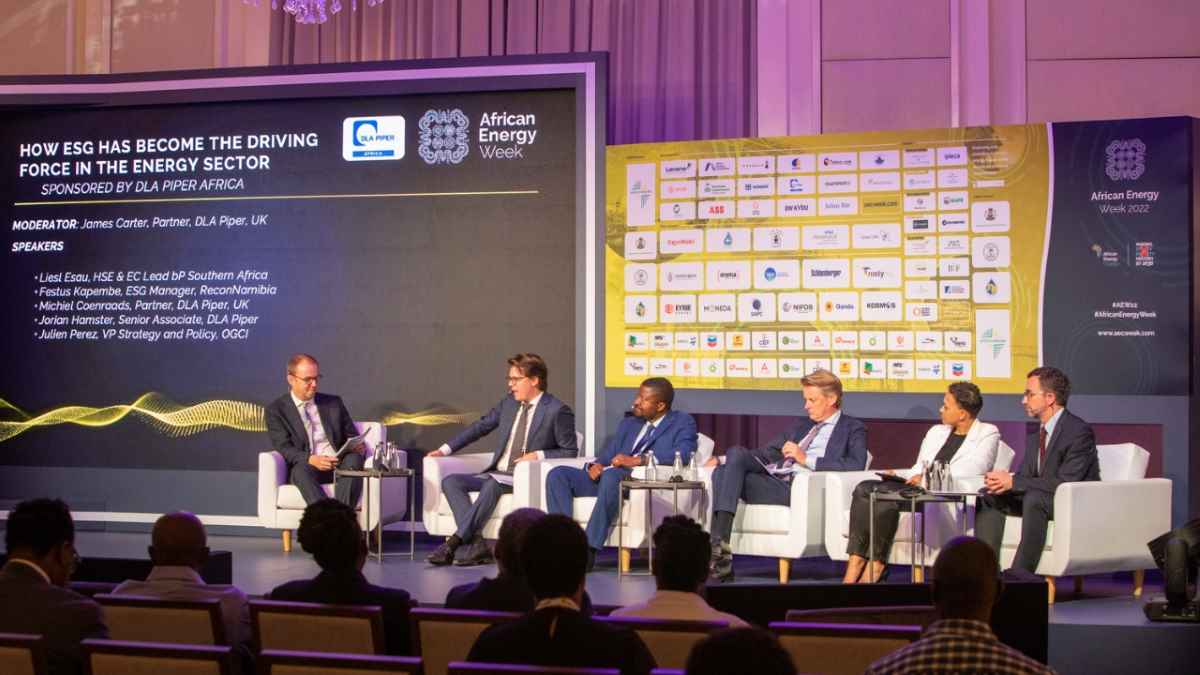
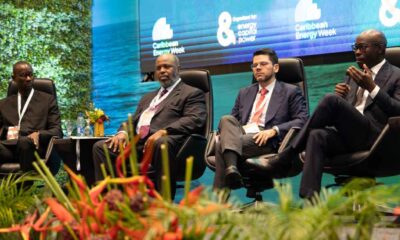
A panel discussion sponsored by Schlumberger at AEW 2022 highlighted how African energy stakeholders are increasingly incorporating ESG in business operations and how ESG is affecting industry trends

JOHANNESBURG, South Africa, October 20, 2022/APO Group/ — 

During a panel discussion held at the African Energy Week (AEW) 2022 (https://AECWeek.com/) conference, energy industry executives have insisted that environmental, social, and governance (ESG) does not imply decarbonization and the use of renewable energy only, but is essential for the sustainable development and exploitation of Africa’s vast hydrocarbon resources to address energy security, socioeconomic development goals and environmental sustainability.

Entitled; ‘How ESG has become the driving force in the energy sector,’ the panel discussion was moderated by James Carter, Partner at DLA Piper, UK and included Jorian Hamster, Senior Associate, DLA Piper; Festus Kapembe, ESG Manager, ReconAfrica; Michiel Coenraads, Partner, DLA Piper UK; Julien Perez, VP Strategy and Policy, OGCI and Liesl Esau, HSE & EC Lead, bp Southern Africa, as speakers.

According to Hamster, “ESG is not just decarbonization, it is not just renewables. By only focusing on decarbonization, we are missing the meaning, importance and benefits of ESG in maximizing energy developments, ensuring energy security and in transferring the benefits associated with the exploitation of resources to the local communities and economies. Today, we are seeing global investors just signing deals when they see that it is renewables and stepping back when it is hydrocarbons, yet even in massive renewables developments ESG is not being prioritized.”

Speaking in regard to how ESG is shaping energy market trends, Coenraads stated “What we are seeing is a huge change of capital from fossils to renewables. Focus on ESG projects is about $600 billion and on non ESG at $400 billion. Banks are moving away from investments in carbon chains and many internationals have committed to net zero meaning it is difficult for majors to finance infrastructure to get oil out of the ground because they need to decarbonize hence they are now diversifying assets. Shell for instance has been told to reduce emissions by 45% by 2030.”

Africa has a lot to contribute to addressing global energy transition but needs to be listened to

Commenting on the increasing exits by majors across some of Africa’s hydrocarbon-rich basins in prioritizing ESG targets set in home countries, Hamster added that “Risks does not mean you have to diversify, you have to work together with all parties involved including governments and develop mechanisms to work around maximizing both ESG and energy developments.”

Perez added that with companies prioritizing ESG, there will be a continued increase in renewables investments and in electrification but if investments in gas and new baseload power capacity additions stops, it will cause a huge crunch on the energy system. He said “We should continue investing in fossil fuels and at the same time use new technologies such as drones, data analytics and satellites to track the environmental impacts of these projects. We need to develop and employ innovative decarbonization mechanisms and strategies in our oil and gas projects. World players need to be guided on what ESG means.”

The panel also explored what Africa as a continent needs to get out of the upcoming COP 27 summit in Egypt. Hamster said “There is something circular about these COP summits especially around climate financing and the commitments keep on being not delivered. There needs to be practical solutions and implementation not just promises. African voice in ESG, the energy transition and environmental issues needs to be heard and included in global frameworks.”

According to Kapembe, “In addition to just maximizing commitment and budgets in environmental and social spending, African companies and leaders need to raise issues around what is affecting the African population at COP 27. In as much as we can explore renewables, we need to make use of the resources available in vast quantities in the continent. The African team needs to have a united voice from the African background and have commitments that can help us sustain developments that will address both the environmental and socioeconomic development goals. Africa has a lot to contribute to addressing global energy transition but needs to be listened to.”

Perez added that “It seems Europe and the west are talking to each other and not listening to the whole world. If we do not resolve the issue of ESG, climate change and energy poverty together, we are all going to lose. In terms of ESG, Africa has a lot to benefit in regard to accelerating renewables investments and developments as well as the implementation of smart technologies. For climate activists, the fossil fuel industry is not a threat and for the fossil fuel sector, ESG is not a challenge but a business opportunity.”

Esau highlighted the need for the implementation of campaigns aimed at increasing ESG awareness across the entire energy value chain from policymakers, energy producers, retailers, transporters and consumers.

Distributed by APO Group on behalf of African Energy Week (AEW).

Energy

High-Level Minister Roundup to Headline African Energy Week 2026

Published

on

African Energy Chamber

African Energy Week 2026 will convene ministers from Algeria, Ghana, Senegal, Zambia and Niger to spotlight oil, gas expansion, reforms and investment opportunities continentwide

CAPE TOWN, South Africa, March 13, 2026/APO Group/ –A high-level ministerial roundup will take center stage at this year’s African Energy Week (AEW) 2026 – taking place in Cape Town from 12–16 October –, convening some of the continent’s most influential energy leaders at a defining moment for Africa’s oil, gas and power sectors. As hydrocarbon expansion converges with accelerating energy transition strategies, the gathering is set to spotlight real-time project execution, regulatory reform and cross-border infrastructure that are actively reshaping Africa’s energy future.


Confirmed ministers to date include Algeria’s Minister of Energy and Renewable Energies Mourad Adjal, Ghana’s Minister for Energy and Green Transition Dr. John Abdulai Jinapor, Senegal’s Minister of Energy, Petroleum and Mines Birame Soulèye Diop, Zambia’s Minister of Energy Makozo Chikote and Niger’s Minster of Petroleum Hamadou Tinni.


Fresh from a March OPEC+ decision to lift output to 977,000 barrels of oil per day (bpd), Algeria enters AEW 2026 amid a $60 billion sector transformation. The country is also advancing a 500-well exploration drive and accelerating its 1.48 GW “Project of the Century” solar rollout. Gas exports to Europe remains central to the country, supported by hydrogen corridor planning and refinery expansion aimed at boosting capacity to 50 million tons by 2029.


Following license extension for Jubilee and TEN to 2040 and the late-2025 restart of the Tema Oil Refinery, Ghana is pushing a $3.5 billion upstream reinvestment plan while settling $500 million in gas arrears. A 1,200 MW state thermal plant and expanded gas processing at Atuabo anchor its gas-to-power shift, alongside a renewed upstream push in the Voltaian Basin.

The participation of these distinguished ministers underscores the scale of opportunity unfolding across Africa’s energy landscape and the urgency of aligning policy with capital


Senegal’s delegation comes on the back of strong production momentum, with the Sangomar oil field delivering 36.1 million barrels in 2025, outperforming forecasts, while the Greater Tortue Ahmeyim LNG development ramped up to 2.9 million tons per annum following first gas. Dakar is now prioritizing domestic gas through refinery upgrades at the SAR refinery and preparations for Sangomar Phase 2 to push output beyond 100,000 bpd.


Zambia is redefining its power mix after drought-induced hydro shortfalls. New solar capacity – including the 200 MW Chisamba expansion and 136 MW Itimpi Phase 2 – is part of a broader 2,500 MW diversification drive. Cabinet has approved major regional fuel pipelines, while the Energy Single Licensing System fast-tracks approvals. Lusaka targets 10 GW generation by 2030, with solar and wind rising to one-third of supply.

Niger’s presence reflects its emergence as a serious oil exporter, with the fully operational 1,950-km Niger-Benin pipeline now moving up to 90,000 bpd to international markets. Alongside uranium expansion and renewed cooperation with Algeria on upstream assets, Niamey is advancing digital oversight reforms and reinforcing energy sovereignty amid evolving geopolitical dynamics.


“The participation of these distinguished ministers underscores the scale of opportunity unfolding across Africa’s energy landscape and the urgency of aligning policy with capital,” says NJ Ayuk, Executive Chairman, African Energy Chamber. “Their leadership reflects a continent moving decisively from strategy to execution, creating a platform where investors can engage directly with the policymakers shaping Africa’s next wave of oil, gas and energy growth.”


At AEW 2026, this ministerial cohort will be well-positioned to offer investors direct insight into Africa’s most dynamic energy markets – where new barrels, new pipelines and new megawatts are reshaping regional growth trajectories in real time.

Distributed by APO Group on behalf of African Energy Chamber.

Continue Reading

Business

Enlit Africa 2026 Programme: 280+ speakers, African nuclear 2.0, Bruce Whitfield Business Breakfast

Published

on

Enlit Africa

The event, taking place 19-21 May 2026 at the Cape Town International Convention Centre, expects 7,200+ attendees and 250+ exhibitors, making it Africa’s largest gathering of energy and water professionals

CAPE TOWN, South Africa, March 12, 2026/APO Group/ –Enlit Africa (https://apo-opa.co/4cEX08g) has released its full 2026 conference programme, featuring 280+ speakers across 8 specialised tracks including a new African Nuclear 2.0 session covering Koeberg’s 20-year life extension and Ghana’s nuclear vendor selection process.


The event, taking place 19-21 May 2026 at the Cape Town International Convention Centre, expects 7,200+ attendees and 250+ exhibitors, making it Africa’s largest gathering of energy and water professionals.

Award-winning business journalist and best-selling author Bruce Whitfield will deliver the opening address at the Project & Investment Network Business Breakfast on 19 May, kicking off three days of strategic sessions, deal-making platforms, and technical masterclasses.

New programme content includes:

African Nuclear 2.0 – A dedicated session examining the transition from planning to execution, featuring:

Koeberg Nuclear Power Station’s successful 20-year life extension (Units 1 and 2 now licensed until 2044/2045)

Ghana’s progression to Phase 3 of its nuclear programme, evaluating US, Chinese, and Russian technology bids

West African Power Pool‘s 10 GW regional nuclear capacity target

Small Modular Reactor (SMR) deployment readiness across African grids

Independent Transmission Projects (ITP) – A new session exploring how private investment is unlocking Africa’s transmission bottleneck, featuring global case studies from India’s PowerGrid and lessons for scaling grid capacity across the continent.

Generation Masterclasses – Five interactive roundtables on gas-to-power, nuclear, hydro power, clean coal, and hydrogen.

AI in Africa’s Power Grid – Examining practical deployment realities, real-time analytics, and predictive maintenance applications already in operation across African utilities.

Conference sessions and technical hub sessions on the expo floor are CPD-accredited by the South African Institute of Electrical Engineers (SAIEE) and the South African Institution of Civil Engineering (SAICE).

Co-located platforms:

Water Security Africa features country playbooks from Namibia (55-year potable reuse programme), Uganda (NRW reduction from 42% to 32%), Cape Town (Day Zero recovery strategies), and sector-specific stewardship sessions with Harmony Gold, Heineken, Mediclinic, and Growthpoint Properties.

Project & Investment Network (P&IN), part of the new Level 2 Executive Experience, connects project developers, investors, African utility CEOs, and DFIs through structured matchmaking, ministerial dialogues, and project briefings. Over the past two years, P&IN has facilitated $3 billion in project pitches.

Utility CEO Forum brings together 35+ confirmed utility CEOs under Chatham House Rule for candid, off-the-record strategic discussions on unbundling, prosumer management, and financial sustainability.

Municipal Forum addresses South African municipalities’ distribution, metering, and revenue challenges, including sessions on NRW management, tariff reform, Cost of Supply studies, and electrifying informal settlements.

Technical Hub sessions on the exhibition floor offer free, CPD-accredited training across Power, Renewable Energy & Storage, and Water tracks, with confirmed speakers from Eskom, ENGIE SA, ACTOM, National Transmission Company South Africa (NTCSA), RenEnergy, and Matla Energy.

Site visits on 22 May include Koeberg Nuclear Power Station and the V&A Waterfront desalination plant.

Pass options:
Free expo pass registration: https://apo-opa.co/4bl2bYu

Free expo passes provide access to 250+ exhibitors and CPD-accredited Technical Hub sessions.

Delegate Pass:
Early bird registration closes 3 April 2026. Delegate passes start at R15,100 (Silver), with P&IN Executive passes at R32,000 including access to the Bruce Whitfield breakfast, Level 2 executive lounge, and investor matchmaking.

Download the full programme: https://apo-opa.co/3NwCble

Register: https://apo-opa.co/4cEX08g

Distributed by APO Group on behalf of VUKA Group.

Continue Reading

Business

Binance Secures Second Major Legal Victory in U.S. Court Under Anti-Terrorism Act in Two Weeks

Published

on

Binance

US Federal Court in Alabama Dismisses All Claims Against Binance in Latest Lawsuit Victory

JOHANNESBURG, South Africa, March 12, 2026/APO Group/ –Binance (www.Binance.com), the world’s largest cryptocurrency exchange, announced today that a U.S. federal court in Alabama has dismissed all claims against the company in a lawsuit alleging violations of the Anti-Terrorism Act (ATA). This marks Binance’s second major legal victory in an  ATA matter within one week, following their victory in the Southern District of New York.

A Full and Complete Legal Victory

In a detailed 19-page ruling, the Court found the plaintiffs’ complaint to be legally and factually deficient. The court’s decision to dismiss every claim across the board represents a decisive legal victory for Binance.

Sanctions compliance and terrorism financing are serious matters of law – they require evidence, legal rigour, and due process

The judge described the filing as a “shotgun pleading.” The complaint failed to clearly specify the claims and improperly grouped all defendants together without distinguishing individual conduct or liability. The ruling also emphasized that the plaintiffs did not meet the basic pleading standard to provide a “short and plain statement” of their claims.

Following the ruling, the court granted the plaintiffs until April 10, 2026, to file an amended complaint addressing the deficiencies identified. However, the judge warned that failure to adequately address these issues would result in dismissal of the entire case.

Building on Momentum and Upholding Legal Integrity

“This decision reinforces our unwavering commitment to protecting Binance and our community from unsubstantiated and bad-faith lawsuits,” shared Eleanor Hughes, General Counsel at Binance. “Sanctions compliance and terrorism financing are serious matters of law – they require evidence, legal rigour, and due process. Courts have now examined these claims on two separate occasions and found them to be without merit. These outcomes speak for themselves. We will not tolerate attempts to misuse the legal system to target our industry, and we remain as committed as ever to transparency, security, and lawful conduct in everything we do”.

This latest decision follows closely on the heels of Binance’s comprehensive victory in New York (https://apo-opa.co/46Xg0ev), where the Court similarly rejected allegations that the company assisted, participated in, or conspired with terrorists. Together, these rulings reflect Binance’s strong resolve to protect its platform and community.

Binance has consistently invested in industry-leading compliance infrastructure, regulatory engagement, and legal governance. The company will continue to vigorously defend itself against any attempts to bring unfounded claims or misrepresent its operations.

Distributed by APO Group on behalf of Binance.

Continue Reading

Trending