Connect with us

Business

How a Regional Company Beat a Global Competitor to a USD 170 Million Kenyan Contract (By Sharon Cheramboss)

Published

on

The proposal wasn’t better and the price wasn’t lower; the difference had been building before the tender was published

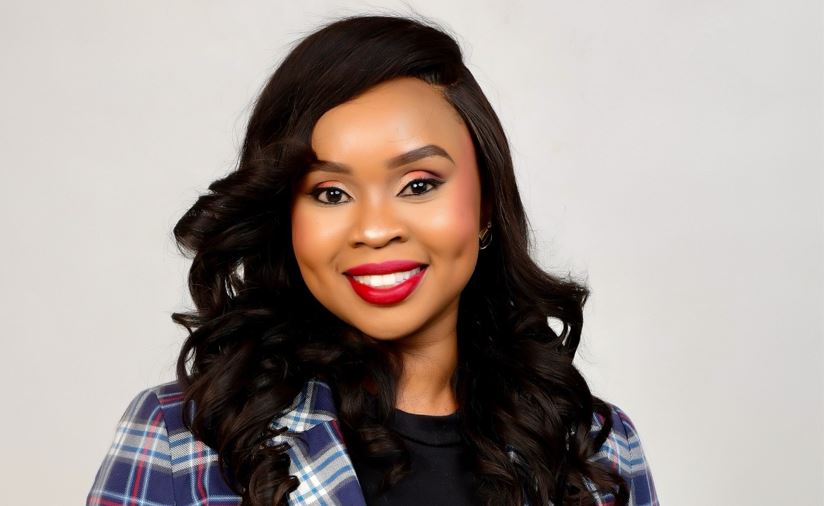
JOHANNESBURG, South Africa, August 19, 2026/APO Group/ —By Sharon Cheramboss, Senior Growth Director, APO Group (https://APO-opa.com).

In 2014, I watched a global technology company lose a government digital infrastructure tender in Kenya. The project was valued at about USD 170 million and attracted strong international and regional competitors. On paper, the global company looked like the obvious winner. It had delivered similar initiatives across multiple continents, had deep technical expertise, substantial implementation capacity, and an international reputation.

The contract went to a regional technology company with a fraction of the global company’s footprint.

My first assumption was that the technical evaluation or commercial proposal must have favoured the regional bidder. But nothing that emerged afterwards supported that. There was no indication the proposal had been weaker, no suggestion the pricing was uncompetitive, and no flaw in the procurement process to point to.

In the weeks that followed, I spoke with people involved in East Africa’s tech ecosystem and looked more closely at the two organisations’ presence in the market. A pattern emerged. The regional company had spent years becoming part of the market it wanted to serve. Its executives regularly shared perspectives on issues decision-makers faced, from digital identity and data governance to the practical realities of implementing public sector technology in East Africa. They spoke at regional forums alongside regulators, development finance institutions, and government agencies. They wrote for The EastAfrican and Business Daily, which policymakers and senior executives read.

By the time procurement began, it was no longer simply another bidder. It had become recognised as an organisation that understood how the sector worked.

What the Questions Reveal

Over more than 14 years working with technology, telecommunications, and innovation organisations across East Africa, I’ve seen the same pattern emerge repeatedly. Companies often assume opportunities are won or lost on pricing, product features, or proposal quality. Those factors matter, but they rarely explain why one organisation consistently wins while another, equally capable, falls short.

Over time, I noticed an early indicator.

Long before organisations submit a proposal or begin serious commercial discussions, they reveal how prepared they are by the way they talk about growth. So, I listen for how they speak. The questions they ask in those early conversations reveal more than leaders realise. Some want to know how quickly they can generate leads, who the largest customers are, or how soon they can begin selling.

Others ask different questions.

Who influences this sector? Which ministries, regulators, or industry associations shape decisions? Which publications do policymakers and business leaders read? Which conferences matter? Which conversations should we be contributing to before we have something to sell?

Those questions tell me an organisation is preparing to participate in a market, not transact in it.

Organisations looking to grow into new markets must understand the market, identify the stakeholders who matter, and build credibility with them over time

It becomes clearer still when they describe their strategy.

If they simply say they are expanding into “Africa” or even “Sub-Saharan Africa”, it usually tells me their presence is organisational rather than commercial. They may have established a regional office, but they haven’t yet developed a market position.

The conversation changes when leaders begin naming countries, sectors, institutions, publications, and stakeholders. They understand that credibility is built market by market. What builds trust in Nairobi isn’t necessarily what builds confidence in Dakar. That’s exactly what the regional company had spent years doing before the tender was ever announced. I’ve also seen the reverse play out.

A private education company with a technology-enabled model for reaching underserved communities entered several African markets, believing its global reputation would open doors.  It had a proven model, technology built for the market, and funding behind it. What it never built was local visibility. Its coverage, interviews, and public statements were aimed at donors and international financiers. The story it told was about global scale and capital, not local relevance. Its own impact report, the document that should have built confidence in the market, was never published in local media. It existed for an international audience and never made it home.

Before organisations commit millions of dollars or award strategically important contracts, they rarely rely on proposals and presentations alone. They look for evidence that a company understands the market, has invested consistently in the sector, and has earned credibility with the people and institutions that shape it.

This isn’t about private networks or knowing the right people. It’s about building a public track record of expertise over time. Publishing informed perspectives. Speaking at respected industry events. Contributing to policy discussions. Demonstrating an understanding of local priorities before asking anyone to buy.

Any organisation can do this. But very few do, because this kind of investment is slow. It costs for two or three years before it produces anything a finance team can point to. It cannot be attributed to any specific contract, because by design it happens before the contract exists. And it usually must be approved by a head office that sets budgets against near-term pipeline.

The people who understand this best are often the ones least able to fund it. The country director who knows exactly which forums matter and which relationships take years to build is asking a global CFO to spend against a return that will show up in someone else’s reporting period.

That’s the real barrier. Not conviction. Structure.

When Growth is Fragmented

Budget isn’t the only obstacle. The work of building credibility is also spread across different parts of the organisation.

Market understanding sits with one team. Stakeholder engagement with another. Communications is responsible for visibility. Business development is expected to convert opportunities into revenue. Each has different budgets, different leaders, and different performance measures. Individually, they’re doing exactly what they’ve been asked to do.

Clients don’t experience them separately. They experience a single organisation and form a single judgement: does this company understand the market it wants to serve?

When these activities aren’t connected, credibility is built in fragments rather than over time. The organisations that consistently succeed treat these as one discipline, not four. They’re different expressions of the same growth strategy.

Communications is usually the thread that holds them together, though it’s rarely described that way. One company won because it published, spoke, and contributed to the debates its buyers cared about. The other lost because the document that could have earned it local confidence never reached a local newsroom. We see this almost daily at APO Group. Organisations looking to grow into new markets must understand the market, identify the stakeholders who matter, and build credibility with them over time.

Growth isn’t built at the point of sale. It’s built in the years beforehand. The question worth asking is not whether your next proposal will be strong enough. It’s whether the market will already know who you are when it lands.


Distributed by APO Group on behalf of APO Group Insights.


Energy

Kosmos Energy Chief Executive Officer (CEO) Andrew Inglis to Receive Mohammed S. Barkindo Lifetime Achievement Award at African Energy Week (AEW) 2026

Published

on

Inglis is recognized for more than four decades of industry leadership, spanning major African oil and gas developments, entrepreneurship, workforce development and community investment

JOHANNESBURG, South Africa, October 5, 2026/APO Group/ –Andrew Inglis, Chairman and CEO of international energy company Kosmos Energy, has been selected as the winner of the African Energy Week (AEW) 2026’s Mohammed S. Barkindo Lifetime Achievement Award for his dedication to advancing African energy projects and ongoing commitment to strengthening community development continent-wide. The award recognizes a career spanning more than four decades and an enduring contribution to the development of Africa’s energy industry.


Inglis joined Kosmos as Chairman and CEO in 2014 following 30 years at bp, where he rose to become CEO of Exploration and Production. Since then, he has overseen Kosmos’ growth across some of West Africa’s most important offshore basins, helping translate major discoveries into producing assets while supporting investment in local businesses, professionals and communities.

Andrew Inglis represents the kind of leadership Africa needs – leadership that finds resources

Central to this legacy is the Greater Tortue Ahmeyim (GTA) LNG development, situated on the maritime border of Mauritania and Senegal. Kosmos discovered the Tortue field in 2015, opening a major new gas province that ultimately underpinned GTA. First LNG production was achieved in 2025 and the project continues to move into ramp-up and optimization in 2026. Additional liquefaction capacity is expected to come onstream in phases, with a portion of gas allocated for the domestic markets in Mauritania and Senegal. In Q2, 2026, gross production averaged approximately 2.65 million tons per annum and nine LNG cargoes were lifted during the period.

In Ghana, Kosmos continues to invest in the Jubilee and TEN fields. A multi-well drilling campaign in 2026 has driven Jubilee production higher, with new wells supporting gross output above 85,000 barrels per day by the end of the second quarter and further development planned. Earlier this year, Ghana ratified extensions to the Jubilee and TEN licenses through 2040, providing the foundation for additional investment and drilling. Kosmos Energy has also played a central role in strengthening Equatorial Guinea’s production landscape. Inglis oversaw Kosmos’ expansion in the country, where the company invested in the Ceiba Field and Okume Complex from 2017 until completing the sale of its producing interests to Panoro Energy in June 2026.

Yet Inglis’ impact goes far beyond project development. Under his leadership, Kosmos has advanced its local content strategy, centered on capacity building, education and entrepreneurial support as well as social development. The Kosmos Innovation Center (KIC) has supported entrepreneurship in Ghana, Mauritania, Senegal and Ivory Coast. Since inception, KIC programs have trained more than 5,600 people, supported 185 businesses, helped launch more than 220 startups and contributed to more than 700 direct jobs. In Equatorial Guinea, Kosmos supported education, healthcare and community initiatives, including the PRODEGE education program, which trained two-thirds of the country’s primary-school teachers during its first five years.

“Andrew Inglis represents the kind of leadership Africa needs – leadership that finds resources, invests for the long term and understands that the ultimate measure of success is the opportunity created around those investments. From GTA and Ghana to the entrepreneurs, workers and communities Kosmos has supported, his impact extends far beyond barrels and molecules. He has helped build businesses, develop people and demonstrate the enormous value that responsible investment can create across Africa,” stated NJ Ayuk, Executive Chairman of the African Energy Chamber.

Inglis will received the Mohammed S. Barkindo Lifetime Achievement Award at the AEW Gala Dinner & Awards Ceremony, taking place during the conference next month. Convening international investors, African governments and leading operators from October 12-16, the event is positioned as Africa’s energy marketplace.

Distributed by APO Group on behalf of African Energy Chamber.


Continue Reading

Business

Africa’s Biggest Energy Movement Returns to Cape Town Next Week

Published

on

Taking place October 12-16, African Energy Week is one of the continent’s major gathering, convening more than 10,000 international delegates for five days of dealmaking

CAPE TOWN, South Africa, October 5, 2026/APO Group/ –In one week, more than 10,000 delegates will converge in Cape Town to access Africa’s next generation of energy investment opportunities as African Energy Week (AEW) 2026 brings projects, capital and decision-makers together from October 12-16.

As Africa’s biggest energy movement, AEW 2026 is built for business. Through dedicated investment forums, country spotlights, the Deal Room, investor briefings, roundtables and high-level networking, the event will provide direct access to the projects and decision-makers driving Africa’s next phase of energy development.


Multiple Tracks, One Strategic Focus

AEW 2026 will deliver a multi-track agenda designed to move investment discussions across the energy value chain. The AEW Townhall will tackle the major strategic issues shaping Africa’s energy future, while the Upstream E&P Forum will put exploration, licensing, drilling and production growth at the center of discussions.

The Energy Finance Forum will connect projects and developers with capital, while the Energy Additions Forum will examine the mix of resources and infrastructure required to expand energy access and support industrialization. The Downstream & Petrochemicals Forum rounds up the main conference stages and will turn attention to refining, fuels, petrochemicals and opportunities for African markets to capture greater value from their resources.

More Platforms, More Investment Pathways

Beyond its core forums, AEW 2026 will feature dedicated platforms targeting some of Africa’s fastest-growing investment opportunities. A pre-conference will set the tone for the week’s discussions, featuring sessions including the 8th Meeting of the APPO NOCs CEOs Forum; Global Energy Leaders Forum; the Deal Room; and African Farmout Forum.

Next week, Cape Town will bring the industry together with one objective: getting African energy projects moving

Renegade Intel will bring artificial intelligence, data centers and digital infrastructure into the energy conversation, while Power Africa Today will focus on the investment, infrastructure and technologies required to expand electricity supply across the continent. Dedicated technical stages will provide space for specialized industry discussions, while roundtables and investor briefings will bring smaller groups of decision-makers together around specific projects, markets and investment requirements.

Africa’s Investment Markets Take the Stage

AEW 2026 will put some of the continent’s most dynamic energy markets directly in front of international investors through dedicated country spotlights. South Africa, Nigeria, Gabon, Ghana, Namibia, Mozambique, the Republic of Congo, Algeria, Senegal, Equatorial Guinea and more will take the stage, providing governments and industry leaders with an opportunity to present investment strategies, policy developments, available acreage and priority projects.

Petroleum ministers from across the continent are participating, bringing their respective investment priorities and opportunities directly to an international audience. The President of Senegal has designated a high-level representative to speak at AEW 2026, while ministers from the Democratic Republic of Congo, Gabon, South Africa, Equatorial Guinea, Niger, Kenya, and more are also participating. International government is also confirmed, including senior representatives from Brazil, Japan, Venezuela, the United States, Grenada, among others.

Beyond the Conference Floor

Dealmaking at AEW 2026 will extend well beyond formal conference sessions. On Monday, October 12, the Just Energy Transition Concert will open the week by bringing African music and energy together, featuring Keasungs, Mafikizolo, Roga Roga & Extra Musica and DJ Dollar before Nigerian star Adekunle Gold closes the evening as the headline act.

A program of networking functions throughout the week will create additional opportunities for investors, government representatives and executives to build relationships and advance discussions outside the conference rooms. The African Energy Awards & Gala Dinner will bring the industry together to recognize the companies, projects and individuals driving Africa’s energy development, providing a high-level conclusion to AEW’s wider networking and engagement program.

“AEW is not just another meeting to discuss Africa’s energy potential; it is a movement where projects meet capital, governments meet investors and companies turn Africa’s resources into catalysts for long-term development. Next week, Cape Town will bring the industry together with one objective: getting African energy projects moving,” states NJ Ayuk, Executive Chairman of the African Energy Chamber.

AEW 2026 is fast-approaching but there is still time to secure your place.

Visit www.AECWeek.com for more information about registration.

Distributed by APO Group on behalf of African Energy Chamber.


Continue Reading

Energy

African Energy Week (AEW 2026) Turns Cape Town into Africa’s Energy Marketplace

Published

on

Ministerial delegations, national oil companies, operators and financiers will converge in Cape Town to negotiate deals, forge commercial partnerships and advance African energy projects

CAPE TOWN, South Africa, October 5, 2026/APO Group/ –African Energy Week (AEW) 2026 (https://apo-opa.co/4dR325o) is more than a conference. It is Africa’s energy marketplace – a meeting point for the governments that control resources, the companies that develop them, the financiers that provide capital and the service providers that turn investment decisions into operating projects. From October 12–16, Cape Town will become a platform for these players to negotiate deals, establish commercial relationships and move African energy opportunities closer to execution.


This commercial mandate has helped turn AEW into a broader movement around African energy development. By bringing decision-makers across the value chain into one marketplace, the event creates an opportunity not only to discuss the trajectory of Africa’s energy systems, but to actively reshape it.

AEW 2026 will convene ministers, national oil companies (NOCs), international operators, independents, financiers and service companies, with a program structured around commercial engagement. In addition to its strategic conference stages, the event incorporates live deal signings, structured business matchmaking and closed-door meetings. More than 9,000 delegates from over 100 countries are preparing to make their way to Cape Town, bringing with them new opportunities for investment, collaboration and project advancement.

AEW has already cemented itself as Africa’s energy marketplace, where every party needed to advance a project or initiative is present and actively pursuing deals. The marketplace model has also translated engagement at the event into tangible commercial outcomes, with agreements concluded across financing, project development and cross-border partnerships.

When people ask me what AEW is, I tell them it’s the African energy marketplace

Agreements signed at recent editions span project finance, trade finance, hydrogen development and NOC partnerships. Signatories at AEW 2022 included Afreximbank, Sasol, Technip Energies and Namcor. The 2023 edition recorded a loan agreement between Afreximbank and Alphaden Energy & Oilfield, as well as a hydrogen agreement between Gambia’s Ministry of Petroleum and Energy and H2 Gambia Limited. Five agreements were signed at AEW 2024, including a partnership between the NOCs of the Republic of Congo and Azerbaijan and a trade finance agreement between Afreximbank and Dorman Long Engineering.

Equatorial Guinea’s 2026 licensing round illustrates how engagement at AEW progresses into commercial activity. The country announced the round at AEW 2025 and provided prospective bidders with details on available acreage, the bid timeline and amendments to fiscal terms and production sharing contracts. This momentum will continue into 2026. Algeria will bring its ongoing bid round – featuring seven onshore exploration opportunities – to the forefront of the event while Liberia’s Petroleum Regulatory Authority, in partnership with Energy Capital & Power, will showcase the country’s 2026 Direct Negotiation Petroleum Licensing Round.

AEW 2026 takes this engagement further. The Deal Room provides project sponsors and developers with a platform to present active oil, gas, power and infrastructure transactions, while the African Farmout Forum, held in partnership with Moyes & Co, Farmout Angel and Envoi, presents available blocks and acreage from across the continent. An African Upstream M&A panel will assess prevailing deal structures, and a dedicated finance session will examine risk allocation as a determinant of financial close.

Country sessions give operators direct access to government decision-makers. The program features spotlights on South Africa, Senegal, Nigeria, Namibia, Ghana, the Republic of Congo and more, while the 8th Meeting of the African Petroleum Producers’ Organization NOC CEOs’ Forum will facilitate collaboration between major players.

Power Africa Today, Renegade Intel and the Upstream E&P Forum will run alongside the main program, extending AEW’s coverage to power, digital infrastructure and exploration. Together, these platforms reinforce AEW’s role not simply as a forum for discussing Africa’s energy future, but as a place where the commercial relationships, investment decisions and agreements shaping that future are made.

“When people ask me what AEW is, I tell them it’s the African energy marketplace. You walk into that building and ministers are there, NOCs are there, banks are there, the company with the rig is there, and they’re all looking for each other. Some of the most important conversations of the year happen in a corridor between sessions, and more often than not they end with a signed agreement,” stated NJ Ayuk, Executive Chairman of the African Energy Chamber.

Registration for AEW 2026 is available at https://apo-opa.co/4dR325o.

Distributed by APO Group on behalf of African Energy Chamber.


Continue Reading

Trending

Exit mobile version