Connect with us

Tech

Getac Launches World’s First AI-Ready Rugged Laptop

Published

on

Getac

The brand-new S510 combines AI-ready technology with rugged build quality and a 15.6-inch screen for optimal productivity in a wide range of scenarios

TAIPEI, China, June 7, 2024/APO Group/ — 

News in brief:

  • Getac has unveiled at GITEX AFRICA 2024 (www.GITEXAFRICA.com) the new S510, the world’s first AI-ready rugged laptop [1], aimed at professionals in the utilities, public safety, manufacturing, and automotive industries
  • Its combination of powerful performance and rugged reliability enables AI-based applications to be used with confidence
  • In keeping with Getac’s sustainable design mandate, the S510’s chassis is partly comprised of post-consumer recycled (PCR) materials

Getac showcased at GITEX AFRICA 2024 its brand-new AI-ready S510 rugged laptop, enabling organisations across industries such as utilities, public safety, manufacturing and automotive to utilise the power of edge AI on a daily basis.

An AI-ready device that’s built for enhanced productivity

The new S510 enables workers to capitalise on the significant productivity benefits of AI-based applications. An Intel® CoreTM Ultra 5/7 processor with Intel® AI Boost and Intel® Graphics put powerful performance at users’ fingertips, while a dedicated Microsoft Copilot key quickly awakens AI capabilities whenever needed.

The S510 combines this innovative feature set with MIL-STD-810H and IP53 certifications, alongside 3ft (0.9m) drop and vibration resistance, giving users the peace of mind they need to work with confidence. The S510 also boasts a 15.6-inch display with 1,000 nits of brightness and Getac sunlight-readable technology for optimal versatility in a variety of light conditions. In addition, the device provides robust connectivity options, including WiFi 6E and Bluetooth 5.3 as standard, with optional 4G-LTE and 5G Sub-6 capabilities to keep users connected.

The new S510 brings together futureproof performance and rugged reliability in a compact and lightweight package

Despite its large screen and rugged credentials, the S510 weighs just 2.35kg (5.18lbs) for easy carrying, while its hot-swappable battery capability supports full-shift operation. Its sustainable design also embodies Getac’s commitment to environmental responsibility, with a significant proportion of its chassis comprising of post-consumer recycled (PCR) materials.

The S510 can be configured based on individual customer needs, with options including dual Thunderbolt 4 ports for faster data transfer, up to 64GB DDR5 (8GB as standard) and up to 2TB of PCIe NVMe SSD storage (256GB as standard). Further options include a laser barcode reader, DVD super multi drive, second storage drive, and/or NVIDIA GPU.

Powering the next generation of AI-based applications

The S510’s powerful specification and rugged credentials make it the ideal hardware platform for a diverse range of AI-based applications. For example, public safety professionals can minimise ambient background noise when conducting interviews and taking witness statements, improving recording clarity. Automotive maintenance professionals can speed up the diagnostics process through real-time algorithms. Manufacturing organisations continue to adopt intelligent and autonomous capabilities and enhance their supply chain. Meanwhile, utilities professionals can use AI-based applications to rapidly analyse field data and identify critical infrastructure issues before they result in costly unplanned downtime.

“AI PCs represent a new generation of personal computers with dedicated AI acceleration capabilities spread across the Central Processing Unit (CPU), Graphics Processing Unit (GPU) and Neural Processing Unit (NPU). Leading the charge in this space are PCs powered by Intel Core Ultra, which offer power-efficient AI acceleration and local inference capabilities on the PC. We are delighted to see Getac’s new S510 bringing this to a rugged platform and adding to the choice of Intel Core Ultra powered AI PCs out in the market,” says Grace Wang, Vice President of Sales and Marketing, General Manager of Intel Taiwan

“We’re only just beginning to scratch the surface of what’s possible when it comes to AI-based applications and the benefits they can bring to organisations across different industries,” says James Hwang, President of Getac Technology Corporation. “The new S510 brings together futureproof performance and rugged reliability in a compact and lightweight package, enabling users to implement the latest AI-based innovations with complete confidence.”

The new S510 is available now. For more information, visit www.Getac.com


[1] Status updated as of May 28, 2024; to the best of our knowledge, this product is the first rugged laptop featuring the latest Intel Core Ultra processor and Microsoft Copilot key.

Distributed by APO Group on behalf of GITEX Africa.

Business

RS South Africa Supports Next-Generation Edge Artificial Intelligence (AI) With NVIDIA Jetson Orin Nano 2

Published

on

New compact robotics computer opens new possibilities for intelligent machines, robotics and vision AI

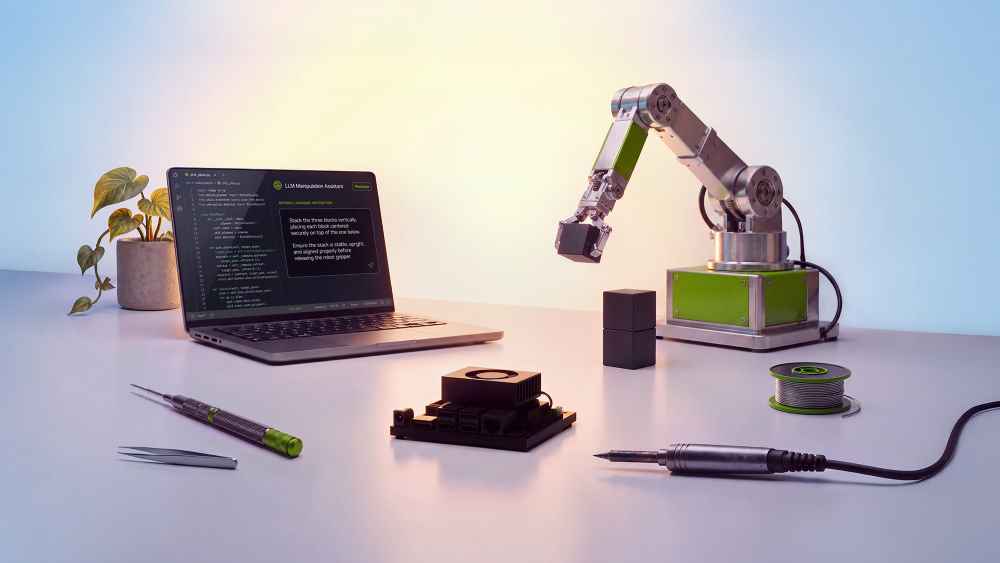
JOHANNESBURG, South Africa, September 21, 2026/APO Group/ –RS (https://apo-opa.co/4doxsf6) is supporting the NVIDIA Jetson Orin Nano 2 robotics computer, a new entry-level edge AI platform designed to deliver next-generation AI performance in a compact, power-efficient format. The platform is expected to become available in the first half of 2027.

The NVIDIA Jetson Orin Nano 2 delivers twice the inference performance of the NVIDIA Jetson Orin Nano Super while maintaining the same compact form factor and 40 W power envelope. It also consumes 40% less power at equivalent performance, making it well suited to applications where computing capability, energy efficiency and physical footprint are important considerations.


These capabilities have the potential to support the development of smarter, more autonomous equipment and systems for South African industrial and engineering organisations, particularly where real-time processing and decision-making are required at the edge.


More performance for intelligent machines

The NVIDIA Jetson Orin Nano 2 features improved Tensor Cores and higher memory bandwidth, delivering 78 TOPS of AI compute, 8 GB of memory and an eight-core Arm CPU. This combination enables a new generation of applications including delivery and inspection drones, robots and vision AI systems, with enhanced AI and video-processing capabilities. The platform is powered by NVIDIA’s open AI software stack, Jetson agent skills and a broad AI ecosystem, helping developers build and deploy AI-enabled applications more quickly.


Supporting South Africa’s AI and automation ambitions

This exciting product launch is a testament to the strong and successful partnership RS and NVIDIA have built since the introduction of the first Orin Nano™ in 2023

RS’s support for the NVIDIA Jetson Orin Nano 2 builds on its established relationship with NVIDIA and its role as a strategic global distribution partner. “As South African businesses increasingly explore how AI, robotics and automation can improve the way industrial systems operate, access to capable edge computing platforms will become increasingly important,” comments Erick Wessels, Sales Director, RS South Africa.


The NVIDIA Jetson Orin Nano 2 brings substantial AI performance into a compact and energy-efficient platform, giving local developers and engineering teams new opportunities to explore intelligent machines, robotics and vision-based applications. “We look forward to supporting customers in South Africa as they investigate the possibilities this technology can unlock,” adds Wessels.


This exciting product launch is a testament to the strong and successful partnership RS and NVIDIA have built since the introduction of the first Orin Nano™ in 2023,” explains Richard Curtin, SVP, Global AIoT Suppliers and Design Solutions, RS.


As a strategic global distribution partner, we are well positioned to help customers worldwide access and scale this latest AI innovation, and we encourage them to stay close to RS and RS DesignSpark for further announcements and early ordering opportunities,” says Curtin.


A platform for the next generation of edge AI

The NVIDIA Jetson Orin Nano 2 represents the next step in making high-performance AI computing accessible in a compact form factor. By combining increased inference performance with improved energy efficiency and an extensive AI software ecosystem, it is designed to help developers accelerate the transition from AI experimentation to practical deployment.


RS will support customers as they explore the opportunities presented by the platform, with further announcements and information on early ordering opportunities to follow ahead of its planned availability in the first half of 2027.

Distributed by APO Group on behalf of RS South Africa.


Continue Reading

Events

Huawei Cloud Rolls Out Enterprise AI Products Across the Board, Building an Open Agentic Cloud

Published

on

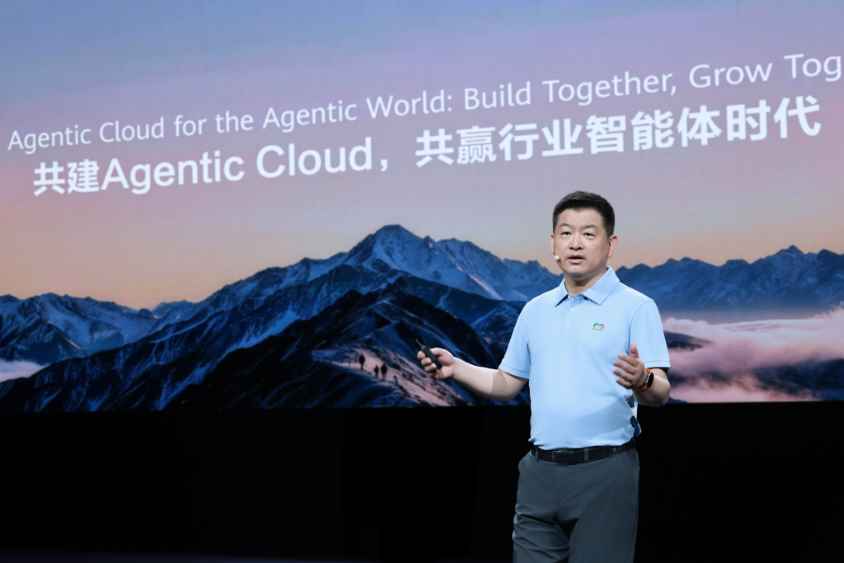
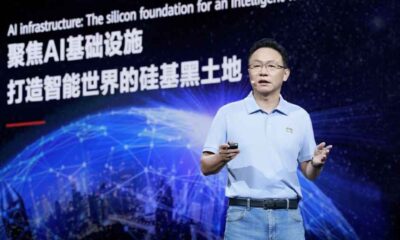
SHANGHAI, CHINA – Media OutReach Newswire – 18 September 2026 – On September 18, Dr. Peter Zhou, Director of the Board at Huawei and CEO of Huawei Cloud, delivered a keynote titled “The Agentic Cloud for the Agentic World: Build Together, Grow Together” at HUAWEI CONNECT 2026. He shared Huawei Cloud’s latest progress. He announced the global launch of the latest AI Cluster Service (AICS), a key step in Huawei Cloud’s strategy to strengthen the silicon bedrock on the cloud and reinforce the foundation for agentic AI. The keynote also highlighted the Agentic Model as a Service (MaaS) platform, which brings together diverse models to accelerate model capabilities as services at scale. The AgentArts enterprise-grade agent platform already serves over 100 enterprises. The Industry AI Foundry has accumulated more than 1,000 industry assets, with over 1,000 projects deployed. The Industry AI Foundry now includes two new zones, Smart Government Zone and AI Hardware Zone, to drive agents toward large-scale adoption. These efforts, taken together, are building a thriving AI ecosystem on the cloud.


Building Agentic Infra for agents
Dr. Peter Zhou also highlighted that in the agentic era, infrastructure no longer simply exists to provide compute. Instead, its purpose has expanded to making every token more efficient, coordinating general and AI compute, enabling models to keep learning, and, more importantly, running agents securely and reliably within real production environments. Huawei Cloud has defined Agentic Infra, a new paradigm around efficient tokens, enhanced memory, unified general & AI scheduling, and secure autonomy. To date, Agentic Infra has served over 3,500 customers.

The latest AICS is built on a five-level fast recovery mechanism with full-chain observability. It supports over 40 days of stable training on cloud and is capable of fault recovery within 10 minutes. Furthermore, supported by coordinated optimization across scheduling, cache, and algorithms, it delivers 20% higher token throughput than the previous generation of compute service. The latest AICS will be commercially available in China on September 30 and in markets outside China on November 30.
The Context Memory Storage (CMS) solution addresses the needs of long-horizon agent tasks for memory capacity and access efficiency. It provides a petabyte-scale memory space, twice the storage capacity of comparable industry products, and supports high-speed terabyte-scale memory reads with 50% higher performance than industry peers.
Agentic MaaS brings together diverse models, enabling developers to invoke state-of-the-art (SOTA) models from leading providers with just one click and no deployment required. At the event, MiniMax demonstrated its advanced multimodal model, which, combined with Huawei Cloud, delivers open, cutting-edge multimodal capabilities.

Building an enterprise-grade agent platform to help enterprises develop and use agents effectively
Huawei Cloud is advancing its enterprise-grade agent platform through a dual approach: commercial and open source. Built on AgentArts and its open-source edition openJiuwen, the platform opens up more than 5,000 general Model Context Protocol (MCP) assets and over 1,000 industry-specific MCP assets, making it easier for enterprises to develop, use, and manage agents. To date, the platform has served more than 100 customers, including the Shenzhen Longgang District Government, China Southern Power Grid, Guangzhou Laboratory, the University of Science and Technology of China, Kingsoft Office, Sichuan Yingu Carbon Sink Renewable Resources Co., Ltd., Changsha Thunder Cloud Network Technology Co., Ltd., and KingMed Diagnostics. At the event, Kingsoft Office shared its implementation practices based on Huawei Cloud’s agent platform. By deeply integrating the agent platform with the WPS 365 Document Center and WPS Comate, Kingsoft Office has built vertical office agents that are now deployed across multiple industries, including finance and government.

Huawei Cloud has announced that AgentArts will be commercially available in markets outside China on December 30. To date, the openJiuwen open-source community has surpassed 50,000 stars and 3.29 million downloads. Together with Chinasoft International, iSoftStone Group, and Beiming Software, Huawei Cloud has launched partner commercial editions and shared a broad market space, helping partners thrive on Huawei Cloud’s silicon bedrock.

Advancing the Industry AI Foundry to accelerate AI adoption at scale across industries
Through the Industry AI Foundry, Huawei Cloud brings together assets such as industry scenarios, models, data, knowledge, and agents, turning industry know-how from isolated project experience into reusable industry capabilities. It has built five industry-specific zones — Smart Healthcare Zone, Embodied AI Zone, AI for Science (AI4S) Zone, Smart Manufacturing Zone, and Smart Finance Zone — with over 1,000 industry-specific assets and more than 1,000 deployed projects.

Two new zones have been launched within the Industry AI Foundry: Smart Government Zone and AI Hardware Zone. The Smart Government Zone has already brought together 24 founding partners, covering a range of scenarios such as government office operations, public services, urban governance, and industry development. The AI Hardware Zone has onboarded 15 core partners, covering more than 20 device types, including AI glasses, AI toys, and AI recording cards, along with over 10 scenario templates and more than 110 scenario skills.

From infrastructure and enterprise-grade agent platforms to industry ecosystems, Huawei Cloud is committed to building an open agentic cloud, with open infrastructure to power AI, an open platform to support enterprises in effectively developing and using agents, and an open industry ecosystem to accelerate AI adoption at scale. Ultimately, Huawei Cloud looks to move forward with customers and partners to build and grow together in the agentic era.

Themed Advancing the Agentic World, HUAWEI CONNECT 2026 will delve into AI across three dimensions: strategy, technology, and ecosystems. You can expect an in-depth look at our latest strategic initiatives, and we’ll also be unveiling our all-new digital and intelligent infrastructure products, scenario-specific solutions for industries, and development tools. The event will run from September 17 to 19 at the Shanghai World Expo Exhibition & Convention Center and Shanghai Expo Center. For more information, please visit HUAWEI CONNECT 2026 online at www.huawei.com/en/events/huaweiconnect


Continue Reading

Tech

Huawei Pioneers a New Computing Architecture for the AI Era: Making One Million Processors Work as One Computer

Published

on

SHANGHAI, CHINA – Media OutReach Newswire – 17 September 2026 – Huawei today announced the Peerium Computing Architecture, a new computing architecture for the AI era. The architecture enables processors at the million scale to work as one computer, meeting the ever-growing demand for AI compute.

The Peerium Computing Architecture achieves strong scaling to the million-processor level through nested parallelism, unified memory addressing, and peer interconnect. It breaks through the Turing paradigm with the introduction of Nested BSP (Nested Bulk Synchronous Parallel), extends the von Neumann single-machine architecture, and overturns the master–slave architecture that has prevailed for decades, so that a million processors truly become one larger computer.


UnifiedBus (UB) is the key interconnect technology that makes the Peerium Computing Architecture possible. Built on a single open protocol, UB is a high-speed bus that scales without limit to connect CPUs, NPUs, memory, SSDs, network interface cards (NICs), and switches. With UB, peer interconnect is achieved across compute, storage, and networking.

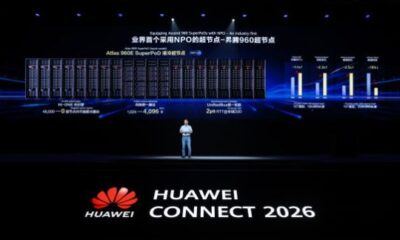
The Atlas 950 SuperPoD and SuperPoD-based SuperClusters are the first-generation product built on the Peerium Computing Architecture. An Atlas 950 SuperCluster with 256,000 cards is already being deployed, and the Atlas 960 system based on near-packaged optics (NPO) is currently under testing.

Eric Xu, Huawei’s Rotating Chairman, said, “In the AI era, Huawei is drawing on the Peerium Computing Architecture we pioneered to continuously build the SuperPoDs and SuperPod-based SuperClusters that meet customer needs for training and inference, making computing power available everywhere and intelligence accessible to all.”
The issuer is solely responsible for the content of this announcement.


Continue Reading

Trending

Exit mobile version