Connect with us
Anglostratits

Business

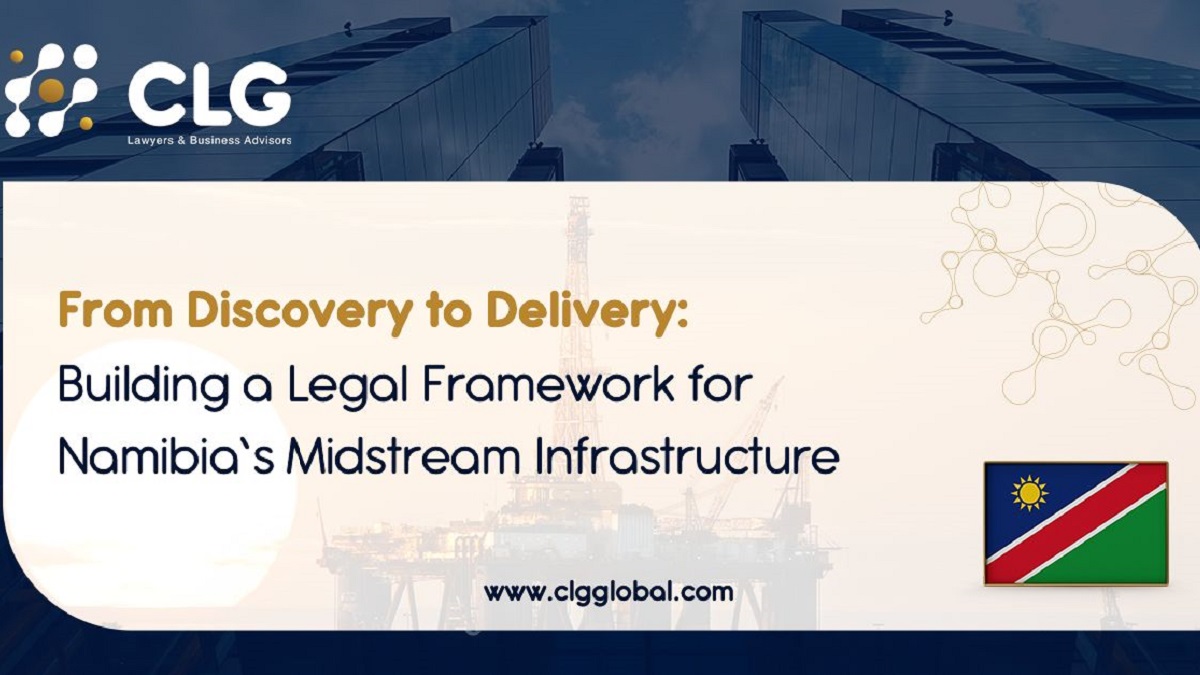
From Discovery to Delivery: Building a Legal Framework for Namibia’s Midstream Infrastructure (by Rachel Mushabati)

Published

on

Framework

A strong legal framework for midstream infrastructure is essential to ensure that Namibia maximizes economic benefits, attracts investment, and builds a sustainable energy industry

SANDTON, South Africa, June 20, 2025/APO Group/ —By Rachel Mushabati, Senior Associate Attorney & Country Head – CLG Namibia (www.CLGGlobal.com)

Namibia’s recent offshore oil discoveries mark a pivotal moment in the country’s energy sector. With major players such as Shell, TotalEnergies, QatarEnergy, and Galp uncovering significant reserves, Namibia is poised to become a key oil producer. However, while exploration and production activities have gained momentum, the midstream sector; involving transportation, storage, and refining of petroleum, remains underdeveloped.

A strong legal framework for midstream infrastructure is essential to ensure that Namibia maximizes economic benefits, attracts investment, and builds a sustainable energy industry. CLG Legal and Business Advisory, with its extensive advisory experience across Africa, is uniquely positioned to support this transition. CLG has advised on midstream regulatory frameworks, infrastructure structuring, and investment promotion strategies in various jurisdictions, and brings this expertise to the Namibian context.

Understanding Midstream Infrastructure and Its Importance

Midstream infrastructure serves as the critical link between oil extraction and the end consumer. This includes pipelines, refineries, storage facilities, and specialized port infrastructure that facilitate the transportation of crude oil and natural gas. Without adequate midstream infrastructure, Namibia risks becoming an exporter of raw crude without capturing additional value through processing and distribution. A robust midstream sector can boost job creation, industrial development, and energy security, making it a strategic national priority.

Market studies from other African producers have shown that well-developed midstream infrastructure can contribute up to 30% more in local value addition compared to direct crude exports.[1] In Ghana, for instance, domestic refining and pipeline infrastructure contributed significantly to its GDP growth in the petroleum sector between 2016–2022. Namibia has the opportunity to tap into similar economic potential.[2]

Existing Legal Framework and Gaps

Namibia’s petroleum sector is primarily governed by the Petroleum (Exploration and Production) Act 2 of 1991 and the Petroleum Products and Energy Act 13 of 1990. These laws focus largely on upstream activities and the regulation of downstream petroleum products. However, there is no dedicated midstream regulatory framework. The absence of clear midstream regulations means there is little guidance on ownership structures, investment incentives, and operational guidelines for pipelines, storage, and refining facilities.

For example, Nigeria’s midstream sector prior to the Petroleum Industry Act (2021) faced significant bottlenecks due to the absence of a clear regulatory framework, particularly regarding third-party access and tariff setting for pipeline infrastructure. These issues led to investor reluctance and underinvestment, which were only addressed after the establishment of the Nigerian Midstream and Downstream Petroleum Regulatory Authority (Nigeria Petroleum Industry Act, 2021).

Lessons from Other Oil-Producing Countries

Namibia can draw inspiration from countries that have successfully developed midstream infrastructure through effective regulation. Norway, for example, has established a robust midstream legal framework that ensures state participation in pipelines and refineries while promoting private investment.[3] Ghana has a dedicated Petroleum Midstream Regulatory Authority that oversees infrastructure development and ensures compliance with environmental and safety standards. Similarly, Nigeria’s Petroleum Industry Act (2021) introduced the Nigerian Midstream and Downstream Petroleum Regulatory Authority, which provides clear guidelines on pipeline ownership and operations.

To address the existing gaps, Namibia must develop a comprehensive legal framework that clearly defines the governance of midstream activities

The Role of Key Stakeholders in Strengthening Namibia’s Legal Framework

To unlock the full potential of the midstream sector, coordinated action is required among various stakeholders:

  1. Government Ministries and Regulators: Responsible for drafting legislation, setting environmental and safety standards, and issuing licenses.
  2. Private Sector and Investors: Bring in capital and technical expertise, while also needing legal certainty to invest confidently.
  3. State-Owned Entities: Can serve as infrastructure operators and strategic partners in public-private partnerships.
  4. Civil Society and Communities: Essential for ensuring environmental accountability and social license to operate.
  5. Legal Advisory Firms: Provide technical assistance in drafting laws, structuring transactions, and navigating policy reform.


Strengthening Namibia’s Midstream Legal Framework

To address the existing gaps, Namibia must develop a comprehensive legal framework that clearly defines the governance of midstream activities. A dedicated Midstream Act would be a crucial first step, providing legal certainty on pipeline infrastructure, refineries, storage, and transportation. Encouraging public-private partnerships can drive midstream development while ensuring local participation. Establishing an independent regulatory authority will help enhance transparency, streamline approvals, and enforce compliance.

Additionally, Namibia should implement policies that prioritize local employment and skills transfer, ensuring that midstream investors contribute to national workforce development. Environmental and safety standards must also be strengthened to mitigate risks associated with pipeline integrity, spill prevention, and emergency response. To further attract investors, tax breaks, duty exemptions, and streamlined licensing processes should be introduced to make Namibia a more competitive destination for midstream infrastructure development.

Conclusion

For Namibia to fully capitalize on its oil discoveries, it must establish a strong midstream legal framework that facilitates the efficient transportation, storage, and processing of petroleum resources. Without this, the country risks losing significant economic value and remaining dependent on crude exports.

By adopting best practices from other oil-producing nations and implementing strategic legal reforms, Namibia can create a thriving midstream sector that benefits both investors and citizens alike. CLG stands ready to support this transformation, leveraging its pan-African expertise in midstream regulation, infrastructure development, and legal advisory. Our team has been instrumental in shaping midstream legal regimes across West and Central Africa, and we are committed to helping Namibia build a regulatory foundation that supports sustainable growth and long-term prosperity.


[1] Ruben, R., Kuijpers, R., & Dijkxhoorn, Y. (2022). Mobilizing the Midstream for Supporting Smallholder Intensification. Land11(12), 2319. https://apo-opa.co/4ngI2bu

[2] Oxford Business Group. “Ghana’s energy production targets and exploration attract investment”. Retrieved from https://apo-opa.co/4kUZQHu.

[3] Norwegian Petroleum Directorate (2021). ‘Midstream Regulatory Framework and Investment Guidelines’.

 

Distributed by APO Group on behalf of CLG

Home  Facebook

Events

As global power structures shift, Invest Africa convenes The Africa Debate 2026 to redefine partnership in a changing world

Published

on

Debate

The Africa Debate 2026 will provide a platform for this essential, era-defining discussion, convening leaders to explore how Africa and its partners can build more balanced, resilient and sustainable models of cooperation

LONDON, United Kingdom, February 5, 2026/APO Group/ –As African economies assert greater agency in a rapidly evolving global order, Invest Africa (www.InvestAfrica.com) is delighted to announce The Africa Debate 2026, its flagship investment forum, taking place at the historic Guildhall in London on 3 June 2026.

Now in its 12th year, The Africa Debate has established itself as London’s premier platform for African investment dialogue since launching in 2014, convening over 800 global decision-makers annually to shape the future of trade, finance, investment, and development across the continent.

Under the theme “Redefining Partnership: Navigating a World in Transition”, this year’s forum will focus on Africa’s response to global economic realignment with greater agency, ambition and economic sovereignty.

The Africa Debate puts Africa’s priorities at the centre of the conversation, moving beyond traditional narratives to focus on ownership, resilience and long-term value creation.

“Volatility is not new to Africa. What is changing is the opportunity to respond with greater agency and ambition,” says Invest Africa CEO Chantelé Carrington.

“This year’s edition of The Africa Debate asks how we strengthen economic sovereignty — from access to capital and investment to financial and industrial policy — so African economies can take greater ownership of their growth. Success will be defined by how effectively we turn disruption into leverage and partnership into shared value.”

The Africa Debate 2026 will provide a platform for this essential, era-defining discussion, convening leaders to explore how Africa and its partners can build more balanced, resilient and sustainable models of cooperation.

Key challenges driving the debate

Core focus areas for this year’s edition of The Africa Debate include:

This year’s edition of The Africa Debate asks how we strengthen economic sovereignty — from access to capital and investment to financial and industrial policy

Global Realignment & New Partnerships

How shifting geopolitical and economic power structures are reshaping Africa’s global partnerships, trade dynamics and investment landscape.

Financing Africa’s Future

The growing need to reform the global financial architecture, new approaches to development finance, as well as the strengthening of market access and financial resilience of African economies in a changing global system.

Strategic Value Chains

Moving beyond primary exports to build local value chains in critical minerals for the green economy. Also addressing Africa’s energy access gap and mobilising investment in renewable and transitional energy systems.

Digital Transformation & Technology

Unlocking growth in fintech, AI and digital infrastructure to drive productivity, inclusion, and the next phase of Africa’s economic transformation.

The Africa Debate 2026 offers a unique platform for high-level dialogue, deal-making, and strategic engagement. Attendees will gain actionable insights from leading policymakers, investors and business leaders shaping Africa’s economic future, while building strategic partnerships that define the continent’s next growth phase.

Registration is now open (http://apo-opa.co/46b19gj).

Distributed by APO Group on behalf of Invest Africa.

Continue Reading

Business

Zion Adeoye terminated as Chief Executive Officer (CEO) of CLG due to serious personal and professional conduct violations

Published

on

CLG

After a thorough internal and external investigation, along with a disciplinary hearing chaired by Sbongiseni Dube, CLG (https://CLGglobal.com) has made the decision to terminate Zion Adeoye due to serious personal and professional conduct violations. This process adhered to the Code of Good Practice of the Labour Relations Act, ensuring fairness, transparency, and compliance with South African law.

Mr. Adeoye has been held accountable for several serious offenses, including:

  • Making malicious and defamatory statements against colleagues
  • Extortion
  • Intimidation
  • Fraud
  • Misuse of company funds
  • Theft and misappropriation of funds
  • Breach of fiduciary duty
  • Mismanagement

His actions are in direct contradiction to our firm’s core values. We do not approve of attorneys spending time in a Gentleman’s Club. CLG deeply regrets the impact this situation has had on our colleagues and continues to provide full support to those affected.

We want to express our gratitude to those who spoke up and to reassure everyone at the firm of our unwavering commitment to maintaining a respectful workplace. Misconduct of any kind is unacceptable and will be addressed decisively.

We recognize the seriousness of this matter and have referred it to the appropriate law enforcement, regulatory, and legal authorities in Nigeria, Mauritius, and South Africa. We kindly ask that the privacy of the third party involved be respected.

Distributed by APO Group on behalf of CLG.


Continue Reading

Business

The International Islamic Trade Finance Corporation (ITFC) Strengthens Partnership with the Republic of Djibouti through US$35 Million Financing Facility

Published

on

ITFC

This facility forms part of the US$600 million, three-year Framework Agreement signed in May 2023 between ITFC and the Republic of Djibouti, reflecting the strong and growing partnership between both parties

JEDDAH, Saudi Arabia, February 5, 2026/APO Group/ –The International Islamic Trade Finance Corporation (ITFC) (https://www.ITFC-IDB.org), a member of the Islamic Development Bank (IsDB) Group, has signed a US$35 million sovereign financing facility with the Republic of Djibouti to support the development of the country’s bunkering services sector and strengthen its position as a strategic regional maritime and trade hub.

The facility was signed at the ITFC Headquarters in Jeddah by Eng. Adeeb Yousuf Al-Aama, Chief Executive Officer of ITFC, and H.E. Ilyas Moussa Dawaleh, Minister of Economy and Finance in charge of Industry of the Republic of Djibouti.

The financing facility is expected to contribute to Djibouti’s economic growth and revenue diversification by reinforcing the competitiveness and attractiveness of the Djibouti Port as a “one-stop port” offering comprehensive vessel-related services. With Red Sea Bunkering (RSB) as the Executing Agency, the facility will support the procurement of refined petroleum products, thus boosting RSB’s bunkering operations, enhancing revenue diversification, and consolidating Djibouti’s role as a key logistics and trading hub in the Horn of Africa and the wider region.

We look forward to deepening this partnership, creating new opportunities, and leveraging collaborative programs to advance key sectors and drive sustainable economic growth

Commenting on the signing, Eng. Adeeb Yousuf Al-Aama, CEO of ITFC, stated:

“This financing reflects ITFC’s continued commitment to supporting Djibouti’s strategic development priorities, particularly in strengthening energy security, port competitiveness, and trade facilitation. We are proud to deepen our partnership with the Republic of Djibouti and contribute to sustainable economic growth and regional integration.”

H.E. Ilyas Moussa Dawaleh, Minister of Economy and Finance in charge of Industry of the Republic of Djibouti, commented: “Today’s signing marks an important milestone in the development of Djibouti’s bunkering services and reflects our strong and valued partnership with ITFC, particularly in the oil and gas sector. This collaboration supports our ambition to position Djibouti as a regional hub for integrated maritime and logistics services. We look forward to deepening this partnership, creating new opportunities, and leveraging collaborative programs to advance key sectors and drive sustainable economic growth.”

This facility forms part of the US$600 million, three-year Framework Agreement signed in May 2023 between ITFC and the Republic of Djibouti, reflecting the strong and growing partnership between both parties.

Since its inception in 2008, ITFC and the Republic of Djibouti have maintained a strong partnership, with a total of US$1.8 billion approved primarily supporting the country’s energy sector and trade development objectives.

Distributed by APO Group on behalf of International Islamic Trade Finance Corporation (ITFC).

Continue Reading

Trending