Connect with us
Anglostratits

Business

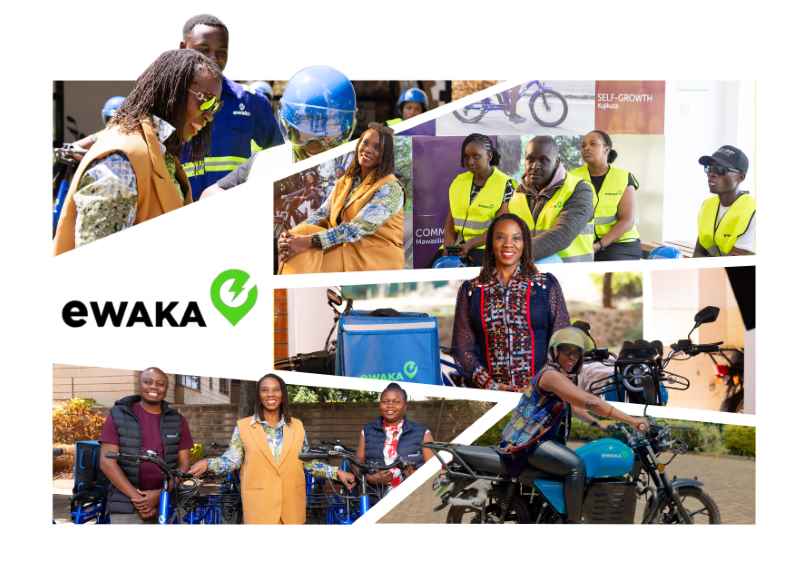
eWAKA Co-Founder and Chief Executive Officer (CEO) Selected as a 2026 Cartier Women’s Initiative Fellow

Published

on

eWAKA

eWAKA Joins the Cartier Women’s Initiative to Accelerate Africa’s Transition to Clean Mobility

NAIROBI, Kenya, July 21, 2026/APO Group/ –eWAKA (www.eWAKA.tech) today announced the company’s Co-founder and CEO, Céleste Tchetgen Vogel, has been selected as a 2026 Cartier Women’s Initiative Fellow. Vogel was recognized for her work to electrify Africa’s last mile, giving riders clean vehicles they can own and a better way to earn. Chosen from applicants around the world, Vogel represents the Anglophone and Lusophone Africa category of the 2026 Cartier Women’s Initiative Awards, which celebrate women entrepreneurs using business as a force for positive change.


eWAKA is an early-stage company with a clear ambition: to make Africa’s last mile clean, affordable, and within reach of the people who move it. Today it provides electric motorcycles and cargo bikes, financing that lets riders own their vehicles affordably, and charging and battery-swap to keep them moving. It coordinates deliveries and fleet operations through its own software. It aims to grow this into a managed electric delivery network, where businesses get reliable, lower-cost delivery and riders earn a steady living. Operating in Kenya and Rwanda, eWAKA is actively expanding into Burundi and the Democratic Republic of Congo, demonstrating its confidence in regional growth and impact.


eWAKA at a Glance


  • Nearly 1,500 active riders in Kenya and Rwanda
  • More than one million deliveries completed, up by over 80,000 on the prior year
  • More than 550 vendors onboarded onto the company’s merchant ordering platform
  • Approximately Ksh 25 million (about US$190,000 or CHF 150,000) earned by riders, up more than Ksh 6 million on the prior year
  • More than 1,500 jobs were created, with over 85% of riders aged 18 to 30
  • More than 3000 metric tons of CO₂ emissions avoided through clean mobility operations
  • Woman-founded and woman-led, with women working as riders, vendors, and agents across the network


We are delighted to welcome Céleste Tchetgen Vogel to the Cartier Women’s Initiative community

By bringing electric vehicles, financing, and software together in a single operation, eWAKA is building a model it can carry from one city to the next, so that each new market means more riders earning, more businesses served, and cleaner air to breathe. The company’s early backers include the Swiss State Secretariat for Economic Affairs (SECO), through its Start-up Fund, alongside impact investors and development finance partners.


eWAKA Co-founder and CEO Céleste Tchetgen Vogel said, “Mobility should open doors, not close them. When a rider can own a clean vehicle and earn a living with it, a whole family moves forward, and the city breathes a little easier. That is the future eWAKA is building, one electric mile at a time. To be welcomed into the Cartier Women’s Initiative, in its twentieth year, tells us the path is real, and gives us the resolve to walk it much further.”


eWAKA is building Africa’s next-generation electric mobility platform, operating in Kenya and Rwanda and expanding into Burundi and the Democratic Republic of Congo. Originally from Cameroon, Vogel is an African entrepreneur who co-founded eWAKA in 2021 after a career in senior legal and executive roles at Credit Suisse, ABB, and Swiss Re. She holds a degree in economics and international relations from Ohio Wesleyan University and a law degree from Northwestern University’s Pritzker School of Law, both in the United States. She was named among the Most Influential Women in Mobility in 2024 and to the Meaningful Business 100 in 2025. eWAKA works with ETH Zurich as a technical partner on battery and fleet data.


Cartier Women’s Initiative Director Kiyo Taga-Witkin commented, “We are delighted to welcome Céleste Tchetgen Vogel to the Cartier Women’s Initiative community. Through eWAKA, she exemplifies how entrepreneurship can drive meaningful, positive change. We look forward to supporting her journey and celebrating the impact she is creating.”


The Cartier Women’s Initiative is an international entrepreneurship program established in 2006 to support women impact entrepreneurs who are building a more inclusive society for generations to come. Since its inception, the program has been dedicated to identifying and accompanying women whose businesses address the world’s most pressing social and environmental challenges. Through a comprehensive approach combining financial support, access to a global network, and tailored leadership development, the Cartier Women’s Initiative enables fellows to scale their businesses while strengthening their capacity to lead and create lasting impact.


Over the years, the initiative has grown into a vibrant international community of more than 520 community members, united by a shared ambition to drive meaningful change within their respective ecosystems. At its core, the Cartier Women’s Initiative is guided by a set of enduring convictions: the belief that women are powerful agents of transformation, that talent is universal, while opportunities are not, that continuous learning is essential to progress, and that sustainable impact is rooted in a deep commitment to the communities it serves.

Distributed by APO Group on behalf of eWAKA.


Business

Namibia’s Orange Basin Moves Toward First Oil at African Energy Week (AEW) 2026

Published

on

African Energy Chamber

The “Invest in Namibia: Transforming Discoveries into Production” session will examine how Namibia can turn its offshore oil boom into a broader industrial opportunity through local suppliers, skills development, technology transfer and domestic investment

CAPE TOWN, South Africa, August 27, 2026/APO Group/ –After a series of major offshore discoveries transformed Namibia into one of the world’s most closely watched exploration frontiers, attention is shifting from proving resources to building the infrastructure, partnerships and industrial capabilities needed to bring them into production. At African Energy Week (AEW) 2026, the session “Invest in Namibia: Transforming Discoveries into Production. Orange Basin’s Path to First Oil” will examine how the country can capture value beyond the development of individual oil fields and use the emerging petroleum sector as a catalyst for wider economic growth.


TotalEnergies’ Venus discovery is technically ready to move toward a Final Investment Decision, with negotiations on fiscal terms still underway. The project’s development concept targets around 150,000 barrels per day at peak production, with first oil potentially around 2030. FEED has been completed and major contractors selected, bringing Namibia’s first potential deepwater oil development closer to execution.

The real measure of Namibia’s oil opportunity will not simply be how many barrels it produces, but how much economic value those barrels create at home

Meanwhile, the Orange Basin continues to attract major international players. TotalEnergies and Galp strengthened their positions across the Venus and Mopane discoveries in 2025, with TotalEnergies becoming operator of Mopane and Galp taking a participating interest in Venus. In August 2026, Equinor agreed to acquire a 17.4% stake in Chevron’s PEL 90, marking its first upstream entry into a new country since 2017. The block is expected to see another exploration well before the end of the year.

The scale of investment now being contemplated makes the question of local economic participation increasingly urgent. Namibia’s draft Local Content Policy identifies the development of national capabilities, employment, local procurement and stronger domestic value chains as central to ensuring that petroleum resources generate benefits beyond government revenues. The government has also highlighted technical training and partnerships with universities and industry as priorities for preparing Namibians for the emerging oil and gas sector.

For Namibia, this means moving beyond an export-led model in which capital, equipment and specialist expertise flow in and crude flows out. Developing local suppliers, financing Namibian businesses, building research and training hubs and creating opportunities for joint ventures could help establish capabilities that extend well beyond the life of individual oil projects. The opportunity spans engineering and fabrication, logistics, marine services, environmental management, digital technologies and other areas of the petroleum supply chain.

“The real measure of Namibia’s oil opportunity will not simply be how many barrels it produces, but how much economic value those barrels create at home,” said NJ Ayuk, Executive Chairman of the African Energy Chamber. “Namibia has a chance to build a competitive African energy industry around its discoveries – one that creates jobs, develops local companies, transfers technology and gives Namibians a meaningful stake in the country’s energy future.”

The session will look beyond first oil itself to the ecosystem required to sustain production and translate upstream investment into long-term industrial development. With Venus, Mopane and further Orange Basin exploration moving toward development, Namibia has an opportunity to establish the commercial partnerships, financing structures and technical capabilities needed to ensure its petroleum boom becomes an economy-wide growth story.

Distributed by APO Group on behalf of African Energy Chamber.


Continue Reading

Business

BUTEC, secures major Engineering, Procurement and Construction (EPC) contract for Casablanca Waste-to-Energy Project

Published

on

BUTEC

Serving a population of more than 4.2 million people across Greater Casablanca, this project represents a significant step in the region’s transition towards a more sustainable and circular approach to waste management

DUBAI, United Arab Emirates, August 28, 2026/APO Group/ –The consortium comprising Nareva, Kanadevia Inova and Itochu Corporation, through its 33.5-year concession agreement with the Municipality of Casablanca, has entrusted BUTEC (www.BUTEC.com) with a major Engineering, Procurement and Construction (EPC) contract for Casablanca’s landmark Waste-to-Energy (WtE) project, leveraging BUTEC’s multidisciplinary engineering and contracting capabilities for one of Morocco’s most significant waste management and energy recovery developments.


For the delivery of this landmark project, BUTEC has joined forces with the Switzerland-based Kanadevia Inova, a global leader in Waste-to-Energy and renewable gas solutions.

Located northwest of the Mediouna landfill in the Casablanca-Settat region of the Kingdom of Morocco, this ultra-large waste incineration facility will process approximately 1.5 million tonnes of non-recyclable waste annually, significantly reducing reliance on landfill.

By diverting the waste from landfill and converting it into energy, this plant is expected to prevent up to 1.0 tonne of CO₂-equivalent emissions per tonne of waste while generating 126 MWe of baseload electricity.

BUTEC is establishing itself as the generalist EPC contractor of choice in this strategic sector

Serving a population of more than 4.2 million people across Greater Casablanca, this project represents a significant step in the region’s transition towards a more sustainable and circular approach to waste management, while supporting Morocco’s broader energy transition and long-term decarbonization ambitions.

BUTEC’s Scope of Work:

While Kanadevia Inova is responsible for the technology and the process part of the EPC works, as well as operations support, long-term maintenance, and financing of the facility, BUTEC will be responsible for civil works for the whole facility and for the engineering, procurement, and construction (EPC) of Non-Process buildings, facilities, and associated works, including all civil, structural, architectural, mechanical, electrical and plumbing (MEP) works, as well as the external infrastructure works required for the Project.

Commenting on the significance of the award, Raymond Daou (SVP Strategy & Business Development) stated:

“Building on our affiliates’ long-standing presence in Morocco, where BUTEC has established itself as one of the country’s leading players in Electromechanical Solutions, the Group is reinforcing, through this landmark contract, its contribution to the Kingdom’s sustainable development ambitions.

Furthermore, with three consecutive large-scale Waste-to-Energy projects across the geographies in which it operates, BUTEC is establishing itself as the generalist EPC contractor of choice in this strategic sector. This latest award confirms once again our ability to combine multidisciplinary engineering expertise, strong local execution capabilities and close cooperation with world-leading process technology partners to deliver complex energy and environmental facilities.”

Distributed by APO Group on behalf of BUTEC Group.


Continue Reading

Business

Asantehene opens Africa Business Investment Summit in Washington, DC with a $500m Investment Target in Africa

Published

on

Asantehene

The opening ceremony, themed “The Asante Crown Meets the Diaspora,” convened more than 400 registered delegates, including senior government officials, C-suite executives, and US-based institutional investors


WASHINGTON D.C., United States of America, August 28, 2026/APO Group/ —

  • Asantehene presented a royal vision for Africa’s economic renaissance
  • Day 1 proceeded under the theme – The Vision Day: Unlocking Africa’s Century, A Diaspora Mandate”
  • Fireside chat with Boris Kodjoe on The Diaspora Return

The Africa Business Investment Summit 2026 opened this morning at the MGM National Harbor, in Washington D.C. Metro, with a royal keynote by the Summit’s Patron, His Majesty Otumfuo Osei Tutu II, Asantehene, as the Millennium Excellence Week hosts its first event outside of Ghana.

The opening ceremony, themed “The Asante Crown Meets the Diaspora,” convened more than 400 registered delegates, including senior government officials, C-suite executives, and US-based institutional investors. They were drawn together under a single mandate: to facilitate $500 million in structured capital commitments between African deal originators and US institutional capital during the two-day summit.

Delivering his keynote address, His Majesty articulated a vision of African economic sovereignty where the diaspora serves as architects of continental development. Speaking with characteristic authority, His Majesty called on African governments, diaspora communities, and international institutional partners to align capital, policy frameworks, and political will behind a shared agenda for the continent’s economic future.

In his address, His Majesty Otumfuo Osei Tutu II, Asantehene said: “For too long, Africa has been described mainly in terms of its deficiencies. We have heard of the roads not built, the electricity not generated, the jobs not created, the capital not available, and the institutions not strong enough,”

For too long, Africa has been described mainly in terms of its deficiencies

Speaking further he noted that “Africa must no longer be regarded merely as a continent of future potential. Africa is already becoming a central part of the future global economy, and those who understand this early will position themselves advantageously.”

Honorable Sampson Ahi, Deputy Minister for Trade, Agribusiness, and Industry, who represented the President of the Republic of Ghana, detailed macroeconomic indicators signalling domestic economic recovery and industrial policy priorities: “ Our ambition is transformation. We want an economy that moves beyond exporting raw materials to manufacturing finished products, creating value, jobs, and shared prosperity. We want capital that drives productivity, entrepreneurship, and innovation. This is the philosophy behind the twenty-four-hour economy program, which is a commitment stimulating round-the-clock production, improving productivity, and developing a competitive and export-oriented economy.”

The first day of the summit concluded under the theme “The Vision Day: Unlocking Africa’s Century, A Diaspora Mandate”, exploring through a series of plenary sessions the most pressing deal themes in US–Africa investment today.

Programme spotlights included: The Diaspora Return, a fireside chat with Boris Kodjoe, Beyond Remittances: Building Africa’s Sixth Region, diaspora capital beyond transfers, The New Gold Rush: Africa’s Seat at America’s Critical Minerals Table,  Ghana’s Gold Moment: From the Gold Coast to Global Market Power, The Diaspora Dollar: Fintech and the Next Remittance Corridor and Powering the Continent: Energy, Infrastructure and the US–Africa Partnership

The second and final day of the event will continue to explore investment opportunities across the continent through sector spotlights on the Creative Economy, Health & Pharma, Technology, and Digital Financial Services.

Following these plenaries, the event will conclude with bilateral investment meetings that will translate the vision outlined in the plenary hall into concrete investment decisions.

Review Day 1 Plenary Sessions: https://apo-opa.co/4cPkRRP

Watch Day 2 Live Stream: https://apo-opa.co/4gYIxFP

  • Day 2 to explore investment opportunities and conclude with bilateral investment meetings

Distributed by APO Group on behalf of Millennium Excellence Foundation.


Continue Reading

Trending