Connect with us

Business

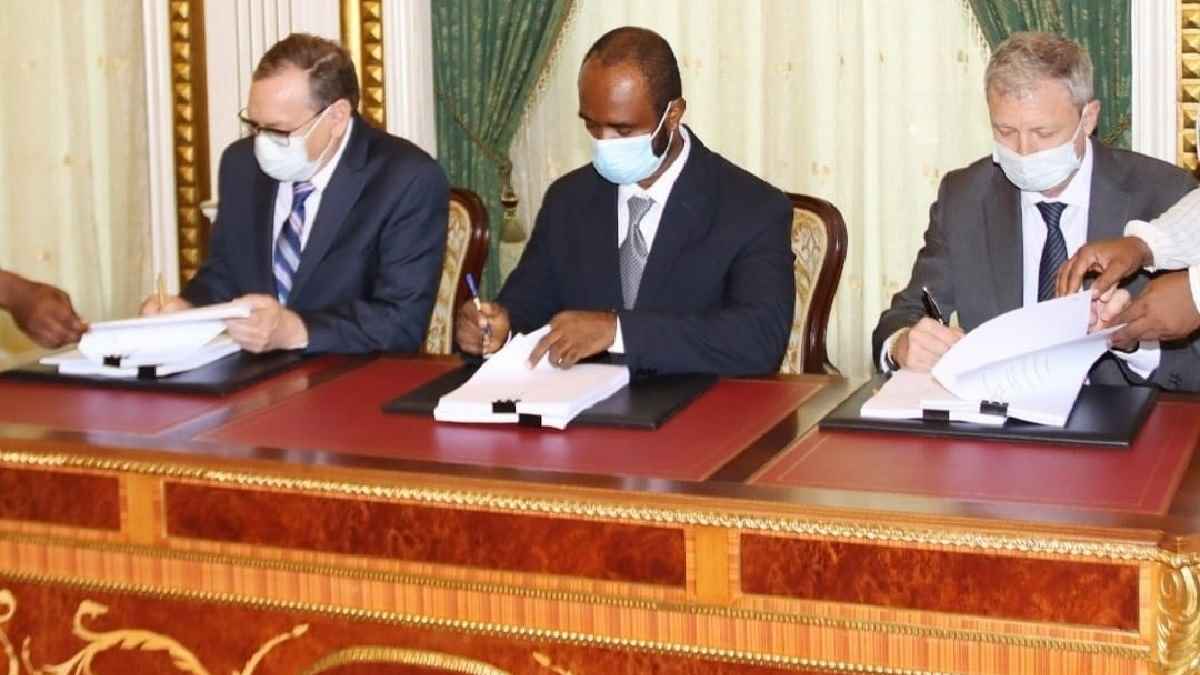
Equatorial Guinea Signs Three Production Sharing Contracts with Panoro Energy, Africa Oil Corporation

Published

on

Panoro Energy

The signing of three production sharing contracts with Panoro Energy and the Africa Oil Corporation, is a step in the right direction regarding expanding exploration in Africa

JOHANNESBURG, South Africa, February 20, 2023/APO Group/ — 

Antonio Oburu Ondo, Equatorial Guinea’s recently appointed Minister of Mines and Hydrocarbons, has awarded independent exploration and production company, Panoro Energy, a 56% participating interest and operatorship in Block EG-01 offshore the hydrocarbon-rich West African country, as well as Canadian oil and gas company, the Africa Oil Corporation, two production sharing contracts (PSC) for offshore Blocks EG-18 and EG-31.

With the PSCs, the Ministry of Mines and Hydrocarbons, under the leadership of Minister Ondo, has taken significant strides towards opening up Equatorial Guinea’s offshore basins even further, working closely with two reputable oil and gas companies to usher in a new era of hydrocarbon exploration and production.

For Panoro, the awarding of Block EG-01 enables the company to work alongside its partners in the block, Kosmos Energy (24%) and national oil company, GEPetrol (20%), to conduct subsurface studies on existing seismic data to identify and define hydrocarbon reserves available over a period of three years. Located in water depths of between 30 meters and 500 meters, Block EG-01 has indicated the presence of high-quality hydrocarbon reserves, with previous exploration activities encountering thin oil and gas pay as well as oil shows. To date, the Eocene sands and Upper Cretaceous identified in the block have been tied to producing wells in Block G – bordering Block EG-01 – where over one billion barrels of commercial oil reserves have been identified. With Panoro Energy and its partners set to extend the contract with an additional two years to conduct exploration activities, the PSC is set to drive Equatorial Guinea into a new era of oil and gas market expansion.

John Hamilton, the CEO of Panoro Energy, stated that the “awarding of Block EG-01 is a natural and complementary expansion of our portfolio in Equatorial Guinea, and is in line with our infrastructure-led exploration strategy, increasing our access to a large inventory of oil prospects and leads within tie back distance of existing production facilities for a modest financial exposure. Panoro is pleased to become an operator in Equatorial Guinea.”

With Panoro Energy’s contract in the Ceiba Field extended to 2029 and in the Okume Complex to 2034, the company’s role in driving Equatorial Guinea’s energy future is imminent

The new contract increases Panoro Energy’s contribution towards the growth of Equatorial Guinea’s energy sector. As a partner and operator in the Ceiba Field and Okune Complex – comprising six operating oil and gas wells – Panoro Energy has been crucial player in maintaining Equatorial Guinea’s energy sector stability and growth. With Panoro Energy’s contract in the Ceiba Field extended to 2029 and in the Okume Complex to 2034, the company’s role in driving Equatorial Guinea’s energy future is imminent.

Meanwhile, for the Africa Oil Corporation, the duo-PSCs enable the company to enter into the promising Equatorial Guinean market. With the agreements, the Canadian explorer will own an 80% interest in both Block EG-18 and EG-31, with GEPetrol owning a 20% interest in each. Currently, Block EG-31 has shown to contain several gas-prone prospects in shallow water depths of less than 80 meters, and is strategically situated close to existing infrastructure such as the Alba gas field and onshore Punta Europa liquefied natural gas (LNG) terminal. As such, the Africa Oil Corporation has emphasized that any future discoveries could present low-cost, low-risk gas development, thereby further consolidating the country’s position as a global LNG hub.

In Block EG-18, potentially large and highly prospective basin floor fan prospects of Cretaceous age – similar to those within the company’s portfolio in Namibia and South Africa – further enhance opportunities for sizeable discoveries. As such, President and CEO, Keith Hill, stated that, “These blocks offer high-impact value upside for our shareholders at relatively low cost, and we look forward to continued collaboration with the government of Equatorial Guinea to explore and develop its natural resources.”

While Minister Ondo is prioritizing boosting Equatorial Guinea’s oil and gas exploration and production to meet growing energy demand locally, across the region and at global scale, the partnership with both Panoro Energy and Africa Oil Corporation is a step in the right direction towards boosting the country’s energy landscape. As such, the African Energy Chamber (AEC) (https://EnergyChamber.org/), as the voice of the African energy sector, strongly supports and commends Minister Ondo’s move in setting the pace for the country’s oil and gas industry expansion by maximizing exploration activities.

“We need to drill more wells in Equatorial Guinea and the Gulf of Guinea. Panoro and Africa Oil Corp will work in a proven but underexplored oil basin in the Gulf of Guinea and it makes it exciting to see the results of their work in the near future,” stated NJ Ayuk, the Executive Chairman of the AEC.

“We have always believed that you need to invest in exploration if you want to see production of oil and gas. The move by the Minister as well as Panoro Energy and Africa Oil Corp should be commended. We strongly support the minister’s strategic response in addressing Equatorial Guinea’s natural decline in oil and gas production. We believe that the awarding of the three PSCs will bring in the much-needed investments to accelerate exploration and production in West Africa. We look forward to witnessing some new discoveries on these exciting blocks in the future,” concluded Ayuk.

Deals such as Panoro Energy and the Africa Oil Corporation’s in Equatorial Guinea will be a key focus at this year’s African Energy Week (AEW) (https://AECWeek.com/) conference and exhibition – Africa’s premier event for the energy sector – which will take place from 16-20 October in Cape Town. AEW 2023’s high-level panel discussions, deal-signings, exhibitions and exclusive networking sessions will focus on how African energy producing countries such as Equatorial Guinea can maximize oil and gas exploration and production through partnerships with local, regional and international independents and majors.

Distributed by APO Group on behalf of African Energy Chamber.

Business

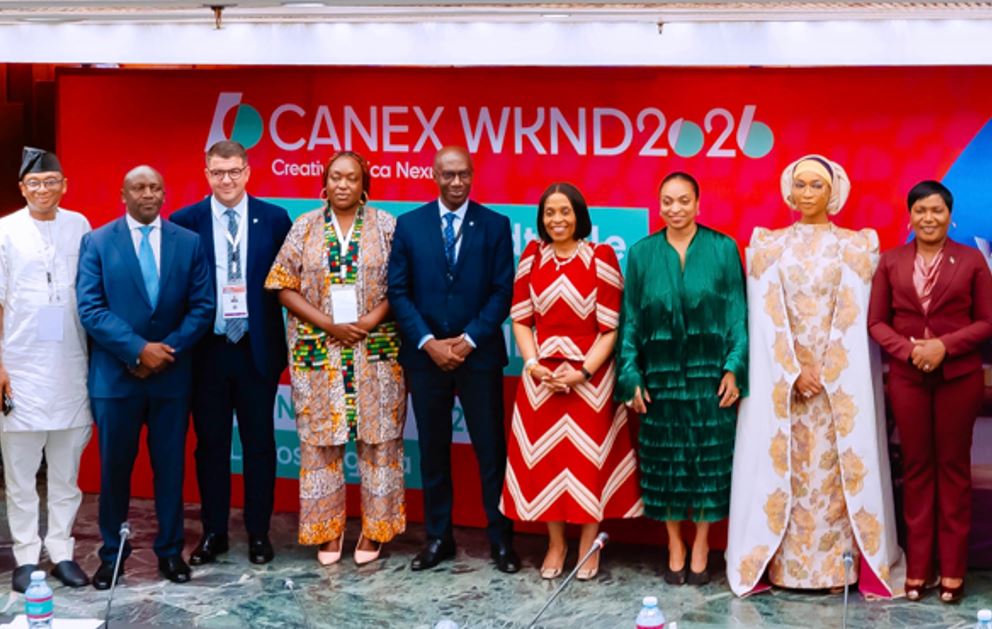
Creative Africa Nexus (CANEX) WKND 2026 opens in Lagos, bringing together leading African and diaspora creatives, investors and policymakers

Published

on

The four-day gathering will convene leading voices from film, music, fashion, sport, publishing, gastronomy and business to advance trade, investment and commercial opportunities across Africa’s creative economy

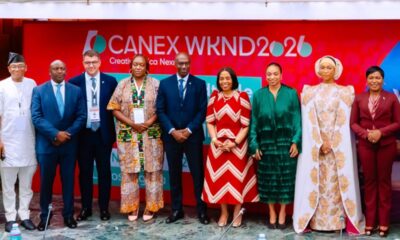
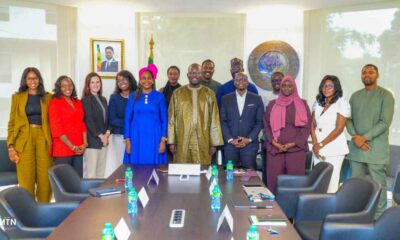
LAGOS, Nigeria, November 5, 2026/APO Group/ –Creative Africa Nexus (CANEX) WKND 2026 has opened today in Lagos, bringing together leading creatives, investors, policymakers, business leaders and cultural figures from across Africa and the diaspora for four days of conversations, deal-making, performances, exhibitions and industry-focused sessions.


Hosted by the Federal Government of Nigeria and organised by African Export-Import Bank (Afreximbank) through its Creative Africa Nexus (CANEX) programme, this year’s event runs from 5 to 8 November under the theme “One People, United in Culture, Creating for the World.”

The 2026 programme spans film and television, music, fashion, sport, literature and publishing, gastronomy and visual arts, with a strong focus on finance, intellectual property, technology, skills, investment and market access.

Across the four-day programme, CANEX WKND will provide platforms for deal-making, industry dialogue and sector-specific engagement, including the CANEX Deal Room, with the aim of turning creative talent and ideas into stronger businesses, partnerships and commercial opportunities.

That ambition reflects the evolution of Afreximbank’s commitment to Africa’s creative and cultural industries in 2020, subsequently doubling this to US$1 billion before quadrupling the original commitment financing available to US$2 billion.

The expansion reflects Afreximbank’s wider objective of helping African creators and creative businesses build scalable enterprises, strengthen ownership of intellectual property and retain more of the economic value generated by African culture and creativity.

The opening ceremony is expected to feature addresses by Ministers of Culture and Creative Industries across 11 African countries, Dr George Elombi, President and Chairman of the Board of Directors of Afreximbank, H.E. Dr Olajumoke Omoniyi Oduwole, Nigeria’s Minister of Industry, Trade and Investment, H.E. Wamkele Mene, Secretary-General of the African Continental Free Trade Area Secretariat, and H.E. Babajide Sanwo-Olu, Governor of Lagos State among other dignitaries.

The programme will bring together some of Africa and the diaspora’s most influential cultural and industry figures. Participants include Nobel Laureate, writer and playwright Professor Wole Soyinka; Emmy Award-winning actor Uzo Aduba; filmmaker and actor Funke Akindele; actors Richard Mofe-Damijo and Thuso Mbedu; former professional footballers Didier Drogba and Jay-Jay Okocha; alongside leading figures from Africa’s music, film, fashion, sport and creative business sectors.

The event will also include performances and appearances from musicians and entertainers such as Davido, Fally Ipupa, Flavour, Libianca and Charlotte Dipanda, reflecting CANEX WKND’s combination of industry engagement with live cultural programming.

Beyond the headline names, the programme places a strong emphasis on the business of Africa’s creative economy.

On 6 November, a high-level conversation titled “One Market, One Culture: Building the Creative Economy of Global Africa” will examine the steps required to convert the growing global influence of African culture into stronger creative businesses, exports and investment. Speakers include Professor Wole Soyinka; ministers responsible for culture and the arts from Côte d’Ivoire, South Africa and Rwanda; International Finance Corporation representatives; and from Afreximbank.

Financing will also be central to the programme. The Creative Economy Finance Summit, presented by Afreximbank in partnership with the Creative Economy Practice at Co-Creation Hub, will bring financial institutions and investors together to examine how creative-economy transactions can be structured, financed and de-risked.

CANEX Creations Inc. will lead discussions on unlocking investment in African intellectual property, while the CANEX Deal Room and Creative Pitch Sessions will connect creative entrepreneurs directly with financiers and investors considering opportunities across film and television, music, fashion, sport, publishing, gastronomy, visual arts and creative infrastructure. Technology and the changing economics of creative production will feature prominently. Sessions will examine artificial intelligence, authorship and intellectual property; the use of technology to reshape creative businesses; and how African creators can use digital tools to develop globally competitive products.

The CANEX CreaThon, delivered with pan-African technology company Gebeya, will bring creators, developers and innovators together around projects in music, video and gaming, supported by African-built digital tools, mentorship, computing resources and a US$50,000 prize pool. Film and television programming will explore both storytelling and the commercial infrastructure required to take African content to wider audiences. Sessions include “Stories Without Borders: Africa, Hollywood & the Global Diaspora”, featuring former Afreximbank President Professor Benedict Oramah, and “Made in Africa, Watched in Africa”, which will examine research into film distribution, audiences and financing across Egypt, Kenya, Nigeria, Rwanda, Senegal and South Africa.

Sport will form another major strand of CANEX WKND 2026. Discussions will examine athlete development, management, commercialisation and the links between sport and the broader creative economy. Didier Drogba and Jay-Jay Okocha are scheduled to participate in “When Giants Speak: The Business of the Game,” while the weekend will conclude with a Legends Football Match at Onikan Stadium on 8 November. Fashion programming will include masterclasses on building profitable African brands, textile value chains, market access and intellectual property, alongside the CANEX Fashion Show and Awards Night.

In gastronomy, the CANEX Junior Chefs Competition, Africa Jollof Wars Competition and a series of live demonstrations and conversations will explore how African food, ingredients and culinary traditions can become stronger commercial propositions across domestic, continental and global markets. Publishing and literature will feature through the CANEX Book Factory, Book Fair, writers’ workshops, manuscript pitching and the CANEX Prize for Publishing, while visual arts programming will combine exhibitions, collector engagement and practical sessions for artists navigating Africa’s growing art ecosystem.

On 7 November, CANEX WKND 2026 will host a major concert bringing together artists from across Africa and the diaspora, before the programme continues into its final day on 8 November with cultural excursions, gastronomy activities, the CANEX Music Factory Songwriting Camp and the Legends Football Game.

Distributed by APO Group on behalf of Afreximbank.


Continue Reading

Business

Coca-Cola system invests USD 1.22 million to strengthen water security in Namibia

Published

on

The initiative represents a nearly USD 25 million investment focused on helping address critical water-related challenges across 20 African countries by 2030

WINDHOEK, Namibia, November 5, 2026/APO Group/ –As Namibia continues to face recurring droughts and growing water demand, the country’s water resources are under increasing pressure. Windhoek is situated in one of the most water-stressed regions in sub-Saharan Africa, where low and unpredictable rainfall, combined with high evaporation rates, continues to challenge water availability and long-term water security.[1]


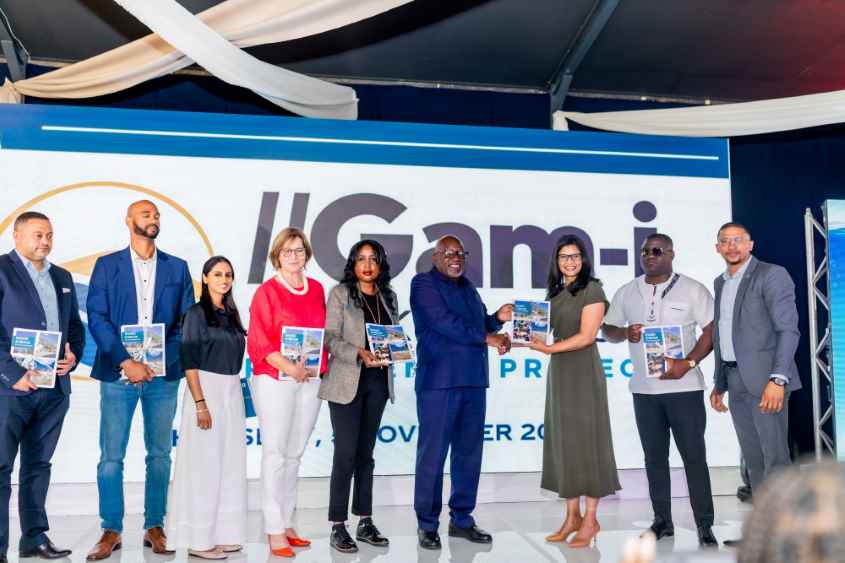
To help address these shared water challenges, the Coca-Cola system is investing USD 1.22 million in the //Gam-i Swakop Basin Resilience Project, designed to help strengthen water security and support ecosystem restoration in the Swakop River Basin, a vital water source for the city of Windhoek and surrounding communities.

The //Gam-i Swakop Basin Resilience Project aims to support improved water availability and help strengthen the resilience of the Swakop River Basin through nature-based solutions that support sustainable water resource management across the catchment area.

Implemented in collaboration with the Global Water Challenge (GWC) and World Wildlife Fund (WWF) Namibia, the project includes the construction of two sand storage dams, restoration of 235 hectares of land through the clearing of invasive alien plants, and the planting of 750 trees in river buffer zones and environmentally degraded areas within Windhoek’s informal settlements. In addition, two boreholes will be drilled to support groundwater recharge in the Windhoek aquifer, and a water resilience action plan has been developed.

Through the Africa Water Stewardship Initiative, the system aims to help protect important watersheds and to improve access to water and sanitation in local communities

This work forms part of the Coca-Cola system’s Africa Water Stewardship Initiative, launched in 2024. The initiative represents a nearly USD 25 million investment focused on helping address critical water-related challenges across 20 African countries by 2030.

“Because water challenges are local, our approach to water security is focused on local action and collaboration,” said Alfred Olajide, Vice President of East and Central Africa Operations at Coca‑Cola. “The Coca‑Cola system remains focused on helping to promote water stewardship, increasing water use efficiency, and treating and returning safe water to communities.”

Henry Friedrich, General Manager of Coca-Cola Namibia Bottling Company (CCNBC) added: “As part of the Coca-Cola Beverages Africa group, we have a responsibility to assist those who face water scarcity and to help protect local water resources where we operate, especially in places with the biggest challenges. Through the Africa Water Stewardship Initiative, the system aims to help protect important watersheds and to improve access to water and sanitation in local communities.”

WWF Namibia Country Director, Dr Juliane Zeidler, said: “Water is one of Namibia’s most precious and increasingly vulnerable resources. This project is an opportunity to demonstrate how investing in healthy ecosystems can deliver tangible benefits for people, while also helping communities become more resilient to future climate pressures. We hope the lessons and partnerships developed through this initiative can inform similar approaches elsewhere in the country.”

“Collaboration is essential to addressing shared water challenges effectively. Coca-Cola and its authorised bottlers continue to work with governments, businesses, and civil society organisations to design and implement strategic interventions,” concluded Olajide.


Distributed by APO Group on behalf of Coca-Cola Beverages Africa.


Continue Reading

Business

‘Power, Protect, Purchase’: Africa Made It unveils blueprint to capture USD 34B in GDP and accelerate African industrial sovereignty

Published

on

Africa Practice research shows that Africa exports up to 98% of its raw cotton overseas and captures only 2% of its total value while incurring a USD 35 billion annual trade deficit
African culture, design, and storytelling influence global fashion, music, and media like never before

LAGOS, Nigeria, November 5, 2026/APO Group/ –Africa Made It (https://AfricaMadeIt.co/), the continental movement driving Africa’s industrial sovereignty, today officially launched its campaign, “Power, Protect and Purchase,” at the CANEX weekend in Lagos, Nigeria. Aimed at unlocking USD 34 billion in annual GDP contribution through a structural transition from unprocessed raw cotton exports to end-to-end local garment processing, the initiative seeks to turn Africa’s vast natural wealth into sovereign, self-sustaining economic power.


Africa Made It is driven by a consortium of leading pan-African organisations, advocacy groups, and media organisations who are positioning Africa as a global investment hub. Its flagship campaign, spotlighting the fibre-to-fashion value chain, presents a clear roadmap for continental industrialisation: securing competitive energy power for local industrial mills, enacting policy measures to protect emerging domestic manufacturers from unfair foreign imports, and rallying African consumers to purchase locally manufactured apparel. Together, these three pillars ensure that value created from African resources remains on African soil.


Africa Practice research shows that Africa exports up to 98% of its raw cotton overseas and captures only 2% of its total value while incurring a USD 35 billion annual trade deficit.  Building the continent’s domestic processing capacity in spinning, weaving, and sewing locally produced cotton will sustain nearly two million permanent industrial jobs and inject approximately USD 33 billion directly into domestic household incomes every year, in addition to a recurring contribution of USD 34 billion to the continent’s GDP.


While these figures reveal the immense macro-economic potential of the value chain, the true heart of this transformation lies in its human impact. Industrial wages and local lint purchases leading to increased capital circulation in rural communities can drive community micro-economic vitality and contribute to rural poverty reduction. Additionally, formal employment opportunities can expand drastically for women, as they currently make up between 70-90% of garment factory workers on the continent.


Realising this vision and changing the lives of millions of people requires a deliberate combination of targeted investments, supportive trade policies, and consumer mobilisation. A USD 1.8 billion capital allocation toward critical structural enablers for garment transformation is the foundation for bridging Africa’s missing middle in the fibre-to-fashion value chain.


Marie Wilke, editor-in-chief of the Africa Made It magazine, said, “African culture, design, and storytelling influence global fashion, music, and media like never before. Yet, without domestic manufacturing infrastructure, Africa’s creative authority yields very little economic return. Linking raw cotton harvest directly to local processing ensures that the intellectual property, commercial margins, and industrial jobs remain on the continent. It is time to wear our power.”


To learn more about the potential of Africa’s fibre to fashion value chain, watch the campaign video (https://apo-opa.co/4BKAIvY) or read the Africa Made it (https://apo-opa.co/4zvA5VF)magazine (https://apo-opa.co/4zvA5VF). Access the campaign website and resources in English (https://apo-opa.co/4zvA5VF) and French (https://apo-opa.co/4zrK8e2).

Distributed by APO Group on behalf of Africa Made It.


Continue Reading

Trending

Exit mobile version