Connect with us

Business

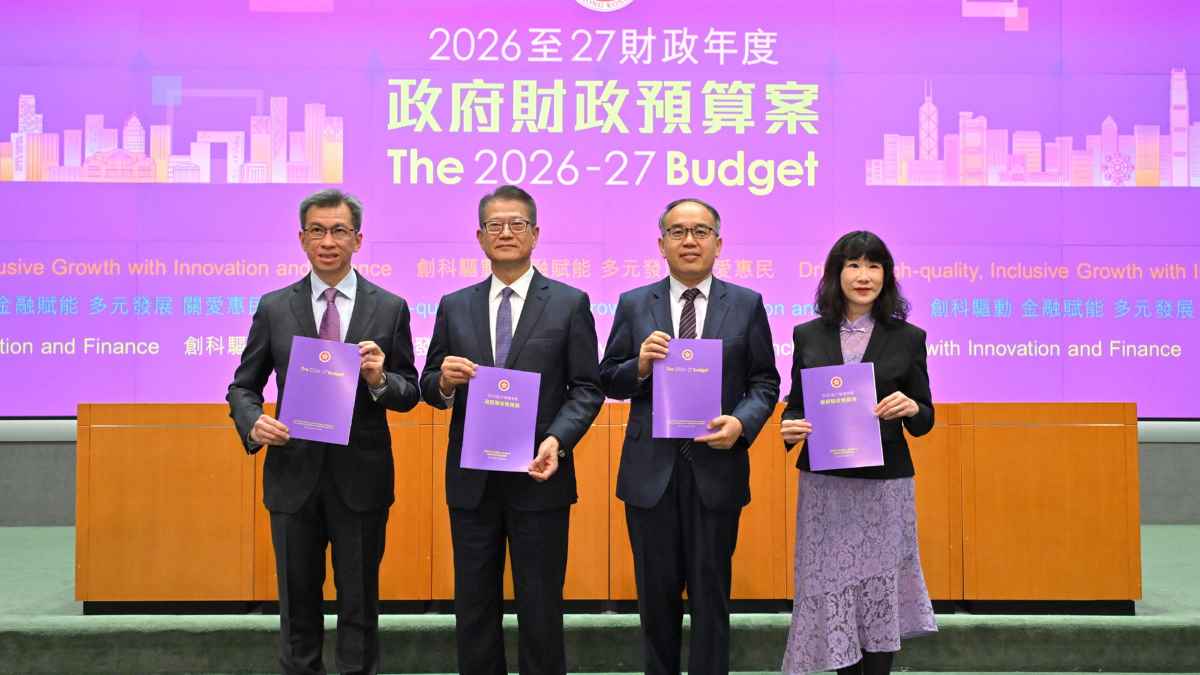
Enhancing Hong Kong’s strength as a global financial centre: 2026-27 Budget

Published

on

Paul Chan

HONG KONG SAR – Media OutReach Newswire – 27 February 2026 – In his 2026-27 Budget announced on Wednesday (25 February), Paul Chan, Financial Secretary of the Hong Kong Special Administrative Region (HKSAR) outlined areas for comprehensively reinforcing the city’s position as a leading international financial hub.

Despite the complex and ever-changing external environment, Mr Chan noted that Hong Kong’s financial market had performed strongly and the city’s financial system remains robust.

In 2025, Hong Kong ranked first globally for funds raised through initial public offerings.

“We will continue to consolidate our existing strengths, tap into emerging fields, strengthen market systems and risk control and deepen financial co-operation in the Greater Bay Area,” Mr Chan said. “By doing so, we will enhance Hong Kong’s role as an international financial centre on all fronts and contribute to the national strategic goal of ‘accelerating China’s development as a financial powerhouse’ “.

With Hong Kong being the world’s largest hub for offshore Renminbi (RMB) business, the Financial Secretary said the city would leverage its unique strengths and proactively align with national development strategies.

For advancing the internationalisation of the RMB, Mr Chan said Hong Kong would facilitate the wider use of RMB in activities such as trade and cross-boundary business; reduce transaction costs; enrich product offerings in the offshore RMB market; improve price discovery in the short-to-medium-term-interest-rate market; and attract high-quality issuers to increase RMB bond issuance in Hong Kong.

In 2025, the stock market delivered a stellar performance. The Hang Seng Index rose by 28 per cent over the year. The daily turnover surged by 90 per cent to a historic high of close to $250 billion (US$32 billion).

Mr Chan said the Hong Kong Exchanges and Clearing Limited (HKEX) would continue enhancing the securities market, attracting issuers and boosting market efficiency.

“We will also introduce the next stage of reforms, including enhancing the regulatory regime for listed companies, providing specific guidelines for overseas companies seeking secondary listing in Hong Kong, offering more overseas markets as recognised exchanges, and continuing to explore with the market the provision of an over-the-counter trading platform for delisted stocks or those requiring special handling.

“The electronic bond-trading platform will also be launched in the second half of this year, thereby reinforcing Hong Kong’s position as a global fixed income and currency hub,” he said.

To attract more family offices and funds to set up in Hong Kong, Mr Chan said Hong Kong would enhance the tax regime, including expanding the scope of “fund” to cover specific funds-of-one, as well as classifying digital assets, precious metals, and specified commodities, etc. as qualifying investments eligible for tax concessions.

Regarding the development of digital assets, the Government published the second policy statement for developing Hong Kong into a global hub for digital asset innovation through the establishment of a comprehensive regulatory framework.

A bill will be introduced this year to establish licensing regimes for, among others, digital asset dealing and custodian service providers.

“We will also explore the adoption of electronic signature for bond issuance documents and the digitalisation of bearer bonds,” Mr Chan said.

To promote the application of fintech and enhance the efficiency of the asset management market, the CMU OmniClear, a market infrastructure operator established by the Hong Kong Monetary Authority, will establish a digital asset platform this year. It will support the issuance and settlement of digital bonds. The platform will also be gradually extended to other digital assets and linked with other tokenisation platforms in the region, consolidating Hong Kong’s leading role in the realm of digital assets.

In order to build an international gold trading market in Hong Kong, Mr Chan said the Government would explore offering tax incentives for eligible institutions conducting gold trading and settlement in Hong Kong; assist the industry in setting up an industry-led trade association to consolidate resources, step up promotion, and foster ties with industry stakeholders from around the world; and help the industry keep abreast of the latest gold market developments, acquire relevant skills and develop a training framework.


Business

Afreximbank Sweeps 2025 Bloomberg Africa Borrower Loans League Tables; Affirming Top Spot as Africa’s Leading Arranger and Bookrunner

Published

on

African Export-Import Bank (Afreximbank) (www.Afreximbank.com) has solidified its dominance in African capital markets, clinching the Number 1 ranking as both Mandated Lead Arranger and Bookrunner in the 2025 Bloomberg Africa Borrower Loans League Tables, as well as the Number 3 ranking for Administrative Agent.


These rankings recognise the Bank’s leadership in arranging debt solutions and mobilising large-scale capital from both within and outside Africa from a diverse range of investors to anchor the continent’s economic growth.

The rankings underscore Afreximbank’s commitment to facilitating capital flows in order to drive economic growth and prosperity in the continent

The results mark a continued ranking of Afreximbank as one of Africa’s market leaders at the top of the Bloomberg league tables over the past years. As Bookrunner, Afreximbank held 21.66% market share comprising 14 deals.

As Mandated Lead Arranger, the Bank accounted for 23.65% market share comprising 20 transactions. The activity, which accounted for these 20 deals, consisted primarily of syndicated transactions in the oil and gas sector, reflecting the Bank’s strategic intervention in closing the significant financing gap in the sector on the continent. The Number 3 Administrative Agency ranking delivered a market share of 13.92% with 13 deals, which also over-indexed in the oil and gas sector.

The Bloomberg Africa Borrower Loans League Tables are a subset of the Bloomberg Capital Markets League Tables, which represent the top arrangers, bookrunners and advisors across a broad array of deal types including loans, bonds, equity and M&A transactions, according to Bloomberg standards. It is a critical tool for investment bankers and analysts to evaluate market share, analyse competitors and identify market trends.

Haytham Elmaayergi, Executive Vice President, Global Trade Bank at Afreximbank, commented:

“I am delighted that the stellar performance of our colleagues has been reflected in Bloomberg’s prestigious league tables, which is a real testament to their assiduous determination and capability. The rankings underscore Afreximbank’s commitment to facilitating capital flows in order to drive economic growth and prosperity in the continent. We will continue to focus on leveraging our unique position to promote high-impact investments and bridge the financing gap across Africa’s most critical sectors.”

Distributed by APO Group on behalf of Afreximbank.

Continue Reading

Business

Investment Agreement Signed in Caracas Concludes African Energy Chamber (AEC) Mission, Ushering in New Era of Africa–Venezuela Energy Cooperation

Published

on

The agreement caps a week of high-level engagements focused on upstream revitalization, trade expansion and human capital development between Africa and Venezuela

CAPE TOWN, South Africa, March 4, 2026/APO Group/ –The African Energy Chamber (AEC) (https://EnergyChamber.org) signed a wide-ranging Memorandum of Understanding (MoU) last week in Caracas with the Ministry of People’s Power for Hydrocarbons of the Bolivarian Republic of Venezuela and Petróleos de Venezuela, S.A. (PDVSA). The agreement establishes a structured framework for long-term collaboration across the full hydrocarbon value chain.


The agreement, signed at the culmination of a high-level working visit, sets in motion clear implementation mechanisms, including a Joint Working Group to define project pipelines, work plans and progress metrics. The MoU articulates coordinated outreach, joint studies and investment-ready frameworks while committing to structured capacity-building initiatives.

“This visit was about moving from conversation to coordination. The MoU we signed in Caracas is not a symbolic agreement – it is a working framework that aligns Africa and Venezuela around concrete investment, trade and training priorities. What we built this week is the foundation for sustained collaboration,” said NJ Ayuk, AEC Executive Chairman.

Structured Hydrocarbon Partnership

The MoU followed productive engagements between the AEC delegation and Venezuela’s petroleum leadership, where officials charted a 12-month action plan to accelerate hydrocarbon rehabilitation, gas development and cross-continental capital flows. Meetings included Venezuela’s Deputy Minister of Hydrocarbon Geopolitics, Deputy Minister of Gas, and PDVSA executives – all conveying a strategic intent to revitalize Venezuela’s oil and gas sector with targeted investor participation and clear regulatory models.

The plan identifies priority areas such as mature field workovers in the Faja del Orinoco, refinery modernization at Paraguaná and El Palito, gas commercialization and mechanisms to facilitate African operator entry via Production Participation Contracts and joint venture structures. Importantly, discussions extended into trade finance and structured LPG and bitumen flows to African markets, opening immediate avenues for South-South commercial energy supply chains.

The MoU we signed in Caracas is not a symbolic agreement – it is a working framework that aligns Africa and Venezuela around concrete investment, trade and training priorities

Practical Trade and Reciprocal Investment

A focal point of the visit was advancing practical trade and investment cooperation between Africa and Venezuela, anchored in mutual economic and energy imperatives. Discussions over the course of the week emphasized that both regions face similar challenges – energy poverty, infrastructure bottlenecks and the need for industrial value addition. Rather than transactional engagements, the aim was to build longer-term institutional alignment that supports bilateral trade flows, joint ventures and shared technical platforms.

Venezuela’s enormous hydrocarbon endowment – including roughly 300 billion barrels of oil reserves and significant gas resources – presents a complementary opportunity for African energy firms with deepwater, heavy crude and gas expertise. African companies were encouraged to explore upstream and downstream opportunities, with the AEC positioned as a facilitator of entry points and partnership structures.

Training Pathways

Beyond commercial deals, the visit foregrounded human capital development and training cooperation as a strategic pillar of the emerging partnership. Meetings with institutions including the Universidad Venezolana de los Hidrocarburos laid the groundwork for structured technical and executive training programs targeting African professionals. These initiatives aim to deepen operational know-how, bolster regulatory competence and reinforce local content objectives across African markets.

This emphasis on skill exchange reflects a deeper recognition: sustainable energy development requires not only capital and infrastructure but also robust institutional capacities. The AEC committed to frameworks supporting long-term training exchanges that will benefit petroleum engineers, geoscientists and industry leaders from both regions.

From Caracas to Cape Town

All of these outcomes from the Caracas visit resonate directly with the broader themes of African Energy Week (AEW) – the annual platform where ministers, national oil companies, investors and service providers align on policy, investment and industrial strategies. AEW’s agenda centers on catalyzing deals and fostering partnerships – priorities the Venezuela engagement advances through structured cooperation, shared investment roadmaps and deepened South-South trade corridors.

By anchoring this partnership in measurable commitments and multi-layered cooperation, the AEC’s Venezuela mission reinforces Africa’s expanding footprint in global energy diplomacy – one that looks beyond traditional North-South paradigms toward a more multipolar, mutually beneficial energy future.

Distributed by APO Group on behalf of African Energy Chamber.

Continue Reading

Business

Cassava Technologies launches Cassava Cloud Partner programme to accelerate Artificial Intelligence (AI) and Cloud adoption across emerging markets

Published

on

Cassava empowers customers to deploy compute capabilities in a scalable, perfectly orchestrated manner from day one, following local compliance policies

BARCELONA, Spain, March 4, 2026/APO Group/ –Cassava Technologies (www.CassavaTechnologies.com), a global technology leader of African heritage, today announced the launch of the Cassava Cloud Partner (CCP) programme. The programme will enable mobile network operators (MNOs) and system integrators across Africa and Latin America to consume, resell, or distribute AI, Cloud, and digital services using Cassava’s infrastructure and technology platforms.


We are expanding Africa’s sovereign AI ecosystem to build solutions that address the continent’s unique challenges while creating new opportunities for growth and digital inclusion

“Through the CCP programme, we are working with partners to extend access to AI infrastructure, cloud platforms, digital capabilities and solutions enabling enterprises, developers, and entrepreneurs across the continent to build and deploy AI-powered solutions,” said Ahmed El Beheiry, Group COO and Group Chief Technology & AI Officer, Cassava Technologies. “We are expanding Africa’s sovereign AI ecosystem to build solutions that address the continent’s unique challenges while creating new opportunities for growth and digital inclusion.”

CCP will provide Cassava’s customers and partners with four clear value propositions. These include access to NVIDIA Cloud Partner solutions, Cassava’s complete turnkey AI Factory, its own native AI solutions and CAIMEx (http://apo-opa.co/409Eeyj), a localised multi-model platform that provides unified access to leading AI models through regional AI factories. Through CAIMEx, customers will gain unified access to advanced tools like the Customer Experience Conversational Interface (CECI) (http://apo-opa.co/4rd9WWl), Geospatial AI Ops (http://apo-opa.co/40cescP), and Cassava Autonomous Networks (http://apo-opa.co/40H6j05).

Cassava empowers customers to deploy compute capabilities in a scalable, perfectly orchestrated manner from day one, following local compliance policies.

Through the CCP programme, Cassava is removing barriers to entry, such as high upfront infrastructure costs, through a flexible managed approach. This supports Cassava’s broader strategy to build a sovereign cloud and AI ecosystem, spanning national and enterprise deployments, to enable governments and enterprises across Africa to access advanced AI infrastructure while maintaining control over their data and digital platforms.

Distributed by APO Group on behalf of Cassava Technologies.


Continue Reading

Trending

Exit mobile version