Connect with us

Business

Employees in the Middle East, Turkiaye, Africa region think they would earn 41% more if they had better digital skills

Published

on

Kaspersky

The lack of digital skills may not only impede one’s career and deprive them of income, but also produces serious risks for the cybersecurity of the organisation where this person is employed

JOHANNESBURG, South Africa, January 18, 2024/APO Group/ — 

According to a recent Kaspersky survey[1] (www.Kaspersky.co.za), over half of employees surveyed in the Middle East, Turkiye and Africa (META) region feel the lack of digital skills when working on computers and other digital equipment. If they had higher digital skills, employees think they would earn 41% more, on average. Specifically, respondents in Egypt said they would earn 53% more money with higher digital skills, in the UAE – 44% more. Respondents in Saudi Arabia indicated their salary would increase by 36% if they had better digital skills, in Turkiye – by 35%, and in South Africa – by 36%.

Employees understand the importance of acquiring new digital skills and honing their existing ones. In the Middle East, Turkiye, Africa region in general, 79% of employees tried to uptake paid or free digital literacy trainings on their own. In Egypt this number stands at 75%, in Saudi Arabia – at 70%, in the UAE – at 91%, in Turkiye – at 81%, and in South Africa at 76%.

The lack of digital skills may not only impede one’s career and deprive them of income, but also produces serious risks for the cybersecurity of the organisation where this person is employed. The ‘human firewall’ is one of the key defenses from cyber incidents. Employees can open a phishing link or download ransomware on a corporate device and it’ll produce financial and reputation losses for the company. This is why workers on any levels — from top managers to interns — should receive proper IT and cybersecurity training.

While digital skills today are the linchpin for career advancement, employers should not forget about the synergy between individual upskilling and organisational cybersecurity

Brandon Muller, Technical Expert for the MEA region at Kaspersky, commented: “While digital skills today are the linchpin for career advancement, employers should not forget about the synergy between individual upskilling and organisational cybersecurity. When companies invest into IT and cybersecurity trainings for their staff, they not only boost their reputation as employers who care about the prosperity of their employees, but also contribute to increasing the cyber protection of organisational infrastructure. Special solutions, such as Kaspersky Automated Security Awareness Platform, help to effectively achieve both these goals.”

To help your employees to improve their digital skills, Kaspersky experts recommend:

  • Conduct regular checkups to understand what digital skills are most needed for business.
  • Organise cyber literacy courses and trainings for employees so they could improve their skills – use Kaspersky Automated Security Awareness Platform (https://apo-opa.co/3Hp9vE0), an online learning tool that would help to train employees about relevant topics in cybersecurity.

Make sure employees know about trending cyberthreats like phishing, scam, ransomware attacks and how to recognise and avoid them. 

Reference:

[1] 2,000 employees across SMBs & enterprises were surveyed in the Middle East, Turkiye, Africa region in 2023.

Distributed by APO Group on behalf of Kaspersky.

Business

Afreximbank issues a $29 million guarantee to scale East African Community (EAC) Customs Bond, easing movement of goods across East Africa

Published

on

Afreximbank considers the EAC Customs Bond a significant step towards simplifying and digitising customs processes across the East Africa region

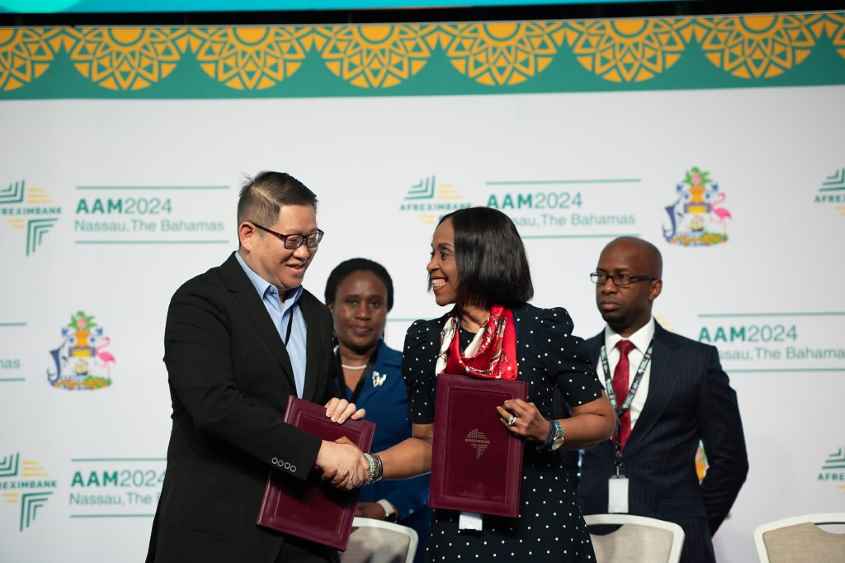
CAIRO, Egypt, September 22, 2026/APO Group/ –African Export-Import Bank (Afreximbank) (www.Afreximbank.com) has issued a US$ 29 million guarantee to BSMART Technology Ltd to support the implementation and scaling of the EAC Customs Bond, the technology-enabled regional customs guarantee solution that facilitates the movement of goods across East African countries.


Aimed at strengthening the financial capacity underpinning the EAC Customs Bond and supporting the transition to a more seamless digital and integrated customs environment, the facility will enable BSMART Technology Ltd to strengthen the implementation and market uptake of the EAC Customs Bond

The financial support builds on Afreximbank’s close collaboration with the EAC Secretariat, which began with the pilot phase of the EAC Customs Bond in August 2025 and the subsequent launch of the Bond during the Heads of State Summit in March 2026. Through the Afreximbank African Collaborative Transit Guarantee Scheme (AACTGS), the Bank has been in the lead in supporting the development of regional customs guarantee and digital solutions that facilitate intra-African trade.

Afreximbank considers the EAC Customs Bond a significant step towards simplifying and digitising customs processes across the East Africa region as it enables clearing and forwarding agents and other eligible users, like guarantors and customs authorities, to access customs bonds through a digital platform, reducing reliance on physical documentation and improving cross-border movement of goods. The solution is designed to eliminate the need for physical bond documentation to be posted at each border for the entry and exit of goods, supporting a seamless transit environment.

This facility demonstrates Afreximbank’s commitment to developing practical solutions that break down the barriers to intra-African trade

By strengthening the financial capacity supporting the digital customs ecosystem, the new facility is expected to lead to the expansion and adoption of the EAC Customs Bond across the region, improve access to capacity, reduce administrative and documentation requirements and facilitate faster movement of goods across the borders. It is also expected to support greater digitisation of customs processes, thereby contributing to the broader objective of increasing intra-Africa trade.

Highlighting the significance of the facility, Mrs. Kanayo Awani, Executive Vice President, Intra-African Trade and Export Development, Afreximbank, said:

“This facility demonstrates Afreximbank’s commitment to developing practical solutions that break down the barriers to intra-African trade. With the EAC Customs Bond, we are supporting the digitisation and simplification of access to customs guarantees for businesses moving goods across the region – cutting costs and improving the efficiency of customs procedures.

“The Bond complements Afreximbank’s broader AACTGS programme to strengthen capacity across Africa. It deepens our relationship with the EAC Secretariat and other stakeholders, including the regional economic commissions. Above all, this intervention aligns with the Bank’s mandate to support the implementation of the AfCFTA and accelerate the integration of African markets.”

Mr Stephen Teang, Managing Director, BSMART Technology Ltd said: “This facility provides important support for BSMART’s growth ambitions and reflects strong confidence in EACBond. We thank Afreximbank for their partnership and support.”

The EAC Secretariat began piloting the EAC Customs Bond in Uganda in 2025. It then followed with the onboarding and participation of Rwanda and Burundi in January 2026 and an official launch at the 25th Summit of Heads of State in March 2026. Under the Bond digital platform, an agent moving goods across multiple countries can do so digitally rather than go through the traditional physical submission of documents at each border post, reducing administrative processes and avoiding delays.

Distributed by APO Group on behalf of Afreximbank.


Continue Reading

Business

Kenya’s Oil Ambitions Meet a New Refining Push at African Energy Week (AEW) 2026

Published

on

Kenya is positioning itself for a larger role in East Africa’s energy market, with Cabinet Secretary for Energy and Petroleum James Opiyo Wandayi set to participate in African Energy Week 2026

CAPE TOWN, South Africa, September 22, 2026/APO Group/ –Kenya’s energy story is no longer confined to developing its nascent oil industry or expanding its already substantial renewable power base. In 2026, the country has emerged as a potential hub for both upstream and downstream investment, while continuing to build out the electricity infrastructure needed to support a growing economy, with Cabinet Secretary for Energy and Petroleum James Opiyo Wandayi set to bring Kenya’s evolving energy agenda to African Energy Week 2026.


At the center of that shift is the proposed 700,000-barrel-per-day refinery in Lamu, which Dangote Industries plans to develop at a cost of around $15-16 billion. The company expects to break ground later this month and complete the project by 2030, with the facility intended to supply refined products to Kenya and neighboring East African markets.

The project would give Kenya a much larger role in regional fuel supply, but it also highlights the infrastructure and supply questions facing the country’s petroleum ambitions. Kenya does not yet have commercial crude production, meaning the proposed refinery will need to secure feedstock from domestic production as it develops or from producers elsewhere in the region and international markets. Reuters has reported that potential sources include South Sudan and Uganda, although infrastructure and geopolitical considerations complicate those options.

That makes Kenya’s upstream progress particularly relevant. In May, Wandayi said the country expected to begin commercial oil production in Turkana by the end of 2026, marking a significant step beyond the small-scale early oil program that has operated in the South Lokichar Basin.

Kenya is entering an important period for its energy sector, with opportunities emerging across the petroleum value chain as well as geothermal, renewables and power infrastructure

The petroleum push is unfolding alongside an ambitious electricity strategy. Kenya recently raised its planned additional generation capacity from 1,500 MW to 5,500 MW, with the revised pipeline incorporating geothermal, hydropower and nuclear generation. The country already produces approximately 93% of its electricity from renewable sources, with geothermal playing a particularly important role.

The challenge now extends beyond adding generation. Kenya is also examining the cost and structure of its electricity market, including power-purchase agreements, transmission and distribution infrastructure. The government has been under pressure to address electricity costs even as it seeks to attract the investment needed for new capacity.

For Wandayi, whose portfolio encompasses both petroleum and the wider energy sector, those developments converge around a common question: how to turn major energy projects into infrastructure, investment and industrial growth.

“Kenya is entering an important period for its energy sector, with opportunities emerging across the petroleum value chain as well as geothermal, renewables and power infrastructure,” said NJ Ayuk, Executive Chairman of the African Energy Chamber. “The proposed Lamu refinery, the development of Kenya’s oil resources and the country’s expanding power ambitions demonstrate the breadth of investment opportunities available. What matters now is creating the conditions for capital and technical expertise to move these projects from ambition into execution.”

Wandayi’s participation at AEW 2026 will put that broader agenda before investors, developers, financiers and energy companies from across Africa and beyond. His portfolio places him at the intersection of Kenya’s efforts to develop domestic petroleum resources, build new downstream infrastructure and expand a power system increasingly dominated by renewable generation.

AEW 2026 takes place in Cape Town from October 12-16, bringing together African governments, energy companies, investors and financiers for discussions spanning oil and gas, power, renewables, infrastructure, critical minerals and energy finance.

Distributed by APO Group on behalf of African Energy Chamber.


Continue Reading

Business

African Energy Week (AEW) 2026 Technical Sessions Put Technology Behind Africa’s Next Energy Projects in Focus

Published

on

Day 2 technical sessions at African Energy Week 2026 will examine frontier exploration, major gas developments, project economics and the technologies supporting Africa’s expanding oil, gas and LNG sectors

CAPE TOWN, South Africa, September 22, 2026/APO Group/ –African Energy Week (AEW) 2026’s Day 2 Technical Stages will put the technology and technical expertise behind Africa’s next wave of energy projects in focus, with sessions covering subsurface interpretation, deepwater exploration, gas development, project economics, digitalization, offshore operations and infrastructure.


The program will unfold across two exhibition-hall stages, with the Drill Room focusing on practical applications across exploration, gas development, offshore operations and LNG, while the Innovation Hub will examine frontier exploration, energy markets, digital technologies and infrastructure. Together, the sessions connect project-level technologies with the wider investment and development challenges facing Africa’s energy industry.

The day opens with GeoEnergy Petroleum Director Maged Fahim, who will examine how legacy and newly acquired subsurface datasets can be integrated with modern technologies to identify additional upstream opportunities. TGS Principal Exploration Advisor Felicia Winter will then focus on Angola’s deepwater basins, examining how modern seismic acquisition and imaging can be used to reinterpret existing data and evaluate frontier plays.

The discussions come as Angola seeks to build on renewed offshore activity. TotalEnergies announced in September that it plans to invest $10 billion in Angola over the next five years, including in exploration, while advancing its $6 billion Kaminho deepwater development.

Gas development will take center stage through two presentations by TotalEnergies. Alexandre Depiesse, GPI Venus, will address appraisal strategies and commercial viability for Orange Basin discoveries, while Mozambique LNG Operations and Project Director Nicolas Cambefort will examine development and optimisation of the Rovuma Basin gas resources. Mozambique LNG, a 13.1-million-ton-per-year project in Area 1 led by TotalEnergies, resumed activities in January 2026 following the lifting of force majeure, putting development of Mozambique’s major offshore gas resources back into focus.

AEW 2026 reflects the practical challenges facing Africa’s energy industry as projects move from resource potential toward development and production

The Republic of Congo National Showcase will provide another perspective on Africa’s expanding LNG industry. The country’s Congo LNG project reached a new stage in February 2026 with the start of commercial production from its second phase. The addition of the Nguya FLNG unit brought total liquefaction capacity to 3 million tons per year, expanding Congo’s ability to monetize its offshore gas resources.

The program will then broaden from individual projects to the continent-wide investment outlook with the launch of The State of African Energy 2027. AEC Senior Vice President Verner Ayukegba and S&P Global Energy Executive Director Max Pietzsch will present the outlook, covering upstream oil and gas, LNG, downstream markets, power, renewables and critical minerals against changing demand, trade flows and energy security requirements.

Project decision-making will remain under examination as S&P Global Energy Technical Research Analyst Tasnika Goorhoo presents “From Limited Data to Better Decisions: How Benchmarking Strengthens Upstream Project Outcomes.” The session will examine how comparative project data can help operators assess performance, costs and development outcomes.

NOV Vice President Mats Anderson will address offshore optimization through high-speed downhole connectivity and real-time distributed measurements, examining how faster access to downhole information can improve operational visibility and decision-making.

Infrastructure will also feature prominently, with Kenyon International West Africa CEO Victor Ekpenyong examining asset integrity and pipeline infrastructure through the company’s CACTUS and FlexSteel technologies. Honeywell Technologies Africa will close the technology-focused sessions with its end-to-end LNG offering, while SLB, InSwitch, the Petroleum Directorate of Sierra Leone and PETROSEN will bring additional perspectives on technology, digitalization and energy services.

“AEW 2026 reflects the practical challenges facing Africa’s energy industry as projects move from resource potential toward development and production,” said NJ Ayuk, Executive Chairman of the AEC. “From subsurface interpretation and deepwater exploration to LNG development, project benchmarking, digitalization and infrastructure, these technical sessions highlight the expertise and technologies needed to develop Africa’s resources efficiently and create lasting value across the energy value chain.”

AEW 2026 takes place from October 12–16 in Cape Town, bringing together governments, investors, operators and technology providers to discuss investment, project development and the future of Africa’s energy sector.


Distributed by APO Group on behalf of African Energy Chamber.


Continue Reading

Trending

Exit mobile version