Connect with us

Business

“Crude Oil: Power, Turnaround and Transformation in Angola” Gains Backing from Industry Leaders

Published

on

Crude Oil

Launched in Luanda on September 2, “Crude Oil: Power, Turnaround and Transformation in Angola” examines how sector reforms are reshaping the country’s oil and gas industry and unlocking a new era of value creation

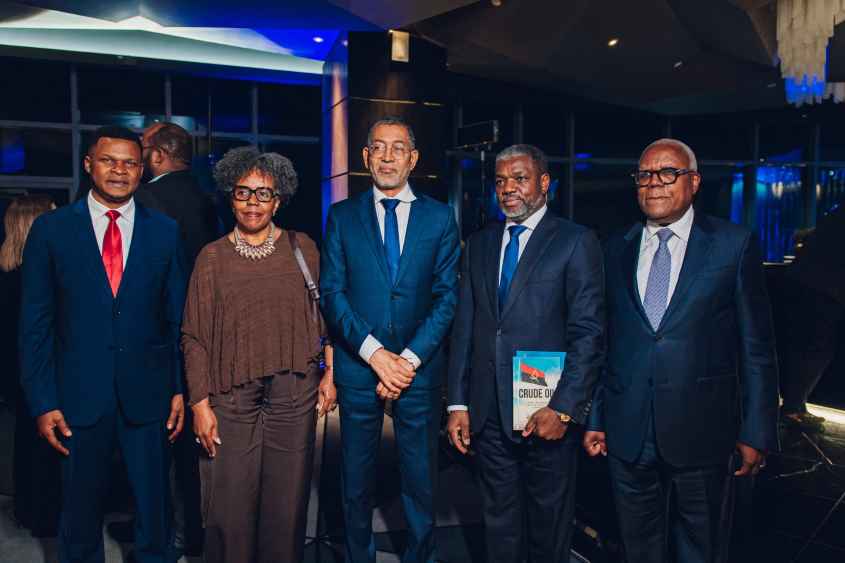
Luanda, Angola, September 4, 2026/APO Group/ –Senior Angolan oil and gas leaders gathered in Luanda on Wednesday to support the launch of African Energy Chamber (AEC) (https://EnergyChamber.org/) Executive Chairman NJ Ayuk’s latest book, “Crude Oil: Power, Turnaround and Transformation in Angola,” a timely examination of the reforms, leadership and industry transformation reshaping one of Africa’s most important energy markets.


Among those lending their support to the launch was Sebastião Gaspar Martins, Chairman and CEO of Sonangol Group, alongside senior industry figures including Sergio Pugliese, AEC Executive President, and Dr. Adilson Mangueira Nelumba, CEO of COPIA Group Companies.


The launch comes as Angola’s oil and gas sector enters a new phase of reform-driven investment and activity. Recent developments include the $5.1 billion Greater PAJ final investment decision in June and a significant oil and gas condensate discovery by Chevron offshore Block 0 in August, while national oil production has remained around the one-million-barrel-per-day mark through 2026.


Martins underscored the significance of Angola’s institutional reforms, particularly the transfer of the concessionaire role to the National Oil, Gas and Biofuels Agency (ANPG), which he described as “far more than an institutional reorganization.” The reform enabled Sonangol to progressively transition from an organization combining state responsibilities with commercial activities into a company increasingly focused on competing, operating, investing, innovating and creating value.


Martins also stressed that Angola’s resource wealth must be measured by what it enables the country to build. “Natural resources by themselves do not transform a nation. It is the institutions, the people, the decisions, and the capacity to convert those resources into value that truly transform a country,” Martins said.


For Ayuk, the story is ultimately one of a country that chose to confront the structural challenges facing its petroleum sector and reshape its trajectory from within.


“Most of the time when we talk about the oil industry in Africa, it’s bad news,” Ayuk said at the launch. “Angola has had a turnaround story. Angolans wrote that history – it’s Angolan ingenuity at its best.”


He singled out the creation of ANPG as one of the most consequential developments of the past decade, arguing that the institutional reform fundamentally changed the way Angola approached its petroleum industry.

We understand that real value begins when we manage to transform a produced barrel into investment, infrastructure, industry, knowledge, employment, and opportunities


“The only model of success for reform and transformation is leadership,” Ayuk said.


For Angola, the next chapter of that transformation is increasingly focused on converting petroleum production into broader economic value and building a competitive domestic energy-services industry.


“Production is the starting point, not the destination. We understand that real value begins when we manage to transform a produced barrel into investment, infrastructure, industry, knowledge, employment, and opportunities,” Martins said. “For us, local content cannot simply mean replacing a foreign company with an Angolan company. It must mean creating competitive Angolan companies capable of providing services in Angola today and competing across Africa tomorrow.”


Representing the private sector, Nelumba highlighted the gradual growth of Angolan participation in the oil and gas industry following the introduction of the country’s local-content framework.


“After the enactment of Law 271/20, local content in Angola – though timidly – grew to between 12% and 15% that already works directly with operators or International Oil Companies… The Government has drawn up the plan; now it is up to us to execute it,” Nelumba said.


Pugliese likewise highlighted the impact of Angola’s reforms, saying, “These have been reforms that have transformed our oil and gas industry, and attracted both confidence and investment into our industry.”


With major projects moving forward and the country seeking to deepen investment, local content and value creation across the energy chain, “Crude Oil: Power, Turnaround and Transformation in Angola” arrives at a pivotal moment – documenting not simply Angola’s petroleum history, but a continuing transformation that could offer lessons for resource-rich economies across Africa.


Crude Oil: Power, Turnaround and Transformation in Angola is now available for purchase. Buy the book on Amazon (https://apo-opa.co/4dmWN99)

Distributed by APO Group on behalf of African Energy Chamber.


Business

Thailand Signals Decisive Pivot to High-Income Status as Bangkok Business Summit 2026 Concludes with Public-Private Execution Pact

Published

on

Deputy Prime Minister Ekniti Nitithanprapas outlined an investment-led blueprint anchored by an upgraded Joint Public Private Committee (JPCC), private-sector syndication, and World Bank alignment ahead of the 2026 Annual Meetings and 2028 ASEAN Chairmanship.
BANGKOK, THAILAND – Media OutReach Newswire – 7 September 2026 – Thailand is ready to cross into “new horizons” — achieving high-income status and driving a more resilient ASEAN, declared Deputy Prime Minister and Minister of Finance Dr. Ekniti Nitithanprapas as he delivered the closing address at the Bangkok Business Summit 2026 today,


Detailing the strategic “why, how, and design” of the national transition, Dr. Ekniti stated that entering new horizons is an unavoidable global imperative. While ASEAN is uniquely positioned to capture emerging opportunities, the region must guard against severe geopolitical, technological, and climate risks with proactive, unified action.

“The goals must be clear, and we are completely on the same page: Thailand must achieve high-income status,” said Dr. Ekniti.

“The recipe provided by the World Bank aligns directly with what our business leaders have outlined. An investment-led growth policy, private-sector-centred endeavours, and persistent implementation are what the government and business community are now executing together. Think of the seven new growth engines as our forwards on the pitch. The government acts as both coach and midfielder — spearheading investment, driving trade, empowering SMEs, unlocking regulatory friction, and cultivating human capital. Meanwhile, fiscal and financial stability serves as our steadfast defensive backline.”

Dr. Ekniti affirmed that the Joint Public and Private Committee (JPPC) will no longer function as a purely advisory body, but will operate as an executive economic steering council mandated to enact structural reforms and track execution against the World Bank’s recommendations.

“We will not be the same old Thailand. We will be driving the global agenda. Thailand will enter new horizons, empower people, and build resilience,” Dr. Ekniti emphasised. “In the next two years, Thailand will assume the Chairmanship of ASEAN. We will establish a long-term, multi-year agenda for a stronger, more resilient ASEAN. If this new model of public-private partnership carries on, we will decisively reinvent Thailand.”

Key leaders representing the Joint Standing Committee on Commerce, Industry, and Banking (JSCCIB) delivered strategic sector priorities to anchor the transition.

Payong Srivanich, Chairman of the JSCCIB and the Thai Bankers’ Association, underscored that reinventing the economy requires modernising legacy industries while creating space for future engines.

“From three core challenges – structural, competitiveness, and public-sector efficiency – came the White Paper outlining the seven industries of the future,” stated Mr. Payong. “This time, the government has presented a credible policy framework based on collaborative public-private partnership. Thailand must address fundamental security—whether in food, energy, or low-carbon growth. We are declaring to the world that we are done with planning and on the same page. Now we are geared up for execution.”

Dr. Poj Aramwattananont, Chairman of the Thai Chamber of Commerce and Board of Trade of Thailand, stressed that amid geopolitical friction, geoeconomics, and regional conflict, growth must be anchored in ASEAN’s 600-plus million people which serve as both supply and demand networks.

Adapting to international trading rules is inseparable from Thailand’s targeted accession to the OECD by 2028. The accession process acts as the structural catalyst to modernise domestic legislation, corporate governance, transparency, and fair market competition to premier global standards—lowering compliance costs and solidifying investor confidence.

Pimjai Leeissaranukul, Chairwoman of the Federation of Thai Industries, insisted that Thailand must build its own brand; it can no longer afford to be just the world’s OEM. She called for a decisive departure from labor-cost competition toward high productivity, automation, AI, and green sustainability. She advocated expanding target sectors—such as next-generation electric vehicles, smart electronics, automation, and wellness—while enforcing enhanced public procurement.

Carlos Felipe Jaramillo, Vice President for East Asia and Pacific at the World Bank, observed that the eyes of the financial world will be on Bangkok next month as it hosts the 2026 IMF–World Bank Group Annual Meetings, providing Thailand with a premier global stage to show that it is advancing on a credible pathway to attain high-income status by 2037.

“The World Bank has presented a series of structural reforms that Thailand can pursue to reach high-income status, creating more and better-paying jobs for young Thais in the future,” Mr. Jaramillo stated. “The plan deliberately puts the private sector at the center, because experience has taught us that the private sector is the primary engine of employment. This reform agenda is multifaceted, requiring coordinated national effort, and, more importantly, relentless persistence in implementation.”

The Bangkok Business Summit 2026 concluded with a clear consensus: today’s closing discussions mark the formal launch of sustained, institutionalised execution across the public sector, private enterprise, and multilateral institutions to ensure Thailand stands as a resilient economic anchor for the wider ASEAN region. 


Continue Reading

Business

Powering privacy in Premium Economy – Emirates unveils the world’s first electric Premium Economy seat with full-height privacy screen

Published

on

Debuting on newly received Airbus A350 aircraft, the new seat combines industry-leading innovation with elevated comfort, giving customers greater control over their personal space

DUBAI, United Arab Emirates, September 4, 2026/APO Group/ –Emirates (www.Emirates.com) is elevating the award-winning Premium Economy experience (https://apo-opa.co/4qZnpmu) even further with the launch of the world’s first electrically powered Premium Economy seat, featuring a full-height adjustable privacy screen between every seat. Debuting on newly received Airbus A350 aircraft, the new seat combines industry-leading innovation with elevated comfort, giving customers greater control over their personal space.


Installed in the Emirates A350 Premium Economy cabin in a spacious 2-3-2 configuration with just 28 seats, the new seat represents the airline’s latest investment in continuously raising the bar for customer experience. The electric privacy divider extends to the full height of the seat – the first feature of its kind in Premium Economy cabins worldwide. Emirates Premium Economy seats are a comfortable 20” wide, and seat pitch is up to 39” on the A350. Seats also recline into a cradle position without intruding on the row behind, so that customers can comfortably sleep and relax inflight.

For Africa, this milestone marks a significant enhancement to the region’s travel offering. Emirates’ A350 Premium Economy is now available on daily services between Dubai and Entebbe, Tunis and Cape Town, giving customers in these markets direct access to the airline’s latest-generation cabin and a new level of comfort for travel.

Designed to bridge the gap between Economy and Business Class, Premium Economy offers a compelling combination of additional space, enhanced privacy, superior dining and elevated service, providing an attractive option for both business and leisure travellers seeking additional comfort on short to long-haul journeys.

Customers travelling from other African destinations across the Emirates network can connect seamlessly through Dubai to A350-operated flights serving key destinations in Asia, Europe and Australia, allowing more travellers across the continent to experience the airline’s newest cabin product.

Passengers can enjoy regionally inspired menus, a carefully curated premium wine programme, amenity kits and Emirates’ renowned hospitality, complemented by more than 6,500 channels of movies, TV shows, music, podcasts and games on the award-winning ice inflight entertainment system. Together, these investments underscore Emirates’ continued commitment to enhancing the travel experience for African customers while strengthening the continent’s connectivity to the world.

How does it work?

Customers can effortlessly raise or lower the divider using the seat controls and lock it into position, creating a more private and personal environment for relaxing, dining or working throughout the flight. The new seat marks Emirates’ first fully electrically powered Premium Economy seat, where customers can also adjust their preferred seating position at the touch of a button using the integrated Passenger Control Unit, with dedicated settings like lounge mode and meal mode.

Ergonomic comforts in Premium Economy

Comfort has been further enhanced with the introduction of Emirates’ widely acclaimed U-Dream headrest by Safran Seats (https://apo-opa.co/469614X). Crafted in leather, the redesigned headrest provides exceptional neck and head support, allowing passengers to adjust the wings into multiple positions for personalised comfort. A manually deployable leather footrest offers additional relaxation and reduces leg fatigue.

Always-on power for customer devices

Wireless charging is also being introduced to Premium Economy for the first time, allowing customers to conveniently power compatible devices throughout the flight. Every seat also includes USB-C charging and a practical tray table with an integrated phone holder, transforming personal devices into a convenient second screen during meals or entertainment.

High-definition inflight entertainment and new aircraft cameras

Customers can also enjoy Emirates’ award-winning ice inflight entertainment (https://apo-opa.co/4qSEQ8d) on a 13.3-inch 4K HDR touchscreen, delivering stunning picture quality with ultra-responsive navigation. On newly delivered Airbus A350 aircraft, passengers will also enjoy enhanced aircraft camera views, with new left and right exterior perspectives joining the existing forward and downward cameras to provide an even more immersive inflight experience.

Generous meals and beverages in Premium Economy

The new seat builds on Emirates’ award-winning Premium Economy experience, where every element has been carefully designed to deliver an elevated journey from take-off to landing. Akin to a Business Class experience, customers enjoy gourmet, regionally inspired menus prepared by Emirates’ chefs and served on Royal Doulton fine china with linen napkins and stainless-steel Robert Welch cutlery. Meals are accompanied by a carefully curated selection of premium beverages, including Chandon Vintage Brut 2021, an exceptional Australian sparkling wine available exclusively to Emirates Premium Economy customers worldwide.

In Premium Economy, Emirates customers are also treated to a selection of acclaimed wines (https://apo-opa.co/4xdb1kj). From September, customers travelling on select routes may savour Chablis Premier Cru Jean-Marc Brocard 2024, which showcases the purity and mineral precision of one of Burgundy’s most celebrated Chardonnay producers, or La Parde de Haut-Bailly 2014, which offers the refined elegance of one of Bordeaux’s most respected Pessac-Léognan estates. October will also mark a first for Emirates, as Wiston Estate Brut NV becomes the airline’s first English sparkling wine, served exclusively in Premium Economy on UK routes. Together, they reflect Emirates’ continued investment in offering customers an exceptional wine programme, supported by more than US$1 billion invested in the airline’s wine portfolio since 2006.

Thoughtful amenity kits with complimentary skincare

On long-haul flights, Premium Economy customers also receive exclusive reusable amenity kits designed in partnership with United for Wildlife (https://apo-opa.co/46Flj1s). Crafted using bio-based materials including cactus leather alternatives, the collectible bags celebrate endangered wildlife across four natural habitats while introducing premium plant-powered skincare products from Aveda for the first time in Premium Economy. Each kit also includes travel essentials such as socks, eyeshades, earplugs and a dental kit, with sustainable materials incorporated throughout the collection.

Continuing to redefine Premium Economy

Since launching Premium Economy in 2022, Emirates has continued to expand the cabin across its growing fleet, with the product now available across all markets which are currently served with A350 aircrafts.

Inspired by the airline’s signature Business Class experience, Emirates Premium Economy has set a new benchmark for the category – offering a level of comfort, privacy and refinement that rivals the Business Class cabins of many airlines. The cabin combines spacious seating, generous legroom, refined dining, world-class entertainment to deliver a distinctive travel experience that has earned multiple international awards including ‘Best Premium Economy Class’ at the Business Traveller Middle East Awards 2024 and 2025 and was named ‘Airline with the Best Premium Economy Class’ at the 2025 ULTRAs Awards.

The introduction of the world’s first electrically powered Premium Economy seat with a full-height privacy screen marks the latest chapter in Emirates’ long history of aviation innovation. From pioneering onboard connectivity and inflight Wi-Fi to introducing next-generation entertainment systems and continually investing in customer comfort, Emirates remains committed to delivering products that help customers Fly Better. 

Distributed by APO Group on behalf of The Emirates Group.


Continue Reading

Business

Caribbean Energy Week 2027 Launches as Guyana’s Oil Boom Enters New Phase

Published

on

Natural Resources Minister Vickram Bharrat joined Guyana’s government and industry leaders in Georgetown to highlight the widening pipeline of opportunities for local and international investors at the Caribbean Energy Week 2027 in-country launch

GEORGETOWN, Guyana, September 3, 2026/APO Group/ –Guyana is rapidly approaching one million barrels per day of oil production, but the country’s next wave of growth could be defined as much by what happens beyond the oil fields as by the continued expansion of offshore output. That was the message from senior government and industry leaders in Georgetown on Tuesday as Caribbean Energy Week (CEW) 2027 officially launched in-country, bringing investors and energy stakeholders together around Guyana’s expanding pipeline of opportunities.


Natural Resources Minister Vickram Bharrat said Guyana’s production has surged from around 80,000 barrels per day in 2020 to more than 900,000 bpd, with the country on track to approach 1.7 million bpd by the end of the decade.

Bharrat highlighted exploration and the wider oil and gas value chain as major areas of opportunity, with Guyana’s local-content framework creating new avenues for international investors to partner with domestic companies. “You are in the right place, at the right time,” he told investors.

The government’s local-content drive is already reshaping that ecosystem. Nearly 1,300 companies are registered with the Local Content Secretariat and almost 7,000 Guyanese have been trained and certified to work directly in the oil and gas sector, Bharrat said.

“When we dropped that [Local Content Act], it was in no way meant to shut the door on foreign investment,” he said. “We have proven that the model can work, where we can have foreign investors partnering with our local private sector.”

We have proven that the model can work, where we can have foreign investors partnering with our local private sector

For Guyana’s Chief Investment Officer Peter R. Ramsaroop, the opportunity now extends beyond hydrocarbons. The country is entering a period of transformation in which energy availability and cost could unlock new investment across manufacturing and other industries.

“Energy is economics. It’s not a commodity, it’s a variable,” Ramsaroop said, pointing to the expected impact of lower electricity costs as Guyana’s Gas-to-Energy (GtE) project comes online.

The approximately 300-MW project is designed to process natural gas from the offshore Stabroek Block for power generation while recovering natural gas liquids. Lindsayca Guyana Country Manager and Board Member Luis Pirela said the project is targeting power generation before the end of 2026.

“With GtE, our goal is to bring energy to Guyana in the shortest time possible,” Pirela said, adding that Lindsayca is now sourcing close to 70% of its materials locally.

The project illustrates the wider shift underway in Guyana, where the rapid expansion of oil production is generating demand for infrastructure, services, manufacturing and local businesses while creating new opportunities for international investors. That transformation is also increasingly regional in scope – a central focus of Caribbean Energy Week 2027.

“Looking around this room, the strength of our collective leadership is clear,” said Sandra Jeque, Vice President at Energy Capital & Power, organizers of CEW. “We are here today to lay the groundwork for what will be a landmark event for the region – Caribbean Energy Week 2027 – at a critical moment for the Caribbean’s energy future.”

With Guyana emerging as one of the world’s fastest-growing oil producers, CEW 2027 will bring that momentum into a regional forum focused on investment, partnerships and the next chapter of the Caribbean’s energy economy.

Distributed by APO Group on behalf of Energy Capital & Power.


Continue Reading

Trending

Exit mobile version