Connect with us

Business

Binance Marks Nine Years: Nearly Half of All Crypto Holders Use Binance, $156 Trillion in All-Time Volume, and a Growing Vision Beyond Crypto

Published

on

Binance

From crypto exchange to multi-asset financial platform, Binance marks nine years of growth driven by its global community and sets its sights on three billion users

JOHANNESBURG, South Africa, July 14, 2026/APO Group/ –Binance (www.Binance.com), the world’s largest cryptocurrency exchange by trading volume, today marks its ninth anniversary with more than 323 million registered users across over 100 countries. When Binance launched in July 2017, fewer than 6 million people (https://apo-opa.co/4pj8By1) worldwide owned cryptocurrency. Today, that number exceeds 741 million (https://apo-opa.co/3RvfRKN), representing growth of more than 12,000% in under a decade. Binance’s user base has grown from zero to 323 million over the same period, meaning roughly 43% of all crypto holders worldwide now use Binance.


The milestone arrives as digital assets move from the margins of global finance to the mainstream. Institutional participation is at record levels, with ETFs and digital asset trusts now holding over 12% of circulating BTC supply. Regulatory frameworks are forming across the G20, the EU, the Middle East, and Southeast Asia. The lines between traditional finance and crypto infrastructure are blurring in ways that would have been difficult to predict when Binance launched.

For Binance, the anniversary is more than a reflection of nine years of growth. It is also a statement of intent: to become the world’s leading financial super app, bringing access to global markets to its target of over three billion users worldwide.

Binance’s Scale at a Glance:

  • 323 million registered users globally, up roughly 7% in H1 2026 alone, representing approximately 43% of all crypto holders worldwide
  • Over $156 trillion in cumulative all-time trading volume across all products (up 7.8% from $145T at year-end 2025), a figure that exceeds the combined annual GDP of the United States, China, Japan, Germany, and the United Kingdom
  • Institutional users grew 9% in H1 2026, reflecting continued maturation of the buyer base
  • $80B+ in monthly TradFi trading volume since March 2026
  • 11% more coins and 3% more trading pairs added in H1 2026, broadening market access

From Crypto Exchange to Multi-Asset Platform

Over the past year, Binance extended its product suite into traditional financial instruments, including stock trading, ETFs, and pre-IPO perpetuals, alongside its existing digital asset offerings. These products are built on Binance’s blockchain-native infrastructure, enabling stablecoin settlement, 24/7 market access, and cross-asset functionality within a single platform.

The early traction has been significant:

Users deserve access to global markets, and we intend to give it to them

  • Since March this year, TradFi products on Binance have generated over $80B in monthly trading volume.
  • Direct stocks, launched in June 2026, reached $1B in assets under management (AUM) (https://apo-opa.co/4vs17Ks) within 30 days of launch, alongside over $3B in cumulative trading volume.
  • bStocks, tokenized 1:1 U.S. securities on Binance that trade 24/7, crossed $100M in AUM (https://apo-opa.co/4pm9RQX) within 2 weeks of launch.
  • 47% of bStocks trading volume takes place outside U.S. market hours, reflecting demand for round-the-clock market access.

Even as Binance expands into new asset classes, its core crypto business continues to demonstrate the depth and resilience that have defined its market position since year one:

  • Binance has now processed $156.4 trillion in all-time trading volume, adding roughly $11.4 trillion in the first half of 2026 alone, a 7.8% increase from year-end 2025.
  • Institutional users also grew 9% over the same period, reinforcing the trend of professional capital deepening its participation in digital assets.
  • This growth occurred despite a more challenging market environment in H1 2026, indicating that user engagement is driven by structural participation rather than short-term market cycles.

Building Toward Three Billion Users

The expansion into traditional financial products reflects Binance’s vision of building the world’s leading financial super app that consolidates trading, payments, savings, and access to global markets on a single platform. The path to three billion users runs through markets that traditional institutions have historically underserved, where blockchain-native infrastructure can deliver financial services at a cost and scale that legacy systems cannot match.

Industry data supports the scale of the opportunity. It is estimated that 741 million people own crypto (https://apo-opa.co/3RvfRKN) globally, compared to approximately 630 million online brokerage accounts (https://apo-opa.co/4wH0mOO). Crypto infrastructure already reaches more people than traditional equity brokerage, and that gap is widening.

“Nine years ago, we set out to increase the freedom of money globally. What we have built is infrastructure that works for everyone. It works whether you are a retail trader in an emerging market or an institutional investor in a financial centre. When we launched in 2017, fewer than 6 million people owned crypto. Today, 741 million do, and 323 million of them are on Binance. That is not just growth. It is a shift in how the world accesses finance. We are only at the beginning,” said Yi He, Co-CEO of Binance.

“323 million people chose to trust us with their money. That is not something we take lightly. Every decision we make, every product we build, every market we enter starts with the question of whether it serves the people who put their faith in us. Today, 43% of all crypto holders worldwide use Binance. As the financial frontier moves toward the intersection of crypto and traditional finance, that trust becomes even more significant. Expanding beyond crypto into stocks, ETFs, and tokenized securities is part of that same commitment. Users deserve access to global markets, and we intend to give it to them,” said Richard Teng, Co-CEO, Binance.

Built by the Community

This year, Binance marks its anniversary under the theme “Built by You.” The theme reflects the company’s belief that its growth over the past nine years was shaped not by the platform alone, but by the millions of users who traded, learned, built, and participated on it.

To mark the occasion, Binance has launched “Built by You,” a global anniversary campaign celebrating the community that helped shape Binance. The campaign features up to $4.5 million in rewards and an interactive journey across nine landmarks in ‘Binance City’, each tied to a different part of the Binance ecosystem.


Products and services referred to in this press release may not be available in your region.


Distributed by APO Group on behalf of Binance.


Business

ExxonMobil Advances Dual-Track Angola Strategy as Brian Unietis Joins Angola Oil & Gas (AOG) 2026

Published

on

ExxonMobil Angola Country Manager Brian Unietis joins AOG 2026 as the company advances a multi-faceted energy strategy in Angola

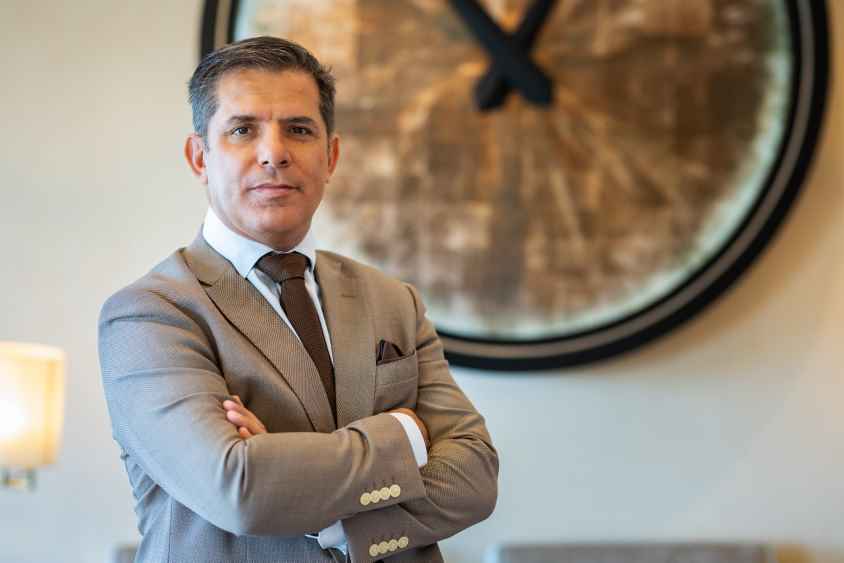
LUANDA, Angola, July 14, 2026/APO Group/ –ExxonMobil’s evolving upstream strategy in Angola will take center stage at the Angola Oil & Gas (AOG) 2026 conference and exhibition as Brian Unietis, Lead Country Manager of ExxonMobil Angola, joins the event as a featured speaker. His participation comes as the company advances a dual-track strategy centered on maximizing production from existing assets while unlocking new offshore exploration opportunities.


Having assumed leadership of ExxonMobil Angola in late 2025, Unietis now oversees a portfolio entering a period of rapid execution. Under his leadership, ExxonMobil has shifted from primarily managing mature offshore assets toward delivering new production, extending field life and opening entirely new exploration provinces designed to support Angola’s ambition of sustaining crude output above one million barrels per day (bpd).

One of the company’s most significant recent milestones came in April 2026 when ExxonMobil awarded a major EPCI contract to Subsea7 for the Likembe Redevelopment 2.0 Project. The redevelopment will connect additional reservoirs back to existing Block 15 facilities through subsea tiebacks, illustrating the company’s increasing focus on infrastructure-led developments that shorten timelines while improving capital efficiency.

Alongside redevelopment activity, ExxonMobil continues to expand beyond its established producing assets. Earlier this year, the company partnered with TotalEnergies and Angola’s National Agency for Petroleum, Gas and Biofuels to secure exploration rights across multiple blocks in the Benguela and Namibe Basins, two frontier regions expected to underpin Angola’s next generation of offshore discoveries. Geological evaluation also continues following ExxonMobil’s first exploration drilling campaign in the Namibe Basin, while additional subsurface assessments are underway across the Free Areas of Blocks 17/06 and 32/21.

The operational momentum follows a series of major strategic decisions taken shortly after Unietis assumed leadership. ExxonMobil and its Block 15 partners reached a final investment decision last year to extend production from the Mondo and Saxi-Batuque fields. The investment followed the extension of Block 15’s production license through 2037, providing the fiscal certainty needed to unlock further redevelopment opportunities across one of Angola’s most productive offshore assets.

Beyond upstream developments, ExxonMobil continues investing across the wider offshore value chain. The company recently secured a long-term charter agreement with Bourbon Mobility for a new fleet of fuel-efficient crew transfer vessels scheduled to enter service in 2027, while specialized management programs are being deployed to safely manage naturally occurring radioactive material generated from mature offshore operations.

These initiatives form part of ExxonMobil’s broader investment program, centered on maximizing production from existing infrastructure while opening new offshore basins capable of sustaining the country’s production base well into the next decade.

As Angola advances policies designed to attract fresh upstream capital and accelerate offshore development, AOG 2026 – taking place in Luanda from September 9‒10, with a pre-conference day on September 8 – will provide a key forum for government leaders, operators and investors to discuss the sector’s next phase of growth.

Unietis’ participation underscores ExxonMobil’s long-term commitment to Angola and positions the company at the forefront of the country’s strategy to combine mature asset redevelopment, frontier exploration and sustained investment to secure its future as one of Africa’s premier oil producers.  ​

Distributed by APO Group on behalf of Energy Capital & Power.


Continue Reading

Business

Africa Trade Development Forum Set to Convene Global Trade and Industry Leaders in Addis Ababa

Published

on

While much global trade conversation has focused recently on tariffs, the primary barrier to African trade lies in the technical, regulatory, financial, and logistical challenges of being able to export, often referred to as Non-Tariff Barriers

ADDIS-ABABA, Ethiopia, July 14, 2026/APO Group/ –Africa’s heads of government, policymakers, leading industrialists, and global partners will gather in Addis Ababa on 23 and 24 November 2026 for the Africa Trade Development Forum 2026. Co-hosted by the Ministry of Trade and Regional Integration of the Federal Democratic Republic Ethiopia and TradeMark Africa (TMA) (www.TradeMarkAfrica.com), the biennial summit arrives at a turning point for the continent’s economic integration and shifting global trade dynamics.


While much global trade conversation has focused recently on tariffs, the primary barrier to African trade lies in the technical, regulatory, financial, and logistical challenges of being able to export, often referred to as Non-Tariff Barriers.

ATDF 2026 offers an important opportunity to focus on these issues with clarity, seriousness and a shared sense of purpose

These Non-Tariff Barriers – such as the measures and processes that allow African companies to show international offtakers that they are meeting critical safety and sanitary standards – currently add an estimated 15% to 30% to regional trade costs. UNECA suggests that eliminating these barriers alone could surge intra-African trade by 52%.”Compliance costs are often higher than the tariffs themselves including actual import duties,” notes UNCTAD, citing that technical measures now regulate two-thirds of global trade.

The 2026 Forum will focus on priority, collective actions to harmonise standards, looking at what is needed to reduce compliance costs, accelerate quality certification, and ensure diminishing rejections of African goods by the world’s most lucrative markets.

Commenting on the forum, H.E. Hailemariam Desalegn Boshe, TMA Board Chair and former Prime Minister of Ethiopia said: “The next phase of Africa’s trade growth will depend on African firms showing that their products are as good as those of anywhere in the world. Businesses are up for the challenge – what we need to do, is to help assess and certify their goods, in a way that does not create a burden. ATDF 2026 offers an important opportunity to focus on these issues with clarity, seriousness and a shared sense of purpose.”

H.E. Kassahun Gofe (PhD), Minister of Trade and Regional Integration of the federal Democratic Republic of Ethiopia said: “Ethiopia is honoured to host the Africa Trade Development Forum 2026 at a time when the continent is placing renewed focus on the quality of its trade systems and the competitiveness of its markets. Standards and quality infrastructure are central to industrial growth, market confidence and the ability of African producers to compete within the continent and beyond. We look forward to welcoming leaders and institutions to Addis Ababa for a practical and forward-looking discussion on the reforms needed to strengthen trade in measurable terms.”

David Beer, Chief Executive Officer of TMA, added: “Africa’s trade ambitions will be realised by building the systems that allow African firms to compete better with the rest of the world, by showing their goods comply with the highest standards. Quality systems underpin that, as they build the trust that markets demand. ATDF 2026 will see leaders focus on how to help businesses make that happen.”

Distributed by APO Group on behalf of TradeMark Africa (TMA).


Continue Reading

Business

From Copper to Gold and Cobalt, These Companies Are Driving Africa’s Next Wave of Mining Investment

Published

on

With billions of dollars being invested in new mines, exploration programs and mineral processing facilities, African Mining Week 2026 will bring together industry leaders – including KoBold Metals, Makor Resources, Buenassa, Typhoon Greenfield Development and Gold Ore – to showcase the projects advancing Africa’s mining sector

CAPE TOWN, South Africa, July 14, 2026/APO Group/ –Africa’s mining sector is entering a new investment cycle as producers accelerate exploration, develop new mines and expand mineral processing capacity to meet rising global demand for strategic minerals. Across the continent, billions of dollars are being deployed into projects designed to increase production, strengthen value addition and position African countries as more competitive players in global mineral supply chains.


Against this backdrop, African Mining Week (AMW) 2026 — The Most Influential Mining Conference in Africa – will bring together the companies leading these investments to discuss the projects, partnerships and financing shaping Africa’s next generation of mining development. Taking place in Cape Town from October 14–16, the event will feature producers advancing major projects across Zambia, the Democratic Republic of Congo, Ghana and South Africa.

Against this backdrop, African Mining Week (AMW) 2026 — The Most Influential Mining Conference in Africa – will bring together the companies leading these investments to discuss the projects, partnerships and financing shaping Africa’s next generation of mining development. Taking place in Cape Town from October 14–16, the event will feature producers advancing major projects across Zambia, the Democratic Republic of Congo, Ghana and South Africa.

Among the companies leading this momentum is KoBold Metals, which broke ground on its $2 billion Mingomba Copper Project in Zambia in May 2026 – one of the country’s largest new mining developments. Expected to produce 300,000 tons of copper annually once operational in the early 2030s, the project supports Zambia’s ambition of increasing national copper production to three million tons per year by 2031. Beyond mine development, the company is deploying artificial intelligence and advanced geological modelling to accelerate mineral discovery across the DRC and Burundi. At AMW 2026, Mfikeyi Makayi, CEO of KoBold Metals, will discuss how technology-driven exploration is reshaping mineral discovery and accelerating Africa’s next generation of mining projects.

Also contributing to Zambia’s expanding copper pipeline is Makor Resources, which is advancing exploration at the Muli and Kangili copper projects. As producers seek to replenish future supply through new discoveries, Brooke Bibeault, CEO of Makor Resources, will outline the company’s $30 million investment strategy and its contribution to strengthening Zambia’s position as Africa’s second-largest copper producer.

Elsewhere on the continent, Buenassa is supporting the DRC’s push to capture greater value from its mineral resources through domestic processing. Eddy Kioni, CEO of Buenassa, will showcase the company’s integrated mining and mineral processing strategy, including the development of a multi-metal processing facility in Lualaba Province. Currently in its feasibility stage, the refinery project will produce 30,000 tons of LME-grade copper cathode and 5,000 tons of cobalt contained (cobalt metal with optionality for sulphate) per annum, during phase 1. Later stages of the project will expand capacity to up to 120,000 tons of copper and 20,000 tons of cobalt contained (cobalt metal with optionality for sulphate) in subsequent phases.

In Ghana, Typhoon Greenfield Development is focused on strengthening the artisanal and small-scale mining sector. Kwaku Afrifa Nsiah-Asare, CEO of Typhoon Greenfield Development, will discuss best practices for formalizing artisanal mining, attracting private investment and increasing production in one of Africa’s leading gold-producing nations.

Meanwhile, Sean Meadon, Senior Geologist at South African producer Gold Ore, will highlight the company’s Turnbridge underground and New Kleinfontein opencast projects, which aim to support the revitalization of South Africa’s gold sector. With first production targeted in 2026, the projects align with broader efforts to expand domestic output and capitalize on sustained strong gold prices.

By bringing together producers, governments, investors and technology providers, AMW 2026 will explore the partnerships, financing and innovation required to translate Africa’s abundant mineral resources into long-term economic growth and industrial development.

Distributed by APO Group on behalf of Energy Capital & Power.

Continue Reading

Trending

Exit mobile version