Connect with us
Anglostratits

Business

Australia’s Orion Minerals to Participate at Critical Minerals Africa Summit

Published

on

Orion Minerals

Orion Minerals CEO Errol Smart will speak on the company’s flagship projects in South Africa’s Northern Cape, where it targets first copper sales by 2025

CAPE TOWN, South Africa, July 1, 2024/APO Group/ — 

Orion Minerals CEO Errol Smart will participate at the upcoming Critical Minerals Africa (CMA) Summit, taking place on November 6-7 in Cape Town. Smart is expected to speak on the Australian mining firm’s role in advancing the energy transition minerals industry in South Africa, as well as identify strategic areas for further investment.

In South Africa, Orion Minerals is undertaking a series of exploration and infrastructure development initiatives to achieve its target of first copper sales by 2025. Earlier this month, the company discovered high-grade copper deposits at the Flat Mines area of the Okiep Copper Project in Northern Cape Province. Orion Minerals is conducting a feasibility study to secure the funding required to initiate mine development. With up to 9.4 million tons at 1.3% copper reserves estimated at the Flat Mines, the project will consolidate South Africa’s position as a leading supplier of the essential mineral.

CMA 2024 serves to position Africa as the primary investment destination for critical minerals. The event is held alongside the African Energy Week: Invest in African Energy 2024 conference (https://AECWeek.com) on November 4 – 8, offering delegates access to the full scope of energy, mining and finance leaders in Cape Town. Sponsors, exhibitors and delegates can learn more by contacting sales@energycapitalpower.com.

Last month, Orion Minerals secured R43.7 million (US$2.4 million) from South Africa’s Industrial Development Corporation to acquire a controlling stake in the Okiep Copper Project, supporting ongoing exploration and accelerating mine development towards the 2025 production goal. The company has also begun trial mining at its Prieska Copper Zinc Mine project in the Northern Cape, as part of efforts to fast-track the rollout of the 2.4 million metric tons per annum project.

Orion Minerals has shown a strong commitment to enhancing South Africa’s critical mineral value chain and increasing value-added activities. The company is conducting feasibility studies for the Jacomynspan Battery Metals Project, which aims to supply high-grade nickel-copper-cobalt-PGE-gold to the Stratega Metals Vapour Refining Project. The latter project is set to be South Africa’s first refinery facility for battery materials. At CMA 2024, Smart will participate in high-level panel discussions that highlight the company’s project portfolio, investment strategy and partnership opportunities going forward.

Distributed by APO Group on behalf of Energy Capital & Power.

Business

Africa and Caribbean trade potential could reach $1.65 billion annually by 2030: International Trade Centre (ITC)-Afreximbank report

Published

on

Afreximbank

The report finds that around 80% of Africa’s annual goods export potential to the Caribbean remains untapped

ST. JOHN’S, Antigua and Barbuda, November 3, 2026/APO Group/ –Annual trade in goods and services between Africa and the Caribbean could reach up to $1.65 billion by 2030, excluding mineral fuels, according to a new report launched today by the International Trade Centre (ITC) and African Export-Import Bank (Afreximbank) (www.Afreximbank.com) on the sidelines of the Commonwealth Heads of Government Meeting in Antigua and Barbuda.


The report, Reshaping Africa-Caribbean Trade: Opportunities for Economic Transformation, (https://apo-opa.co/4eiz62u) finds that while Africa and the Caribbean share deep historical and cultural links, trade between the two regions continues to represent only a small share of each region’s overall trade, despite complementarities across sectors ranging from agribusiness and manufacturing to services and the creative economy.

A look at the numbers

The report finds that around 80% of Africa’s annual goods export potential to the Caribbean remains untapped, with are significant opportunities for export growth if trade and investment is actively promoted and facilitated.

Africa and the Caribbean must transform a shared history into shared prosperity

Caribbean export potential lies in the services sector, reaching $481 million. The report identifies business opportunities across several priority sectors, including processed food and animal feed, chemicals, minerals and metals, apparel and textiles, leather and footwear, tourism, transport services and creative industries.

These findings – and more – are based on trade and export potential analysis, detailed sector assessments and a survey of 1,175 businesses and business support organizations across Africa and the Caribbean.

Tapping into priority sectors

ITC Executive Director Pamela Coke-Hamilton (https://apo-opa.co/3WHHZMU), in launching the report, said: ‘At a time of major shifts in global trade, countries need to strengthen regional ties and invest in value addition, to build resilience. We know the major trade opportunities between Africa and the Caribbean – and now we can focus on helping businesses take advantage of those opportunities through better market intelligence, improved logistics and greater access to finance.’

Commenting on the report, Denys Denya, Senior Executive Vice President at Afreximbank, said: ‘Africa and the Caribbean must transform a shared history into shared prosperity. With our CARICOM office in Barbados, about $1 billion in approved transactions and a $5 billion regional financing commitment, Afreximbank is advancing this vision through financing, deposit mobilization under CENDEP, business links through the annual Afri-Caribbean Trade and Investment Forum, local-currency payments through CAPSS and creative-industry collaboration through CANEX. This report offers a practical roadmap to turn untapped potential into bankable opportunities across agribusiness, manufacturing, tourism and the creative economy. Through targeted financing, stronger transport and logistics links and strategic partnerships, we can build a Global Africa connected by heritage, trade, investment and shared opportunity.’

The report finds that businesses continue to face significant challenges, including high transport costs, limited direct shipping links, regulatory barriers, limited access to finance and difficulties in identifying trusted commercial partners. It highlights that future economic cooperation should extend beyond traditional trade in goods, including through joint investment ventures, digital services, creative industries and tourism. It also calls for targeted action to improve market intelligence and business matchmaking; expand access to trade finance and payment solutions; strengthen transport and logistics connectivity; support sector-specific value chain development; improve regulatory cooperation and market access; and foster stronger partnerships among business support organizations.

Read the full report HERE (https://apo-opa.co/4exHBH9)

Distributed by APO Group on behalf of Afreximbank.


Continue Reading

Business

MSGBC Oil, Gas & Power 2026 Investment Track to Spotlight New Capital Opportunities

Published

on

Etu Energias

A high-level ministerial roundtable, a project development clinic and matchmaking sessions are set to drive partnerships across the MSGBC region

DAKAR, Senegal, November 3, 2026/APO Group/ –The MSGBC Oil, Gas & Power 2026 conference and exhibition, taking place from December 1–3 in Dakar, will introduce a dedicated Investment Track designed to deepen capital engagement across West Africa’s energy landscape. Building on the region’s expanding upstream activity, infrastructure development and cross-border integration, the track will serve as a platform where governments, investors and project developers can align on investment pathways across the MSGBC basin.


At the core of the Investment Track will be the Ministerial Leadership & Global Capital Roundtable, where energy ministers will convene to examine how enhanced regional cooperation, regulatory alignment and coordinated infrastructure development can accelerate capital flows into the sector. The session is expected to focus on the policy and financing frameworks required to unlock large-scale projects, including investment codes such as Mauritania’s 2025 reform, as well as strengthening fiscal incentives and improving regulatory clarity to attract capital into the energy sector.

The Investment Track is designed to move beyond dialogue and into deal facilitation, bringing together decision-makers who can directly shape the next phase of energy investment

For the first time at the MSGBC Oil, Gas & Power event, the Project Development Clinic will introduce a more technical format. In this small-group advisory setting, project developers, government representatives and investors will engage directly on project challenges. The clinic aims to improve project structuring, address financing bottlenecks and identify practical solutions to accelerate development timelines and move projects closer to final investment decisions.

The Investment Track will also feature structured Business-to-Business Matchmaking sessions designed to connect stakeholders across the energy value chain. These targeted engagements will facilitate discussions between investors, operators, service companies and public-sector institutions, enabling participants to explore partnerships and co-investment opportunities.

Together, these sessions reflect the MSGBC region’s broader shift toward investment-led growth. In Senegal, this momentum is already visible through the partnership between state-owned agencies APIX and COS-PETROGAZ to improve the business environment for energy projects and streamline investment processes. With PETROSEN advancing development work on the Yakaar-Teranga gas project and targeting a final investment decision in December 2026, alongside new exploration opportunities emerging onshore, the Investment Track will provide a platform to connect the region’s resource potential with investors and project developers.

“The Investment Track is designed to move beyond dialogue and into deal facilitation, bringing together decision-makers who can directly shape the next phase of energy investment across the region. By creating a space for investors, project developers and public-sector stakeholders to engage directly, the track will help turn investment priorities into concrete partnerships and project opportunities,” states Sandra Jeque, Events and Project Director, Energy Capital & Power.

Explore opportunities, foster partnerships and stay at the forefront of the MSGBC region’s oil, gas and power sector. Visit www.MSGBCOilGasAndPower.com to secure your participation at the MSGBC Oil, Gas & Power 2026 conference. To sponsor or participate as a delegate, please contact sales@energycapitalpower.com.

Distributed by APO Group on behalf of Energy Capital & Power.


Continue Reading

Business

Afreximbank and partners bring together investors and industrialists in Benin to Accelerate local processing and investment in Special Economic Zones

Published

on

Afreximbank

Held under the theme “Investing in Local Processing and Industrialisation”, the forum brought together international investors, industrialists, buyers and development finance institutions to explore the vast opportunities for local processing and strategic partnerships offered by the GDIZ

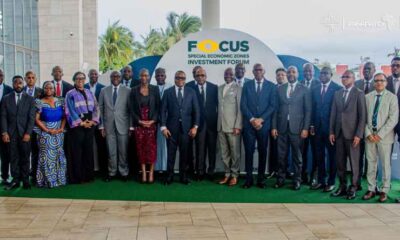
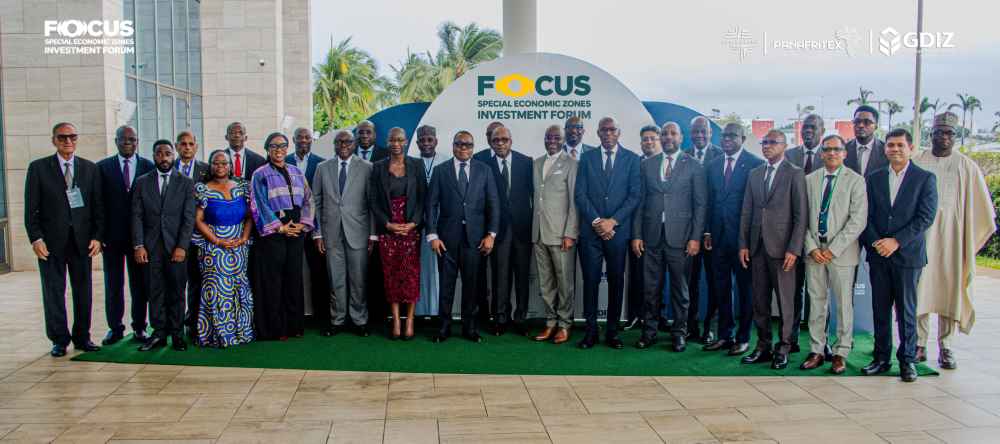
COTONOU, Benin, November 3, 2026/APO Group/ –African Export-Import Bank (Afreximbank) (www.Afreximbank.com), in partnership with the Société d’Investissement et de Promotion de l’Industrie (SIPI-BENIN S.A), the entity responsible for developing the Glo-Djigbé Industrial Zone (GDIZ), and Panafritex, hosted the Special Economic Zones Investment Forum (FocusSEZ 2026) on 21 and 22 October 2026 at the Sofitel Cotonou Marina Hotel and the GDIZ.


Held under the theme “Investing in Local Processing and Industrialisation”, the forum brought together international investors, industrialists, buyers and development finance institutions to explore the vast opportunities for local processing and strategic partnerships offered by the GDIZ.

Local processing at the heart of discussions

In his address, Mr Jean Arsene Yemina, Regional Director of Operations for Francophone West Africa at Afreximbank, speaking on behalf of Ms Kanayo Awani, Executive Vice President, Intra-African Trade and Export Development, Afreximbank, highlighted the role of financing and industrial partnerships in transforming Africa’s raw materials into finished products:

“Here in Benin, textiles have become the driving force behind this transformation. The Glo-Djigbé Industrial Zone was established through a partnership between the Government of Benin and ARISE IIP, with Afreximbank proud to have contributed to financing its development.

“Here in Benin, the textile industry has become the driving force behind this transformation. The Glo-Djigbé Industrial Zone was created through a partnership between the Government of Benin and ARISE IIP, and Afreximbank is proud to have helped finance its establishment. Today, the zone is home to West Africa’s first fully integrated cotton-to-garment manufacturing platform, operated by Benin Textile (BTEX). The entire value chain, from ginning and spinning to weaving and finished garments, is carried out on African soil by African hands. Before the creation of the GDIZ, less than 1% of Benin’s cotton was processed locally. In just three years, the zone has come to process approximately 40,000 metric tons of cotton—nearly 12% of national production—and to produce millions of “Made in Benin” garments for major international brands such as US Polo, Kiabi, and H&M.”

He also highlighted similar efforts underway at the GDIZ to develop local processing in the cashew, soybean and shea value chains.

Mr Létondji Beheton, Director General of SIPI-BENIN S.A., emphasised the need to strengthen value addition across the continent:

“Our ambition can no longer be limited to producing and exporting raw materials. We must go further by processing more of these resources on our continent, developing competitive industries, strengthening our value chains and retaining a greater share of the wealth generated from our natural resources.”

He added: “It is against this backdrop that the Glo-Djigbé Industrial Zone (GDIZ) was established, as the outcome of a public-private partnership between the Republic of Benin and ARISE Integrated Industrial Platforms (ARISE IIP). This integrated industrial platform embodies a shared commitment to making local processing a driver of economic growth, job creation and industrial development.

“By attracting manufacturing facilities and developing integrated value chains, the GDIZ is helping transform raw materials into higher-value-added products, strengthen Benin’s industrial capacity and enhance its competitiveness in regional and international markets. In doing so, it is contributing to the development of a more diversified economy that generates wealth and creates sustainable opportunities for the country.”

Africa has significant potential to strengthen its position in the global textile industry

Mr Arvind Mathur, CEO of PANAFRITEX, highlighted the role of ARISE IIP’s textile platform in developing an integrated textile industry in Africa, capable of transforming the continent’s cotton into finished, high-value-added products.

“Africa has significant potential to strengthen its position in the global textile industry. Realising this ambition will require the development of integrated industrial capacities that can transform cotton grown on the continent into higher-value-added finished products, while enhancing the competitiveness of the sector and expanding its access to international markets.

“At PANAFRITEX, we are contributing to this momentum by developing a model that brings together industrial processing, business development and the promotion of finished products. Our own brands, Obalé and SúSú, are part of this approach, connecting Africa’s manufacturing capabilities with consumer markets.

“The commissioning of our first industrial facilities at the GDIZ in Benin marks a major milestone in the rollout of this model. At the same time, the development of new facilities in Cameroon, Kenya, Nigeria, Ghana and Tanzania reflects our ambition to progressively expand our industrial footprint across the continent.

“Through this expansion, we aim to contribute to strengthening Africa’s textile value chains, creating skilled jobs and ensuring that a greater share of the value generated is retained locally.”

Financing, Market Access and Business Networking

Discussions focused on the development of a new generation of African industrial hubs, the cotton value chain, financing for the textile industry, as well as logistics and integrated supply chains. The programme also featured business-to-business (B2B) and business-to-government (B2G) meetings with targeted public-sector institutions, aimed at identifying investment opportunities, financing solutions and potential business partnerships.

Afreximbank presented the range of financial instruments and support facilities it offers investors and businesses to facilitate the establishment and expansion of their industrial operations. These include long-term financing and equipment financing, trade finance and working capital facilities, guarantees and risk-sharing mechanisms, as well as project preparation support and equity investment through the Fund for Export Development in Africa (FEDA).

The Bank also highlighted its Africa Buyers Programme, which connects African buyers with manufacturers operating in industrial zones across the continent. The initiative aims to complement access to finance with market opportunities for products manufactured in Africa.

A full day was dedicated to a visit to the GDIZ, during which participants toured its infrastructure and industrial facilities and took part in business matchmaking sessions bringing together investors, manufacturers and buyers. These activities were designed to facilitate the establishment of new manufacturing facilities and expand sourcing opportunities for “Made in Benin” products, particularly in agribusiness, textiles, plastics, packaging and industrial equipment.

Across sectors ranging from agro-processing and textiles to plastics, packaging and industrial equipment, the overarching objective is to accelerate the establishment of new production facilities and strengthen the supply of quality-certified “Made in Benin” products.

An Integrated Model for Advancing Industrial Sovereignty

Covering 1,640 hectares, the Glo-Djigbé Industrial Zone (GDIZ) is the result of a strategic partnership between the Republic of Benin and ARISE Integrated Industrial Platforms. Designed as a comprehensive, integrated ecosystem, it supports investors across the entire value chain, from securing supplies of locally sourced agricultural and mineral raw materials to industrial processing and the export of finished products, leveraging its direct connectivity to the country’s logistics infrastructure and the Port of Cotonou.

By hosting this international forum, Benin is once again demonstrating its ability to offer an attractive business environment, an enabling regulatory framework and world-class infrastructure to help build the future of African industry.

Distributed by APO Group on behalf of Afreximbank.


Continue Reading

Trending