Connect with us
Anglostratits

Business

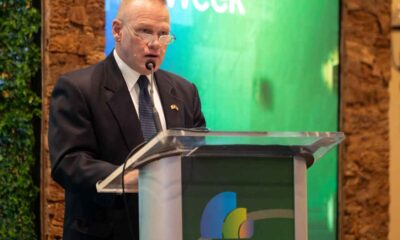
Angola: African Development Bank Group approves $10million Trade Finance Transaction Guarantee to Banco Fomento de Angola S.A.

Published

on

Angola

Leveraging BFA’s strategic footprint in Angola, this guarantee will provide support to Small and Medium sized Enterprises, including women-led businesses

ABIDJAN, Ivory Coast, December 19, 2022/APO Group/ — 

The Board of Directors of the African Development Bank Group (www.AfDB.org) has approved a $10 million Trade Finance Transaction Guarantee (TG) to Banco Fomento de Angola S.A. (BFA). Leveraging BFA’s strategic footprint in Angola, this guarantee will provide support to Small and Medium sized Enterprises, including women-led businesses.

The move will facilitate the import and export trade finance requirements of SMEs and, by extension strengthen the Angolan credit market. The African Development Bank will provide up to 100% guarantee to participating banks for the non-payment risk arising from the confirmation of letters of credit and similar trade finance instruments issued by BFA.

This is aligned with the AfDB’s focus on private sector development through the provision of support to the financial sector

Commenting on the approval, the Bank’s Director General for Southern Africa, Leila Mokaddem said, “The approval of this facility by the Board of Directors allows the African Development Bank to support BFA to finance trade-related transactions, such as exports of agricultural commodities, import of raw materials and inputs. This will strengthen BFA’s capacity to finance trade transactions for SMEs and local businesses, providing essential risk coverage to support value chain financing, working capital, and export-import transactions.”

African Development Bank Officer in Charge of the Financial Sector Development Department, Ahmed Attout emphasized the critical need for such support on the continent.

“We are excited about this partnership which will help BFA to increase its trade finance support to critical sectors of the Angolan economy by leveraging the capital relief provided by the AfDB’s AAA rated TG” he said. “This is aligned with the AfDB’s focus on private sector development through the provision of support to the financial sector,” he added.

Pietro Toigo, Bank’s country manager in Angola said: “The approval of this transaction is part of the African Development Bank’s efforts to support growth of the private sector and economic diversification in Angola, and extend provision of credit to underserved segments of the market”

The African Development Bank estimates the annual trade finance gap for Africa to be around $81 billion. Compared to multinational corporates and large local corporates, SMEs and other domestic firms have greater difficulty in accessing trade finance. The TG is one of the strategic tools that the Bank deploys to help reduce the continent’s trade finance gap.

Distributed by APO Group on behalf of African Development Bank Group (AfDB).

Business

ABB’s Application Configurator brings speed and precision to grid-feeding protection system design

Published

on

Configurator

The Application Configurator is a free tool that enables engineers to generate a complete, validated bill of materials for grid-feeding protection systems in minutes rather than hours

CAPE TOWN, South Africa, April 7, 2026/APO Group/ –As distributed energy resources (DERs) scale rapidly across Africa and globally, the pressure to design safe, compliant and grid-stable protection systems has never been greater. ABB, a global leader in electrification solutions for the energy transition, is meeting this challenge head-on with its Application Configurator.

The Application Configurator is a free tool that enables engineers to generate a complete, validated bill of materials for grid-feeding protection systems in minutes rather than hours.

In an exclusive interview with ESI Africa (published by VUKA Group), 3 experts unpack how DER is reshaping the electricity network and how a smart solution makes the connection quick and manageable.

DERs are reshaping the grid — and testing its limits

Rising DER penetration is fundamentally reshaping grid dynamics and challenging existing infrastructure. Grid-feeding protection (which prevents faults and islanding) is increasingly difficult to implement given the diversity of grid codes, architectures and regional standards. Designing flexible, adaptive solutions is now essential to maintaining grid stability while keeping projects on schedule.

Africa’s energy transition: opportunity and complexity

South Africa exemplifies both the scale of opportunity and the complexity of the challenge. The country is integrating a rapidly growing installed base of distributed energy resources into an already strained electricity grid. Grid connection capacity has long been a bottleneck, but a major national upgrade programme — encompassing new long-distance transmission lines and expanded large-scale transformer capacity — is now underway. This decade-long effort aims to ease severe congestion, address structural capacity constraints, and lower barriers to connecting new renewable projects.

Although national loadshedding has been suspended since late March 2024, load reduction remains common in areas where local networks risk overloading. In this environment, grid-feeding protection systems play a critical role: they help stabilise installations during periods of high stress and protect vulnerable infrastructure from failure.

Why automatic disconnection is non-negotiable

When DERs remain connected during a grid fault, they can amplify the problem rather than help contain it. If a localised grid issue occurs while DERs continue feeding power into an unstable system, what begins as a minor disturbance can escalate into a major disruption. Grid-feeding protection systems detect voltage and frequency deviations instantly, isolating DERs before cascade failures can develop — protecting both grid stability and worker safety.

Application Configurator: from hours to minutes

Selecting the right products for a grid-feeding system has traditionally been a time-consuming and error-prone process, requiring engineers to cross-reference extensive datasheets, technical catalogues and multiple product families. ABB’s Application Configurator fundamentally changes this workflow.

Through a guided four-step process, the tool automatically proposes the optimal electrical architecture based on project-specific parameters — including grid code standards, generation power, backup and interface devices, inverter details, short-circuit levels, and connection configuration. It draws on ABB’s full product portfolio and built-in engineering expertise to recommend protection devices, interface relays, disconnecting devices, surge protection, accessories, and communication or monitoring options.

The configurator automatically verifies selectivity, protection coordination, short-circuit withstand ratings, interface protection requirements, and component compatibility — significantly reducing the risk of mis-sizing or design errors. Users retain full flexibility to adjust quantities, swap components, or add accessories at any stage, with recommendations updating instantly. The output is a complete, validated bill of materials tailored to the specific project.

Free access for all engineers

Application Configurator is available at no cost to any engineer or project team, whether existing ABB customers or those new to ABB solutions. Users simply create an account, input their project details, and begin configuring immediately. No prior ABB relationship is required.

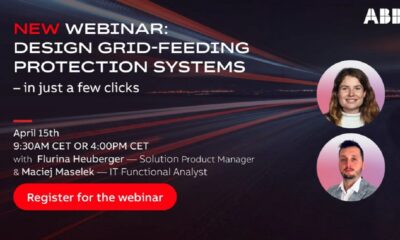
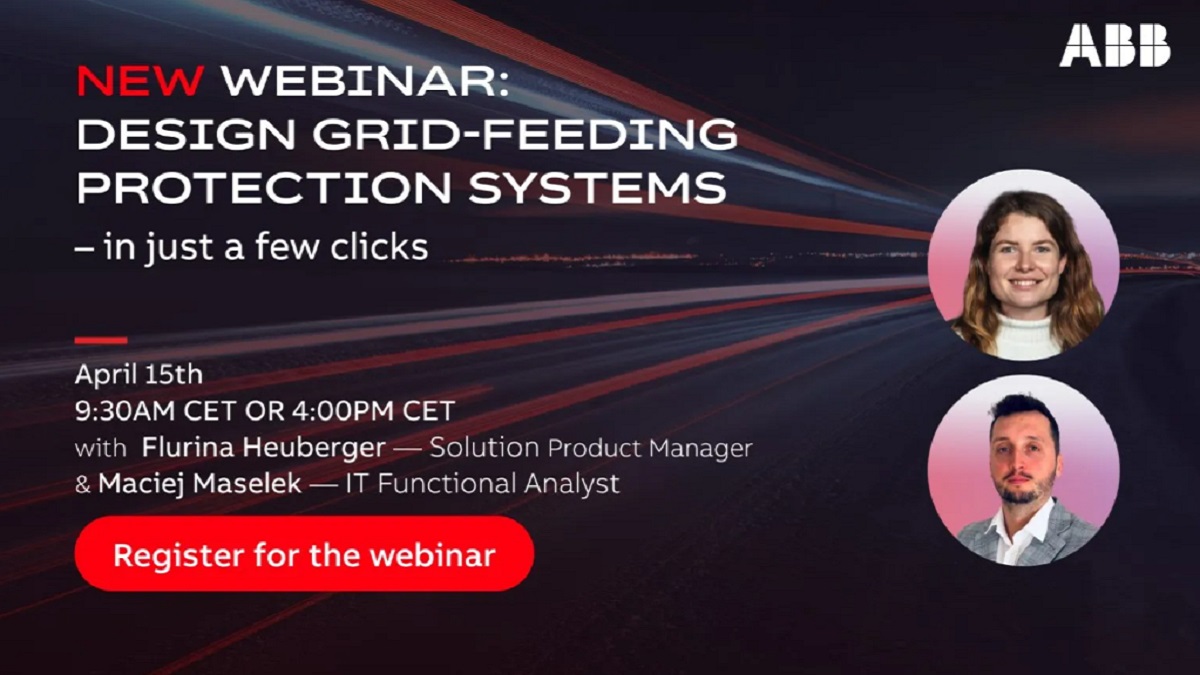
Upcoming webinar: design grid-feeding protection systems

ABB is hosting a webinar on 15 April 2026 demonstrating how Application Configurator simplifies and accelerates the design of compliant grid-feeding protection systems. The session will cover how the tool ensures safety, grid stability, availability, and power continuity across a range of project types.

Date: 15 April 2026

Times: 9:00 AM CET or 16:00 CET

Registration: (http://apo-opa.co/4ee7ITM)

About the experts:
Flurina Heuberger 
is Solution Product Manager at ABB Electrification, focusing on business strategy and innovation in the Solar, BESS, and Hydrogen sectors.
Maciej Maselek is Functional Analyst for the Application Configurator at ABB Electrification, where he ensures a seamless user experience and efficient application configuration.
Elvis Khumalo is Product Marketing Specialist for Low Voltage Products at ABB Electrification in South Africa, specialising in motor control, protection products, and solutions across industry segments.

Distributed by APO Group on behalf of VUKA Group.

Continue Reading

Energy

Can Equatorial Guinea Reposition as West Africa’s Gas Hub?

Published

on

Energy Capital

As Equatorial Guinea advances third-party gas agreements and infrastructure plans, its hub ambitions will be showcased at the Invest in African Energy Forum, with Minister Antonio Oburu Ondo and senior industry leaders confirmed to attend

PARIS, France, April 7, 2026/APO Group/ –Equatorial Guinea is moving from strategy to execution in its bid to become a regional gas hub. A series of agreements signed in early 2026 – covering cross-border supply, upstream participation and infrastructure utilization – are positioning the country to monetize gas through existing assets and regional aggregation.


This agenda will take center stage at the Invest in African Energy (IAE) Forum in Paris, where Equatorial Guinea will feature in a dedicated Country Spotlight session led by Antonio Oburu Ondo, Minister of Mines and Hydrocarbons. With participation from key industry players, including Panoro Energy and Perceptum, EG Ronda bid round organizer, the forum will provide a platform to outline the country’s gas sector repositioning and where investors can engage.

Momentum behind this model has accelerated in recent months. In February 2026, Equatorial Guinea and Cameroon signed a unitization agreement to jointly develop the cross-border Yoyo-Yolanda gas fields, estimated to hold around 2.5 trillion cubic feet of gas. Production from the project is slated to feed directly into Equatorial Guinea’s Punta Europa complex, reinforcing the country’s hub strategy without requiring standalone export infrastructure.

Simultaneously, the government strengthened domestic supply through a Heads of Agreement with Chevron to expand the Aseng gas project, increasing GEPetrol’s stake from 5% to over 30%. This not only stabilizes production but also secures additional feedstock for downstream processing, linking upstream development directly to the hub model.

Rather than focusing on new LNG developments, Equatorial Guinea is aggregating domestic and regional gas volumes to maximize existing infrastructure. At the core of this approach is the Punta Europa complex on Bioko Island, one of sub-Saharan Africa’s most advanced gas processing hubs, with LNG, methanol and LPG facilities already in place. The current challenge is securing reliable feedstock as output from legacy fields such as Alba declines.

The Gas Mega Hub initiative offers a faster, more cost-effective route to monetization. By processing third-party volumes from Cameroon, and potentially Nigeria, the country can leverage existing facilities while avoiding the risks and capital intensity of greenfield LNG projects. This approach opens a spectrum of investment opportunities across gas aggregation, transport, processing and downstream integration, often structured through commercially aligned frameworks that reduce execution risk.

Policy and regulatory support are central to this transition. The Ministry of Mines and Hydrocarbons has prioritized regulatory alignment and cross-border cooperation, recognizing that successful hub development depends as much on enabling frameworks as on physical infrastructure. The recent agreements reflect growing clarity and investor confidence.

For the global investment community, IAE 2026 offers a strategic opportunity to engage directly with government and operators shaping the hub model. The participation of both policymakers and companies active in the sector reinforces the credibility and immediate relevance of Equatorial Guinea’s strategy.

Equatorial Guinea is no longer waiting for new discoveries to drive growth. By leveraging existing infrastructure, securing regional supply and building flexible commercial models, the country is positioning itself as a critical node for gas monetization in West Africa. Success here could extend the life of its assets while establishing a platform for regional energy trade.

IAE 2026 (https://apo-opa.co/41nyEZQ) is an exclusive forum designed to connect African energy markets with global investors, serving as a key platform for deal-making in the lead-up to African Energy Week. Scheduled for April 22–23, 2026, in Paris, the event will provide delegates with two days of in-depth engagement with industry experts, project developers, investors and policymakers. For more information, visit www.Invest-Africa-Energy.com. To sponsor or register as a delegate, please contact sales@energycapitalpower.com.

Distributed by APO Group on behalf of Energy Capital & Power.

Continue Reading

Business

Grey Connects the Africa-Canada Money Corridor With Instant Transfers via Interac

Published

on

Grey

Y Combinator-backed Grey now supports direct Canadian Dollar transfers to any Canadian bank account, starting at $2.50, with Interac delivering funds in minutes

SAN FRANCISCO, United States of America, April 7, 2026/APO Group/ –Sending money to Canada has been harder than it should be. Wire queues, unpredictable fees, days of uncertainty, whether you’re supporting family in Ontario, paying a Canadian contractor, or settling a business invoice. Starting today, Grey (https://Grey.co) users can send Canadian Dollars directly to any Canadian bank account, arriving in minutes via Interac for $3.00, or the next business day via bank transfer for $2.50. No percentage fee. No wire delays.

Canada is home to one of the world’s most diverse diaspora populations, with communities from Nigeria, India, the Philippines, and other emerging markets deeply connected to their homes. The corridor has been dominated by legacy services that charge $15-30 on a typical $500 transfer and settle in days. Grey’s flat fee and Interac delivery address both problems at once.

From Lagos to Mumbai to Manila, our users had someone in Canada they needed to pay, but no good way to do so

The Interac integration matters more than the price. Interac is the payment rail built into the daily financial life of virtually every Canadian bank account holder, the same network used for everyday domestic payments. When Grey settles through Interac, the transfer doesn’t enter a wire queue. It moves the way domestic payments do: fast, confirmed, and predictable. Recipients don’t need a new app or account. The money arrives at the bank, where they already have an account.

“Canada kept coming up. From Lagos to Mumbai to Manila, our users had someone in Canada they needed to pay, but no good way to do so. Expensive wires, slow settlement, no certainty. We fixed that,” said Idorenyin Obong, CEO and co-founder of Grey.

The service supports all Canadian banks for both personal and business accounts and joins Grey’s local-currency transfer network across 170+ destinations. Users can send from USD, EUR, GBP, or NGN balances, with individual transaction limits of $10,000 CAD and business limits of up to $100,000 CAD via bank transfer. Grey holds a Money Service Business license from FINTRAC in Canada and FinCEN in the USA.

Download the Grey app on iOS or Android, or visit https://Grey.co to send your first transfer to Canada.

Distributed by APO Group on behalf of Grey.

Continue Reading

Trending