Connect with us

Energy

Africa’s Next Wave of Liquefied Natural Gas (LNG) Investment Set to Converge at Paris Energy Forum

Published

on

Energy Capital

Confirmed participation from leading and emerging gas producers will bring Africa’s most commercially significant LNG expansions, offshore developments and monetization strategies directly into view for investors and project partners

PARIS, France, February 20, 2026/APO Group/ –With governments and operators from across Africa’s gas frontier confirmed to participate, the Invest in African Energy Forum (Paris, April 22–23, 2026) arrives as the continent’s LNG sector enters a new phase of growth. Major export projects are moving into expansion, emerging producers are scaling floating liquefaction capacity and several large undeveloped gas discoveries are advancing toward commercialization. Together, these developments are shaping where capital, partnerships, and infrastructure investment will flow across Africa’s next wave of LNG and gas opportunities.


Grand Tortue Ahmeyim Expansion – Mauritania & Senegal


With first LNG already achieved, the strategic focus has shifted to Phase 2 expansion of the Grand Tortue Ahmeyim development. Partners are advancing plans for a low-cost scale-up that could roughly double liquefaction capacity before the end of the decade, leveraging existing floating LNG infrastructure and proven offshore reserves. Because core infrastructure and export routes are already in place, Phase 2 represents one of the clearest near-term LNG growth opportunities in Africa, offering comparatively lower development risk alongside meaningful production upside.


Yakaar-Teranga – Senegal’s Pre-FID Gas Anchor


Senegal’s Yakaar‑Teranga discovery remains one of the world’s largest undeveloped gas resources, with commercialization structure and domestic-versus-export allocation still under negotiation. This positioning places Yakaar-Teranga among the continent’s most consequential pre-FID gas opportunities, capable of underpinning future LNG trains, long-term gas-to-power supply or industrial feedstock development – making it a focal point for upstream financiers and infrastructure developers evaluating scalable, long-life reserves.


Nigeria’s Domestic LNG & Gas-to-Power Build-Out


Nigeria is accelerating gas monetization through supply growth, LNG expansion and downstream utilization. A 2026 gas master plan targets an additional 1.8 billion cubic feet per day (bcf/d) of supply, forming part of ambitions to reach 10 bcf/d by 2027 and 12 bcf/d by 2030, alongside more than $60 billion in sector investment. Parallel rollout of mini-LNG and small-scale liquefaction projects is expanding gas access for off-grid industry, transport and distributed power – creating multiple entry points for midstream investors, technology providers and infrastructure financiers across the value chain. For capital markets, Nigeria’s strategy signals a shift from export-only LNG toward integrated domestic gas ecosystems with diversified revenue streams.


Libya’s Gas Redevelopment Potential


Libya is working to raise gas production to nearly one billion cubic feet per day in the second half of 2026 through offshore redevelopment and the rehabilitation of legacy infrastructure, with the dual aim of stabilizing domestic electricity supply and rebuilding export capacity. If financing conditions and political alignment continue to improve, the country could re-emerge as a major Mediterranean gas supplier later this decade – representing one of North Africa’s most significant, yet still undercapitalized, gas investment opportunities.


Congo LNG – Fast-Track Floating Liquefaction Growth


The Congo LNG development has rapidly positioned the Republic of Congo as a new LNG exporter. Phase 2 began operations in December 2025, adding 2.4 million tons per year of capacity and lifting total output to about 3 million tons annually. Built around floating LNG units and modular upstream tie-ins, the project demonstrates a replicable, lower-cost commercialization model – reducing timelines compared with traditional onshore terminals. For investors, the modular structure and expansion-ready design create opportunities across upstream supply, LNG shipping, processing services and regional gas infrastructure partnerships, offering a clear pathway to participate in a fast-growing and relatively lower-risk African LNG market.


Distributed by APO Group on behalf of Energy Capital & Power.

Business

Venezuelan Oil and Gas Opportunities Take Center Stage at African Energy Week (AEW) 2026

Published

on

The country is promoting new hydrocarbons contracts, upstream and refining opportunities, and technical partnerships with Africa to attract investment and strengthen local energy sector capabilities

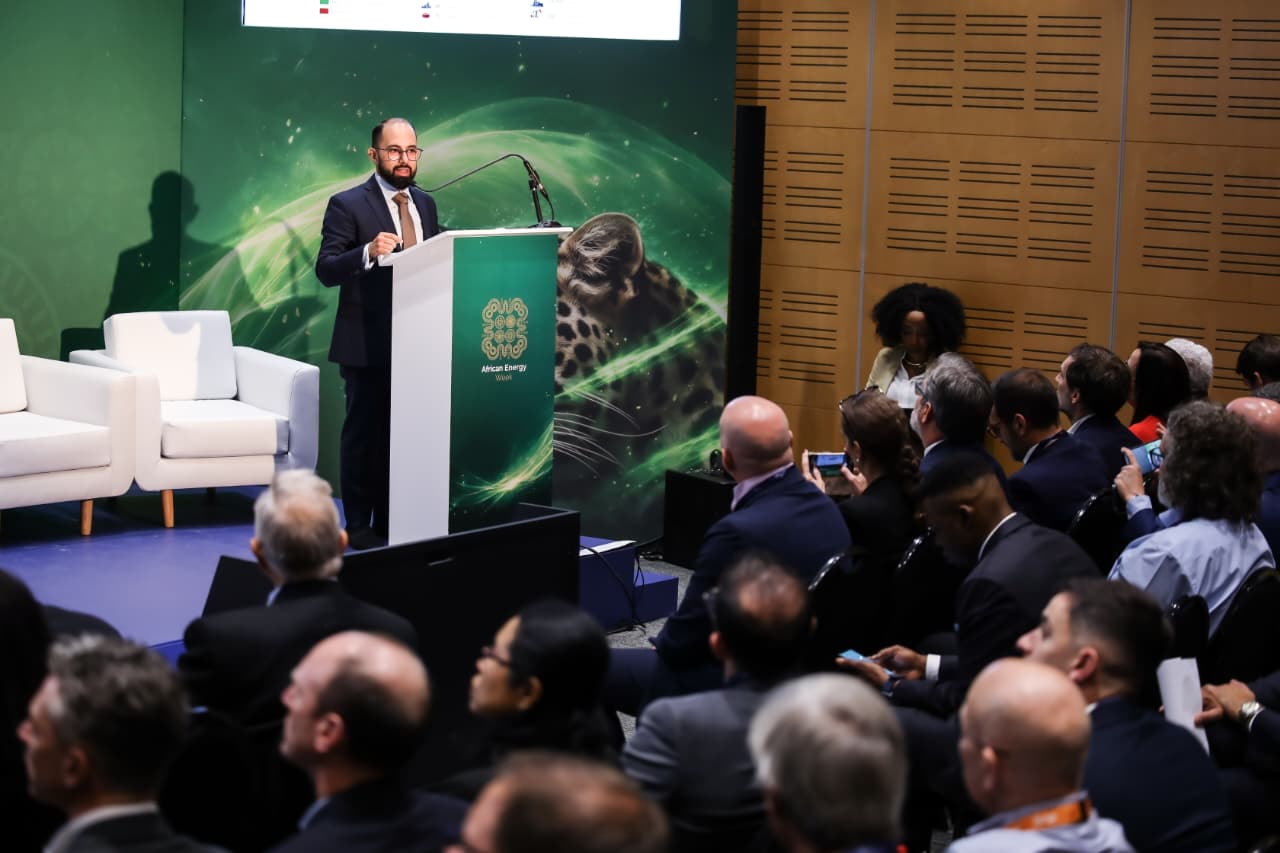
CAPE TOWN, South Africa, October 14, 2026/APO Group/ –Venezuela is seeking to attract international investment into its oil and gas sector while building stronger energy partnerships with African countries. Revised hydrocarbon legislation offers new entry routes for private operators, while cooperation on technical training could help African markets draw on Venezuela’s industry expertise. These opportunities featured at the Venezuela Global Investment Forum during African Energy Week (AEW) 2026 in Cape Town.


Ricardo Gomez, Venezuela’s Vice Minister of Commercial Policy, outlined the country’s investment proposition, highlighting 303 billion barrels of proven oil reserves and 193 trillion cubic feet of natural gas.

“Venezuela combines a large hydrocarbon resource base with refining infrastructure and a market that needs reliable energy,” he said. “The opportunities extend from upstream projects to downstream and refining.”

The country’s amended Organic Hydrocarbons Law introduces new ways for international companies to enter the market. Hydrocarbon production participation contracts allow private operators to manage designated assets, oversee operations and market production under negotiated terms. Agreements can extend for 25 years, offering a longer investment horizon for field development and rehabilitation.

Restructured joint venture companies provide another route, retaining majority state ownership while allowing international partners to take on operational responsibilities through approved agreements. Direct ministerial contracts and strategic alliances offer additional opportunities in field redevelopment, oilfield services and infrastructure.

Venezuela is seeing a lot of interest as a result of aggressive fiscal and regulatory changes that are making the country more attractive

Potential investments span heavy-oil production in the Orinoco Belt, mature onshore fields, offshore gas, pipeline rehabilitation, export terminals and refinery upgrades. Venezuela’s target of signing 105 definitive oil contracts by year-end reflects its wider effort to attract operators and accelerate project development.

Scott Gilbert, CEO and Executive Director of Corcel Plc and Non-Executive Chairman of Apertura Energy, highlighted investor interest in the changing regulatory environment. “Venezuela is seeing a lot of interest as a result of aggressive fiscal and regulatory changes that are making the country more attractive,” he said.

Alongside these commercial opportunities, Venezuela is promoting its technical expertise through the Venezuelan University of Hydrocarbons (UVH). Celia Bejarano, the university’s President, explained how the institution trains engineers and geologists in geophysics, reservoir engineering, well management, natural gas and petrochemicals.

“The Venezuelan University of Hydrocarbons was created to deliver a specialized institution where the country can train its own recruits to develop its own premier resources,” Bejarano said.

Through its Africa-Venezuela Energy Partnership with the African Energy Chamber (AEC), UVH is advancing technical training, knowledge exchange and workforce development. The initiative could help African energy projects apply Venezuela’s experience in heavy-oil production and offshore engineering while strengthening local capabilities. Rene Awambeng, founder and managing partner of Premier Invest, highlighted this opportunity for African developers.

“When we are developing our assets here, we always import talent,” he said. “With the Venezuelan University of Hydrocarbons, we can actually leverage Venezuela’s immense experience to support local content development here in Africa.”

Also speaking during the discussion, NJ Ayuk, Executive Chairman of the AEC, emphasized the strategic value of closer ties between the regions. “Our energy industry has an amazing ally in Venezuela,” he said, describing the country as “open for business and ready to partner with Africa.”


Distributed by APO Group on behalf of African Energy Chamber.


Continue Reading

Business

African Energy Chamber (AEC), S&P Global Energy Sign Five-Year Partnership for African Energy Week

Published

on

S&P Global Energy has renewed and formalized a long-term relationship with AEW as the event connects African energy projects with investors and commercial partners

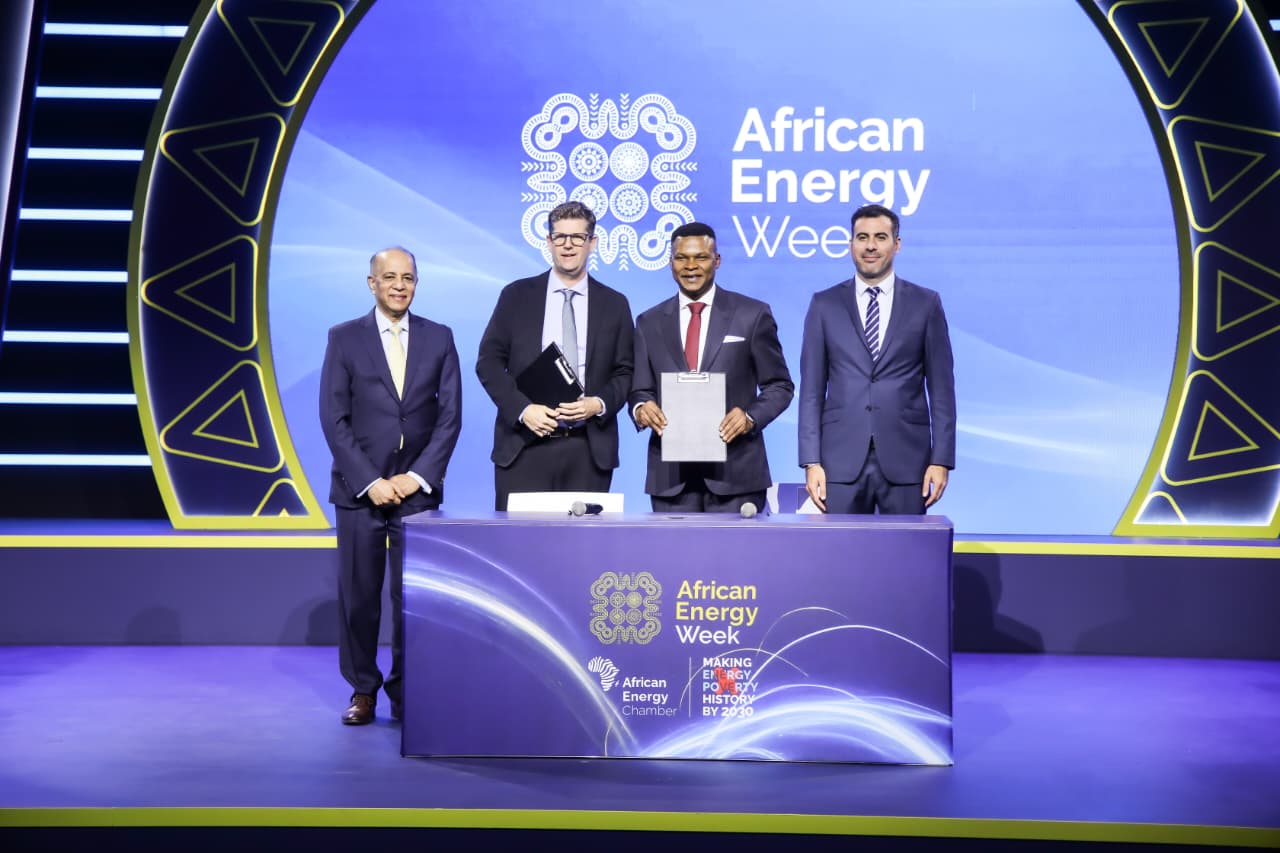
CAPE TOWN, South Africa, October 14, 2026/APO Group/ –The African Energy Chamber (AEC) (https://EnergyChamber.org/) and S&P Global Energy have signed a memorandum of understanding renewing their official partnership for the African Energy Week (AEW) conference and exhibition for five years, through the 2031 edition, establishing a long-term relationship around the continent’s energy investment platform.


The agreement was signed during the opening ceremony of AEW 2026 in Cape Town by Christian Nilsson, Chief Commercial Officer of S&P Global Energy, and NJ Ayuk, Executive Chairman of the AEC. It formalizes a partnership between one of the world’s leading market intelligence and research firms and Africa’s biggest energy conference, laying the foundation for long-term engagement and collaboration. The partnership is also set to produce a new State of Energy in Africa report, with findings to be shared at the conclusion of AEW 2026.

Africa competes for capital against every other region in the world, and the countries that win will be the ones that can show investors the numbers

S&P Global Energy provides market intelligence, data and analysis across energy and commodities. Its work supports commercial decisions on supply, demand, pricing and investment, which are areas relevant to African companies seeking capital and international investors assessing opportunities across the continent.

The partnership comes as African energy markets seek investment across upstream development, gas infrastructure, electricity generation, refining and industrial processing. Access to market information helps investors assess project economics, compare opportunities and understand the conditions influencing long-term returns.

“Africa competes for capital against every other region in the world, and the countries that win will be the ones that can show investors the numbers,” said Ayuk. “S&P Global Energy brings analytical rigor to AEW. Locking in this partnership through 2031 means the governments and companies that come to Cape Town will keep getting world-class data insights alongside the deals being signed on our stages.”

Considered Africa’s premier energy marketplace, AEW brings project owners and prospective partners together through investment forums, country spotlights, technical discussions, an exhibition and commercial meetings. The event program spans oil and gas, power, energy finance and emerging technologies, connecting policy discussions with the requirements of companies developing and funding projects.

The five-year agreement establishes a sustained relationship between the AEC and S&P Global Energy as AEW continues to connect African energy opportunities with global capital and expertise.

Distributed by APO Group on behalf of African Energy Chamber.


Continue Reading

Business

Etu Energias, Chariot, BW Energy Sign Master Agreement at African Energy Week (AEW) 2026

Published

on

The Master Agreement covers technical and financial collaboration, strengthening a partnership between the companies

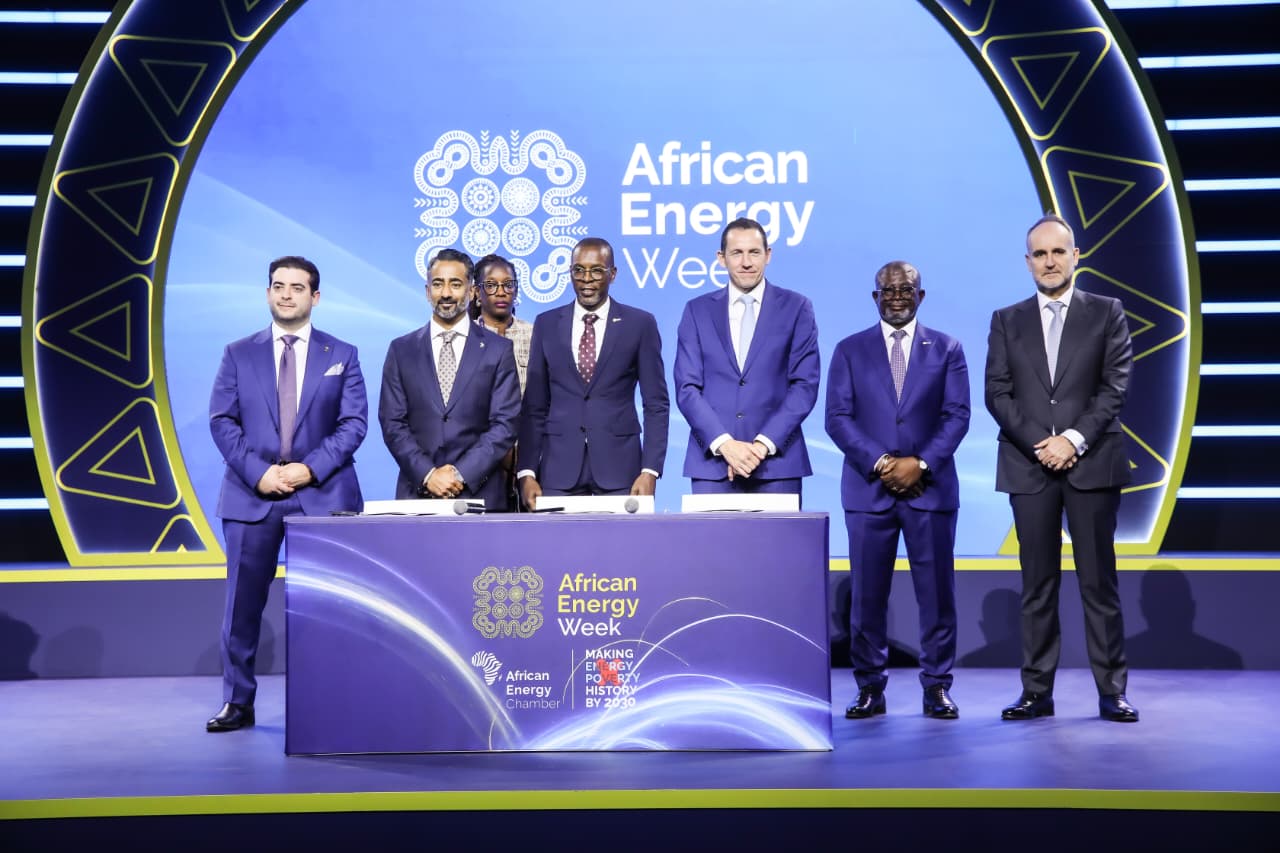
CAPE TOWN, South Africa, October 14, 2026/APO Group/ –Angola’s Etu Energias has signed a Master Agreement with Chariot and BW Energy covering technical and financial collaboration. The agreement aims to support Etu Energias’ growth strategy in Angola and reflects a shared ambition between the parties to build a long-term and growing relationship for the benefit of all stakeholders.


The agreement was signed during the opening ceremony of African Energy Week 2026 by Edson Dos Santos, CEO of Etu Energias; Duncan Wallace, CTO and Board Member of Chariot; and Ali Athar, Senior Vice President of Finance and Accounting at BW Energy. It demonstrates continued confidence in Angola’s upstream sector as well as the capacity of the country’s indigenous companies. Etu Energias, Angola’s first private oil and gas exploration company, has grown production to 25,000 bpd within five years and is targeting 100,000 bpd by 2030. The agreement aims to improve access to commercial solutions and capital with the goal of supporting long-term sector development.

The signing follows a framework agreement announced by Chariot on September 1 between Etu Energias, BW Energy and Chariot to support Etu’s acquisition of Chevron’s additional 31% interest in Angola’s Block 14 and 15.5% interest in Block 14K. The partnership established a basis for technical and operational support as Etu seeks to assume operatorship of Block 14, with Shell Western Supply and Trading providing the acquisition debt funding.

For Etu Energias, the transaction supports its ambition to expand production and operating capacity in Angola. Already a stakeholder in the licenses, the company brings knowledge of the assets, while BW Energy and Chariot contribute complementary technical expertise.

For BW Energy, the framework marks a strategic entry into Angola and an extension of its West African growth strategy. An August company announcement identified opportunities to develop nearby reservoirs through connections to existing infrastructure, optimize production and reduce operating costs. BW Energy’s support gives it economic exposure to future cash flows corresponding to approximately 8,000 bpd, subject to completion and applicable approvals.

For Chariot, the September agreement adds economic exposure equivalent to approximately 4,000 bpd in return for services and support. Shell Western Supply and Trading’s role centers on acquisition financing. The company will provide all acquisition debt funding required at completion of the Chevron transaction.

Distributed by APO Group on behalf of African Energy Chamber.


Continue Reading

Trending

Exit mobile version