Connect with us
Anglostratits

Energy

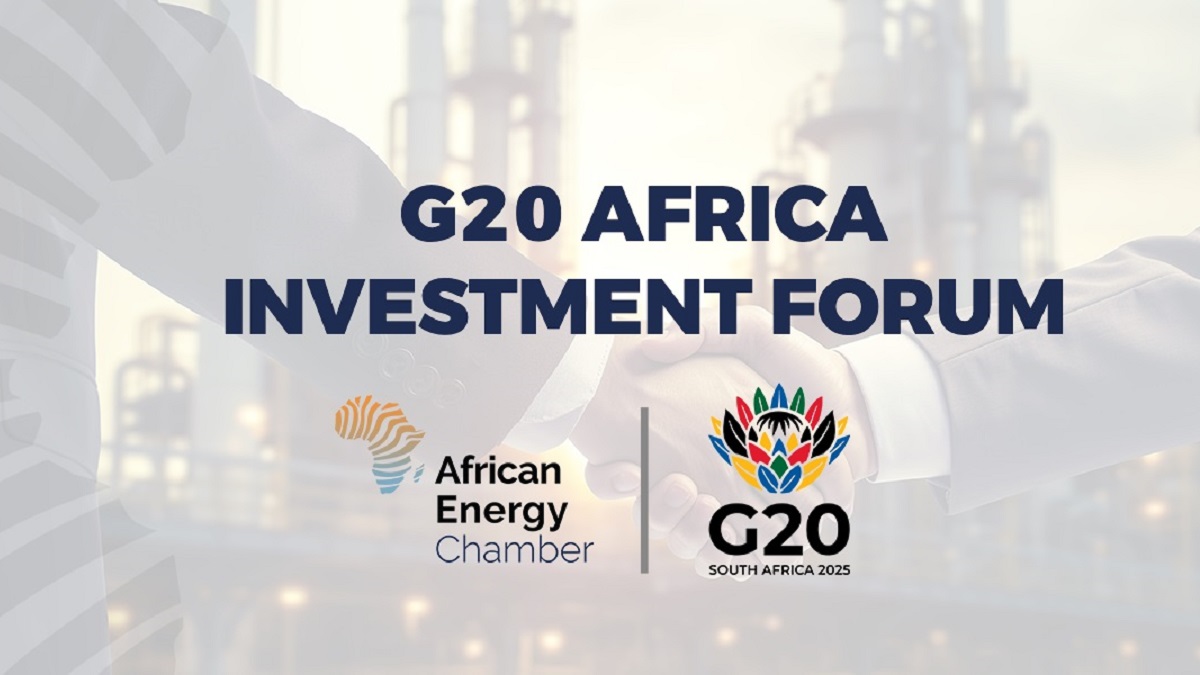
African Energy Chamber to host G20 Investment Forum; Opening Doors for Impactful Energy Investments in Africa

Published

on

Energy

Taking place November 21 in Johannesburg, the forum offers a unique opportunity for representatives from the G20 nations to chart new pathways for strengthening energy access in Africa

JOHANNESBURG, South Africa, October 31, 2025/APO Group/ –As the need to make energy poverty history becomes increasingly more urgent, the African Energy Chamber (AEC) (https://EnergyChamber.org/) has announced the launch of the G20 Africa Energy Investment Forum on November 21, 2025. Taking place at the Southern Sun Sandton in Johannesburg, South Africa, the forum will explore potential avenues for foreign investment in African energy, delving into strategic topics from oil production to natural gas development to clean cooking, nuclear and affordable energy.

Africa’s energy sector is currently at an important cross-road. Faced with both an energy and climate crisis, the continent requires significant investment to bolster energy access while driving a just and inclusive energy transition. Many nations across the continent have highlighted the value of an integrated approach to achieving these goals, one in which oil and gas play a foundational role. For Africa, oil and gas production will continue to form the cornerstones of the continent’s development and will remain stable at 11.4 million barrels per day (bpd) in 2026. By 2030, production will rise to 13.6 million bpd, underscoring the role oil plays in Africa. With African energy demand projected to rise fourfold by 2040, the upcoming G20 Africa Energy Investment Forum provides a platform for African oil nations to secure investment while addressing key challenges such as access to finance.

In Africa’s quest for low-carbon energy solutions, natural gas has emerged as a driver of both energy access and industrialization. Current estimates show that Africa has over 620 trillion cubic feet (tcf) of proven gas reserves, with ongoing exploration campaigns expected to uncovers trillions more. Many nations across the continent have positioned gas as an economic driver, recognizing its role as both a power generation source and clean cooking solution. With 250 GW of additional power capacity needed between now and 2030 to meet anticipated demand growth, gas has emerged as one of the fastest pathways to achieving this goal. Countries such as Angola, Libya, Algeria, the Republic of Congo and Nigeria have committed to raising gas production, while emerging producers such as Zimbabwe, South Africa and Namibia are seeking partners to advance development. Just this month, South Africa announces plans to lift its long-standing moratorium on shale gas exploration, representing a key step towards unlocking the over 200 tcf of estimated gas in the Karoo Basin.

As we engage the G20, our message is simple: Africa needs common-sense energy policies – not ideology

Beyond power generation, natural gas has emerged as a critical fuel for clean cooking. With over 900 million people living without access to clean cooking solutions in Africa, there lies a critical opportunity to expand reliable, affordable LPG solutions across the continent, leveraging robust infrastructure and strong global collaboration. The International Energy Agency shows that Africa will require $37 billion cumulative investment to 2040 to achieve universal access to clean cooking, highlighting an opportunity for LPG-directed investments across the continent. The G20 Africa Energy Investment Forum will delve into the impact of clean cooking solutions such as LPG in Africa. These discussions will build on recent developments, including the U.S. Department of Energy’s commitment to strengthening partnerships with African nations across the clean cooking industry, championed by U.S. Secretary of Energy Chris Wright. The commitment was made at Clean Energy Ministerial, hosted in Busan in 2025, creating new pathways for U.S.-Africa collaboration.

The G20 Africa Energy Investment Forum will also explore actionable pathways to advancing alternative energy solutions such as hydropower, geothermal and nuclear. Currently, South Africa holds the only operational nuclear power facility in Africa, but developments in other nations show the promise of future investments. Egypt, Nigeria, Ghana and Kenya are pursuing their own nuclear projects, while South Africa has introduced plans to deploy an additional 5.2 GW of nuclear capacity in the coming years. By 2030, the International Atomic Energy Agency projects a 58% increase in nuclear energy use in Africa, underscoring the scale of potential investments.

“As we engage the G20, our message is simple: Africa needs common-sense energy policies – not ideology. We need financing that supports Africans building power plants, pipelines and refineries, not roadblocks that keep our people in the dark. The G20 must champion a pragmatic approach that balances growth with sustainability and puts African priorities at the forefront,” states NJ Ayuk, Executive Chairman, AEC.

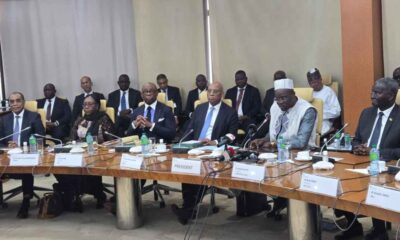
The upcoming forum takes place on the heels of the African Energy Week: Invest in African Energies 2025 conference. During the event, G20 nations participated in the Global Energy Leaders Forum, exploring actionable pathways for global collaboration and investment in Africa’s energy sector. As the continent prepares for the 2026 edition of the event, the G20 Africa Energy Investment Forum will serve as a launchpad for future deals and partnerships.

Register for the forum at https://apo-opa.co/4nvCE2S

Distributed by APO Group on behalf of African Energy Chamber.

Home  Facebook

Business

Africa’s Lithium Pipeline Gains Momentum as Global Supply Deficits Loom

Published

on

Energy Capital

The upcoming African Mining Week 2026 – taking place from October 14-16 in Cape Town – will connect global investors with prospects within the lithium industry amidst an anticipated resource supply deficit by 2028

CAPE TOWN, South Africa, April 9, 2026/APO Group/ –Rising demand for lithium is positioning Africa to attract foreign investment, accelerate local beneficiation and strengthen its role in securing the global battery supply chain. A recent forecast by Wood Mackenzie projects that global lithium demand could exceed 13 million tons by 2050 under an accelerated energy transition scenario. This surge is expected to place significant pressure on supply, with deficits emerging as early as 2028. Without substantial new investments, existing lithium projects will struggle to meet demand beyond the mid-2030s.


Against this backdrop, Africa’s growing pipeline of greenfield and development-stage lithium projects positions the continent as an increasingly important contributor to global supply security. In 2025, Africa ranked as the largest source of new lithium supply globally, with new output from the region exceeding that of the rest of the world combined. This milestone underscores the continent’s potential to scale production and strengthen its role in the global battery minerals market.

Emerging Lithium Producers Strengthen Africa’s Supply Pipeline

Even under a slower energy transition scenario, Wood Mackenzie projects that lithium markets will remain adequately supplied until 2037, before entering deficit. This outlook reinforces Africa’s strategic role as new projects across Mali, Zimbabwe, Ghana and Namibia advance toward production.

In the Democratic Republic of the Congo (DRC), Zijin Mining, AVZ Minerals and KoBold Metals are expected to begin operations at the Manono lithium project in mid-to-late 2026, marking the country’s first lithium output. Ranked among the world’s largest hard-rock lithium deposits, Manono is expected to begin exports shortly after commissioning, diversifying DRC’s mineral output while strengthening the continent`s contribution to the global electric vehicles and battery supply chain.

Mali Emerges as a Regional Lithium Hub

Mali is also rapidly positioning itself as a key lithium producer. The Bougouni Lithium Project, commissioned in 2025, currently produces approximately 125,000 tons per annum of concentrate, with Phase Two expansion plans underway that could nearly double production capacity.

Meanwhile, the Goulamina Lithium Project, one of the largest spodumene deposits globally, is producing around 506,000 tons of spodumene concentrate annually, with expansion plans targeting one million tons per year. Together, these projects are expected to significantly strengthen Mali and Africa’s position within the global lithium market.

Ghana and Zimbabwe Expand Lithium Production and Value Addition

In Ghana, the Ewoyaa Lithium Project, developed by Atlantic Lithium, is set to become the country’s first lithium-producing mine, with production targeted for late 2027. The project is expected to produce 3.58 million tons of spodumene concentrate grading 6% and 5.5%, alongside approximately 4.7 million tons of secondary product, further strengthening Africa’s contribution to global lithium supply.

Meanwhile, Zimbabwe – currently Africa’s largest lithium producer – is accelerating efforts to move up the value chain. Government policies restricting the export of raw lithium are encouraging investment in local processing and beneficiation facilities, supporting the production of higher-value lithium products and positioning the country as a key supplier to the global battery materials market.

Investment Momentum Builds Ahead of African Mining Week

With an estimated $276 billion in new investment required to avoid the forecast supply deficits beginning in 2028, Africa’s lithium-rich countries are well positioned to attract the capital needed to expand production and downstream processing.

In this context, African Mining Week 2026 – scheduled for October 14–16 in Cape Town – will serve as a key platform for global investors, project developers and policymakers to engage on opportunities within Africa’s lithium sector. As the continent’s premier mining investment event, the conference will feature high-level discussions, project showcases and strategic networking sessions aimed at accelerating partnerships across the lithium value chain.

Distributed by APO Group on behalf of Energy Capital & Power.

Continue Reading

Business

New Final Investment Decisions (FID) Propel Africa’s Mining Sector as Investors Eye $8.5T Untapped Potential

Published

on

Energy Capital

The 2026 edition of African Mining Week will highlight recent and upcoming FIDs, alongside key projects and investment opportunities

CAPE TOWN, South Africa, April 8, 2026/APO Group/ –Australian mining company Resolute Mining has approved a $516 million Final Investment Decision (FID) for its Doropo Gold Project in the Ivory Coast. The FID advances the project into the construction phase, with first production of 500,000 ounces per annum expected by 2028, strengthening the country and Africa’s position as major gold producers. Similarly, Toubani Resources approved a $216 million FID for the Kobada Gold Project in Mali, enabling the project to enter construction. Designed to produce approximately 162,000 ounces of gold per annum, Kobada supports Mali’s strategy to expand gold output beyond the current 60 tons per annum.


Such approvals signal growing capital inflows into Africa’s mining sector, as developers advance projects toward production to meet rising global mineral demand while the continent seeks investment partners to unlock its estimated $8.5 trillion in untapped mineral resources.

Rising FIDs Drive New Phase of Growth for African Mining

As more mining projects reach FID stage, Africa’s mining industry is entering a new phase of expansion, with the capital strengthening the continent’s role in global supply chains while driving infrastructure development, job creation and long-term economic growth.

With global demand for critical minerals expected to triple by 2030, FID announcements across Africa are set to accelerate, underpinned by the continent’s 30% share of energy transition metal reserves. The expanding pipeline of FIDs underscores the strong momentum building across the sector.

Rio Tinto approved a $473 million investment decision to extend the life of the Zulti South Project to 2050, strengthening South Africa’s position as a long-term supplier of mineral sands including zircon and ilmenite, which are essential inputs for construction, ceramics and advanced manufacturing industries. Meanwhile, Tharisa approved a $547 million FID for an underground expansion at its Bushveld Complex operations. The project is expected to deliver over 200,000 ounces of platinum group metals (PGMs) annually alongside more than two million tons of chrome concentrate, reinforcing the country’s position as the world’s leading supplier of PGMs.

Beyond these projects, a broader pipeline of developments is advancing toward investment decisions across the continent. Major projects including the Manono Lithium Project in the Democratic Republic of Congo, the Gorumbwa Platinum Project in Zimbabwe, the Diamba Sud Gold Project in Senegal and the Kabanga Nickel Project in Tanzania are progressing toward potential FIDs as investors position themselves to capture rising demand for battery minerals and critical metals.

Investment Momentum Ahead of African Mining Week

This growing pipeline of investment decisions and project developments will be a key focus of the upcoming African Mining Week 2026, taking place October 14–16 in Cape Town. The event will connect investors, project developers and government regulators to explore partnership opportunities and investment prospects across Africa’s mining value chain. Through high-level discussions and project showcases, the conference will examine how rising FIDs are driving production growth, strengthening infrastructure development and advancing Africa’s strategy to transform its mineral wealth into long-term economic value.

Distributed by APO Group on behalf of Energy Capital & Power.

Continue Reading

Energy

Can Equatorial Guinea Reposition as West Africa’s Gas Hub?

Published

on

Energy Capital

As Equatorial Guinea advances third-party gas agreements and infrastructure plans, its hub ambitions will be showcased at the Invest in African Energy Forum, with Minister Antonio Oburu Ondo and senior industry leaders confirmed to attend

PARIS, France, April 7, 2026/APO Group/ –Equatorial Guinea is moving from strategy to execution in its bid to become a regional gas hub. A series of agreements signed in early 2026 – covering cross-border supply, upstream participation and infrastructure utilization – are positioning the country to monetize gas through existing assets and regional aggregation.


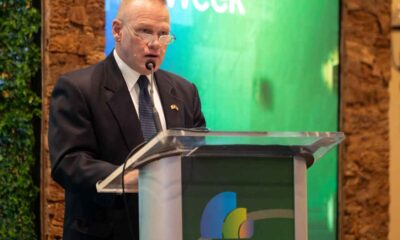
This agenda will take center stage at the Invest in African Energy (IAE) Forum in Paris, where Equatorial Guinea will feature in a dedicated Country Spotlight session led by Antonio Oburu Ondo, Minister of Mines and Hydrocarbons. With participation from key industry players, including Panoro Energy and Perceptum, EG Ronda bid round organizer, the forum will provide a platform to outline the country’s gas sector repositioning and where investors can engage.

Momentum behind this model has accelerated in recent months. In February 2026, Equatorial Guinea and Cameroon signed a unitization agreement to jointly develop the cross-border Yoyo-Yolanda gas fields, estimated to hold around 2.5 trillion cubic feet of gas. Production from the project is slated to feed directly into Equatorial Guinea’s Punta Europa complex, reinforcing the country’s hub strategy without requiring standalone export infrastructure.

Simultaneously, the government strengthened domestic supply through a Heads of Agreement with Chevron to expand the Aseng gas project, increasing GEPetrol’s stake from 5% to over 30%. This not only stabilizes production but also secures additional feedstock for downstream processing, linking upstream development directly to the hub model.

Rather than focusing on new LNG developments, Equatorial Guinea is aggregating domestic and regional gas volumes to maximize existing infrastructure. At the core of this approach is the Punta Europa complex on Bioko Island, one of sub-Saharan Africa’s most advanced gas processing hubs, with LNG, methanol and LPG facilities already in place. The current challenge is securing reliable feedstock as output from legacy fields such as Alba declines.

The Gas Mega Hub initiative offers a faster, more cost-effective route to monetization. By processing third-party volumes from Cameroon, and potentially Nigeria, the country can leverage existing facilities while avoiding the risks and capital intensity of greenfield LNG projects. This approach opens a spectrum of investment opportunities across gas aggregation, transport, processing and downstream integration, often structured through commercially aligned frameworks that reduce execution risk.

Policy and regulatory support are central to this transition. The Ministry of Mines and Hydrocarbons has prioritized regulatory alignment and cross-border cooperation, recognizing that successful hub development depends as much on enabling frameworks as on physical infrastructure. The recent agreements reflect growing clarity and investor confidence.

For the global investment community, IAE 2026 offers a strategic opportunity to engage directly with government and operators shaping the hub model. The participation of both policymakers and companies active in the sector reinforces the credibility and immediate relevance of Equatorial Guinea’s strategy.

Equatorial Guinea is no longer waiting for new discoveries to drive growth. By leveraging existing infrastructure, securing regional supply and building flexible commercial models, the country is positioning itself as a critical node for gas monetization in West Africa. Success here could extend the life of its assets while establishing a platform for regional energy trade.

IAE 2026 (https://apo-opa.co/41nyEZQ) is an exclusive forum designed to connect African energy markets with global investors, serving as a key platform for deal-making in the lead-up to African Energy Week. Scheduled for April 22–23, 2026, in Paris, the event will provide delegates with two days of in-depth engagement with industry experts, project developers, investors and policymakers. For more information, visit www.Invest-Africa-Energy.com. To sponsor or register as a delegate, please contact sales@energycapitalpower.com.

Distributed by APO Group on behalf of Energy Capital & Power.

Continue Reading

Trending