Connect with us

Business

African Development Bank’s AFAWA Hits $1 Billion Investment Milestone in Lending to Women Entrepreneurs in Africa

Published

on

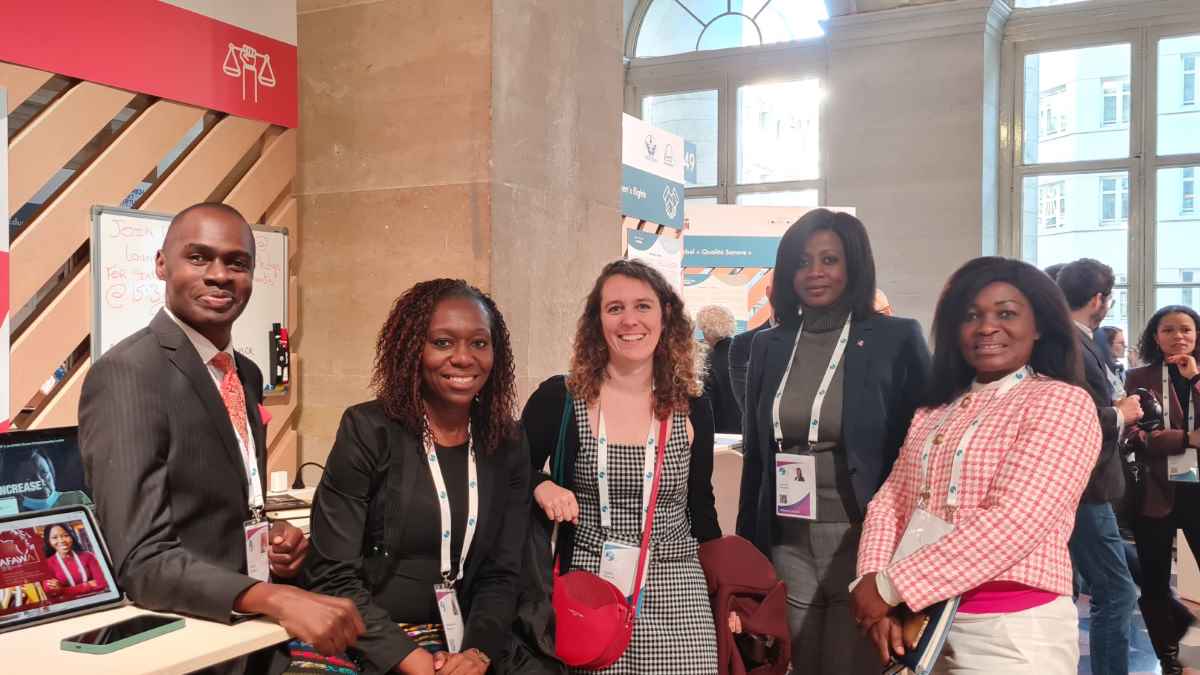
AFAWA

AFAWA was launched in 2015 in Dakar during the first Feed Africa conference (Dakar 1 Africa Food Summit)

ABIDJAN, Ivory Coast, January 31, 2023/APO Group/ — 

The African Development Bank’s (www.AfDB.org) Affirmative Finance Action for Women in Africa (AFAWA) (http://bit.ly/3sggisg) initiative has reached a landmark $1 billion in approved funding designated for lending to African  women entrepreneurs.

This is yet another milestone for the bank following an historic summit last week to tackle the escalating challenges of food security in Africa. The Dakar 2 Africa Food Summit, co-hosted by the Bank and the Government of Senegal, was attended by 34 heads of state and government, more than 70 ministers, farmers’ representatives from the private sector and development partners. 

AFAWA was launched in 2015 in Dakar during the first Feed Africa conference (Dakar 1 Africa Food Summit).  

Dr. Beth Dunford, the Bank’s Vice President for Agriculture, Human and Social Development said: “I am incredibly proud of AFAWA’s financing achievement. AFAWA’s benchmark reminds us that when we invest to grow Africa’s food systems, we must also invest in Africa’s women agripreneurs.”

Women run the majority of Africa’s agricultural sector small and medium-sized enterprises (SMEs), yet they face significant barriers to accessing finance. Across the continent, African women entrepreneurs face an estimated $42 billion gender financing gap compared to men.

By the end of December 2022, AFAWA-approved lending to women-led small and medium sized enterprises reached $1.051 billion

In the last two years, the Bank, through AFAWA, has multiplied the volume of investments toward women-owned small and medium enterprises sevenfold.

“By the end of December 2022, AFAWA-approved lending to women-led small and medium sized enterprises reached $1.051 billion. Of that, $135 million targets women in the agriculture sector,” said Malado Kaba, Director of the Bank’s Gender, Women and Civil Society Department. “AFAWA’s approved lending reaches across 27 countries, and through 56 financial institutions. Already 4,115 women business owners have benefited from AFAWA financing instruments. This is just the beginning,” she added.

Already, financial barriers to African women ‘agripreneurs’ growing their businesses, are being addressed through AFAWA investment. AFAWA is working to boost the professional and financial capacities of over 200 women cooperatives in the staple crop food sector in Cote d’Ivoire. This includes training and access to a digital platform connecting women producers to buyers of agricultural products like wholesalers, retailers and consumers across Cote d’Ivoire.

Furthermore, AFAWA is working with Ecobank on the “Financing Climate Resilient Agricultural Practices in Ghana” project. The project mobilized $20 million from the Green Climate Fund, and $5 million from Ecobank Ghana as co-financing, to fill the gap for working capital to farmers. The AFAWA project aims to provide financing and technical support to 400 women-led, farmer-based associations and women-owned small and medium enterprises, to foster their agriculture productivity and strengthen their climate resilience practices.

To accelerate progress toward unlocking $5 billion in lending for women by 2026, AFAWA has established a Guarantee Mechanism (http://bit.ly/3DtOnuS) which de-risks the women’s market and increases the ability of financial institutions to lend to women business owners.

AFAWA also launched the Women Entrepreneurship Enablers program, which provides up to $250,000 for women’s business associations, incubators, accelerators, women-led cooperatives, and civil society organizations. The program increases women SMEs readiness to access credit and scale their businesses. The program inducted its first cohort of 10 Enablers (http://bit.ly/3wFoVi8) in July 2022, who are expected to apply skills acquired in the Enablers program to reach more than 15,000 women-led micro and small enterprises.  The second call for proposals to the program drew more than 1,200 applicants. The second cohort will be announced later this year.  

“In 2023, we will continue to work closely with our partners to accelerate their ability to lend to women-led micro and small enterprises. Ensuring that the enabling environment is inclusive to enhance women’s ability to access financing will be critical. Thus, we will work closely with policymakers to ensure that the right reforms are in place to accelerate women-led small and medium enterprises’ financial access,” said Kaba.

To learn more about some of the women participating in AFAWA’s programs, watch the videos on the Bank’s website (http://bit.ly/3RiipqW).

Distributed by APO Group on behalf of African Development Bank Group (AfDB).

Business

Morocco: African Development Bank Mobilises €205 Million to Extend High-Speed Rail Line and Strengthen the Kingdom’s Mobility and Logistics Competitiveness

Published

on

By improving travel flow between the Kingdom’s major economic and urban hubs, the project will promote more sustainable mobility and enhance territorial connectivity

RABAT, Morocco, July 9, 2026/APO Group/ –The Board of Directors of the African Development Bank Group (www.AfDB.org) approved €205 million in financing for Morocco to support the implementation of the Rail Infrastructure Development Support Project (PADIF) on 8 July.


The operation aims to strengthen the capacity and operational performance of the Kenitra–Marrakech railway corridor, which carries a significant share of the country’s passenger and freight traffic. It will do so by extending the high-speed rail line (HSR) and upgrading the existing railway infrastructure along this strategic corridor.


By improving travel flow between the Kingdom’s major economic and urban hubs, the project will promote more sustainable mobility and enhance territorial connectivity.


Beyond its positive impact on mobility, the project will support the transition to more sustainable and environmentally friendly transport modes and deliver significant economic benefits by reducing travel times and logistics costs.


In the long term, it will strengthen Morocco’s logistics competitiveness and reinforce its role as a strategic hub linking Europe and Africa

“By combining the extension of the high-speed rail line with the modernisation of existing infrastructure, this operation will help accommodate growing passenger and freight traffic, facilitate trade flows, and reduce travel times,” said Achraf Tarsim, Head of the African Development Bank Group’s Country Office in Morocco. “In the long term, it will strengthen Morocco’s logistics competitiveness and reinforce its role as a strategic hub linking Europe and Africa.”


The project includes the acquisition of equipment to modernise railway infrastructure along the Kenitra–Marrakech corridor and around the Casablanca rail hub. This includes the supply of new rails and track components for conventional rail lines and the high-speed network, to increase corridor capacity and sustainably improve operational performance.


PADIF also incorporates a project management support component covering project ownership, engineering supervision, and the monitoring and evaluation of results and impacts, ensuring effective implementation.


By contributing to the development of resilient, sustainable, and high-value-added infrastructure, the operation is fully aligned with the African Development Bank Group’s Four Cardinal Points (https://apo-opa.co/4vWv2Mb) and the institution’s 2024–2029 Country Strategy Paper for Morocco. It also supports Morocco’s New Development Model and the Rail 2040 Plan, which aims to modernise the national railway network.


Since 1978, the African Development Bank Group has mobilised nearly €15 billion to finance more than 150 projects and programmes in Morocco. Its interventions (https://apo-opa.co/4wd803P) span strategic sectors, including transport, social protection, water and sanitation, energy, agriculture, governance, and the financial sector.

Distributed by APO Group on behalf of African Development Bank Group (AfDB).

Continue Reading

Business

Institute for the Management of State Assets and Holdings (IGAPE) Launches Initial Public Offering (IPO) of Angola’s Largest Telecommunications Company

Published

on

The transaction comprises the sale of 7,500,000 ordinary registered book-entry shares, representing 15% of UNITEL’s share capital, each with a nominal value of AOA 5,000.00

LUANDA, Angola, July 9, 2026/APO Group/ –The Institute for the Management of State Assets and Holdings (IGAPE) (https://IGAPE.MinFin.Gov.ao), acting as the selling shareholder, launched the Initial Public Offering (IPO) of a 15% stake in UNITEL, marking one of the largest capital market transactions ever undertaken in Angola.


The transaction comprises the sale of 7,500,000 ordinary registered book-entry shares, representing 15% of UNITEL’s share capital, each with a nominal value of AOA 5,000.00. Upon completion of the offering, all 50,000,000 shares, representing the company’s entire issued share capital, are expected to be admitted to trading on the Angola Debt and Securities Exchange (BODIVA).

The final offer price will be determined within a price range of AOA 36,036.00 to AOA 40,040.00 per share. The price will be set following the bookbuilding process, based on investor demand during the subscription period.

The IPO comprises two tranches. The Employee Offering reserves 1,000,000 shares, representing 2% of UNITEL’s share capital, for preferential subscription by eligible employees. The General Public Offering comprises 6,500,000 shares, representing 13% of the company’s share capital, together with any shares remaining unsubscribed under the Employee Offering.

The subscription period opens at 2:00 p.m. on 6 July and closes at 3:00 p.m. on 24 July 2026, allowing retail, corporate and institutional investors to participate in what is expected to be a landmark transaction for Angola’s capital market.

Investors may submit subscription orders through the participating financial intermediaries: BFA Capital Markets, Áurea SDVM, Distribuidora Valor SDVM, Eaglestone SDVM, Standard Invest SDVM and Hemera Capital Partners Securities. Orders may also be placed through Banco Caixa Geral Angola and Banco de Fomento Angola via their branch networks, digital platforms, websites, telephone banking services and email.

With more than 21 million customers and operations across all 18 provinces of Angola, UNITEL has been the country’s leading telecommunications operator for the past 25 years. The IPO provides Angolan citizens and investors with the opportunity to become shareholders in one of the country’s most established companies and to participate in its future growth while supporting the continued development of Angola’s capital market.

Distributed by APO Group on behalf of Institute for the Management of State Assets and Holdings (IGAPE).


Continue Reading

Business

Ancient Port, New Voyages: Ningbo’s Smart Manufacturing Expands Global Trade Footprint via Maritime Silk Road

Published

on

COLOMBO, SRI LANKA- Media OutReach Newswire – 9 July 2026 – On July 4, 2026, the cultural exchange event Encounter & Insight: Dialogue Between Ningbo, China and Colombo, Sri Lanka took place in Colombo.

Separated by thousands of miles, the two millennia-old port cities reconnected, leveraging their ports as a bond and cultural exchanges as a cohesive force to hold in-depth talks on integrated port-city development and bilateral economic and trade connectivity.

This cross-Indian Ocean dialogue echoes the ancient Maritime Silk Road while charting a brand-new outbound development path. As a pivotal starting port of the ancient Maritime Silk Road, Ningbo is building a new global trade landscape powered by smart manufacturing.

A thousand years ago, merchant vessels from Mingzhou Port set sail southward loaded with Yue Kiln celadon porcelain, passing through Ceylon to deliver Oriental crafts across the Indian Ocean coasts. Precious gemstones and spices traveled the same sea route back to regions south of the Yangtze River, laying the groundwork for the earliest cultural exchange between the two ports through trade. Today, the cargo carried by giant cargo ships has undergone a dramatic transformation. Beyond traditional daily necessities, intelligent equipment, digital home appliances and industrial robots now dominate shipments.

Official statistics show that Ningbo’s exports of intelligent equipment, including mechanical arms and industrial robots, hit 440 million yuan in 2025, surging more than 40% year-on-year. From January to May this year, Ningbo’s exports of mechanical and electrical products maintained steady growth, reaching 247 billion yuan, a 4.1% year-on-year increase and accounting for 58.0% of the city’s total export volume. The new energy foreign trade sector saw explosive growth, with exports of new energy vehicles, lithium batteries, and photovoltaic products jumping 138.4% year-on-year, with electric vehicle exports skyrocketing 215.9%. Smart manufactured goods are continuously expanding the scope of Ningbo’s foreign trade.

Complementing the Colombo forum, an exhibition highlights Ningbo’s outstanding going-global enterprises and their products, vividly illustrating the profound shift in Ningbo’s trade structure.

Alongside time-honored Maritime Silk Road staples such as celadon porcelain and silk, Ningbo’s smart manufactured products—including AI translation glasses, intelligent outdoor gear and digital small home appliances—occupy prominent display spaces across the venue. In Sri Lanka, Ningbo smart water meters are widely adopted nationwide, while handheld cooling fans and intelligent kitchen appliances have entered ordinary households.

Leveraging Colombo Port’s transshipment advantages, massive volumes of Ningbo smart manufactured goods are distributed onward to Europe, the Middle East and beyond. What Ningbo exports today is no longer mere commodities, but a complete outbound solution integrating technology, brand value and after-sales services.

Faced with mounting challenges including homogeneous global market competition and rising trade barriers, Ningbo’s manufacturing sector has abandoned the old model of low-cost OEM production, relying on intelligent transformation to consolidate its competitive edge in overseas markets.

Over more than a decade of digital transformation efforts, Ningbo has achieved full digital upgrading of all industrial enterprises above designated size. A large number of local factories have built unmanned black-light workshops and flexible production lines, escaping vicious price competition through continuous technological iteration. Represented by five specialized, sophisticated, distinctive and innovative enterprises dubbed Ningbo’s “Five Little Tigers”—famous for their core proprietary technologies, including highly sophisticated visual inspection equipment, heat-resistant materials, sun-proof coatings, puncture-proof materials and self-drilling fasteners—these niche manufacturers have developed differentiated technical routes and full-spectrum production capacity, cementing irreplaceable competitiveness for Ningbo smart manufacturing on global markets.

Beyond trade expansion, Ningbo has built a supporting cultural communication system to ensure “products go global, accompanied by local culture”.

The launch of Sri Lanka’s first “One-Meter Cultural Space” cultural station during the Colombo event marks a tangible milestone of Ningbo’s go-global initiative. Built on enterprises’ overseas outlets, these miniature cultural exhibition halls integrate intangible cultural heritage crafts, urban stories and smart products, enabling overseas clients to experience cutting-edge manufacturing while gaining insight into Ningbo’s profound cultural heritage.

During the twin-city story-sharing session, Ningbo entrepreneurs based in Sri Lanka and local designers blending Chinese and Sri Lankan aesthetics shared stories of bilateral exchanges. Economic and trade ties have evolved into a bond for people-to-people communication, bridging divides in cross-cultural trade.

From Tang-dynasty celadon porcelain sailing across the Indian Ocean to intelligent equipment shipping to every corner of the globe, Ningbo, the ancient Maritime Silk Road port, has preserved its enduring gene of openness. Where exchanges once relied purely on commodity trade, today smart manufacturing underpins a stable, diversified and high-value-added global trade network.

The Ningbo-Colombo dialogue stands as a vivid microcosm of this transformation: the port still links lands and seas, yet the core of its trade has undergone a full intelligent upgrade.

Rooted in its historical legacy as a key Maritime Silk Road hub, Ningbo has consolidated its industrial foundation through a decade of digital development, expanded global market reach via worldwide port networks, and softened trade cooperation through cultural exchanges. This brand-new outbound shipping route forged by smart manufacturing has not only reshaped the city’s foreign trade landscape, but also delivered a replicable port-city development model for Chinese manufacturing to go global.


Continue Reading

Trending

Exit mobile version