Connect with us

Business

African Development Bank Group (AfDB) Unveils Africa-Wide Aviation Financing Platform to Turn Growth into Sustainable Profit

Published

on

AfDB

The priority now is execution—aligning policy, capital and infrastructure to ensure aviation becomes a durable driver of inclusive growth and regional integration across the continent

NAIROBI, Kenya, March 5, 2026/APO Group/ –With Africa poised to become the world’s fastest-growing aviation market, policymakers and industry leaders are focused on a central challenge: how to translate rising demand into sustainable connectivity, competitiveness, and financial viability.

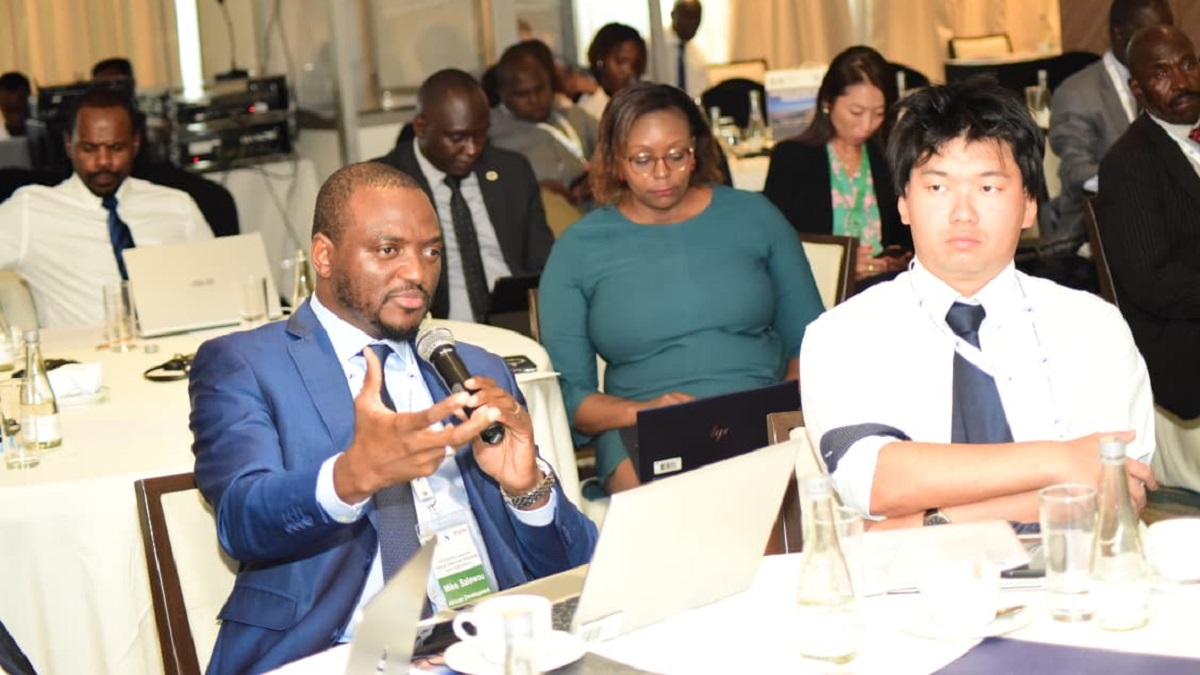
This question anchored deliberations at the two-day Airlines, Capital and Connectivity Forum convened in Nairobi on 25–26 February 2026 by the African Development Bank Group in partnership with the African Airlines Association (AFRAA).

Despite strong demand fundamentals, Africa’s aviation sector continues to face structural constraints, including high costs of capital, fragmented regulatory regimes, infrastructure gaps, and limited access to long-term financing. To address these challenges, the Bank is advancing the Integrated Aviation Transformation Program (IATP), a continent-wide platform designed to modernise the aviation ecosystem and mobilise private, institutional, and concessional capital at scale. The programme seeks to align policy reform, innovative financing instruments, and project execution within a single, bankable framework.

The Forum brought together airline executives, transport ministers, regulators, investors, manufacturers, and development partners to explore how the IATP can accelerate coordinated delivery across the sector. Participants underscored aviation’s role as a strategic enabler of regional integration, trade facilitation, tourism, and economic diversification.

Opening the Forum, the Bank’s Director for Infrastructure and Urban Development, Mike Salawou, noted that while Africa’s aviation demand outlook ranks among the strongest globally, supply-side capacity and investment readiness have lagged. The IATP, he said, seeks to de-risk priority investments, support early pilot transactions, and restore confidence among commercial and institutional financiers.

Africa represents nearly 18 percent of the global population but accounts for less than three percent of worldwide air traffic

From the industry’s perspective, AFRAA Secretary General Abderahmane Berthé highlighted the scale of the opportunity and the imbalance confronting the continent. “Africa represents nearly 18 percent of the global population but accounts for less than three percent of worldwide air traffic, reflecting structural and regulatory barriers rather than weak demand,” he said.

Remarks delivered on behalf of Kenya Airways described Africa as the largest structural aviation opportunity of the 21st century. Over the next two decades, one in four new global air travellers is expected to originate from Africa, driven by rapid urbanisation, a growing middle-income population, and a youthful demographic profile.

However, the industry’s financial performance remains constrained. According to the International Air Transport Association (IATA), African airlines are projected to generate net margins of only 1–2 percent, below the global average forecast of 3.9 percent in 2026. High fuel costs, heavy taxation, incomplete liberalisation and limited hub infrastructure continue to undermine profitability.

Connectivity remains a critical bottleneck. Intra-African traffic accounts for only about a quarter of total air travel, with many passengers required to transit outside the continent. Participants emphasised that full implementation of the Single African Air Transport Market is essential to unlock efficient intra-continental connectivity.

A keynote address delivered by Eric Ntagengerwa, Head of Transport and Mobility at the African Union Commission (AUC) on behalf of Lerato Dorothy Mataboge, Commissioner for Infrastructure and Energy, framed aviation reform as an imperative for sovereignty, integration, and competitiveness. He observed that the Single African Air Transport Market is the designated African Union Theme for the Year 2027.

Discussions over two days focused on practical delivery, including strengthening airline bankability, advancing climate-aligned aviation, developing cargo and logistics, building skills, and deploying innovative risk-sharing mechanisms under the IATP. Country experiences from Nigeria, Kenya, and Ethiopia illustrated how continental objectives can translate into coordinated national reforms and near-term investment opportunities.

Samuel Obafemi Bajomo, Senior Adviser to Nigeria’s aviation ministry, emphasised that forward-looking, pro-investment policy frameworks are critical to strengthening connectivity and unlocking Africa’s growth potential and positioning aviation as a catalyst for trade, tourism, and shared prosperity.

The Forum concluded with a clear message: Africa’s aviation demand is real, accelerating, and irreversible. The priority now is execution—aligning policy, capital and infrastructure to ensure aviation becomes a durable driver of inclusive growth and regional integration across the continent.


Distributed by APO Group on behalf of African Development Bank Group (AfDB).

Business

Sierra Leone Deepens Upstream Ambitions with Shell Reconnaissance Deal

Published

on

The agreement reflects growing investor confidence in Sierra Leone’s offshore potential and highlights a data-led strategy to de-risk frontier exploration acreage

PARIS, France, April 23, 2026/APO Group/ –Sierra Leone has strengthened its upstream petroleum ambitions with the signing of a Reconnaissance Permit Agreement with Shell Exploration Company B.V., marking a significant step in its efforts to attract investment and advance offshore basin evaluation.

The agreement was signed through the Petroleum Directorate of Sierra Leone (PDSL) at the Invest in African Energy 2026 Forum in Paris on Wednesday.

Under the terms of the agreement, Shell is granted rights to undertake advanced geological and geophysical studies across offshore G-Blocks 91, 92, 93, 110, 111, 112, 114, 115, 116, 117, 133, 134, 135, 148, 149, 150, 162, 163 and 164, covering approximately 20,594 square-kilometers.

Signing this agreement… underscores Sierra Leone’s growing visibility on the global energy stage

The reconnaissance program will include seismic data quality control and interpretation, integration of well data, detailed petrophysical analysis, basin modelling, petroleum systems evaluation, identification of structural traps and reservoir fairways, and play-based exploration and prospectivity mapping.

“This agreement with Shell marks a defining moment in Sierra Leone’s journey to responsibly unlock the value of our natural resources. It sends a strong and credible signal to the global investment community… that Sierra Leone is open for business, underpinned by transparency, stability and strong governance,” said President Julius Maada Bio in a statement released by PDSL.

PDSL Director General Foday Mansaray also highlighted the strategic importance of the agreement, stating: “Signing this agreement… underscores Sierra Leone’s growing visibility on the global energy stage. Securing Shell as a partner is a strong validation of the work we have undertaken to strengthen our geoscience database and regulatory framework.”

He noted that Sierra Leone’s upstream strategy is centered on de-risking frontier acreage through high-quality seismic data, advanced subsurface imaging and transparent engagement with global operators.

Shell’s involvement brings significant weight to Sierra Leone’s upstream ambitions. With operations in more than 70 countries and extensive deepwater exploration expertise, the company is expected to play a key role in assessing basin potential ahead of future licensing rounds.

As African frontier basins continue to attract renewed interest from global energy companies, Sierra Leone’s latest agreement signals both ambition and positioning – placing data, transparency and credible partnerships at the center of its upstream growth strategy.

Distributed by APO Group on behalf of Energy Capital & Power.

Continue Reading

Energy

Zambia Energy Minister to Showcase Integrated Power and Fuel Investment Agenda at African Energy Week (AEW) 2026

Published

on

Makozo Chikote joins African Energy Week’s growing ministerial lineup as Zambia fast-tracks energy reforms across power, renewables, and oil

CAPE TOWN, South Africa, April 22, 2026/APO Group/ –Zambia’s Energy Minister, Makozo Chikote, will take a prominent role at African Energy Week (AEW) 2026 in Cape Town from 12–16 October, where he is expected to outline the country’s integrated energy strategy to investors, policymakers and development partners.


His participation comes at a time when Zambia is accelerating reforms across the entire energy value chain – from electricity generation and renewable deployment to fuel supply security and downstream oil infrastructure – positioning the country as both a regional power hub and an emerging player in refined fuel distribution.


A key pillar of the government’s agenda is the Carbon Feed-in Premium (CFIP) program, launched earlier this month and designed to unlock up to 300 MW of private renewable energy investment. The initiative aims to diversify Zambia’s generation mix, reduce emissions and strengthen grid stability. It also includes a Mitigation Outcome Purchase Agreement with Norway under the CFIP framework, expected to help mobilize international climate-linked financing and support decarbonization of the power sector ahead of 2027.


Alongside the renewable push, Zambia is also advancing its hydrocarbons and fuel security agenda. The government has begun construction of a 60,000 barrels-per-day crude oil refinery in Ndola, a landmark downstream project aimed at reducing dependence on imported refined fuels and strengthening domestic supply security. The refinery is expected to support industrial demand, particularly from mining and transport sectors, while easing pressure on foreign exchange reserves over the long term. At AEW 2026, Minister Chikote is expected to position this dual-track strategy as central to Zambia’s long-term energy security and industrial growth agenda.


Zambia has already committed to adding more than 2,610 MW of new electricity generation capacity by the end of 2026. The expansion program is designed to address chronic power shortages, reduce load shedding and support industrial expansion. It prioritizes a diversified mix of solar, wind and hybrid projects to improve system resilience, particularly as climate variability continues to affect hydropower output.

Zambia is taking a smart, integrated approach to energy – balancing power, renewables, and oil and fuel security


Investor sentiment has also been supported by recent regulatory momentum. In March 2026, the Energy Regulation Board approved 24 licenses, seven construction permits and amendments to existing projects, representing a combined investment commitment of ZMW 1.1 billion across power generation, renewables and downstream petroleum infrastructure. The approvals reflect both growing private sector appetite and a more streamlined regulatory environment for energy project development.


Beyond generation and fuel infrastructure, Zambia is also strengthening energy efficiency and system resilience. Through a partnership with the European Union, the Ministry of Energy has launched the Zambia Energy Efficiency and Sustainable Transformation program, introducing LED retrofits and infrastructure upgrades in schools and hospitals in the Eastern Province to reduce consumption and improve reliability.


Regionally, Zambia is deepening cooperation with Tanzania in oil and gas development, with both governments exploring joint exploration opportunities, cross-border energy trade and shared infrastructure. The discussions reflect a broader regional push to strengthen energy security and improve integration across East and Southern Africa.


“Zambia is taking a smart, integrated approach to energy – balancing power, renewables, and oil and fuel security. This is exactly the kind of practical, investment-ready strategy Africa needs. Minister Chikote is showing how policy can unlock capital and deliver real projects across the entire energy value chain,” said NJ Ayuk, Executive Chairman of the African Energy Chamber.

Distributed by APO Group on behalf of African Energy Chamber.

Continue Reading

Business

Afreximbank announces third African Continental Free Trade Area (AfCFTA) training programme as it seeks to empower African businesses

Published

on

The programme is designed to equip participants with the skills, knowledge, and practical expertise required to navigate and succeed within Africa’s evolving intra-African trade landscape

CAIRO, Egypt, April 22, 2026/APO Group/ –African Corporates will have a unique opportunity to learn how to fully maximize the benefits of the African Continental Free Trade Area (AfCFTA) when the third edition of the AfCFTA Training Programme holds in Cairo, Egypt from 16th June to 18th June, 2026.

Developed and led by African Export-Import Bank (Afreximbank), in collaboration with the American University in Cairo (AUC) and the AfCFTA Secretariat, the programme is designed to equip participants with the skills, knowledge, and practical expertise required to navigate and succeed within Africa’s evolving intra-African trade landscape.

While the AfCFTA has significant potential to drive economic development across Africa, limited understanding of its technical provisions and practical applications continues to hinder the full realization of its benefits. The programme is designed to equip businesses with practical, actionable insights on identifying and capitalising on trade opportunities, managing export and import operations, and navigating trade finance, supply chains, and the broader international trade environment. It will also provide a clear understanding of how the AfCFTA framework addresses capacity constraints and expands market access for producers of goods and services across the continent.
By translating the AfCFTA’s legal and treaty provisions into business-ready strategies, the programme offers clarity on the regulatory, operational, and market requirements necessary for companies to fully leverage opportunities within the rapidly expanding AfCFTA market.

We are empowering businesses across Global Africa to scale, innovate, and play a leading role in the continent’s economic transformation

As the African Union’s key strategic partner in implementing the AfCFTA, Afreximbank has spearheaded multiple initiatives to advance both intra and extra-African trade and investment, with trainings playing a key role in capacity building.

Commenting on the programme, Dr. Yemi Kale, Group Chief Economist & Managing Director of Research at Afreximbank, described it as “a strategic platform for advancing the adoption and deepening the understanding of the AfCFTA among key stakeholders, particularly corporates within the broader private sector ecosystem.” He added that the initiative “reinforces the Bank’s commitment to equipping businesses with the insights and capabilities required to effectively leverage opportunities under the Agreement.”

Dr. Kale said: “I have full confidence that participants in this training will leave with a holistic understanding of the AfCFTA, its genesis and dimensions, enabling them to assess the outcomes of the ongoing negotiations, and to examine the challenges and opportunities that underlie the negotiations and the agreement at large. They will also be able to explore the prospects of the AfCFTA and to capitalize on the agreement while supporting its objectives to the benefit their corporations and the continent.”

Mohamed Ali, Director of Trade in Goods and Competition at the AfCFTA Secretariat, said: “This programme represents a critical step towards unlocking the full potential of intra-African trade through targeted capacity building and strategic partnerships. Our collaboration with Afreximbank reinforces a shared commitment to equip African businesses with the practical knowledge, tools, and institutional support required to effectively utilize the Agreement.”

Commenting on the programme, Mr. Stephen Tio Kauma, Managing Director, Human Resources at Afreximbank, stated: Delivered through the Afreximbank Academy (AFRACAD), this programme reflects our commitment to equipping African businesses with the practical skills needed to fully leverage the opportunities under the AfCFTA. AFRACAD continues to serve as a leading trade knowledge hub, empowering participants to compete and thrive in Africa’s single market. Through our strong partnerships and innovative learning approach, we are empowering businesses across Global Africa to scale, innovate, and play a leading role in the continent’s economic transformation”.

For registration and further information, please visit: https://apo-opa.co/41O3CdY

Distributed by APO Group on behalf of Afreximbank.

Continue Reading

Trending

Exit mobile version