Connect with us
Anglostratits

Business

African Development Bank-funded project boosts universal access to water in Rwanda

Published

on

African Development Bank

The Kigali Bulk Water Supply Project was the Bank’s first private sector operation in Rwanda

ABIDJAN, Ivory Coast, June 8, 2023/APO Group/ — 

Esther Mukantwali of Rwangara Village in Bugesera District, about 18 km south of Rwanda’s capital Kigali, used to wake up at 3 in the morning to trek for an hour to fetch water from a swamp. 

The story is the same for 18-year-old Umuhoza Francine, who lives four km further in Nyagatovu village, also in Bugesera District. She trekked for over two hours to get to the source of her village’s water. That meant she got to school late and exhausted.

“It got worse during the dry season because the swamp would dry up, forcing us to walk even further — up to three hours — to get to the next water source,” she said.

The story is different now. Mukantwali and Francine’s lives have been transformed thanks to an African Development Bank-funded public-private water project that brought clean water as close as five minutes from their homes.

“I no longer wake up at 3 a.m. in search of water. I get enough sleep knowing I can access clean water at my doorstep,” said Mukantwali. She added: “I have enough time to spare for income generation activities.” Francine on the other hand, not only walks less than five minutes to the water tap, but she also now gets to school on time.

Mukantwali, Francine, and other residents of their villages pay a small fee weekly of about 300 Rwandan Francs (37 US cents) for facility maintenance.

The manager of the water point in Rwangara village, Esperance Mukandenezo, says the facility has improved sanitation in the area.

We used to have many cases of waterborne diseases because the water sources then were contaminated

“We used to have many cases of waterborne diseases because the water sources then were contaminated,” she said. “Now, the situation has greatly improved, thanks to the Kigali Bulk Water Supply Project.”

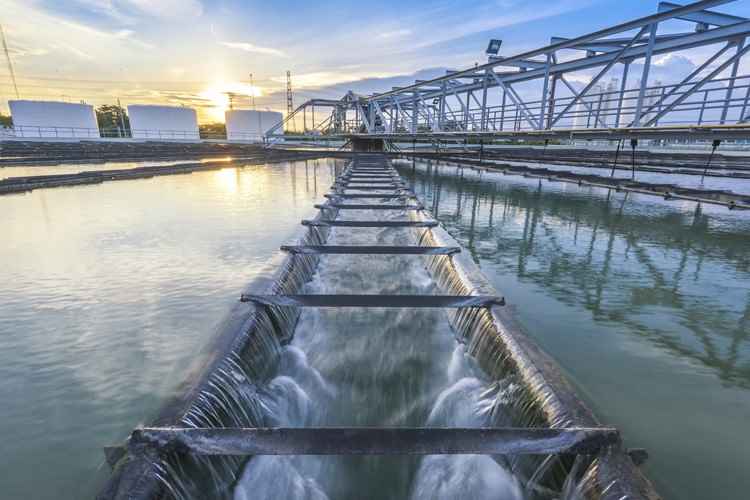
The Kigali Bulk Water Supply Project was the Bank’s first private sector operation in Rwanda. The project which was completed in 2021, covered the installation of a new water treatment plant, building new wells and rehabilitating existing ones. It also provided pipelines, storage reservoirs, pumping stations and water points in various parts of Kigali.

Producing 40,000 cubic meters of water daily, the project has increased access and improved water services for around 500,000 people in Kigali and surrounding areas. It also serves the country’s largest industrial zone, the Kigali Prime Economic Zone, located in Masoro, Gasabo District. It was implemented by the Water and Sanitation Corporation (WASAC), the national water and sanitation utility, which, previously, could only produce 109,500m³ against Kigali’s average demand of 150,000 to 200,000m daily.

According to Speciose Nyirabahire, a Monitoring and Evaluation Specialist with WASAC, there are 68 water points installed under the project in Bugesera District.

“Now girls are no longer dropping out of school because of domestic chores. Given that water is close to their homes, they have ample time to study, and they are also performing well in school,” she said.

Sanitation in schools has also improved because apart from enhancing water supply, the project provided ablution blocks in the learning institutions, said Nyirabahire.

The Kigali Bulk Water Supply Project is contributing to the government’s agenda of achieving universal access to water.  

The African Development Bank’s Country Manager for Rwanda, Aissa Toure Sarr, said: “The Bank is pleased to partner with the government to help it achieve its goal of social transformation and water access to the population.”

According to the National Strategy for Transformation 2017-2024, the government seeks to scale up access to water to 100% by 2024 from the current 86%. With the support of the Bank, Rwanda appears to be on course to achieving the objective.   

Distributed by APO Group on behalf of African Development Bank Group (AfDB).

Business

The Impacts of the Middle East Conflict on Africa

Published

on

African Development Bank

Twenty-nine currencies in Africa have weakened, raising the cost of servicing external debt and importing food, fuel, and fertilizer

TANGIER, Morocco, April 6, 2026/APO Group/ –The global economic environment has become increasingly volatile with rising frequency of major shocks worldwide. Amid spikes in energy, food and fertilizer prices caused by the ongoing conflict in the Middle East, the African Development Bank (AfDB) (www.AfDB.org), the African Union Commission (AUC) the United Nations Development Programme (UNDP), and the UN Economic Commission for Africa (UNECA) outline practical recommendations for crisis responses and resilience building in African countries.


Download Document: https://apo-opa.co/4mjcyl0

On the margins of the 58th Session of the Economic Commission for Africa in Tangier, the principals of the four institutions discussed the implications of the conflict on African economies and highlighted the key findings and recommendations of the forthcoming report.

“Continued escalation of the conflict worsens global instability, with serious implications for energy markets, food security, and economic resilience, particularly in Africa where economic pressures remain acute” H.E. Mahmoud Ali Youssouf, Chairperson of the African Union Commission.

The report highlights that the current shocks are transmitting faster and through more concentrated channels than past global disruptions, leaving African economies with little time to adjust. Its effects are already affecting African economies and households, requiring rapid effective policy action.

As global crises multiply, Africa’s response must evolve from managing shocks to fostering resilience

Global oil prices have already surged by more than 50 percent as of late March. Twenty-nine currencies in Africa have weakened, raising the cost of servicing external debt and importing food, fuel, and fertilizer. Disruptions linked to Gulf energy supplies limit access to ammonia and urea during the critical March–May planting season. This will affect agricultural production, compounding risks of crisis and emergency levels of food insecurity, especially for low‑income households and import‑dependent economies.

A Test and a Turning Point

“Africa has been hit by too many external shocks not of its making,” said Claver Gatete, UN Under-Secretary-General and Executive Secretary of the United Nations Economic Commission for Africa “This moment calls for decisive action, to protect people now, but also to accelerate Africa’s long‑term push towards energy security, food sovereignty, and financial self‑reliance. Crises like this reinforce why Africa must finance more of its own future and strengthen regional solutions that build resilience before the next shock hits.”

“This moment demands leadership, within Africa and from its partners,” stressed Ahunna Eziakonwa, UN Assistant Secretary‑General and Director of UNDP’s Regional Bureau for Africa. “With the right mix of policy choices, financing tools, and political resolve, Africa can weather this shock and emerge more resilient, more self-reliant, and better positioned to shape its own economic future.”

The Brief calls for coordinated action across three horizons:

  • Immediate crisis response measures to cushion households and stabilize fuel, food, and fertilizer supply by African governments and supported by development partners and the private sector.
  • Medium‑term reforms to strengthen energy security, targeted social protection, and regional trade under the AfCFTA
  • Long‑term structural reforms towards stronger domestic resource mobilization and African financial safety nets, including accelerated implementation of the African Financing Stability Mechanism

“As global crises multiply, Africa’s response must evolve from managing shocks to fostering resilience,” emphasized Sidi Ould Tah, President of the African Development Bank Group. “African institutions and development partners need to act swiftly and in concert, leveraging their comparative advantages to cushion short-term shocks while laying the foundations for long-term resilience.”

By strengthening regional integration, accelerating African-led financial solutions, and investing decisively in energy, food, and trade resilience, the continent can move from vulnerability to preparedness.

Distributed by APO Group on behalf of African Development Bank Group (AfDB).

Continue Reading

Business

ER Group chooses Nairobi to accelerate East African partnerships and investment

Published

on

ER Group

The Group, created in 2025 through the merger of Mauritian business flagships ENL and Rogers, marks a new step in its regionalisation strategy by strengthening its presence in one of Africa’s most dynamic economic regions

MOKA, Mauritius, April 3, 2026/APO Group/ —Mauritian listed business group ER Group (https://ERGroup.mu) has established a regional office in Nairobi, Kenya, and created a regional fund with equity partners to expand investment and partnerships across East Africa. The Group, created in 2025 through the merger of Mauritian business flagships ENL and Rogers, marks a new step in its regionalisation strategy by strengthening its presence in one of Africa’s most dynamic economic regions.

Regional expansion is one of the pillars of ER Group’s ten-year strategy, set out earlier this year. In line with this roadmap, the Group, which is present in 17 territories worldwide, is accelerating its expansion in Africa through a measured approach focused on sectors it knows well. The priority is to grow in industries and countries the Group already operates, working with trusted partners to expand sustainably.

Through this approach, ER Group aims to increase the contribution of international activities from around 15% of revenue today to 30% over the coming decade. East Africa has been identified as a priority region within this strategy, with Kenya, Tanzania, Zanzibar, Rwanda, and Uganda forming the first phase of expansion.

Establishing a regional office in Nairobi strengthens our ability to identify opportunities and support the expansion of our subsidiaries across East Africa

To back this ambition, ER Group has created, together with equity partners, a regional fund of MUR 1 billion to accompany the expansion of its subsidiaries across Africa. The fund is designated to providing capital for growth, supporting selective investments and providing additional capacity to pursue opportunities in markets and sectors where the Group has established expertise.

On the ground, ER Group has appointed Rasmus Bentzen as its regional representative in Nairobi. Bringing over a decade of experience in private equity and regional investment across East Africa, he will anchor the Group’s regional expansion agenda by identifying investment opportunities, developing strategic partnerships and supporting growth of its subsidiaries in Africa.

Gilbert Espitalier-Noël, Group Chief Executive Officer of ER Group, said: “Regionalisation is a central part of our long-term strategy. We focus on markets where our businesses already have operational expertise and where partnerships can support sustainable growth. Establishing a regional office in Nairobi strengthens our ability to identify opportunities and support the expansion of our subsidiaries across East Africa.

As it accelerates its regional ambition, ER Group, one of Mauritius’s most profitable and diversified business groups, continues to combine strong financial performance with dedicated investment, giving it the capacity to support its expansion with discipline and long-term perspective. For the first half of FY26, the Group, listed on the Stock Exchange of Mauritius and included in its Sustainability index (SEMSI), reported:

  • Revenue of MUR 23.2 billion ($492.7 million)
  • EBITDA of MUR 6.4 billion ($135.9 million)
  • Profit after tax of MUR 2.6 billion ($55.2 million)
  • Operating margin of 26%
  • Expected EBITDA FY26: MUR 12 billion ($254.8 million)

The Nairobi presence, combined with the creation of dedicated regional investment capacity, marks the start of a more active phase of expansion for ER Group, building on its existing footprint and financial capacity to deepen partnerships and pursue opportunities across East Africa and the Indian Ocean region.

Distributed by APO Group on behalf of ER Group.


Continue Reading

Business

Caribbean Scales Up Energy Financing as Afreximbank Expands CARICOM Commitment

Published

on

Afreximbank

Afreximbank’s expanded CARICOM financing capacity is reshaping how the Caribbean approaches energy, infrastructure and industrial development

PARAMARIBO, Suriname, April 1, 2026/APO Group/ –The Caribbean’s energy ambitions received a major financial boost this March as Afreximbank confirmed it is increasing its CARICOM financing capacity to $5 billion, marking a significant step toward closing the region’s infrastructure and development funding gap.


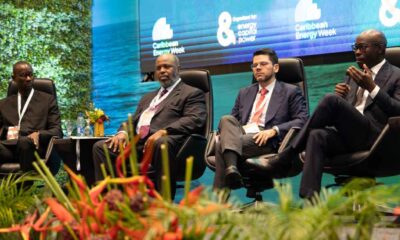
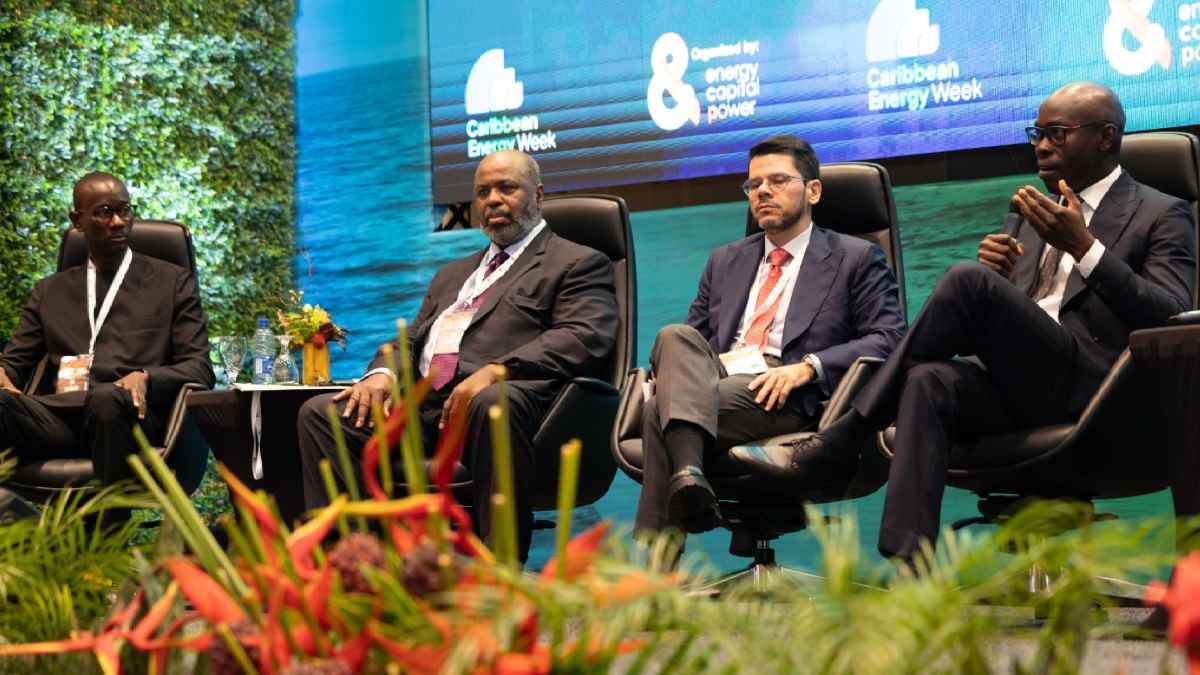
Speaking during the Atlantic Basin Business Forum at Caribbean Energy Week (CEW) 2026, Okechukwu Ihejirika, Acting CEO for the Caribbean Office at Afreximbank, emphasized that access to capital remains the single most important factor in turning the region’s energy ambitions into reality.

“There is a lot of financing that is required in the region and no one single institution can cover that alone. With CARICOM Afreximbank, we see the establishment of a large institution that can finance projects across the region,” Ihejirika said.

Launched in 2023, CARICOM Afreximbank will scale its regional financing limit from $3 billion to $5 billion over the next four years. Ihejirika explained that the entity already has buy-in from CAPRICOM states, and that “we have commissioned advisory agencies that are working on developing the framework document. We are waiting on feedback from the advisors. Once that comes in, we will be ready to throw in funds.”

Scaling Caribbean Energy: Finance and Infrastructure in Focus

The expansion of Afreximbank’s CARICOM financing commitment signals a shift toward more locally anchored financing structures, capable of supporting energy, infrastructure and industrial projects across the Caribbean. It coincides with an accelerated push by Caribbean authorities to address infrastructure challenges, targeting strengthened logistics and regional ties.

Wandenberg Pitaluga Filho, President of the Amapá Economic Development Agency, outlined how Brazil’s Amapá state is focusing on infrastructure, regulatory reform and workforce development to position itself as a logistics and industrial hub linked to the Guyana Plateau and Caribbean energy developments.

We are focused on three pillars: infrastructure, regulation and workforce development

“We are focused on three pillars: infrastructure, regulation and workforce development,” Filho said, noting that projects such as the expansion of Santana port and new gas infrastructure will be critical to supporting future oil and gas developments across the region.

Local Content Takes Center Stage

Beyond financing and infrastructure, local content has emerged as a strategic priority for many Caribbean states, with speakers at CEW emphasizing that resource development must translate into domestic economic growth. Jude Kearney, Partner at ASAFO & CO., stressed that local content policies are not simply regulatory tools but foundational components of a functioning hydrocarbon industry.

“Local content is not just a throwaway concept. It has turned out to be an incredibly important component of a working hydrocarbon industry,” Kearney said, pointing to countries such as Nigeria and Equatorial Guinea as examples of how strong but flexible local content frameworks can support both investors and domestic industry development.

From an African perspective, Ababacar Mbengue, Director of Promotion and Exploration at Petrosen E&P, outlined how Senegal has approached local content by benchmarking global markets and implementing legislation across the entire oil and gas value chain. He stated that “Petrosen is not only educating investors but supporting them from a technical side to do seismic work and exploration until they can develop [projects].”

The message from both sides of the Atlantic was clear: local content frameworks must be structured, predictable and aligned with industry realities if they are to attract investment while building domestic capacity.

Cross-Atlantic Cooperation Gains Momentum

Cross-Atlantic cooperation between Africa and the Caribbean is also gaining momentum, particularly as new gas producers and emerging oil provinces look to share technical expertise, financing models and regulatory experience.

Delivering a keynote ahead of the discussion, Ibrahima Noba, Director of E&P, Ministry of Energy, Senegal, highlighted that “What we see between Africa and the Caribbean is a resurgence. Both face similar challenges and share a common vision. This creates a unique opportunity for aligned strategies. We believe the time has come for collaboration between NOCs, shared development of gas monetization strategies and stronger collaboration across the energy value chain.”

Distributed by APO Group on behalf of Energy Capital & Power.

Continue Reading

Trending