Connect with us
Anglostratits

Business

Africa Data Centres and Distributed Power Africa work together to reach Sustainable Development Goals

Published

on

ADC-DPA

Under the terms of the agreement, DPA SA will supply 12MW of renewable solar energy for Africa Data Centres facilities in South Africa

JOHANNESBURG, South Africa, March 14, 2023/APO Group/ — 

Africa Data Centres (https://www.AfricaDataCentres.com/) has signed a 20-year Power Purchase Agreement with Distributed Power Africa; distributed Power Africa will supply 12MW of renewable solar energy for Africa Data Centres facilities in South Africa through wheeling; by working together, the two companies are also supporting several of the United Nations Sustainable Development Goals.

Africa Data Centres, a business of Cassava Technologies group, is pleased to announce it has signed a 20-year Power Purchase Agreement (PPA) with DPA Southern Africa Pty Ltd (DPA SA), a joint company of Distributed Power Africa  and the French utility company, EDF.

Under the terms of the agreement, DPA SA will supply 12MW of renewable solar energy for Africa Data Centres facilities in South Africa .

“Through this agreement, our customers will benefit from a sustainable data centre,” says Tesh Durvasula, CEO of Africa Data Centres.

As the demand for data continues to soar, the data centre industry is expanding rapidly, he explains. “However, while data centres are the foundation of the digital transformation process in Africa, they require reliable, cost effective and preferably green power to operate. Our partnership with DPA will also help in reducing our reliance on the strained South African national grid, enabling us to play our part in alleviating the current energy challenges facing the country”.

Energy will be delivered to Africa Data Centres’ facilities partly from the solar farm DPA is developing near Bloemfontein to deliver the first 12MW required for the ADC data centres.

This new deal will provide over 30% of our South African data centres with renewable energy, a great stride forward in our aim to reach carbon neutrality

Research (https://apo-opa.info/3YJEXmA) reveals that the global data centre market was valued at $187.35 billion in 2020 and is projected to reach $517.17 billion by 2030, registering a CAGR of 10.5% from 2021 to 2030. In addition, most estimates claim data centres are responsible for as much as 2% of the world’s energy consumption, which is approximately the same as the aviation industry.

While it cannot be denied that tremendous strides have been made towards carbon neutrality, designing, developing, and operating sustainable facilities is still one of the greatest challenges faced by developers, co-location operators, global cloud computing providers and hyperscalers.

According to Durvasula, “Each year, the data centre industry must try to accommodate two fundamental goals. Firstly, it must meet the demand for the capacity needed to support the ever-increasing range of high-performance computing, digital services, edge environments and connected devices. Secondly, it must find ways to lower energy usage and reduce its universal impact resources that are already stretched to the limit.”

Africa Data Centres itself has a target to power all its data centres with clean, zero-carbon sources of energy. “This new deal will provide over 30% of our South African data centres with renewable energy, a great stride forward in our aim to reach carbon neutrality.”

The data centre giant, as the largest pan-African network of interconnected data centre facilities, is at the vanguard of sustainable change and has always been committed to helping South African companies reduce their reliance on the already strained power supply. “By signing this latest PPA, we will reach our second milestone towards carbon neutrality. Our first milestone was to optimise our roof space with solar, and this latest deal will see us utilising the recently approved wheeling mechanism within South Africa’s municipalities”.

DPA is a pan-African renewable energy company with key operations in South Africa, Kenya and Zimbabwe whose vision is to power Africa to a brighter future. Commenting on the partnership Norman Moyo, CEO of DPA,  said, “Our customers are looking for cost-effective and efficient ways of meeting their green targets and reduce energy costs for their businesses in a climate of increased power shortages. We are excited to embark on this milestone project with Africa Data Centres as it will demonstrate our innovation in deploying renewable energy solutions”.

Through the creation of a 50:50 Joint Venture between DPA and EDF in South Africa via DPA Southern Africa (Pty) Ltd,  EDF intends to develop hybrid energy solutions for clients across Africa. Valérie Levkov, Senior VP Africa and Middle East at EDF commented: “This agreement with Africa Data Centres re-affirms EDF’s commitment to provide low carbon solutions for commercial and industrial client in Africa, and we are very pleased to be a part of this initiative.   

By working together, the two companies are also supporting several of the United Nations Sustainable Development Goals. To ensure access to affordable, reliable, sustainable, and modern energy for all and to make cities and human settlements inclusive, safe, resilient and sustainable. This partnership also creates sustainable consumption and production patterns and, most significantly, takes urgent action to combat climate change and its impacts.

Distributed by APO Group on behalf of Africa Data Centres.

Business

African Energy Chamber (AEC) Supports Perenco Partnership to Advance Industry 4.0 Skills in Central Africa

Published

on

African Energy Chamber

The African Energy Chamber welcomes Perenco Cameroon and Perenco Gabon’s partnership with UCAC-ICAM to launch an Industry 4.0 lab, advancing local skills development and strengthening Africa’s industrial future

JOHANNESBURG, South Africa, April 9, 2026/APO Group/ –A new partnership between Perenco Cameroon, Perenco Gabon and the UCAC-ICAM Institute in Douala to establish an Industry 4.0 laboratory marks a significant step toward aligning academic training with the evolving needs of the energy and industrial sectors. The facility will give students access to advanced automation, digital simulation and smart production technologies, helping close the gap between academic learning and the practical, industry-ready skills required across Central Africa’s industrial landscape.


As the voice of Africa’s energy sector, the African Energy Chamber (AEC) welcomes the initiative as a scalable model for local content development. By equipping students with Industry 4.0 capabilities, the laboratory directly supports the Chamber’s mandate to ensure greater in-country value creation and workforce participation across Africa’s energy value chain. The initiative also addresses critical skills shortages, enabling operators to increasingly rely on locally trained talent.


Developing local skills is fundamental to building a competitive and sustainable energy sector in Africa

The partnership underscores Perenco’s long-term commitment to sustainable development and capacity building in Cameroon and Gabon. Designed as a mini-factory, the UCAC-ICAM laboratory enables students to engage with real-world industrial tools and processes. This hands-on approach will support the development of engineers and technicians capable of contributing to key projects, including operations in the Rio del Rey Basin and infrastructure developments such as the Cap Lopez LNG terminal in Gabon.


Students across multiple disciplines will benefit from hands-on exposure to the lab’s advanced technologies. General Engineering students will train using robotic systems and virtual reality simulations, while Computer Science Engineering students will focus on industrial IoT and smart technologies. Process Engineering students will gain experience in automated production systems, and Petroleum program students will develop expertise in energy systems and instrumentation control. Graduates from UCAC-ICAM are being actively recruited by leading companies operating in Douala, reflecting growing demand for locally trained, industry-ready talent.

“Developing local skills is fundamental to building a competitive and sustainable energy sector in Africa,” says NJ Ayuk, Executive Chairman of the AEC. “This partnership demonstrates how industry and academia can work together to create a highly skilled workforce that will drive Africa’s industrialization and energy future. It is exactly the type of initiative needed to ensure Africans play a leading role in developing the continent’s resources.”

The UCAC-ICAM laboratory represents a strategic investment in Africa’s industrial and energy future. By strengthening local capacity, advancing technology adoption and supporting independent operators, the initiative aligns with the AEC’s broader vision of a self-sufficient and globally competitive African energy sector.

Distributed by APO Group on behalf of African Energy Chamber.

Continue Reading

Business

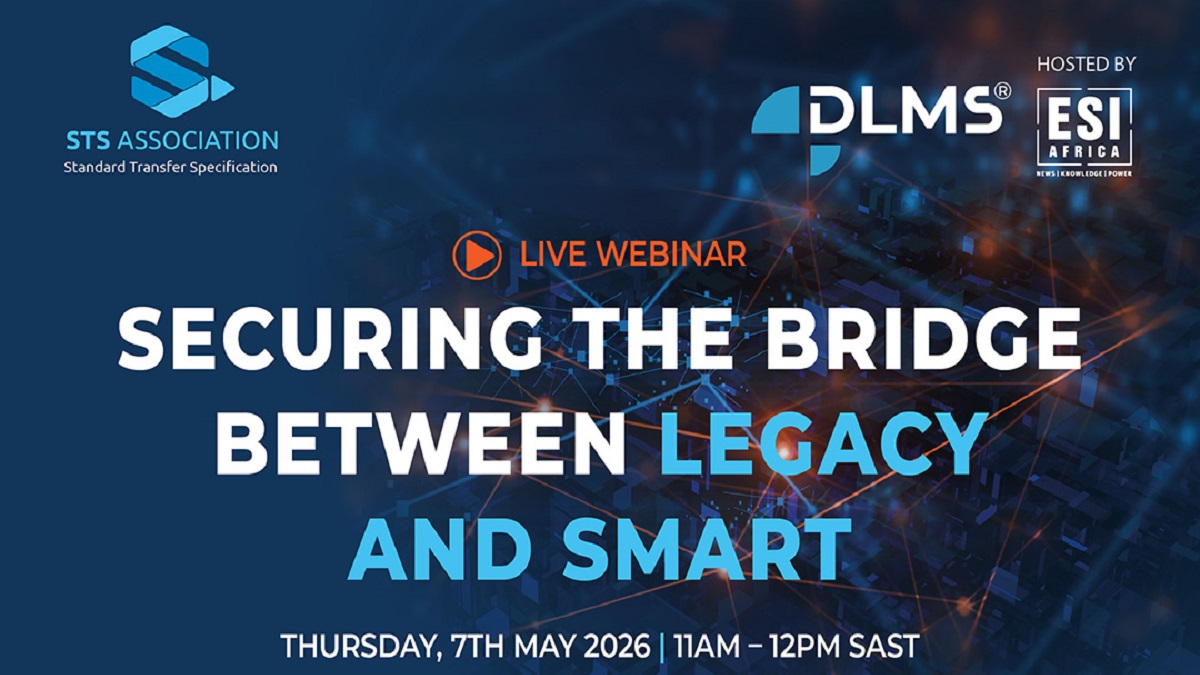
Securing the bridge between legacy and smart

Published

on

DLMS

STS Association and DLMS User Association sign landmark Liaison Agreement to advance interoperable, secure and future-ready metering systems

CAPE TOWN, South Africa, April 9, 2026/APO Group/ –The recent Liaison Agreement between the STS Association and the DLMS User Association marks a pivotal step in the evolution of interoperable, secure and future-ready metering systems. By aligning STS token technology with the widely adopted DLMS/COSEM framework, this collaboration is set to bridge the gap between legacy infrastructure and next-generation smart metering. The partnership reflects a shared vision to enhance interoperability, strengthen smart prepayment integration, and unlock greater value across the global metering ecosystem.


STS Association, in partnership with ESI Africa (part of VUKA Group), and DLMS User Association, is hosting a free webinar on this topic:

Securing the bridge between legacy and smart

Thursday, 7 May 2026 | 11:00 AM – 12:00 PM

Register: https://apo-opa.co/4cfEUb5

What you will learn

Industry experts will unpack how this strategic alignment enables seamless integration between your trusted prepayment systems and advanced data exchange protocols. Attendees will gain insight into:

  • How STS tokens can be securely transported using DLMS/COSEM
  • The role of Generic Companion Profiles in enabling interoperability
  • How coordinated roadmaps will shape the future of token technology and smart metering
  • The expanding application of these standards beyond electricity into water, gas and time metering
  • Practical benefits for utilities, manufacturers and system integrators navigating the transition from legacy to smart environments

Introducing the Panel

Lance Hawkins-Dady – STSA Board Chairman

Franco Pucci – STSA Technical Consultant

Don Taylor – STSA Independent Director

Sergio Lazzarotto – DLMS User Association, President

Join STS Association and ESI Africa to explore how this landmark collaboration is securing the bridge between legacy systems and smart innovation. Discover how aligned standards can simplify integration, enhance security and future-proof your metering strategy.

Register now: https://apo-opa.co/4cfEUb5

Distributed by APO Group on behalf of VUKA Group.

Continue Reading

Business

Africa’s Lithium Pipeline Gains Momentum as Global Supply Deficits Loom

Published

on

Energy Capital

The upcoming African Mining Week 2026 – taking place from October 14-16 in Cape Town – will connect global investors with prospects within the lithium industry amidst an anticipated resource supply deficit by 2028

CAPE TOWN, South Africa, April 9, 2026/APO Group/ –Rising demand for lithium is positioning Africa to attract foreign investment, accelerate local beneficiation and strengthen its role in securing the global battery supply chain. A recent forecast by Wood Mackenzie projects that global lithium demand could exceed 13 million tons by 2050 under an accelerated energy transition scenario. This surge is expected to place significant pressure on supply, with deficits emerging as early as 2028. Without substantial new investments, existing lithium projects will struggle to meet demand beyond the mid-2030s.


Against this backdrop, Africa’s growing pipeline of greenfield and development-stage lithium projects positions the continent as an increasingly important contributor to global supply security. In 2025, Africa ranked as the largest source of new lithium supply globally, with new output from the region exceeding that of the rest of the world combined. This milestone underscores the continent’s potential to scale production and strengthen its role in the global battery minerals market.

Emerging Lithium Producers Strengthen Africa’s Supply Pipeline

Even under a slower energy transition scenario, Wood Mackenzie projects that lithium markets will remain adequately supplied until 2037, before entering deficit. This outlook reinforces Africa’s strategic role as new projects across Mali, Zimbabwe, Ghana and Namibia advance toward production.

In the Democratic Republic of the Congo (DRC), Zijin Mining, AVZ Minerals and KoBold Metals are expected to begin operations at the Manono lithium project in mid-to-late 2026, marking the country’s first lithium output. Ranked among the world’s largest hard-rock lithium deposits, Manono is expected to begin exports shortly after commissioning, diversifying DRC’s mineral output while strengthening the continent`s contribution to the global electric vehicles and battery supply chain.

Mali Emerges as a Regional Lithium Hub

Mali is also rapidly positioning itself as a key lithium producer. The Bougouni Lithium Project, commissioned in 2025, currently produces approximately 125,000 tons per annum of concentrate, with Phase Two expansion plans underway that could nearly double production capacity.

Meanwhile, the Goulamina Lithium Project, one of the largest spodumene deposits globally, is producing around 506,000 tons of spodumene concentrate annually, with expansion plans targeting one million tons per year. Together, these projects are expected to significantly strengthen Mali and Africa’s position within the global lithium market.

Ghana and Zimbabwe Expand Lithium Production and Value Addition

In Ghana, the Ewoyaa Lithium Project, developed by Atlantic Lithium, is set to become the country’s first lithium-producing mine, with production targeted for late 2027. The project is expected to produce 3.58 million tons of spodumene concentrate grading 6% and 5.5%, alongside approximately 4.7 million tons of secondary product, further strengthening Africa’s contribution to global lithium supply.

Meanwhile, Zimbabwe – currently Africa’s largest lithium producer – is accelerating efforts to move up the value chain. Government policies restricting the export of raw lithium are encouraging investment in local processing and beneficiation facilities, supporting the production of higher-value lithium products and positioning the country as a key supplier to the global battery materials market.

Investment Momentum Builds Ahead of African Mining Week

With an estimated $276 billion in new investment required to avoid the forecast supply deficits beginning in 2028, Africa’s lithium-rich countries are well positioned to attract the capital needed to expand production and downstream processing.

In this context, African Mining Week 2026 – scheduled for October 14–16 in Cape Town – will serve as a key platform for global investors, project developers and policymakers to engage on opportunities within Africa’s lithium sector. As the continent’s premier mining investment event, the conference will feature high-level discussions, project showcases and strategic networking sessions aimed at accelerating partnerships across the lithium value chain.

Distributed by APO Group on behalf of Energy Capital & Power.

Continue Reading

Trending