Connect with us
Anglostratits

Business

Access Bank Calls for Stakeholders Collaboration to Boost Intra-African Trade

Published

on

Access Bank

Ogbonna made the call at the Access Bank Africa Trade Conference (ATC 2026) held in South Africa

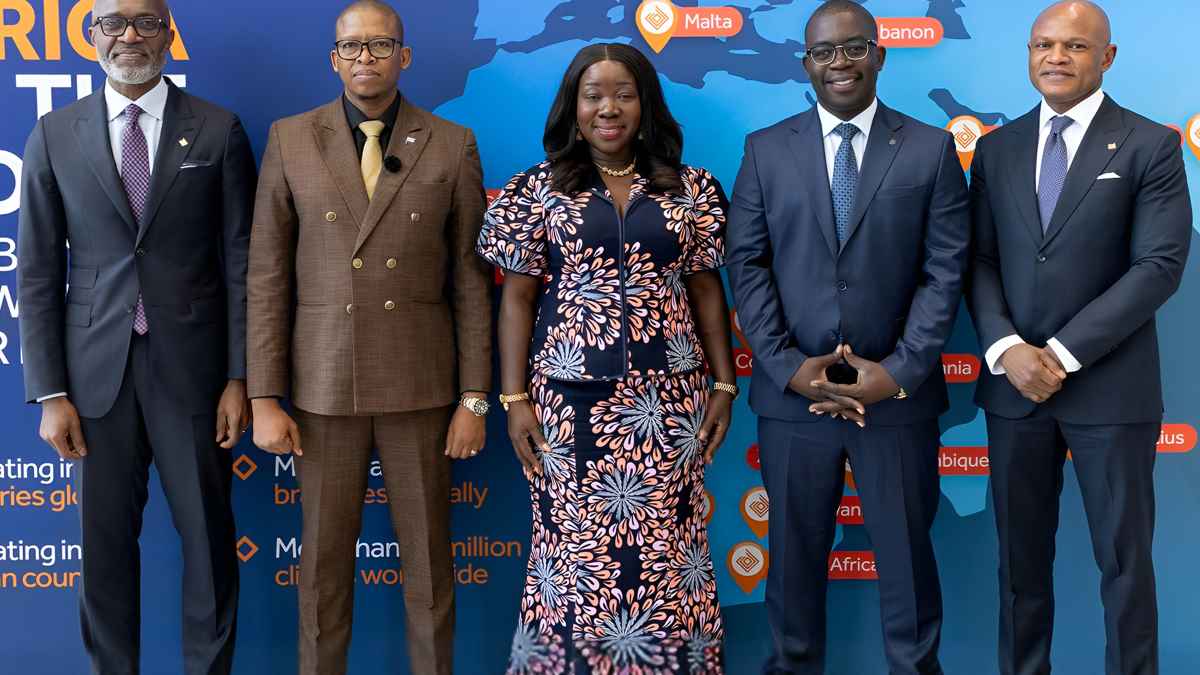
LAGOS, Nigeria, March 16, 2026/APO Group/ –The Managing Director and Chief Executive Officer, Access Bank Plc (www.AccessBankPlc.com), Mr. Roosevelt Ogbonna, has called for stronger collaboration among policymakers, financiers and businesses to accelerate trade within Africa and unlock the continent’s economic potential.

Ogbonna made the call at the Access Bank Africa Trade Conference (ATC 2026) held in South Africa, where he said Africa must address structural barriers that continue to limit the growth of intra-continental commerce despite its vast market opportunities.

Speaking during his opening remarks, the Access Bank Chief noted that the conference was convened to continue conversations which started at the inaugural edition in 2025 on how Africa can expand trade within the continent while strengthening its participation in global markets.

He noted that Africa’s share of global trade remains relatively small, stressing that fragmented trade corridors and structural bottlenecks continue to hinder the growth of commerce across the continent.

His words, “The reality is that Africa still controls a small share of global trade. The corridors are still fragmented and more aspirational than functional, and too many small businesses that aspire to trade across Africa remain constrained”.

Further speaking, Ogbonna explained that stakeholders at last year’s conference agreed on three key priorities at transforming Africa’s trade landscape. The priorities he listed include, (i) Breaking down silos between policymakers, financial institutions and businesses, (ii) Building a trade ecosystem driven by reliable data and analytics, and (iii) Developing systems that support both large corporations and smaller businesses seeking to expand across borders.

He noted that the 2026 edition of the conference is not a fresh start but a continuation of efforts to drive meaningful progress in intra-African trade. According to him, since the last edition of the conference, some progress has been recorded across key sectors of the economy.

“We have seen value chains emerging across agriculture, manufacturing and services, and we are seeing African brands crossing borders and building a global presence,” he said.

Ogbonna also pointed to the growing role of technology platforms in reducing friction in areas such as payments, logistics and market access. He, however acknowledged that the gains remain uneven across the continent, with progress concentrated in a few markets and specific trade corridors.

Speaking on the need for stronger infrastructure financing in growing intra African trade, the Director General for Southern Africa at the African Development Bank (AfDB), Kennedy Mbekeani, called for stronger mobilisation of private capital to finance critical infrastructure required to unlock the full potential of Africa’s trade integration.

We have seen value chains emerging across agriculture, manufacturing and services, and we are seeing African brands crossing borders and building a global presence

“The mobilisation of private capital remains crucial as many African governments are constrained by limited fiscal space and overstretched balance sheets. The mobilisation of capital, particularly private capital, is something that we need to work on”, Mbekeani said.

Opening up on African governments perspective to the drive for intra Africa trade, Zambia’s Minister of Commerce, Trade and Industry, Chipoka Mulenga speaking during the ministerial panel discuss of the conference noted that policy alignment among African countries would be critical to unlocking the continent’s trade potential.

“Policy is very important in making anything come together. It must be consistent, resilient and coherent. If intra-African trade must be enhanced, we must deliberately craft policies that speak the same language across our countries. We should leverage our comparative advantages, rather than competing with one another,” Mulenga stated.

Also speaking during the session, Ghana’s Minister for Trade, Agribusiness and Industry, Elizabeth Ajare, noted that Africa does not lack policy frameworks but rather struggles with harmonised implementation.

“Africa does not lack policies; we already have many. Our challenge is the implementation of these policies in a harmonised manner. That is what we must focus on to make trade work effectively across the continent,” she posited.

Ajare further stressed that countries must be willing to compromise and adopt mutual recognition frameworks to facilitate trade across borders.

“If we insist on verifying every product independently, we will not make progress. Harmonising standards and recognising each other’s certification processes will allow us to trade more efficiently,” she added.

Speaking in the same vein, Botswana’s Minister of Trade and Entrepreneurship, Tiroeaone Ntsima, noted that African governments must focus on creating enabling environments that allow businesses and investors to drive economic growth.

“The governments of today are not like those of the 1960s where everything was done by government. Our role now is to create an enabling environment for businesses and investors to thrive”.

Ntsima added that Botswana is repositioning itself as a key trade corridor within the region. “In the past we described ourselves as a landlocked country, but today we see ourselves as land-linked. By creating corridors that connect markets across the continent, we open up new opportunities for trade and economic growth,” he noted.

On his final notes, the Access Bank Chief urged stakeholders across the continent to move beyond dialogue and take concrete steps that will strengthen trade relationships among African countries, emphasising that Africa’s economic transformation would depend largely on the willingness of businesses and institutions to collaborate more effectively.

“This conference must not end as another talking shop. It must become the birthplace of a movement that contributes to transforming intra-African trade,” he urged.

Distributed by APO Group on behalf of Access Bank PLC.


Business

Africa’s Greenfield Exploration Surges to Meet Global Mineral Demand

Published

on

Energy Capital

Record exploration activity in South Africa, Ghana and Namibia is propelling African nations to the forefront of the global mining supply chain, as African Mining Week 2026 prepares to showcase the continent’s latest projects and investment opportunities

CAPE TOWN, South Africa, March 16, 2026/APO Group/ –African mining markets are witnessing an unprecedented surge in greenfield exploration, with governments and investors racing to secure new mineral reserves and expand production pipelines. Last year, South Africa awarded 358 new exploration licenses, Ghana is advancing more than 90 projects and Namibia has received over 800 new applications – all signaling Africa’s intent to strengthen its role in supplying minerals vital to the global economy. The move comes as demand for critical minerals is projected to quadruple by 2040, while gold and other traditional commodities reach record prices, making exploration a strategic priority for industrial growth, job creation and downstream economic diversification.


South Africa: Securing Global PGMs Leadership

South Africa is boosting its exploration pipeline to sustain global leadership in platinum group metals, chrome and manganese while revitalizing gold and iron ore sectors. In 2025, the country awarded 358 new prospecting rights and 32 mining rights, signaling a significant step toward unlocking mineral resources and supporting long-term production growth.

To further stimulate exploration, the government allocated R2 billion to support junior mining companies and expand activity. These efforts are part of a broader plan to mobilize R2 trillion in investment for the critical minerals sector and unlock an estimated R40 trillion in untapped iron ore resources.

https://apo-opa.co/4sMDmvS

https://apo-opa.co/4bqcJph

Ghana: Gold Sector Growth and Industry Diversification

We are looking forward to further discoveries of critical minerals that will support the global energy transition

Ghana hosts over 90 active exploration projects, reinforcing its status as Africa’s leading gold producer while expanding into critical minerals. The country has attracted more than $20 billion in mining and exploration investment over the past two years, reflecting strong investor confidence.

Speaking in Cape Town in February, Emmanuel Armah-Kofi Buah, Minister for Lands and Natural Resources, emphasized Ghana’s diverse resource base, which includes significant deposits of bauxite, manganese, iron ore, cobalt and nickel. “We are looking forward to further discoveries of critical minerals that will support the global energy transition,” he said.

Namibia: Accelerating Licensing to Unlock Critical Minerals

Namibia is reforming exploration licensing to expand its mining sector and strengthen its position as a leading uranium and diamond producer. The country currently holds 588 Exclusive Prospecting Licenses alongside a growing pipeline of new applications.

https://apo-opa.co/4uOrDin

Mining Commissioner Isabella Chirchir confirmed in Cape Town that Namibia is deploying digital licensing platforms to accelerate processing, reduce backlogs and improve regulatory efficiency. With over 800 new exploration license applications and more than 600 pending environmental approvals, the country is positioning itself to attract increased exploration investment and unlock new mineral discoveries.

Continental Outlook: Strategic Exploration Across Africa

Other African markets are also intensifying exploration to advance national mining strategies: Zambia is expanding copper exploration to reach 3 million tons annually by 2031. Guinea is progressing exploration around the $20 billion Simandou iron ore project, the world’s largest untapped iron ore deposit, supporting global steel supply chains and the Simandou 2040 economic diversification plan.

Against this backdrop, African Mining Week, scheduled for October 14–16, 2026 in Cape Town, will highlight exploration opportunities across the continent. The event will feature panel discussions, country spotlights and project showcases focused on greenfield exploration, investment opportunities and strategies to unlock Africa’s untapped mineral wealth.

African Mining Week serves as the premier platform for exploring the full spectrum of mining opportunities across Africa. The event is held alongside the African Energy Week: Invest in African Energies 2026 conference from October 12-16 in Cape Town. Sponsors, exhibitors and delegates can learn more by contacting sales@energycapitalpower.com.

Distributed by APO Group on behalf of Energy Capital & Power.

Continue Reading

Business

Beyond the balance sheet: Afreximbank unveils Season II of ‘Impact Stories,’ showcasing transformative projects across two continents

Published

on

afreximbank

The series brings to life the impactful outcomes of strategic investments, moving beyond finance to capture the human and economic transformation unfolding across the continent and its diaspora

Together, we’ve built a compelling, audience first YouTube documentary series dedicated to telling powerful human stories and showcasing the real-world impact of their initiatives

CAIRO, Egypt, March 12, 2026/APO Group/ –African Export-Import Bank (Afreximbank) (https://www.Afreximbank.com/) is pleased to launch the second season of its documentary series, Impact Stories. Building on the success of the inaugural season, the new collection of six films expands the series’ geographic scope to capture the Bank’s growing footprint across Global Africa, featuring stories from the Caribbean and Africa.


Produced by Afreximbank in partnership with Create, CNN International Commercial’s branded content studio, Season Two takes viewers on location to Grenada, Ghana, Côte d’Ivoire, and Nigeria. The series brings to life the impactful outcomes of strategic investments, moving beyond finance to capture the human and economic transformation unfolding across the continent and its diaspora. Each episode provides an intimate look at the landmark projects and partnerships that are unlocking enterprise, building critical infrastructure, and fostering a new era of prosperity.

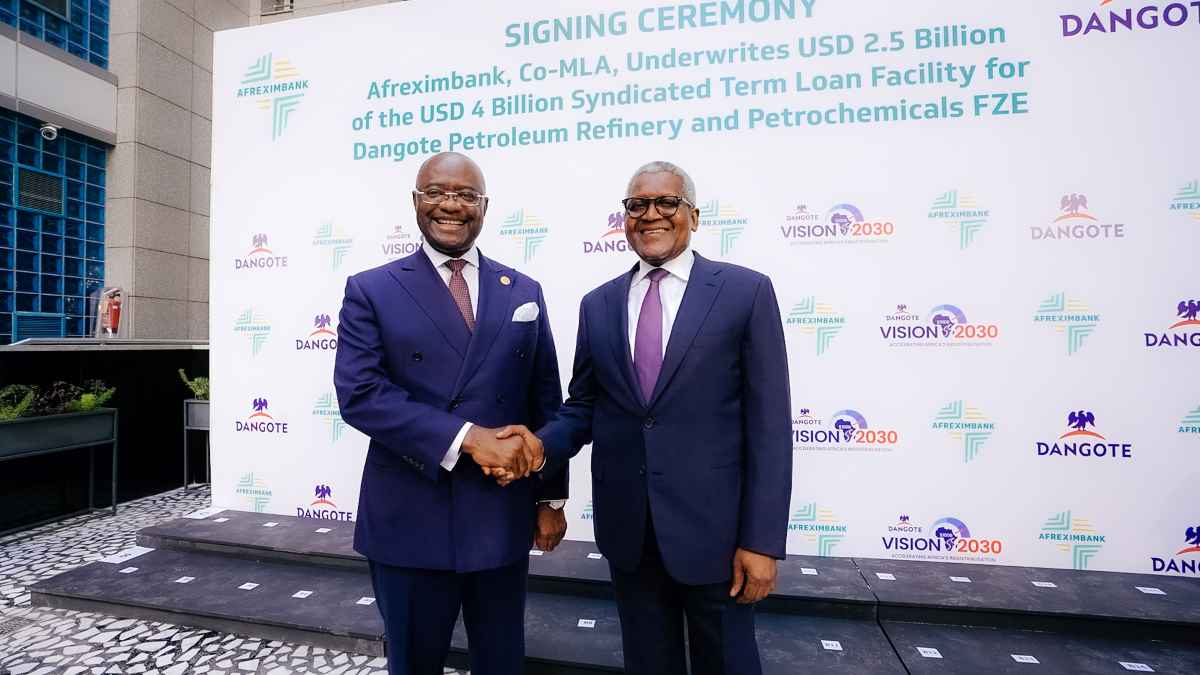
Featuring stories that highlight the breadth and impact of Afreximbank’s interventions — from the expansion of the Silversands Resort in Grenada, a flagship project of deeper Africa-Caribbean cooperation, to the development of Dangote Refinery in Lagos, the films illustrate the scale of ambition driving Africa’s economic future. Viewers will be transported to Aba, Nigeria, to see how the Geometric Power project is revitalising a historic industrial hub with reliable electricity, and to Ghana, where the series follows the journey of cocoa from farm to global market through the Bank’s partnership with Plot Enterprise.

The series also celebrates the rise of Africa’s creative economy, spotlighting Ghanaian fashion brand Boyedoe as it prepared for its debut on global stage at Paris Fashion Week, supported by Afreximbank’s Creative Africa Nexus (CANEX) programme. The final episode explores the renovation of Abidjan’s iconic Félix Houphouët-Boigny Stadium, showcasing how investment in national infrastructure delivers wide-reaching cultural and economic benefits for local communities.

Mrs. Anne Ezeh, Director of Communications and Events at Afreximbank, emphasised the series’ role in documenting the Bank’s core mission and impact: “These films are much more than stories about investment and projects; they are portraits of partnership and progress, demonstrating our unwavering commitment to fostering economic independence. By showcasing the entrepreneurs, communities, and national economies we partner with, we are sharing a vision of a prosperous and integrated Global Africa. This showcase is vital because it demonstrates that the building blocks for greater economic integration are already in place or being built now, inspiring businesses and regions to accelerate intra-African trade and encouraging entrepreneurs to forge cross-border collaborations that drive development at home and abroad.”

Martin Laing, Senior Director of Production and Global Executive Producer at CNN International Commercial’s Create Brand Studio, said: “It’s been a real privilege to work hand in hand with Afreximbank and their incredible team as co producers of Impact Stories again for the second season. Together, we’ve built a compelling, audience first YouTube documentary series dedicated to telling powerful human stories and showcasing the real-world impact of their initiatives across Africa, its global diaspora, and beyond. We are incredibly proud to collaborate on a truly international series that puts people at the heart of the storytelling and connects meaningfully with audiences around the world.”

The six new episodes which will debut on Afreximbank TV (https://apo-opa.co/47Dzbu0) on March 12th and serve as a powerful testament to Afreximbank’s mandate to finance and promote trade, as well as demonstrating how strategic investments are turning opportunity into tangible prosperity for businesses and communities across Africa and the Caribbean. The series will be promoted in high impact formats across CNN.com and in a long-form TV campaign across CNN International.

Distributed by APO Group on behalf of Afreximbank.

Continue Reading

Business

Sub‑Saharan African economies among world’s fastest‑improving in global connectedness

Published

on

African

Based on more than 9 million data points tracking international flows of trade, capital, information, and people, the report offers the most comprehensive view of globalization available

  • Global connectedness stood at 25% in 2025, matching the record high first reached in 2022
  • Namibia ranks among the top three countries globally for long‑term increases in connectedness since 2001; Mozambique, Nigeria and Zambia record strong gains
  • The DHL Global Connectedness Report 2026 draws on more than 9 million data points worldwide

Globalization remains at a historically high level – despite escalating geopolitical tensions, rising U.S. tariffs, and unprecedented uncertainty about future trade policies. This is one of the key findings of the DHL Global Connectedness Report 2026 (https://Group.DHL.com), released today by DHL and New York University’s Stern School of Business.

Based on more than 9 million data points tracking international flows of trade, capital, information, and people, the report offers the most comprehensive view of globalization available.

Sub‑Saharan Africa: connectedness gains point to rising relevance in global trade

Against this global backdrop, the report presents a nuanced picture for Sub‑Saharan Africa. While levels of connectedness differ significantly across the region, several economies are strengthening their integration into global flows, underscoring steady progress over time, and highlighting scope for further gains in others.

Namibia ranks among the countries with the largest increases in connectedness since 2001, with Mozambique also featuring among the strongest long‑run improvers. More recently, Nigeria and Zambia are listed among the countries with the largest connectedness gains since 2022, reflecting growing momentum in trade, investment and people flows.

Hennie Heymans, CEO of DHL Express Sub‑Saharan Africa, commented: “As supply chains across the globe continue to develop and trade routes expand into new territories, connectedness is emerging as a key differentiator for businesses and nations alike. The countries in our region that are strengthening their global links are becoming more visible in international trade networks. While this is an encouraging trend in terms of the scope of opportunities available, the key is to take advantage of these opportunities to drive consistent and reliable trade flows. This report further underscores how Africa is increasingly shifting from a narrative of aid to one of trade, a transformation powered by stronger integration, rising competitiveness, and improved access to global markets. To fully unlock this potential, the region needs strong regional connectivity, predictable cross-border processes, and partners that understand both local conditions and global trade requirements. At DHL Express, we are committed to being a catalyst for growth in Africa, ensuring that not only is Africa a part of global trade but a key driver within it.”

Beyond trade and investment, the report finds that people flows have recovered fully from the Covid‑19 collapse. In tourism, UN data show that Africa recorded a 17% increase in international arrivals in 2025 compared with 2019, the second‑largest increase among world regions, behind the Middle East.

In the report’s 2024 country ranking of 180 economies, South Africa ranks 53rd overall. Other Sub‑Saharan African countries with relatively higher overall ranks include Seychelles (40th), Mauritius (65th), Namibia (68th), Ghana (97th), Nigeria (100th), Mozambique (107th), and Kenya (119th).

The DHL Global Connectedness Report shows that countries and companies are not retreating behind national borders

Globalization has held firm since 2022

The report tracks globalization on a scale from 0% (no cross-border flows) to 100% (borders and distance have no impact). The world’s level of globalization was 25% in 2025, in line with the record high set in 2022.

“Globalization is holding its ground – and that alone speaks volumes about its value,” said John Pearson, CEO of DHL Express. “From poverty to climate change, the world’s biggest challenges can only be solved through global thinking. The DHL Global Connectedness Report shows that countries and companies are not retreating behind national borders. That is good news. DHL strengthens global ties by connecting markets, businesses, and people so they can adapt, diversify, and unlock new opportunities – even in uncertain times.”

At the same time, the current level of globalization underlines how far the world remains from being fully globalized. In many areas, international flows could expand further in the absence of policy constraints.


No global split into rival blocs

Even as the U.S. and China decouple, most countries continue to engage with their longstanding partners. Over the past decade, only 4–6% of global goods trade, greenfield FDI, and cross-border M&A have shifted away from geopolitical rivals. Of these flows, most have not moved to close allies but to countries with flexible geopolitical positions, such as India and Vietnam. Overall, the world economy remains far from a broad split into rival blocs.

“The politics and policy surrounding globalization are much more volatile than the actual flows between countries,” said Prof. Steven A. Altman, Director of the DHL Initiative on Globalization at NYU Stern’s Center for the Future of Management. “Global trade patterns changed more in 2025 than they do in a typical year, but less than they did during other recent disruptions such as the early stages of the war in Ukraine. Sound decision-making requires a calibrated view of how much global business ties are really changing. The risks to globalization are real, but so is the resilience of global flows.”

The DHL Global Connectedness Report

Published regularly since 2011, the DHL Global Connectedness Report provides reliable insights on globalization by analyzing 14 types of international trade, capital, information, and people flows. The 2026 edition is based on more than 9 million data points. It ranks the connectedness of 180 countries, accounting for 99.6 percent of global gross domestic product and 99.0 percent of the world’s population. A set of 180 one-page country profiles summarizes each country’s pattern of globalization.

The report was commissioned by DHL and authored by Steven A. Altman and Caroline R. Bastian of New York University Stern School of Business.


The report and further resources are available at https://apo-opa.co/4diKcod.

Distributed by APO Group on behalf of DHL Group.

Continue Reading

Trending