

Business
8.7% of users encountered phishing attacks in Africa in 2022, global number of attacks exceeds 500 million

Kaspersky experts discovered that throughout 2022 cybercriminals increasingly turned to phishing
LAGOS, Nigeria, March 2, 2023/APO Group/ —
Kaspersky’s (www.Kaspersky.co.za) anti-phishing system prevented more than 500 million attempts at accessing fraudulent websites globally in 2022. This is twice more compared to 2021 figures. In Africa, 8.7% of individuals and corporate users were affected by phishing: attacks on their devices were detected and stopped. In South Africa, the share of users affected by phishing stands at 9.7%, followed by Kenya at 8.4% and Nigeria at 7%. Detailed information on the global situation with spam and phishing can be found in Kaspersky’s Spam and Phishing in 2022 (https://apo-opa.info/3Zc1idO) report.
Although spam and phishing attacks are not necessarily complex from a technological standpoint, they rely on sophisticated social engineering tactics, making them highly dangerous to those who are not aware of them. Fraudsters are skilled at creating phishing web pages identical to the original websites that collect private user data or encourage the transfer of money to fraudsters targeting both individuals and organisations. Kaspersky experts discovered that throughout 2022 cybercriminals increasingly turned to phishing. The company’s anti-phishing system successfully blocked 507,851,735 attempts to access fraudulent content globally in 2022, twice the number of attacks thwarted in 2021.
The sphere most frequently targeted with phishing attacks was delivery services. Fraudsters send fake emails pretending to be from well-known delivery companies and claim there is an issue with a delivery. The email includes a link to a fake website, which asks for personal information or financial details. If the victim falls for the scam, they could lose their identity and banking information, which may be sold to websites on the dark web.
With financial phishing, the most commonly targeted categories were online stores and online financial services. Among the financial phishing attempts in South Africa 15.4% were through websites of fake payment systems, 68.4% through fake online stores and 16.2% through fake online bank portals. Among the financial phishing attempts in Kenya 22.5% were through websites of fake payment systems, 54.9% through fake online stores and 22.6% through fake online bank portals. And among the financial phishing attempts in Nigeria 31.1% were through websites of fake payment systems, 51.2% through fake online stores and 17.8% through fake online bank portals.

Phishing pages are the first step in a long chain of events that can result in identity theft, financial loss, and reputational damage for both individual consumers and businesses
Kaspersky experts have also highlighted a global trend in the phishing landscape of 2022: an increase in the distribution of attacks through messengers, with the majority of blocked attempts coming from WhatsApp, followed by Telegram and Viber.
There is also growing demand among cybercriminals for social media credentials, with criminals exploiting people’s curiosity and desire for privacy by offering fake updates and verified account status on social media platforms.
Moreover, the experts found that cryptocurrency scams and market events, like the pandemic, are still being used by phishing attackers to steal sensitive information from people who are afraid and worried. These scammers are taking advantage of people’s fears and concerns to steal their sensitive information.
“Phishing is one of the most prevalent and pernicious threats in the cybersecurity landscape. Being the gateway to many of the worst cyber threats, phishing pages are the first step in a long chain of events that can result in identity theft, financial loss, and reputational damage for both individual consumers and businesses. It’s crucial for everyone to understand the threat and take action to protect themselves,” comments Olga Svistunova, security expert at Kaspersky.
In order to avoid becoming a victim of spam or phishing-based scams, Kaspersky experts advise the following:
- Only open emails and click links if you are sure you can trust the sender.
- When a sender is legitimate, but the content of the message seems strange, it is worth checking with the sender via an alternative communication channel.
- Check the spelling of a website’s URL if you suspect that you are faced with a phishing page. If you are, the URL may contain mistakes that are hard to spot at first glance, such as a 1 instead of I or 0 instead of O.
- Use a proven security solution (https://apo-opa.info/3EQxD1D) when surfing the web. Thanks to access to international threat intelligence sources, these solutions are capable of spotting and blocking spam and phishing campaigns.
Read more about Spam and Phishing in 2022 in the report on Securelist.com (https://apo-opa.info/3Zc1idO).
Distributed by APO Group on behalf of Kaspersky.











Business
CIT VERICASH Recognized as Best Digital Financial Services Platform of 2026 by Global Business Outlook

Business
Comsol enters wholesale 5G home broadband market with backing from new shareholders
Business
Electra Mining Africa: Showcasing the Technologies Shaping the Future of Industry
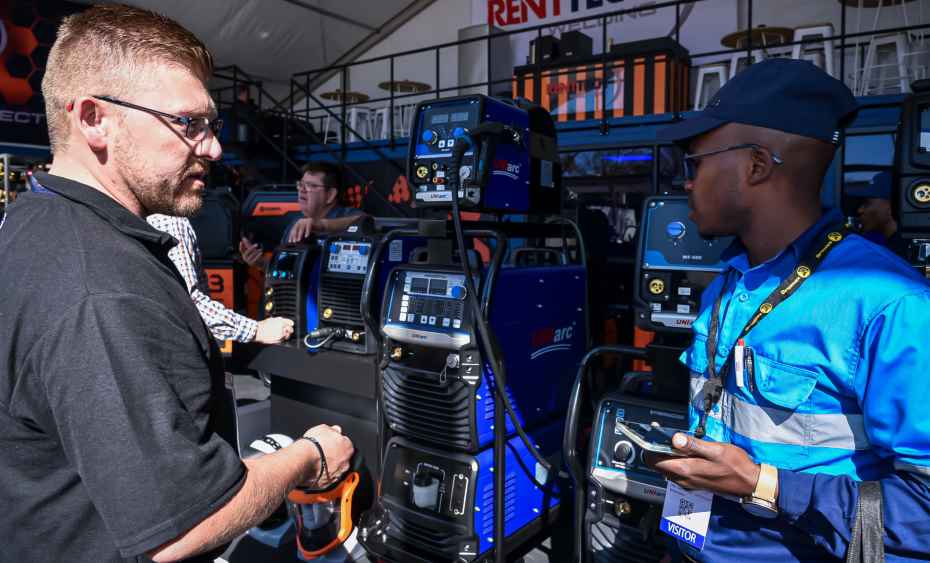
More than 1,000 exhibitors, technical seminars, industry forums and networking opportunities will bring together the people, products and ideas shaping industrial progress across Africa
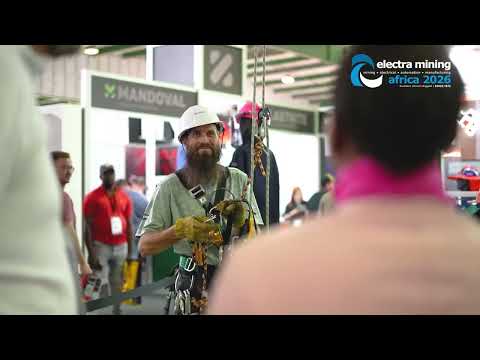
Taking place from 7-11 September at the Johannesburg Expo Centre in Nasrec, Johannesburg, Electra Mining Africa will once again provide a meeting place for industry. Recognised as one of Africa’s leading industrial exhibitions, the event will bring together more than 1,000 predominantly local exhibitors, together with international companies, country pavilions, industry organisations, technical specialists, business leaders and decision-makers from across mining, manufacturing and related industries.
By bringing together six complementary sectors—mining, manufacturing, automation, electrical and power, transport and related engineering sectors—under one roof, Electra Mining Africa enables visitors to explore how integrated technologies and solutions can improve productivity, safety and operational performance. The exhibition provides a unique opportunity to compare products, engage directly with technical experts and discover how innovations from different sectors are increasingly working together to support smarter industrial operations.
Reflecting continued industry confidence, Electra Mining Africa has expanded its footprint for the 2026 edition, growing by 4,000m² to a record 44,000m² of net exhibition space across six indoor exhibition halls and expanded outdoor display areas.
Visitors will have the opportunity to explore solutions ranging from large-scale mining equipment and industrial machinery to automation systems, artificial intelligence (AI), robotics, digital manufacturing, predictive maintenance technologies, power solutions and advanced engineering services. The exhibition also features pumps, valves, welding and fabrication equipment, safety solutions, personal protective equipment (PPE), tools, components and specialist industrial services.
Electra Mining Africa has become an important business platform for companies serving markets across Africa. At the previous edition, industry professionals from 58 countries were represented, reflecting the exhibition’s growing international reach and its role in connecting manufacturers, technology suppliers, distributors, buyers and decision-makers from across the continent and beyond. For many exhibitors, the exhibition provides opportunities to strengthen customer relationships, meet prospective buyers, appoint distribution partners and explore new business opportunities. For visitors, it offers access to both internationally recognised brands and locally developed technologies designed to address the operational requirements of African industry.
Electra Mining Africa brings together the technologies, expertise and industry relationships that help organisations make informed decisions
Beyond the exhibition floor
Electra Mining Africa offers an extensive programme of technical knowledge sharing, professional development and industry collaboration. Free-to-attend seminars hosted by the Southern African Institute of Mining and Metallurgy (SAIMM) will explore practical operational challenges and emerging technologies, while the Society for Automation Instrumentation Mechatronics and Computer Engineering (SAIMC) will present specialist workshops on advances in automation and mechatronics. WiMSA’s Women in Mining workshop will provide a forum for discussion around leadership, opportunity and professional development, and the Lifting Equipment Engineering Association of South Africa (LEEASA) will host its two-day National Conference, bringing together industry professionals to share knowledge and discuss developments affecting the sector.
New for 2026, the SA Institution of Mechanical Engineering (SAIMechE) Skills and Career Hub will strengthen collaboration between industry and the education and training sector, encouraging conversations around future workforce requirements, skills development and innovation. Visitors will also be able to experience the Geological Society of South Africa (GSSA) Explorers Pitch, where finalist student teams present their mineral exploration projects to an expert industry judging panel before the winning team is announced.
Also taking place during Electra Mining Africa are the New Products and Innovation Awards, which recognise outstanding achievements by both local and international exhibitors. Adjudicated by the South African Capital Equipment Export Council (SACEEC), entries are evaluated against a comprehensive set of criteria, including innovation, engineering excellence, research and development, product quality, technical expertise and the practical value each solution delivers to industry. The winners are announced during the exhibition, recognising companies whose products and innovations are advancing technology, performance and industrial application.
“Industrial businesses are facing increasingly complex challenges that cannot be solved in isolation. Electra Mining Africa brings together the technologies, expertise and industry relationships that help organisations make informed decisions, identify practical solutions and build partnerships that support long-term growth. That’s what makes the exhibition such an important meeting place for industry, not only in South Africa but for businesses operating across the African continent,” says Charlene Hefer, Portfolio Director at Montgomery Group, organisers of Electra Mining Africa..
Industry professionals wishing to attend Electra Mining Africa can register (https://apo-opa.co/4xthQPH) as a Standard Visitor free of charge. There is also an option to upgrade to a Diamond Select Visitor.
Distributed by APO Group on behalf of Montgomery Group Africa.