

Business
UK-Based Property Investment Company to Help South Africans Buy Low Interest Rate Property in the United Kingdom

This investment platform gives Africans a chance to invest in property with ease and without limitations
JOHANNESBURG, South Africa, October 19, 2022/APO Group/ —
Baron and Cabot (www.BaronCabot.com) is helping South Africans acquire property in the U.K; South Africans to acquire low interest rate property in the U.K.
Baron and Cabot, a UK-based Property Company, is helping Africans to acquire property in the U.K with low-interest rates. South Africa’s, Kenya’s, Nigeria’s and Ghana’s middle class and business people have turned to the U.K to buy houses for renting out, mostly due to the high inflation in the countries, which has made acquiring Real Estate property very expensive and mortgage rates very high.
As of 2022, rising inflation has become a shared trend in Africa. Global supply disruptions caused by the COVID-19 pandemic and Russia’s invasion of Ukraine are some of the major factors responsible for inflation. Prices are set to rise even further, as Russia and Ukraine are major wheat suppliers to many African countries. Benin, for example, imports all its wheat from Russia, while imports to Somalia originated almost solely from Russia and Ukraine.
According to the IMF, Sudan has the highest inflation rate in Africa as of 2022. The rate reached roughly 245% owing to a long-running economic crisis and political instability. Zimbabwe ranked second on the list of African countries with the highest inflation, averaging 90%. The latest figures from the Zimbabwe National Statistics Agency show that the country’s annual inflation rate reached 191% in June from 132% in May, a 30.7% month-on-month increase. Statista, a German company specialising in consumer data, rates Ethiopia, Angola and Sierra Leon as the third, fourth and fifth most inflated countries in Africa, respectively. Ghana, Nigeria, South Sudan, Zambia and São Tomé and Príncipe are also on the top ten list.
House prices in South Africa have been growing every month. House price growth averaged 2.5% (before adjusting for inflation) in 2020, then rose by 4.2% in 2021. The latest inflation numbers show the biggest increase in five years. Much of this is due to rising fuel prices, and food inflation as a result of supply line disruption. These factors put pressure on the middle class, and can be expected to slow property growth.
We aim to help Africans with the ability to provide mortgages and buying of property through thorough research for the safety of their investment in the UK

In instances of rising inflation, rents rise along with the prices of goods and raw materials, with typical lease clauses allowing for rent to be marked up to the market to protect the investor in terms of net income. This happens in cities such as Accra, where property owners increase their rental prices annually by at least 10% to 15% to beat inflation. The rising cost of building materials in Kenya has pushed construction costs by an average of Sh3,000 per square meter, forcing constructors to hold ongoing projects. In Nigeria, most of the developers have jacked up their house prices by 40 to 50 percent.
“We have a mini bungalow selling for N6.5 million which was initially N4.5 million. While the price went up because of the building materials cost,” Adekunle Monehin, the managing Director of Tobykemsworth Investment Limited said in April 2022.
Egypt has seen been the most affected with the prices of building materials increased by up to 92% in March, according to a report issued by the Central Administration of Building Materials of the Ministry of Housing, Utilities and Urban Communities.
A great opportunity presented by the UK is that Africans can legally buy a property or have banks offer favourable mortgage terms for investment. This investment platform gives Africans a chance to invest in property with ease and without limitations. Thus, while seeking to invest in property, Baron & Cabot stands out to be the paramount property investment organization that an investor can trust throughout the investment process.
“Baron & Cabot is undoubtedly the fastest growing UK property investment company in the world,” remarks Mark Pearson, founder of Baron & Cabot. “We aim to help Africans with the ability to provide mortgages and buying of property through thorough research for the safety of their investment in the UK. As the demand for property investment rises within African investors, our main goal is to make sure the process of property investment always remains transparent and simple.”
Among the markets that Baron and Cabot has in Africa, Nigeria is the most lucrative. Baron and Cabot gets a very low mortgage rate for Nigerians in England. The rates range between 4.5% and 4%. It can be a 25-year mortgage, and it is changed every two and five years to get a lower mortgage rate. You don’t have to use cash to buy out the mortgage to change it, you move from one to another. Ghanaian investors are also exploring alternative investments. Pearson says that on average, they record transactions of up to 5 million pounds in West Africa monthly, with the bulk coming from Nigeria and a fair share from Ghana.
Investing in property in the UK is greatly considered to be one of the lowest risk investments in the world, with consistent long-term returns factored in by continuous growth within the country. Baron & Cabot has built a market-leading research strategy for the investor to simply choose what would be suitable for them. The investor is also granted a step-by-step guide on sourcing the right property to purchase in the UK. This gives the investor the power and confidence to ask the right questions for profitable property investment.
Distributed by APO Group on behalf of Baron & Cabot.












Business
CIT VERICASH Recognized as Best Digital Financial Services Platform of 2026 by Global Business Outlook

Business
Comsol enters wholesale 5G home broadband market with backing from new shareholders
Business
Electra Mining Africa: Showcasing the Technologies Shaping the Future of Industry
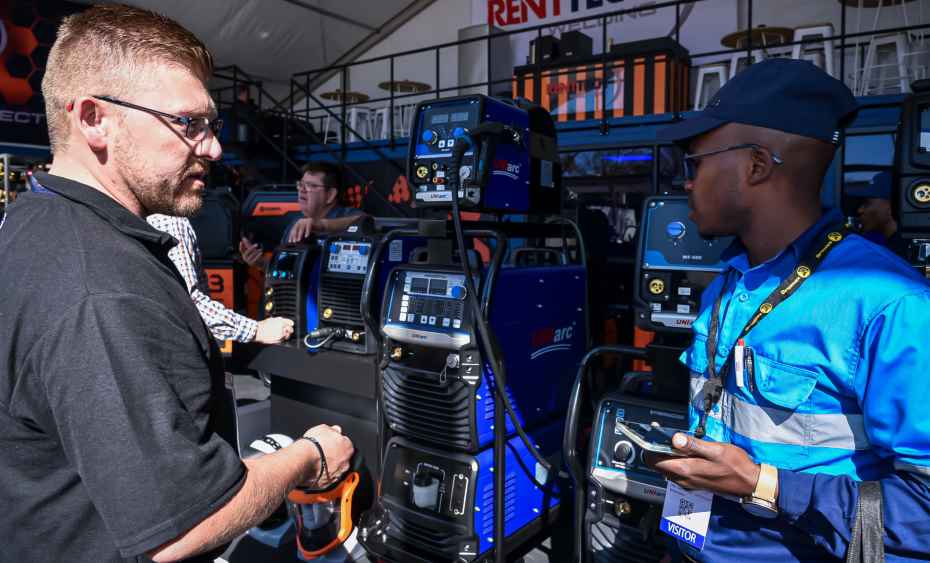
More than 1,000 exhibitors, technical seminars, industry forums and networking opportunities will bring together the people, products and ideas shaping industrial progress across Africa
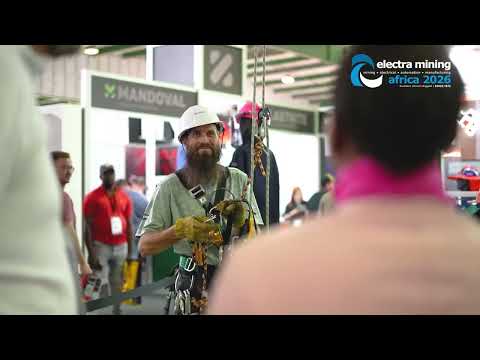
Taking place from 7-11 September at the Johannesburg Expo Centre in Nasrec, Johannesburg, Electra Mining Africa will once again provide a meeting place for industry. Recognised as one of Africa’s leading industrial exhibitions, the event will bring together more than 1,000 predominantly local exhibitors, together with international companies, country pavilions, industry organisations, technical specialists, business leaders and decision-makers from across mining, manufacturing and related industries.
By bringing together six complementary sectors—mining, manufacturing, automation, electrical and power, transport and related engineering sectors—under one roof, Electra Mining Africa enables visitors to explore how integrated technologies and solutions can improve productivity, safety and operational performance. The exhibition provides a unique opportunity to compare products, engage directly with technical experts and discover how innovations from different sectors are increasingly working together to support smarter industrial operations.
Reflecting continued industry confidence, Electra Mining Africa has expanded its footprint for the 2026 edition, growing by 4,000m² to a record 44,000m² of net exhibition space across six indoor exhibition halls and expanded outdoor display areas.
Visitors will have the opportunity to explore solutions ranging from large-scale mining equipment and industrial machinery to automation systems, artificial intelligence (AI), robotics, digital manufacturing, predictive maintenance technologies, power solutions and advanced engineering services. The exhibition also features pumps, valves, welding and fabrication equipment, safety solutions, personal protective equipment (PPE), tools, components and specialist industrial services.
Electra Mining Africa has become an important business platform for companies serving markets across Africa. At the previous edition, industry professionals from 58 countries were represented, reflecting the exhibition’s growing international reach and its role in connecting manufacturers, technology suppliers, distributors, buyers and decision-makers from across the continent and beyond. For many exhibitors, the exhibition provides opportunities to strengthen customer relationships, meet prospective buyers, appoint distribution partners and explore new business opportunities. For visitors, it offers access to both internationally recognised brands and locally developed technologies designed to address the operational requirements of African industry.
Electra Mining Africa brings together the technologies, expertise and industry relationships that help organisations make informed decisions
Beyond the exhibition floor
Electra Mining Africa offers an extensive programme of technical knowledge sharing, professional development and industry collaboration. Free-to-attend seminars hosted by the Southern African Institute of Mining and Metallurgy (SAIMM) will explore practical operational challenges and emerging technologies, while the Society for Automation Instrumentation Mechatronics and Computer Engineering (SAIMC) will present specialist workshops on advances in automation and mechatronics. WiMSA’s Women in Mining workshop will provide a forum for discussion around leadership, opportunity and professional development, and the Lifting Equipment Engineering Association of South Africa (LEEASA) will host its two-day National Conference, bringing together industry professionals to share knowledge and discuss developments affecting the sector.
New for 2026, the SA Institution of Mechanical Engineering (SAIMechE) Skills and Career Hub will strengthen collaboration between industry and the education and training sector, encouraging conversations around future workforce requirements, skills development and innovation. Visitors will also be able to experience the Geological Society of South Africa (GSSA) Explorers Pitch, where finalist student teams present their mineral exploration projects to an expert industry judging panel before the winning team is announced.
Also taking place during Electra Mining Africa are the New Products and Innovation Awards, which recognise outstanding achievements by both local and international exhibitors. Adjudicated by the South African Capital Equipment Export Council (SACEEC), entries are evaluated against a comprehensive set of criteria, including innovation, engineering excellence, research and development, product quality, technical expertise and the practical value each solution delivers to industry. The winners are announced during the exhibition, recognising companies whose products and innovations are advancing technology, performance and industrial application.
“Industrial businesses are facing increasingly complex challenges that cannot be solved in isolation. Electra Mining Africa brings together the technologies, expertise and industry relationships that help organisations make informed decisions, identify practical solutions and build partnerships that support long-term growth. That’s what makes the exhibition such an important meeting place for industry, not only in South Africa but for businesses operating across the African continent,” says Charlene Hefer, Portfolio Director at Montgomery Group, organisers of Electra Mining Africa..
Industry professionals wishing to attend Electra Mining Africa can register (https://apo-opa.co/4xthQPH) as a Standard Visitor free of charge. There is also an option to upgrade to a Diamond Select Visitor.
Distributed by APO Group on behalf of Montgomery Group Africa.