Connect with us
Anglostratits

Business

How Africa can turn energy investment into lasting economic value (By Grant Villet)

Published

on

Mozambique and Namibia show what is possible when major oil and gas developments are viewed not simply as energy projects, but as platforms for infrastructure, skills, local business growth and regional economic integration

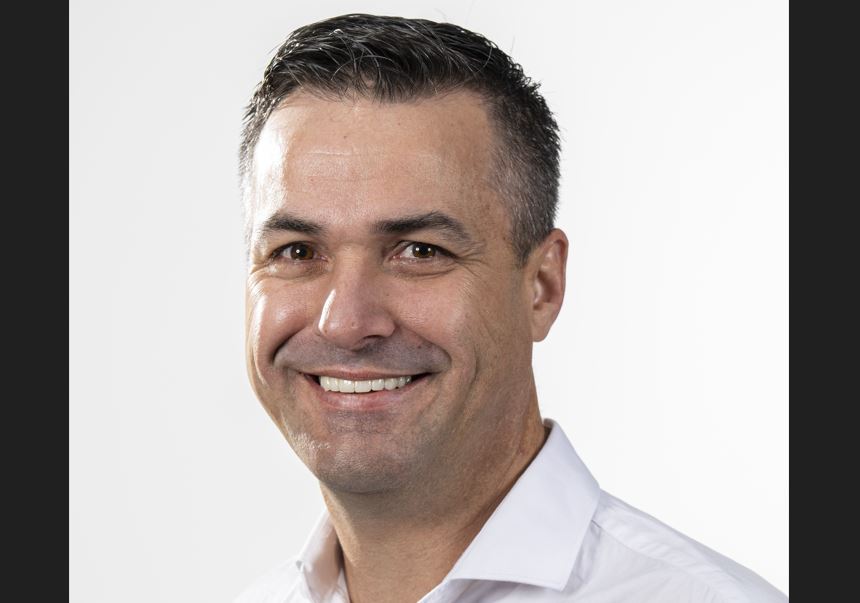
JOHANNESBURG, South Africa, October 22, 2026/APO Group/ —By Grant Villet, Business Development and Integration Executive, Aurex Constructors (www.Aurex.com).

Africa’s energy story is often around gas discoveries and investment potential. However, the real opportunity extends far beyond the resource itself. Mozambique and Namibia are emerging as important players in Africa’s oil and gas landscape, and what makes these markets particularly exciting is not simply the scale of their energy resources.


It is the potential for major energy developments to become platforms for broader economic transformation. The question we should be asking is not only how we develop these resources, but what we build around them and what remains when the project itself is complete.

The opportunity extends far beyond the oil and gas facility

In Mozambique, the scale of gas discoveries has already attracted global investment and created momentum for infrastructure development. Namibia is generating similar interest through its offshore discoveries.

These developments create demand for far more than the facilities required to produce or handle gas. They require ports, roads, logistics networks, power infrastructure, telecommunications and accommodation facilities. They also require a skilled workforce comprising artisans, supervisors, engineers and project managers, supported by the technical and operational expertise needed to deliver large-scale projects.

Local suppliers capable of meeting international standards for safety, quality and delivery are equally important. This supporting ecosystem is critical because it is where much of the broader economic opportunity lies.

If the ecosystem develops alongside the project, local businesses can participate meaningfully and the benefits can extend throughout the economy. Energy investment can then build demand and capability across multiple sectors rather than remaining concentrated within the project itself.

For Southern Africa, this creates an even greater opportunity. Developments in Mozambique and Namibia could strengthen regional supply chains and create opportunities through improved energy security for businesses across multiple countries. The real value lies in recognising these projects as platforms for broader economic growth rather than simply as energy-producing assets.

A successful project leaves a legacy

For me, success in a major infrastructure project cannot be measured only by whether a facility is completed on time and on budget. Those things are obviously important, but they are only part of the story. The projects that leave the biggest impact are those that develop people and strengthen local businesses creating lasting economic benefits long after construction has finished. That requires something that is sometimes harder to quantify, namely trust.

Major energy developments bring together governments, international operators, contractors, local suppliers and communities. These relationships can become complicated, particularly in complex operating environments, but our experience has shown that projects perform better when relationships are built on transparency and shared goals.

Problems are solved faster. Decisions can be made more effectively. Stakeholders remain focused on the bigger picture rather than becoming trapped in competing interests. Ultimately, the most successful projects create enduring economic and social value alongside the infrastructure they deliver.

Local capability cannot be an afterthought

There is often significant attention on the investment and jobs generated by major energy projects. Those benefits matter, but they should be viewed as part of a much longer-term process. If local participation and skills development are treated as box-ticking exercises, the benefits will inevitably be limited.

For local economic participation to become transformational, it must be intentional. Governments, operators and contractors need to genuinely invest in building sustainable local capacity. That means creating opportunities for local companies to grow, investing in training programmes and providing pathways for people to develop technical expertise that remains with them long after a project has been completed.

The measure of success should extend well beyond the construction phase. Five or ten years down the line, are local businesses stronger? Are local professionals more experienced? Has technical expertise been developed that can be applied to future projects? Is the economy better positioned to take advantage of the next opportunity? If the answer to those questions is yes, then real value has been created.

I believe Africa has a unique opportunity to use its natural resources as a foundation for industrialisation, job creation and the development of globally competitive industries

Lessons from complex operating environments

Our experience in Mozambique and Namibia has reinforced another important lesson in that technical capability alone does not guarantee success. Every major project has its own challenges, whether they are logistical, regulatory or operational.

Understanding the local environment, building strong relationships and remaining adaptable are therefore essential. We have also seen the value of engaging local businesses early and investing in local partnerships. Early investment in local partnerships and skills development generally delivers stronger long-term outcomes.

This is particularly important when projects are being delivered in remote or developing regions, where resilient supply chains require careful planning and strong collaboration between stakeholders. These lessons extend well beyond Mozambique and Namibia. They are relevant to energy and infrastructure projects across the continent.

Collaboration works best when it starts early

The complexity of major energy developments means that no single organisation can deliver their full potential in isolation. Governments, international companies, engineering and construction firms, African contractors and local suppliers all have roles to play. Collaboration succeeds when there is early engagement, clear communication and mutual respect between stakeholders.

Where challenges tend to arise is when stakeholders operate in silos or when local companies are brought into the conversation too late. Misaligned expectations can quickly create friction and undermine the potential of the wider project. The most successful projects recognise the complementary strengths that different participants bring.

International companies can contribute technology, experience and investment. Local businesses bring valuable market knowledge, established relationships and an understanding of local operating conditions. When those strengths are combined effectively, everyone benefits.

This is why local participation should be regarded as a strategic advantage rather than a compliance requirement. It should be understood as a source of capability, and knowledge  that can make the project itself stronger.

Oil and gas and the wider question of energy security

As industrial and economic demand grows, oil and gas also has an important role to play in Southern Africa’s energy future. Countries need reliable energy sources to support economic growth and industrial development and address energy security challenges while supporting sectors such as manufacturing, mining and heavy industry.

Importantly, oil and gas does not have to be viewed in opposition to renewable energy. It can form part of a balanced energy mix as countries develop the reliable energy systems required to support growing economies. There is also a broader regional opportunity.

Major energy developments can help connect infrastructure, supply chains and markets across national borders. In doing so, they can create stronger economic linkages and support greater regional integration. The opportunity extends beyond energy production to building more connected economies, stronger supply chains and greater regional growth.

Africa’s biggest opportunity and risk

Looking beyond individual oil and gas developments, I believe Africa has a unique opportunity to use its natural resources as a foundation for industrialisation, job creation and the development of globally competitive industries. However, that opportunity comes with a significant risk.

We could focus too heavily on extracting resources without building the skills, infrastructure and industries needed to maximise their long-term value. Natural resources alone do not create prosperity. What matters is how effectively those resources are translated into economic development and sustainable business growth.

That requires a different way of thinking about major energy projects. The oil and gas facility is not the end point. It is one component of a much larger economic system. Ports, roads, logistics, telecommunications, power infrastructure, accommodation, skills, local suppliers and resilient supply chains all form part of the picture. So do the relationships between governments, international companies, contractors, communities and local businesses.

If these elements are developed deliberately and in parallel, the impact of an energy project can extend far beyond the project itself. Mozambique and Namibia demonstrate the scale of the opportunity. Their energy developments have the potential to strengthen regional supply chains, improve energy security, support industrial development and create opportunities that extend across borders. The challenge and the opportunity is to ensure that Africa captures that wider value.

If we can balance resource development and capability development, support international investment while strengthening local participation, and connect individual projects to broader regional growth, energy investment can become much more than an export opportunity. It can become a foundation for lasting economic transformation. And that is when Africa’s natural resources can truly become an engine for the continent’s future.

Distributed by APO Group on behalf of Aurex Constructors.


Business

Africa50’s Nabil Saimi Joins MSGBC 2026 as Senegal’s Project Pipeline Draws Infrastructure Capital

Published

on

Etu Energias

Africa50 invests in projects at their earliest stage, with power and midstream gas among its priority sectors

DAKAR, Senegal, October 22, 2026/APO Group/ –Nabil Saimi, Senior Investment Director for the Project Development Fund at Africa50, will speak at MSGBC Oil, Gas & Power 2026 in December. His confirmation brings one of the continent’s leading infrastructure investors to the Dakar conference, with a focus on the earliest and most decisive phase of the project cycle: when concepts become bankable assets. Africa50’s model is built around carrying projects from development through to financing, an approach well matched to the basin’s expanding pipeline of gas, power and infrastructure projects.


Africa50 was set up by the African Development Bank (AfDB) alongside African governments and now has 33 shareholder states, with Senegal, Mauritania and The Gambia among them. The platform has mobilized close to $9 billion in investment across the continent, according to Senegal’s Presidency. Its Project Development business invests equity at the preparation stage to ready projects for financiers, generally targeting developments worth more than $100 million, with power, transport, midstream gas and information and communications technology as priority sectors.

Senegal has been central to Africa50’s power portfolio. At its 2017 shareholders meeting in Dakar, Africa50 partnered with national utility Senelec under a joint agreement to develop the 120 MW Malicounda combined cycle power plant and select its strategic sponsor. The €154 million plant entered commercial operation in August 2022, adding 8% to Senegal’s generation capacity, and was built with the ability to run on the country’s own gas once supply is available. In April 2026, an Africa50 delegation met President Bassirou Diomaye Faye in Dakar and reaffirmed its support for Senegal’s development priorities.

Project development is gathering momentum across the organization. In September 2026, Africa50 appointed former International Finance Corporation (IFC) regional director Cheick-Oumar Sylla as CEO of its Project Development Fund, a key appointment under its 2030 roadmap. Separately, the Alliance for Green Infrastructure in Africa Project Development Fund (AGIA-PD), managed by Africa50, secured $50 million from Italy’s Cassa Depositi e Prestiti and France’s Proparco in 2026, adding to the $118 million raised at its first close in August 2025 as the fund targets $400 million.

Africa50’s reach now extends deeper into gas and grid infrastructure across the continent. In 2026, the platform unveiled partnerships in Tanzania covering LNG and electricity transmission, while a $20 million commitment from British International Investment took its Infrastructure Acceleration Fund to roughly $330 million in total commitments. Both areas carry weight in the MSGBC basin, where LNG exports and gas-to-power plans are shaping the region’s next phase of development.

Plants such as Malicounda were built with domestic gas in mind, and the basin’s next generation of power and gas infrastructure will depend on capital committed early in development. Saimi’s participation strengthens MSGBC 2026’s focus on connecting the region’s project pipeline with the investors able to advance it.

Organized by Energy Capital & Power (ECP) and held under the High Patronage of Senegalese President Bassirou Diomaye Faye, MSGBC Oil, Gas & Power 2026 takes place December 1-3 in Dakar and will convene heads of state, ministers, investors, operators and development partners from Mauritania, Senegal, The Gambia, Guinea-Bissau and Guinea-Conakry. Explore opportunities and secure your participation at www.MSGBCOilGasAndPower.com.

Distributed by APO Group on behalf of Energy Capital & Power.


Continue Reading

Business

Algeria Energy Minister Brings Regional Power Expertise to MSGBC 2026

Published

on

Etu Energias

Minister Mourad Adjal joins Algeria’s Hydrocarbon Minister Mohamed Arkab at the Dakar conference, bringing new perspectives on power and renewable energy development

DAKAR, Senegal, October 22, 2026/APO Group/ –Algeria’s Minister of Energy and Renewable Energies Mourad Adjal will participate as a speaker at MSGBC Oil, Gas & Power 2026, bringing senior government expertise on gas, power infrastructure, renewable energy and regional energy integration to the event’s investment and policy discussions. Minister Adjal joins Algeria’s Hydrocarbons Minister Mohamed Arkab at the event, taking place December 1–3 in Dakar.


His participation comes as Algeria advances major renewable energy and hydrogen programs while strengthening its position as a regional energy partner. The country is implementing a 15,000 MW renewable energy program through 2035, with a first phase comprising 3,200 MW of solar capacity currently underway. The program offers relevant experience for MSGBC countries seeking to expand generation capacity while integrating larger shares of renewable power into their energy systems.

Hydrogen is also becoming a major component of Algeria’s energy strategy. The country is participating in the SoutH2 Corridor, which aims to establish infrastructure linking North African hydrogen production with European markets, while the Algeria-Europe Alliance for Hydrogen is progressing toward the publication of its feasibility study results in 2027.

These developments have direct relevance to the MSGBC region, where Mauritania and Senegal are positioning themselves for large-scale green hydrogen development alongside expanding oil and gas production. The combination of new generation capacity, transmission infrastructure and export-oriented energy projects is creating growing demand for integrated regional energy systems.

Minister Adjal also brings extensive experience from Algeria’s electricity and gas sector at a time when MSGBC countries are developing gas-to-power infrastructure and cross-border energy connections. Senegal is advancing domestic gas utilisation and new power capacity, while Mauritania is combining LNG development with emerging hydrogen projects and wider plans for energy-intensive industrial development.

Before becoming minister in September 2025, Adjal served as Chairman and CEO of Sonelgaz, Algeria’s state-owned electricity and gas utility, from December 2021. He previously led the Electricity and Gas Distribution Company and held senior regional roles including President of the Mediterranean Transmission System Operators Association and Chairman of the Maghreb Electricity Committee.

His participation adds senior North African perspective to an MSGBC market increasingly focused on converting resource discoveries into producing assets, reliable power and integrated infrastructure. As Senegal, Mauritania and neighbouring markets develop gas, electricity and renewable projects, Adjal’s experience across utility-scale energy systems will contribute to discussions on building the infrastructure required for the region’s next phase of growth.

MSGBC Oil, Gas & Power will convene international operators, service companies and investors in Dakar to explore opportunities across the region’s energy sector. To secure a delegate pass or learn more, visit www.MSGBCOilGasandPower.com or email sales@energycapitalpower.com.

Distributed by APO Group on behalf of Energy Capital & Power.


Continue Reading

Energy

Dangote Refinery Chief Executive Officer (CEO) Joins South Sudan Oil & Power (SSOP) 2026 as $1.8B Kenya Expansion Opens Regional Distribution Opportunities

Published

on

Etu Energias

David Bird’s participation comes as Dangote advances its East African refining and distribution strategy, anchored by a 700,000-bpd Lamu Refinery and 25% stake in KPC

JUBA, South Sudan, October 22, 2026/APO Group/ –Dangote Petroleum Refinery and Petrochemicals is expanding its footprint across East Africa, with a $16 billion refinery planned in Kenya and a $335 million investment in Kenya Pipeline Company (KPC). As these developments open new opportunities for regional petroleum trade, the company’s CEO and Managing Director David Bird has joined the South Sudan Oil & Power (SSOP) 2026 conference as a speaker.


Taking place in Juba on November 24-25, SSOP returns for its seventh edition as the nation’s premier platform for investment, dealmaking and policy. Bird’s participation comes as South Sudan looks to translate its resource potential into renewed exploration, higher production and greater participation in regional petroleum value chains. With major downstream investment reshaping East Africa’s energy market, SSOP 2026 offers an opportunity for producers, refiners and investors to establish the partnerships needed to advance regional energy trade and unlock new commercial opportunities.

The event arrives at a strategic time for Dangote. On September 30, the company officially broke ground on a 700,000-barrel-per-day (bpd) refinery in Lamu, Kenya. Set to come online in 2029, the facility is designed to supply gasoline, diesel and jet fuel to East African markets, with regional governments offered a combined 30% stake in the project. The project aims to replicate Dangote’s 650,000-bpd Nigerian facility, which is currently operating at full capacity and is set to expand to 1.2 million bpd. A delegation from South Sudan attended the Lamu groundbreaking ceremony, underscoring the country’s commitment to strengthening regional petroleum ties.

https://apo-opa.co/4zQaHcU

Beyond the Lamu facility, Dangote is strengthening its footprint across East Africa’s distribution networks. Just this month, the company acquired a 25% stake in KPC, securing access to established infrastructure transporting petroleum products from Kenya’s coast to regional markets, including Uganda, Rwanda, South Sudan and the Democratic Republic of the Congo. Following the $335 million transaction, Dangote plans to invest an additional $1.5 billion to expand KPC’s approximately 1,300-km pipeline network, bringing its total planned investment to $1.8 billion.

https://apo-opa.co/4zS8fCN

For South Sudan, East Africa’s only established commercial crude oil producer, Dangote’s expansion introduces new opportunities for regional petroleum integration. The country holds approximately 3.5 billion barrels of proven oil reserves and is seeking to increase production through new exploration, redevelopment of mature fields and investment in supporting infrastructure. While no crude supply agreement between South Sudan and Dangote has been announced, the development of additional regional refining capacity could create opportunities for future feedstock supply arrangements, subject to commercial viability, infrastructure and crude compatibility.

Bird brings extensive experience across refining, petrochemicals and integrated energy infrastructure to SSOP 2026. Before joining Dangote in 2025, he served as CEO of OQ8, the $9.5 billion Duqm refinery joint venture in Oman, overseeing the development and commissioning of major refining, pipeline and terminal infrastructure. He also held senior leadership positions at Shell, spanning upstream production, downstream operations and global energy supply chains. His participation at SSOP 2026 will bring expertise in large-scale refining investment, project delivery and regional petroleum market development to discussions on South Sudan’s next phase of growth.

https://apo-opa.co/3WotMnT

As the country’s official energy event, held in partnership with the Ministry of Petroleum, SSOP 2026 provides a platform for advancing discussions around regional trade, refining and infrastructure investment. The conference brings together international and national oil companies, refiners, trading companies, infrastructure developers, financiers and technology providers to negotiate partnerships, mobilize investment and connect South Sudan’s petroleum resources with regional and international markets.

Register for SSOP 2026: https://apo-opa.co/3WGMyXJ

Distributed by APO Group on behalf of Energy Capital & Power.


Continue Reading

Trending