Connect with us
Anglostratits

Events

Airshow China kicks off its 100-day countdown to the 30th Anniversary

Published

on

Airshow

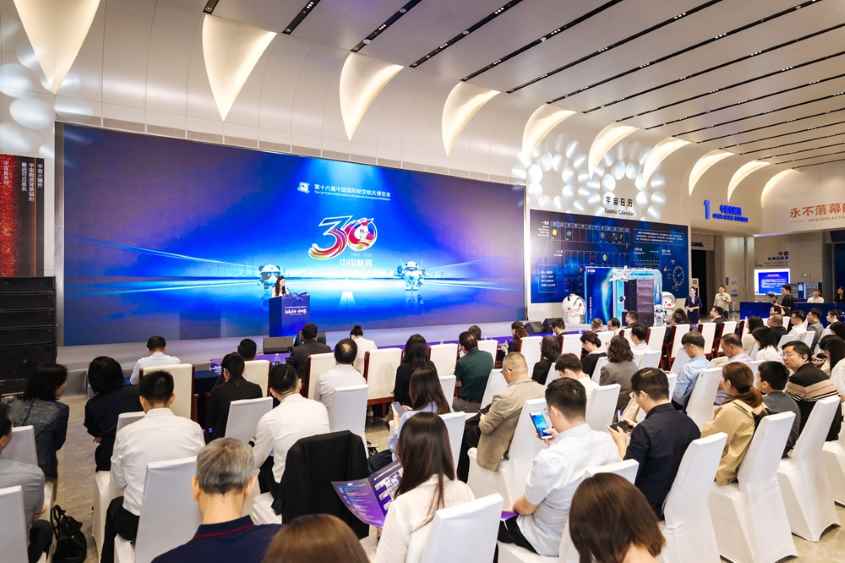
ZHUHAI, CHINA – Media OutReach Newswire – 31 August 2026 – The 100-day Countdown to the 16th China International Aviation & Aerospace Exhibition (Airshow China 2026) was launched on August 28 in Zhuhai, Guangdong. Scheduled for December 7-13 this year, Airshow China 2026 will mark for the official start of its 100-day countdown on August 29.

A commemorative logo marking the 30th anniversary of Airshow China was unveiled at the event. The logo features a three-dimensional, gold-toned “30” as its visual symbol, incorporating tech-inspired aviation and advanced manufacturing elements, complemented by gradient ribbons in blue, purple and magenta. Founded in 1996, Airshow China is celebrating its 30th anniversary this year.
“Over the past three decades,” said Li Xiaodong, Deputy Secretary-General of the People’s Government of Zhuhai Municipality and Deputy Secretary-General of the Zhuhai Executive Committee of Airshow China, in his remarks at the event, “Airshow China has grown increasingly international, professional and market-oriented, establishing itself as one of the world’s premier airshows. In 2026, Airshow China will continue to benchmark itself against world-class exhibitions and contribute to the development of aviation industry clusters.”


During the World Airshow Dialogue session, aviation industry representatives from home and abroad delved into topics on global industrial-chain coordination, green aviation, the low-altitude economy (also known as advanced air mobility), aircraft engines aftermarket services, and the development of the general aviation industry.

Representatives from peer event organizer International Aviation and Space Salon (MAKS) and major aviation players including Boeing delivered video remarks extending greetings and sharing insights. They voiced anticipation for returning to the upcoming Airshow China with state-of-the-art products and services to foster deeper-going industrial exchanges.

At the subsequent round-table dialogue session, Dai Haibin, spokesperson for AVIC General Aircraft Company, noted that Airshow China has served as an excellent platform for debuting key aircraft and other equipment, among them the AG600 “Kunlong” amphibious aircraft.

Xu Shixin, Chief Operating Officer of Embraer China, observed that the Chinese market boasts huge potential and a well-developed industrial system, unlocking broad opportunities for cooperation in areas such as green aviation and the low-altitude economy. Drawing on its accumulated technological expertise, Embraer stands ready for deeper collaboration on eVTOL (electric vertical takeoff and landing) aircraft development and the building of a low-altitude transportation ecosystem.

At the event, Zhuhai Airshow International Culture Communication Co., Ltd. inked IP merchandise cooperation agreements with Beijing Institute of Technology, Zhuhai; Alipay (Hangzhou) Digital Service Technology Co., Ltd, and Truly HONEST Investment Limited, among other partners. The cooperation covers product development integrating traditional culture with aerospace technology, AI-powered digital commemorative ticket stubs enabled by NFC technology, and derivative products based on sci-fi intellectual properties.

Over its 30-year history, Airshow China has undergone remarkable expansion: from less than 8,000 square meters at its debut in 1996 to 450,000 square meters at its latest edition. The number of participating countries and regions has jumped from 25 to 47, cementing Airshow China’s status as one of the world’s most influential aviation and aerospace exhibitions.


Events

Huawei Commits to Advancing an Intelligent, Green Europe with Customers and Partners

Published

on

Huawei

FLORENCE, ITALY – Media OutReach Newswire – 16 October 2026 – The 11th Huawei Connect Europe was held today in Florence, Italy. Adolfo Urso, the Italian Minister of Enterprises and Made in Italy, Eugenio Giani, President of the Tuscany Region, Italy, and Sara Funaro, Mayor of Florence, delivered remarks at the event.

Thousands of attendees, including industry leaders, technology experts, and partners from around the globe, gathered at the event to explore how digital technologies such as artificial intelligence (AI) will accelerate Europe’s twin digital and green transition under the theme “Advancing Intelligent & Green Europe”.


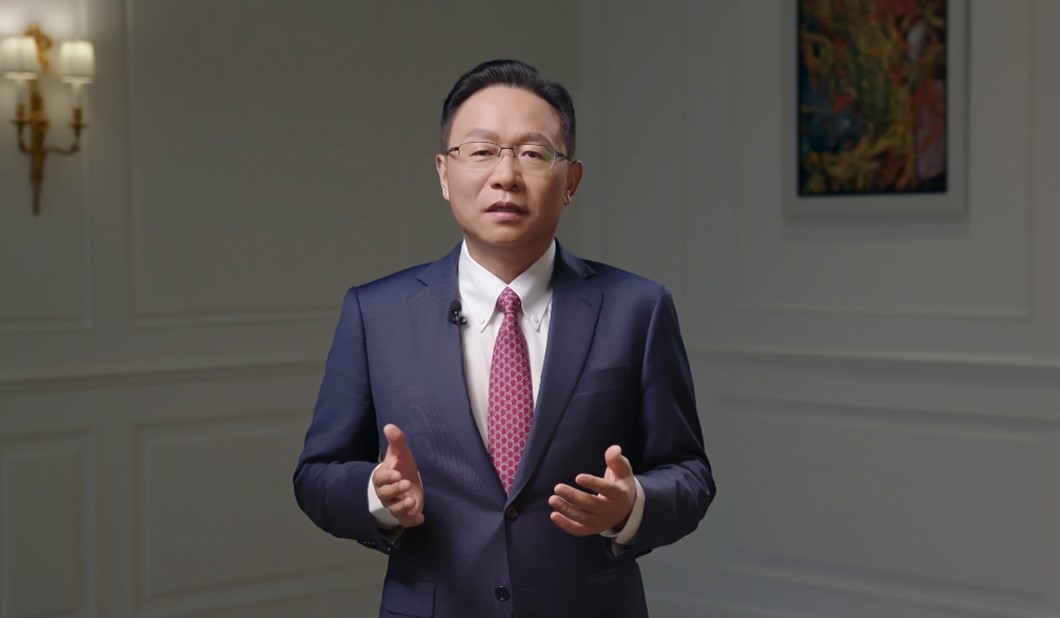
David Wang, Deputy Chairman of the Board and Rotating Chairman at Huawei, said in his opening keynote: “As Europe’s digital and green transitions continue to progress, Huawei is working with over 5,000 partners to solve real customer challenges through technological innovation. The intelligent world is coming, faster than ever, and industries across Europe are preparing for a major leap in productivity, powered by AI and other advanced technologies. Huawei has been and will remain in Europe, for Europe. Working alongside customers and partners, we are committed to open collaboration to seize opportunities, driving shared success and helping build a more intelligent, greener Europe.”

– Building a customer-centric “Huawei + Partners” collaboration system for a sustainable future in Europe

Leo Chen, Huawei’s Senior Vice President and President of Enterprise Sales, also spoke at the event, explaining the company’s strategy for the European market: “Huawei is in Europe, for Europe. We dive into local customer needs and turn technology into action to drive Europe’s twin green and digital transition.”

Chen went on to explain that Huawei has two focuses in the region, developing innovative products and solutions tailored to local industry scenarios, and empowering local partners to better serve European customers.

Building on the company’s existing “Huawei + Partners” collaboration system, Huawei additionally launched the SCALE framework for Europe at this event. This framework covers five key initiatives: Scenario-based Solutions, Co-Innovation, Aligned Marketing, Local Service, Consistent Quality, and Efficient Collaboration. These initiatives are aimed at helping local partners innovate around customer needs, integrate Huawei solutions into their offerings more easily, and improve their service capabilities.

Other guests who spoke at the event on their own insights into Europe’s twin transition strategy and intelligent industry practices included: Pierre Francois Rudant, Head of Technology, Auchan Retail; Federico Ascoli, Head of Platforms, Extended Group Management Board, Also; Sergio Grassi, a Country Manager of Zeliatech and Chief Revenue Officer for Value, Green and Services of Esprinet Group Italy; and Marcel Poser, Co-founder, Screening Eagle Technologies.

For more details, see the official website of HUAWEI CONNECT 2026 * FLORENCE: https://www.huawei.com/eu/events/huaweiconnect-florence
The issuer is solely responsible for the content of this announcement.


Continue Reading

Energy

African Mining Week (AMW) 2026 Opens with Call for African Value Addition and United States (U.S.) Critical Mineral Partnership

Published

on

African Mining Week
African Mining Week 2026 is taking place from October 14 – 16 in Cape Town, uniting African mining leaders, project developers and financiers with global partners
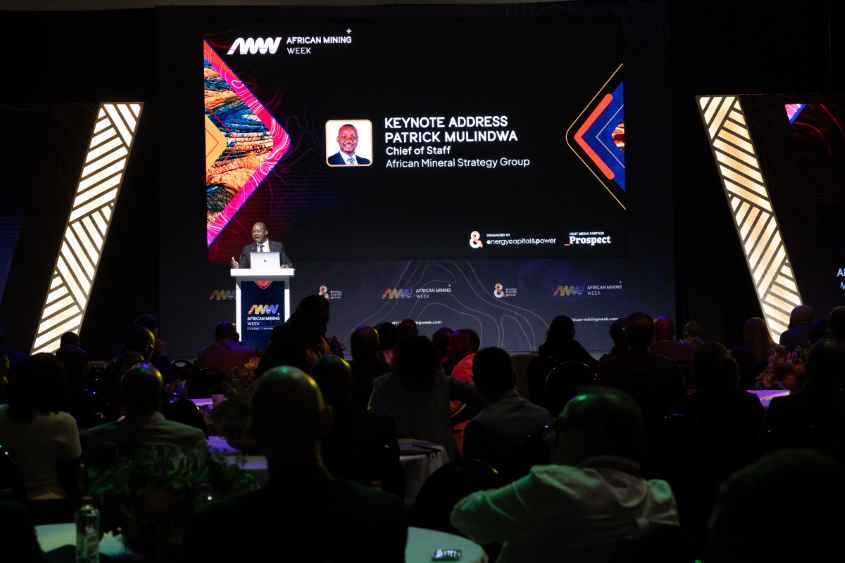
CAPE TOWN, South Africa, October 15, 2026/APO Group/ –African Mining Week (AMW) 2026 officially opened on Wednesday with keynote addresses from regional leaders, regulators and international stakeholders, underscoring the vital need for deeper regional integration, localized value addition and strategic global partnerships to drive mining growth across the continent.


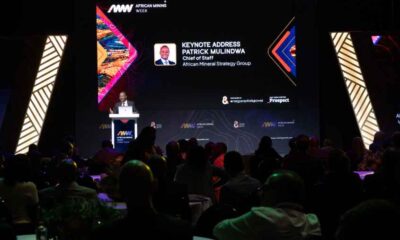
Patrick Mulindwa Lubega, Chief of Staff of the Africa Minerals Strategy Group (AMSG), stressed that African producers must leverage the surging global demand for critical resources to deliver socioeconomic benefits for local communities.

“The world’s appetite for African minerals is growing rapidly – copper for the power grid, lithium for batteries and gold as a strategic reserve,” Lubega stated. “The core question must be how these mineral export initiatives leave our people with real skills and economic benefits – we cannot simply be left with holes in the ground. The true measure of our mineral wealth lies in the jobs we create and the industrialization we foster.”

To secure these long-term gains, Lubega emphasized the pivotal role of state-owned enterprises in negotiating equitable, high-value deals with international investors.

We must focus on building resilient supply chains that deliver real economic gains for local populations

He pointed to the launch of the AMW African National Mining Companies Forum as a key milestone. The forum has brought together state mining entities from Malawi, Libya, Egypt and Kenya, along with an official delegation from Eswatini observing best practices to accelerate the creation of its own national mining firm.

“This forum is not about locking out the global market; historically, our governments regulated a sector in which they rarely participated as commercial actors. National mining companies allow us to directly participate and partner with the private sector to advance our shared agenda for local and regional value addition.”

Hon. Dr. Monica Musenero Masanza, Uganda’s Minister of Energy and Mineral Development, backed Lubega’s call for local impact, arguing that mining must be defined by investments made across the entire value chain rather than mere extraction.

“Mining on its own does not equal true industrialization,” Masanza stated. “No matter what you extract, you are starting with raw ore, and only about 10% of a mineral’s potential value is realized at the initial mining stage. We must focus on how we can maximize economic benefits by taking raw materials like tin mined in Uganda and adding significant value to them domestically.”

Ashley Ndir, Principal Commercial Officer at the U.S. Commercial Service under the U.S. Department of Commerce, underscored the U.S government’s commitment to partnering with African mineral producers across the entire mining value chain.

“The mere presence of resources means nothing unless we transform them into long-lasting economic value; we must focus on building resilient supply chains that deliver real economic gains for local populations,” Ndir stated. “There is a clear alignment between the United States and Africa. African nations are seeking opportunities for local and regional value addition, while the U.S. is focused on building more diversified, resilient critical mineral supply chains – and these objectives mutually reinforce each other.”

Distributed by APO Group on behalf of Energy Capital & Power.


Continue Reading

Energy

Africa shifts from carbon market potential to delivery as Carbon Markets Africa Summit (CMAS) 2026 opens in Kigali

Published

on

Carbon Markets Africa Summit

African governments, development finance institutions and global climate leaders call for high-integrity markets, investment-ready projects and greater value for African communities

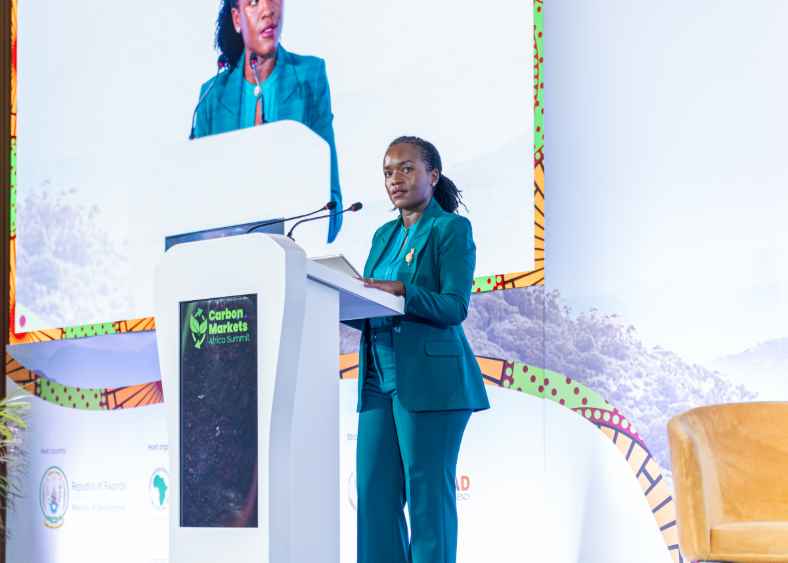
KIGALI, Rwanda, October 15, 2026/APO Group/ –Africa must move beyond carbon market potential towards delivery, building high-integrity, investable markets that attract long-term capital while protecting national climate priorities and ensuring greater value reaches African countries and communities.


That was the central message from the opening keynote sessions of the Carbon Markets Africa Summit (CMAS) 2026 in Kigali, Rwanda, where policymakers, investors, project developers, development finance institutions and international climate organisations gathered to accelerate Africa’s participation in global carbon markets.

Representatives from 45 countries, including 21 African nations, are participating in the summit, where discussions have shifted decisively from market readiness to implementation, investment and transactions.

Officially opening the summit, Hon. Dr Bernadette Arakwiye, Rwanda’s Minister of Environment, said Africa’s carbon markets must be shaped by African priorities and deliver tangible benefits for the continent.

“The question before us is therefore no longer simply whether Africa is ready. It is whether we can deliver at scale, with integrity and with innovation.”

Minister Arakwiye said progress is already evident as African countries establish carbon market frameworks, grant authorisations, sign bilateral agreements and develop projects. However, she cautioned that carbon finance remains concentrated in a relatively narrow range of project types. She called for diversification into renewable energy, electric mobility, sustainable waste management, industrial decarbonisation, agriculture and landscape-scale nature-based solutions.

Minister Arakwiye identified three priorities for scaling Africa’s carbon markets: accessible methodologies suited to African contexts; project preparation and readiness finance; and long-term demand at fair value.

“Trust is the currency of this market,” she said. “To our buyers and investors, I say: look closely at these efforts. Reward them with long-term demand, fair prices and patient capital.”

From potential to execution

The call for delivery was echoed by Hon. Hamad Yusuf Masauni, Tanzania’s Minister of State in the Vice President’s Office responsible for Union Affairs and Environment, who said the continent now has an opportunity to reposition itself in global carbon markets.

“For too long, Africa has been spoken about as a continent of potential. At the Carbon Markets Africa Summit, we declare that the era of potential is giving way to the era of execution.”

Minister Masauni stressed the importance of moving high-quality, bankable projects through to issuance and offtake rather than focusing solely on the size of project pipelines.

“Credibility is built one verified tonne, one closed deal and one community that sees real benefit at a time.”

The importance of ensuring value reaches communities was also central to remarks from Maxwell Gomera, UNDP Resident Representative in South Africa and Director of the Africa Sustainable Finance Hub.

Gomera called for market infrastructure capable of carrying value “from the buyer all the way to the farmer”, backed by strong community rights, enforceable benefit-sharing, early-stage finance and partnerships focused on delivery.

Africa urged to compete on integrity, not price

For too long, Africa has been spoken about as a continent of potential

Speakers also stressed that Africa’s competitive advantage should be the quality and integrity of its carbon assets rather than simply offering the lowest-priced credits.

Perumal Arumugam, Manager of Markets and Non-Markets and Stakeholder Interaction at UN Climate Change (UNFCCC), said Africa should move beyond asking how it can participate in carbon markets and instead consider how carbon markets can advance African priorities.

“Africa should not compete simply by offering the cheapest tonnes. Africa should compete by offering credible and creditable tonnes, a sustainable tonne, and a tonne that the world can trust.”

He said success should ultimately be measured not only in credits issued, but in investment mobilised, mitigation unlocked, value reaching communities, stronger economies and African countries retaining control over their climate transitions.

Speaking on behalf of AUDA-NEPAD, Esterine Fotabong similarly called for African countries to scale carbon markets on their own terms, supported by predictable authorisations, functioning registries and credible monitoring, reporting and verification systems.

She also highlighted the need to build greater African capacity in validation and verification and expand access to carbon finance in sectors such as agriculture.

Global demand will reward quality

Representing the European Commission, Lukas Visek, Deputy Head of the Directorate-General for Climate Action Task Force for Carbon Pricing and Carbon Markets, signaled future European demand for international carbon credits while stressing that quality requirements would be stringent.

“Additionality and permanence are not negotiable,” he said. “Quality, however, will be rewarded.”

The message to developers was clear: projects being developed for future international demand will need robust data, genuine additionality, strong community participation and demonstrable alignment with national and global climate goals.

Turning carbon projects into investable assets

The summit’s opening programme then moved directly from policy to capital and deal flow, with leaders from the African Development Bank (AfDB), Development Bank of Southern Africa (DBSA) and Kigali International Financial Centre (KIFC) examining the practical barriers preventing more investment from reaching African projects.

Policy certainty, early-stage project preparation, bankable pipelines, robust governance and appropriate financial risk-sharing were identified as critical to accelerating capital flows.

Dr Anthony Nyong, Director of Climate Change and Green Growth at the African Development Bank, emphasised that carbon markets should ultimately be viewed through the lens of African development.

“We don’t have carbon projects. We have development projects.”

Greg Fyfe, Chief Investment Officer at DBSA, highlighted the catalytic role development finance institutions can play by supporting project preparation, providing patient capital and absorbing risks private investors are unable to take.

The opening sessions underscored a decisive shift in the African carbon market conversation: from readiness to delivery, from fragmented projects to investable pipelines, and from selling credits to building markets capable of delivering lasting economic, social and climate value.

As CMAS 2026 continues in Kigali, attention now turns to connecting credible African projects with buyers and capital, unlocking transactions and ensuring Africa plays a leading role in shaping the next generation of global carbon markets.

Distributed by APO Group on behalf of VUKA Group.


Continue Reading

Trending