Connect with us
Anglostratits

Energy

The Great Build-Out: Namibia’s Energy Supply Chain Enters its Make-or-Break Phase

Published

on

African Energy Chamber

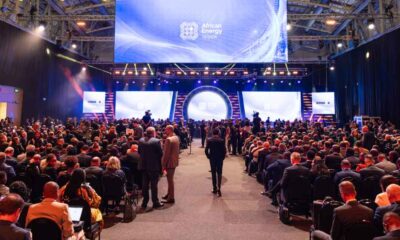
At NIEC 2026, AEC Advisory Board Member Nosizwe Nokwe-Macamo and industry leaders highlighted Namibia’s push to build a competitive energy supply chain, balancing international investment with rising local capacity, regional demand integration and downstream development opportunities

WINDHOEK, Namibia, April 21, 2026/APO Group/ –Major offshore oil discoveries in the Orange Basin, combined with expanding green hydrogen developments, are reshaping how Namibia is structuring its energy supply chain. New local content frameworks, port expansions in Walvis Bay and Lüderitz, and rising investment from global operators and service firms are accelerating domestic participation and capacity.


At the Namibia International Energy Conference (NIEC) in Windhoek, the African Energy Chamber’s (AEC) Advisory Board Member Nosizwe Nokwe-Macamo underscored the urgency of regionalizing demand and strengthening local capacity across southern Africa’s energy value chain. The Chamber’s broader message supports Namibia’s emergence as a supply hub, anchored in offshore oil momentum and long-term opportunities in refining and industrial integration. The question now facing Namibia is how far the country can realistically advance in building an independent, competitive energy supply chain while continuing to rely on international partners to provide capital, technology and operational expertise.

“Namibia is sitting on the cusp of something great,” Nokwe-Macamo said. “We have a huge market here in southern Africa. [Namibia] has been so successful when it comes to offshore projects, and they could become the supply hub for the region. There is a medium- long-term opportunity to have downstream infrastructure here in Namibia that could supply the region with products. With this in mind, regionalizing demand becomes very important.”

During the NIEC panel discussion – which was moderated by AEC Senior Vice President Verner Ayukegba – legal and business advisory firm CLG echoed these sentiments, highlighting that Namibia’s competitiveness in building a local energy supply chain depends on aligning regulation with market realities. CEO Oneyka Cindy Ojogbo stressed that effective local content policies must reduce import dependence while ensuring affordability for operators, balancing long-term industrial development with regulatory stability to avoid short-term legislation that could undermine investment confidence.

If operators are able to source local goods and services instead of importing it, there’s a more affordable bottom line

“There’s certainly a business case for local content in Namibia’s energy sector,” stated Ojogbo, adding, “If operators are able to source local goods and services instead of importing it, there’s a more affordable bottom line. This provides a clear incentive for operators to support local capacity in operating countries. There’s a tendency for legislation to be opportunistic and focus on short-term issues. The key here is a balance, otherwise the entire structure fails and falls apart.”

Oilfield service provider KAESO Energy Services has emerged as a key technical player in Namibia’s offshore energy build-out, providing downhole tools, asset management and maintenance support across multiple Orange Basin drilling campaigns. With a 28,500m2 operational base in Lüderitz, the company supports major operators including TotalEnergies, Galp and Rhino Resources, while maintaining strong partnerships with international service firms and expanding regional training capacity.

KAESO General Manager Jorge de Morais emphasized the importance of assessing whether Namibian firms can achieve long-term operational independence within the energy supply chain. He noted that while local companies are increasingly active in offshore services, the sector is still heavily reliant on international operators and expertise, showcasing the need to build deeper domestic capability to sustain competitiveness.

From the perspective of a locally owned Namibian logistics and maritime operations company, Zephyr Marine Services is increasingly embedded in the country’s offshore oil and gas value chain, supporting exploration activity in the Orange Basin. The firm provides vessel coordination, asset logistics and operational planning, while deploying digital systems and AI-enabled tools to improve efficiency, compliance and offshore coordination. This growing local capability is central to reducing reliance on imported services and strengthening Namibia’s position in a competitive, integrated energy value chain.

CEO Quintin Simon highlighted during the session that the company is actively building the technical, financial and operational capacity required to compete alongside international operators in Namibia’s offshore sector. He noted that while partnerships remain essential, Zephyr is focused on developing systems and alliances that enable greater competitiveness and long-term integration into the country’s evolving oil and gas supply chain.

Namibia’s supply chain stands to become truly competitive through balanced integration of international operators and rapidly scaling local capability, a perspective consistently championed by the AEC. Regional demand integration, local content enforcement and downstream expansion are critical, but long-term success hinges on building technical independence without undermining investment confidence or operational efficiency.

Distributed by APO Group on behalf of African Energy Chamber.

Business

Society of Petroleum Engineers (SPE) Libya Builds Youth Pipeline as Energy Sector Prepares for Growth

Published

on

Etu Energias

SPE Libya’s young professionals and student networks are building technical expertise and industry connections as the country prepares for increased exploration and upstream investment ahead of LEES 2027

TRIPOLI, Libya, October 23, 2026/APO Group/ –Libya’s efforts to increase oil and gas production are putting renewed attention on the technical expertise and workforce capabilities needed to support exploration, drilling and field development. The Society of Petroleum Engineers (SPE) Libya Section is contributing to that effort through its Young Professionals activities and engagement with university students.


SPE Libya’s Young Professionals network provides early-career members with opportunities for technical and professional development and links them into the wider SPE community. Ali Abu Ikhzam, founder and Young Professionals Chair of the SPE Libya Section, has also contributed to SPE’s international Young Professionals network and technical publications, with his work covering areas including digitalization and automation.

University-based SPE student chapters provide another route into the profession, giving students opportunities to engage with technical subjects, industry professionals and the wider petroleum engineering community. Such networks can provide an early connection between university training and the technical requirements of Libya’s upstream sector.

The focus on workforce development comes as Libya seeks to attract fresh investment into exploration. The National Oil Corporation’s general bidding round offered 22 exploration blocks, including 11 offshore blocks, as part of an effort to increase exploration activity and develop the country’s oil and gas reserves. The NOC said the round was designed to attract international companies into exploration and drilling while creating opportunities for local businesses and employment. The round has since concluded with international companies awarded investment opportunities.

These issues will feature at the Libya Energy & Economic Summit (LEES) 2027, where SPE International – Libya Section is an official supporting organization. The summit will take place in Tripoli from January 23–25, with SPE hosting a Technical Conference as part of the event’s program. The summit’s Knowledge Hub will also address upstream technologies, operational excellence, workforce development and project execution.

SPE Libya is also involved in the Energy JEEL initiative, a Ministry of Oil and Gas-led program focused on developing young Libyans through energy-related training and knowledge sharing. The initiative has trained more than 900 young people and is intended to build a pipeline of engineers, technicians and other energy professionals as Libya develops its oil, gas and broader energy sectors.

Youth development will also form part of LEES 2027’s In-Country Value Forum on January 24. The program is set to examine youth and women in energy, AI, workforce development and pathways for the next generation of Libyan energy professionals.

For SPE members, the summit provides access to operators, service companies, policymakers and international technical specialists in one setting. For students and young professionals, it also offers exposure to the projects, technologies and industry contacts that will become increasingly relevant as Libya develops new exploration opportunities and invests in existing assets.

LEES 2027 takes place in Tripoli from January 23–25. For more information visit https://LibyaSummit.com. To sponsor or participate as a delegate, contact sales@energycapitalpower.com.

Distributed by APO Group on behalf of Energy Capital & Power.


Continue Reading

Energy

Ghana Energy Minister John Jinapor to Speak at MSGBC Oil, Gas & Power 2026

Published

on

Etu Energias

Ghana’s Energy Minister joins MSGBC Oil, Gas & Power 2026 as the country advances upstream investment, gas monetization and infrastructure development

DAKAR, Senegal, October 26, 2026/APO Group/ –Ghana’s Minister for Energy and Green Transition Dr. John Abdulai Jinapor will participate as a speaker at MSGBC Oil, Gas & Power 2026 in Dakar, Senegal, from December 1–3. His participation comes as Ghana pursues upstream investment, domestic gas monetization and power-sector reforms to strengthen energy security and attract capital.


Minister Jinapor’s participation brings Ghana’s experience in balancing hydrocarbon development, electricity reliability and renewable energy investment to a regional forum focused on cross-border infrastructure and resource development. The fifth edition, held at the CICAD under the high patronage of President Bassirou Diomaye Faye, will connect policymakers, operators and investors across the MSGBC basin.

Ghana’s latest initiatives combine upstream recovery with major downstream infrastructure plans. On October 20, Jinapor pledged to lead inter-ministerial talks addressing land acquisition, compensation and financing hurdles facing the proposed $28-billion Petroleum Hub in Jomoro, following an agreement between the Petroleum Hub Development Corporation and a United Arab Emirates consortium led by Global Sphere.

https://apo-opa.co/4ijaUOu

The proposed development includes a 300,000-barrel-per-day refinery, petrochemical facilities and deepwater ports, with construction targeted for early 2027. If delivered, the project could expand domestic processing capacity, support industrial activity and position Ghana as a regional petroleum-products trading hub.

At African Energy Week 2026 in Cape Town, Jinapor also reported $3.5 billion in upstream investment commitments for Ghana’s Jubilee, Tweneboa, Enyenra and Ntomme, and Offshore Cape Three Points fields. The commitments support expansion and drilling campaigns as the country seeks to reverse declining production and sustain output from mature offshore assets.

His contribution will enrich regional discussions at MSGBC Oil, Gas & Power 2026, fostering opportunities for cross-border cooperation

https://apo-opa.co/4BoGjrs

Gas supply and power-sector efficiency remain central to that strategy. Ghana is implementing its Second Gas Processing Plant, while plans for additional offshore infrastructure aim to increase gas availability; the government has also reported savings of $500 million from reducing liquid-fuel imports for electricity generation.

https://apo-opa.co/4jGStFP

Regional integration offers another route to improving supply security. Jinapor recently outlined discussions with Nigeria on exchanging Ghanaian electricity for Nigerian natural gas delivered through the West African Gas Pipeline, while Ghana is procuring a 200 MW battery energy storage system alongside a 200 MWp solar facility.

https://apo-opa.co/4Bxfr94

These measures complement efforts to address energy-sector liabilities, which exceeded $3 billion at the start of 2025, and improve payments to independent power producers. Ghana’s longer-term plans include expanding renewable capacity, increasing electricity access to 99% by 2030 and developing nuclear power as part of its future generation mix.

“Minister Jinapor’s participation brings valuable perspective on how Ghana is mobilizing investment across upstream production, gas monetization and power infrastructure to strengthen energy security and support industrial growth. His contribution will enrich regional discussions at MSGBC Oil, Gas & Power 2026, fostering opportunities for cross-border cooperation, infrastructure development and investment partnerships across West Africa,” says Sandra Jeque, Vice President, Energy Capital & Power.

MSGBC Oil, Gas & Power 2026 will also feature Senegal’s Minister of Energy and Petroleum Dr. El Hadji Abdourahmane Diouf; Guinea-Conakry’s Minister of Energy Laye Sékou Camara; Algeria’s Minister of State for Hydrocarbons Mohamed Arkab and Minister of Energy and Renewable Energies Mourad Adjal; Guinea-Bissau’s Minister of Natural Resources Baldé; and Mali’s Minister of Energy and Water Tiémoko Traoré.

Organized by Energy Capital & Power and held under the High Patronage of Senegalese President Bassirou Diomaye Faye, MSGBC Oil, Gas & Power 2026 takes place December 1–3 in Dakar and will convene heads of state, ministers, investors, operators and development partners from Mauritania, Senegal, The Gambia, Guinea-Bissau and Guinea-Conakry. Explore opportunities and secure your participation at www.MSGBCOilGasandPower.com.

Distributed by APO Group on behalf of Energy Capital & Power.


Continue Reading

Energy

Venezuela Energy Week (VEW) 2027 Deal Room Targets Joint Ventures, Service Agreements and Offtake Partnerships

Published

on

Venezuela Energy Week

Register as a commercial partner at Venezuela Energy Week 2027 to connect with Venezuelan operators, projects and strategic energy opportunities

International operators, oilfield service companies and strategic partners are invited to register as commercial partners for the Venezuela Energy Week (VEW) 2027 Deal Room, where companies can pursue joint ventures, service agreements, technology deployments, offtake arrangements and other commercial opportunities.


Taking place February 22–25 at the Simón Bolívar Convention Center in Caracas, the Deal Room will bring international companies into direct discussions with local operators, project developers, asset owners and regional leadership. As international companies re-engage with Venezuela’s oil and gas industry, the platform aims to facilitate project-level discussions and establish commercial relationships spanning upstream development, infrastructure, technology and energy supply.

For international operators and investors, the Deal Room provides an opportunity to identify assets and local counterparties for joint development. Venezuela’s push to increase oil production to 1.3 million barrels per day (bpd) in 2026 and 1.5 million bpd in 2027 is creating potential openings for companies with the technical expertise, operational capacity and financial resources to participate in field rehabilitation, enhanced oil recovery, drilling and production expansion. Partnerships with Venezuelan operators can provide a route to developing assets and sharing project responsibilities.

Recent agreements demonstrate how partnerships have already begun to take shape. In September, Chevron secured expanded development rights in the Orinoco Belt, underpinning plans by its Venezuelan joint ventures to invest more than $7 billion over five years. Eni also signed a 25-year contract with PDVSA to assume operatorship of the Junín 5 heavy-oil field, giving the company responsibility for its technical, financial and commercial development.

Oilfield service companies and technology providers can pursue commercial agreements supporting these activities. Demand spans drilling and workover equipment, artificial lift, engineering, digital production systems, reservoir technologies, power solutions and other services required to restore production and improve the performance of existing infrastructure.

Commercial partnerships are advancing this area. In September, Halliburton signed separate agreements with Eneva and WESCA covering development opportunities, field evaluation and technical planning, while SLB signed a framework agreement with PDVSA in June spanning field development, digital technologies and workforce training.

The commercial opportunity extends beyond upstream operations. Companies can explore technology and service partnerships supporting gas processing and transportation, refinery rehabilitation, power generation, grid infrastructure and energy logistics, creating multiple routes for international suppliers and specialist firms to establish a presence in the market and for Venezuelan companies seeking to strengthen their portfolios.

Recent agreements reflect growing momentum in these areas. In September, GE Vernova signed a strategic alliance with PDVSA to rehabilitate electrical infrastructure serving Venezuela’s oil industry. More recently, Baker Hughes partnered with PDVSA, Venezuelan engineering company Lindsayca and Fulcrum LNG to pursue gas processing, transportation and commercialization projects.

Offtake and supply agreements offer another route for strategic participation. Companies can negotiate arrangements linked to specific oil, gas or refined-product assets, while international trading and downstream partners can explore supply relationships connected to Venezuela’s expanding production and processing capacity. Trading companies Vitol and Trafigura have already secured agreements to purchase and market Venezuelan oil, while international refiners are increasingly pursuing direct supply relationships with PDVSA.

The Deal Room will also provide direct access to the institutions shaping project development and commercial activity, including the Ministry of Hydrocarbons, PDVSA and its operating leadership. These relationships can help companies identify counterparties, clarify project requirements and develop commercial frameworks around specific opportunities.

As international activity accelerates across Venezuela’s energy sector, the Deal Room offers companies a focused setting to identify partners and convert market interest into concrete commercial relationships.

International operators, service companies and strategic partners can register to engage as commercial partners at the Venezuela Energy Week 2027 Deal Room. To engage as a commercial partner email info@venezuelaenergyweek.com or visit https://apo-opa.co/4z16kLV for more information.

Distributed by APO Group on behalf of Energy Capital & Power.


Continue Reading

Trending