Connect with us
Anglostratits

Business

Emirates Expands Payment Flexibility in Kenya Through Cellulant’s Split-Payment Solution

Published

on

Emirates

The partnership unlocks greater purchasing power by combining multiple payment methods or staggering payments to remain within daily transaction limits

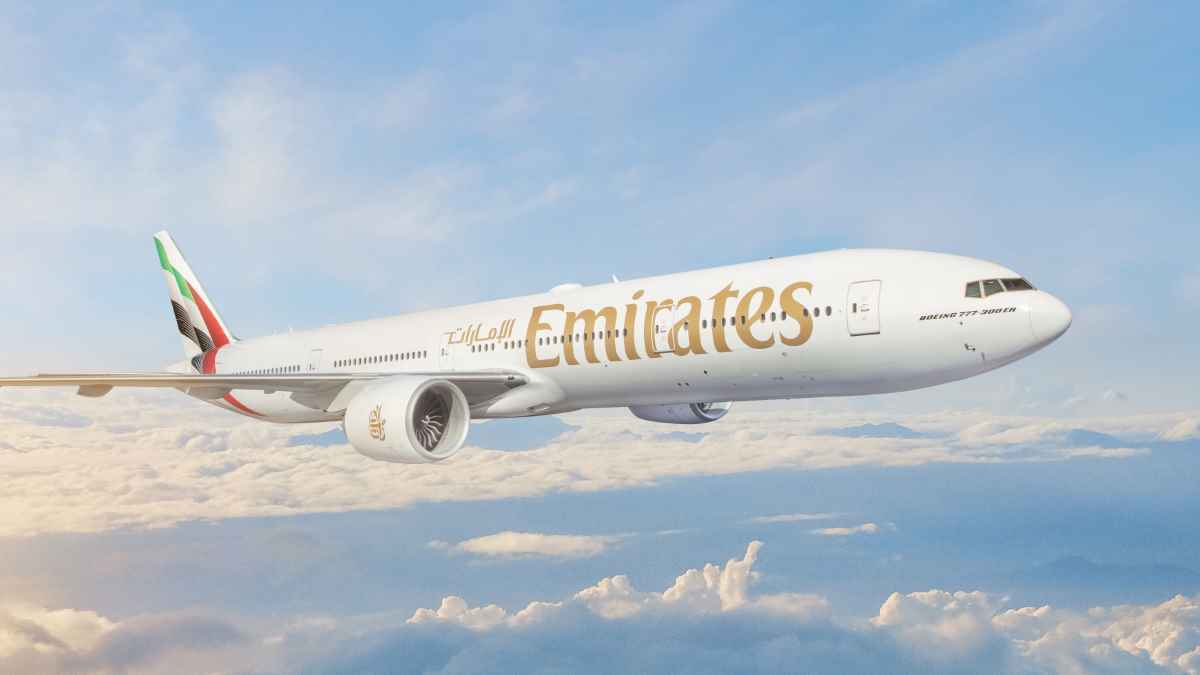
NAIROBI, Kenya, February 25, 2026/APO Group/ –Emirates (www.Emirates.com), the world’s largest international airline, has introduced a first-of-its-kind split-payment solution for travellers in Kenya, through a longstanding strategic partnership with Cellulant, Africa’s leading payments technology company. The split-payment capability, enabled by Tingg, Cellulant’s payment gateway, has debuted in Kenya and is expected to roll out to other African markets in the coming months.

Available on Emirates’ website, Tingg’s split payment feature, offers greater financial flexibility by allowing customers to combine multiple payment methods across mobile money, mobile banking and local credit and debit cards. The partnership also enables customers to make an initial payment online, followed by up to four additional instalments across 24 hours, unlocking greater purchasing power and making airfares more accessible to mobile-first customers.


“With hundreds of millions of Africans relying on mobile money as their preferred way to pay, extending this convenience to global travel payments is essential,” said Michael Muriuki, Chief Product and Technology Officer at Cellulant. “Through Tingg, we are enabling Emirates customers to complete high-value transactions seamlessly, without transaction limits becoming a barrier to access.”


Commenting on the partnership, Christophe Leloup, Emirates’ Country Manager for Kenya, said, “Kenya is one of the most dynamic markets on our global network, and we’re always looking for ways to enhance our customer experience across every touchpoint, including the booking process. By introducing split payments, through Tingg by Cellulant, we unlock greater flexibility and convenience, while enabling more customers to access our world-class product and services.”


With hundreds of millions of Africans relying on mobile money as their preferred way to pay, extending this convenience to global travel payments is essential

Solving a Real Pain Point: the Split-Payment Breakthrough

Mobile money is the dominant form of payment across Africa, with over 1 billion registered mobile money wallets and more than 80 billion transactions totalling over US$1 trillion. Yet despite its widespread adoption, per-transaction and daily limits on mobile wallets often prevent customers from completing high-value purchases, such as international airline tickets, forcing customers to abandon bookings.


By introducing the split-payment solution available through Cellulant’s payment platform, Tingg, Emirates directly addresses this challenge by allowing customers to complete ticket bookings while remaining within provider-imposed limits.


The split-payment feature joins Emirates’ raft of other financing options (https://apo-opa.co/3ZV37Oc), designed to make airfare more accessible to customers. In Kenya, Emirates enables payments through mobile apps such as M-Pesa and Safaricom or via mobile banking transfer, through partner banks, via Cellulant. Across the region, Emirates and Cellulant also facilitate a variety of finance options in 14 markets across Africa such as South Africa, Ghana and Zimbabwe.


The launch comes as Emirates adds a third daily flight on the Dubai–Nairobi route from 1 March 2026, increasing capacity on a corridor that has seen strong demand. In recent months, Emirates has operated its double daily flights at a consistently strong seat factor, reflecting growing demand for air travel between Kenya and global destinations. By pairing the extra flights with locally aligned payment options, Cellulant and Emirates are ensuring that demand is met with accessibility.


To book tickets with split payment, customers can visit the Emirates website.

Distributed by APO Group on behalf of The Emirates Group.

Business

Customer Experience Management (CEM) Africa 2026 closes on a high with a strong community response

Published

on

970 attendees across three days, 260 + companies representing 20 countries, came together in Cape Town for practical insight, technology, networking and conversations shaping the future of customer experience in Africa

CAPE TOWN, South Africa, September 7, 2026/APO Group/ –CEM Africa 2026 concluded at the Century City Conference Centre following three days of strong engagement across Africa’s customer experience community.


The 14th edition welcomed 970 attendees from more than 260 companies across 20 countries, bringing together senior CX, customer service, marketing, digital, technology and transformation leaders alongside solution providers and industry partners.

The event achieved a Net Promoter Score of 69, reflecting a strong response from delegates and reinforcing the relevance of the CEM Africa platform.

Across the programme, delegates had access to 43 workshop and breakout sessions and 10 main stage content sessions, with feedback consistently highlighting the quality, relevance and practical value of the content.

Discussions tackled the issues shaping CX today, including AI adoption, trust, customer intelligence, employee experience, digital transformation, customer journeys and the growing pressure to demonstrate measurable business value.

Standout voices and timely conversations

Under the theme “Trust, Technology and the Human Future of CX in Africa”, the programme combined global perspective with distinctly African CX challenges and opportunities.

Business journalist and best-selling author Bruce Whitfield delivered “The Trust Advantage”, exploring the role of trust in reducing friction and creating stronger business outcomes.

Zahirah Variawa, Founder of The Fourth Thread, opened Day Two with “The Moments People Remember: Why the Experiences We Create Matter More Than We Think”, placing human connection firmly at the centre of customer experience.

Martin Urrutia, Head of Global Retail Experience at The LEGO Group, delivered “Experience Is the Brand”, examining how organisations can design experiences that differentiate, scale and build loyalty.

From the public sector, Rashid Toefy, Deputy Director-General at the Western Cape Government, presented “Citizen Experience by Design: Building Trust Through Better Public Services”, highlighting the importance of experience design in strengthening trust between institutions and the people they serve.

Together, these sessions reinforced one of the strongest messages to emerge from CEM Africa 2026: technology is reshaping customer engagement, but trust, relevance and human connection remain fundamental to great experience.

Engagement across every part of the event

CEM Africa 2026 was designed to encourage participation beyond the main stage.

Delegates moved throughout the venue between keynote sessions, 43 workshops and breakouts, panel discussions, solution demonstrations, the exhibition and direct conversations with technology providers and peers.

Day Zero set the tone with The Social Club: Play. Taste. Connect, live podcast discussions and opening drinks, creating an informal environment for the community to connect before the main conference programme began.

Across Days One and Two, engagement continued through the exhibition, matchmaking and smaller-format sessions, while Matchmaking and Happy Hour and the CEM Engage Party created further opportunities for delegates, speakers and partners to build relationships outside the formal programme.

The event closed with WiN CX Africa, bringing female leaders together around leadership, safety, trust and inclusion in customer and employee experience.

Strong response from partners

Sponsors and exhibitors also reported a highly positive response, with partners contributing actively to both the content programme and the wider event experience.

NiCE, Lead Sponsor of CEM Africa 2026, played a prominent but integrated role throughout the summit, bringing practical perspectives on AI-powered customer experience, enterprise AI agents and the evolving relationship between human and AI-enabled service.

An NPS of 69 reinforces that the community is finding real value in these conversations and in the connections CEM Africa creates

The wider partner community contributed expertise across Voice of Customer, customer intelligence, automation, conversational engagement, journey orchestration, contact centres and CX measurement, helping ensure that technology conversations remained grounded in real operational and commercial challenges.

The numbers behind CEM Africa 2026

The post-event results underline both the scale of the community and the depth of engagement across the programme:

970 total attendance

260+ companies represented

20 countries represented

43 workshop and breakout sessions

10 main stage content sessions

+69 Event NPS

For CEM Africa, the NPS of 69 is particularly significant. It is not simply a measure of satisfaction, but an indication that delegates found genuine value in the content, connections and overall event experience.

“The response to CEM Africa 2026 has been incredibly encouraging. What stood out was the level of engagement across every part of the event, from the main stage and workshops to the exhibition, matchmaking and networking functions. An NPS of 69 reinforces that the community is finding real value in these conversations and in the connections CEM Africa creates.”

Terry Southam, Group Director retail – VUKA Group

Momentum builds towards CEM Johannesburg Edition

With the Cape Town flagship complete, attention now turns to the CEM Johannesburg Edition, taking place on 10–11 November 2026 at NH Hotel in Sandton.

The event expands to a full two-day format in 2026, bringing together senior CX decision-makers, practitioners and solution providers around practical workshops, peer-led insight, solution discovery and purposeful business networking.

The strong response in Cape Town is already carrying forward into Johannesburg, with growing interest from delegates, speakers and commercial partners.

Download the CEM Johannesburg Edition Sponsorship Brochure

Download Sponsorship Brochure (https://apo-opa.co/4ymJqhg)

Register your interest to attend

Register Interest (https://apo-opa.co/4igD4LH)

Explore the CEM Johannesburg Edition

Visit the CEM Johannesburg Edition website (https://apo-opa.co/4igK6jK)

Distributed by APO Group on behalf of VUKA Group.


Continue Reading

Business

Africa’s first full-stack hydrogen hub powers up in Namibia

Published

on

Namibia

The CMB.TECH Namibia facility in Walvis Bay brings together solar power generation, green hydrogen production, and energy storage in a single operational ecosystem

CAPE TOWN, South Africa, August 24, 2026/APO Group/ –Namibia is demonstrating what is possible in Africa’s energy transition with the continent’s first fully integrated green hydrogen facility.


The CMB.TECH Namibia facility in Walvis Bay brings together solar power generation, green hydrogen production, and energy storage in a single operational ecosystem, demonstrating how clean energy can be produced at industrial scale while supporting industrial decarbonisation and long-term energy resilience.


This landmark project marks a key step in sustainable energy infrastructure. It integrates solar power generation, green hydrogen production, and energy storage within one ecosystem. This shows how clean energy can be produced at scale to support industrial decarbonisation and long-term energy resilience.

“Africa’s first fully integrated green hydrogen facility demonstrates that large-scale clean energy production is not a future ambition, but a present-day reality. Operating successfully in one of the world’s most demanding environments, it showcases the viability of green hydrogen as a cornerstone of the continent’s energy transition,” Sabine Dall’Omo, CEO, Siemens Sub-Saharan Africa, tells ESI Africa (https://apo-opa.co/4d0HFy3), part of VUKA Group.

Hydrogen for local industrialisation in Namibia

The hydrogen produced at CMB.TECH will initially power local industrial applications, like dual-fuel trucks, generators and Namibia’s first hydrogen-powered freight locomotive. In the future, the plant will expand and integrate more with port infrastructure, transforming maritime decarbonisation by refuelling ships with ammonia from green hydrogen.

This will boost Namibia’s renewable energy use and reduce dependence on fossil fuels, especially in the hard-to-decarbonise shipping sector.

As the technology partner underpinning the operation, Siemens provides the integrated electrical, automation and safety infrastructure that enables seamless coordination across the site, creating a high-availability platform that supports the future of green industrial development.

Namibia is one of the sunniest countries in the world, with about 300 sunny days a year, and solar power can be harnessed in abundance. In Walvis Bay, that solar power drives an electrolyser that splits water into hydrogen and oxygen. To produce marine fuel, the hydrogen will be combined with nitrogen from the air to create ammonia, which is then liquefied.

Africa’s first fully integrated green hydrogen facility demonstrates that large-scale clean energy production is not a future ambition, but a present-day reality

“In a region where reliable energy is essential for economic growth and social development, what matters most is a system that simply works,” says Dall’Omo. “The CMB.TECH plant can only deliver on its promise if all technologies operate seamlessly as one. That is where Siemens makes the decisive difference. Working as a ONE tech company and serving as the unified interface for automation, control, and power distribution, we ensure the facility runs reliably from day one.

“Our long presence in the region, deep understanding of local conditions, and close collaboration across our businesses help reduce complexity, solve issues quickly, and keep operations stable. In short, we bring the entire system to life, enabling the plant to become a dependable, future-shaping asset for the customer and the wider community.”

Integrated hydrogen economy

CMB.TECH is a “Living Lab” for an integrated hydrogen economy. “The facility includes a solar-powered off-grid electrolyser for renewable hydrogen production, a refuelling station for hydrogen-powered vehicles and industrial applications, and an on-site Hydrogen Academy for local talent development,” says Roy Campe, Chief Technology Officer at CMB.TECH.

The plant’s 5MWp solar park covers 6.5 hectares and feeds a hydrogen production facility with a 5MW Proton Exchange Membrane electrolyser and a 5.9MWh battery. The fully off-grid electrolyser produces green hydrogen using electricity from the solar park and energy stored in the Battery Energy Storage System (BESS).

CMB.TECH built the facility and is using the green hydrogen for its local industrial applications, making the company its own first customer and ensuring a guaranteed buyer from day one. “Many green hydrogen projects are stalling because, while they invest heavily in solar energy and green hydrogen production, there is often no commercial offtake agreement in place to secure demand for the hydrogen produced,” says Dall’Omo.

“Beyond its role as an energy production facility, the project illustrates how green hydrogen can accelerate the decarbonisation of transport and logistics value chains. From supporting local mobility solutions to enabling future maritime refuelling infrastructure, it provides a tangible pathway toward lower-carbon industrial and shipping ecosystems,” says Wiebke Polomka, Senior Manager: Southern Africa, Afrika-Verein der deutschen Wirtschaft.

Hydrogen Academy in Namibia

In addition to ecological and economic effects, knowledge transfer is central. The Hydrogen Academy on site trains drivers, technicians, and scientists and strengthens the labour market. Today, 24 of the facility’s 25 employees are Namibian and received training through the Hydrogen Academy.

“By partnering with local universities and institutions like the Namibia Institute for Mining Technology, the project is training a new generation of engineers and technicians. This creates a sustainable pipeline of local expertise, positioning Namibia as an exporter of not just green molecules, but also the technical knowledge required to operate and maintain a hydrogen economy,” says Johannes Shimbilinga, Municipal Mayor of Walvis Bay.

The plant also provides a model for collaborative energy transformation. “The project underscores the importance of ecosystem-led execution in delivering complex energy transitions,” Dall’Omo concludes. “By bringing together developers, systems integrators, technology partners, and cross-border industry stakeholders, it demonstrates how strategic collaboration can unlock sustainable industrial growth and long-term economic resilience.”

The current 5MWp solar park occupies only a fraction of the available land. “The next step is to increase capacity to 250MW, then to 500,” says Campe. “We want to turn Namibia into a global energy hub and export energy to Europe and the rest of the world. Today we have 7,000 solar panels. In the future, there could be millions.”

Distributed by APO Group on behalf of VUKA Group.


Continue Reading

Business

Africa Finance Corporation launches Infrastructure Climate-Resilient Fund Nigeria to mobilise domestic institutional capital

Published

on

Africa Finance Corporation

ICRF Nigeria forms part of ACP’s US$750 million Infrastructure Climate-Resilient Fund (ICRF), a pioneering vehicle designed to strengthen the resilience of Africa’s infrastructure

LAGOS, Nigeria, August 24, 2026/APO Group/ –AFC Capital Partners (ACP), the asset management subsidiary of Africa Finance Corporation (AFC) (www.AfricaFC.org), has launched the Infrastructure Climate-Resilient Fund Nigeria (ICRF Nigeria) as a dedicated platform to mobilise domestic institutional capital for investment in climate-resilient infrastructure projects across Nigeria and the wider African continent.


Registered with the Securities and Exchange Commission (SEC) as a closed-end fund, ICRF Nigeria is designed to channel capital from pension fund administrators (PFAs), insurers, asset managers and other Nigerian institutional investors towards a diversified portfolio of commercially viable high-impact infrastructure opportunities.

ICRF Nigeria forms part of ACP’s US$750 million Infrastructure Climate-Resilient Fund (ICRF), a pioneering vehicle designed to strengthen the resilience of Africa’s infrastructure by embedding climate considerations throughout the asset lifecycle—from planning and design to construction and operation. The Fund addresses a critical challenge for the continent: ensuring that the infrastructure underpinning Africa’s growth can withstand increasingly severe and unpredictable climate impacts.

ICRF has attracted participation from leading global and African institutional investors, including a US$253 million first-loss commitment from the Green Climate Fund (GCF)—its largest equity investment in Africa to date—alongside the European Investment Bank (EIB), Development Bank of Southern Africa (DBSA), Cassa Depositi e Prestiti (CDP), the Nigeria Sovereign Investment Authority (NSIA), and several African pension funds. ACP expects to mobilise up to US$3.7 billion in total financing through ICRF and build a diversified portfolio of 10 to 12 infrastructure projects across Africa.

Samaila Zubairu, AFC’s President and CEO, commented: “Africa is not short of capital. The continent holds more than US$4 trillion in domestic resources, including significant pools of long-term capital in pensions, insurance and sovereign wealth funds. Yet too much of this wealth remains invested in low-risk, short-term instruments rather than being channeled into productive sectors such as infrastructure, industry and innovation.

ICRF Nigeria gives Nigerian institutional investors a dedicated route into high-quality, climate-resilient infrastructure investments across Nigeria and Africa

“The opportunity before us is to create investment vehicles that connect Africa’s long-term savings with its long-term development needs. ICRF Nigeria is an important step in that direction, enabling Nigerian institutional capital to participate in the infrastructure that will drive more resilient and sustainable growth across Nigeria and the continent.”

Ayaan Adam, CEO of ACP, said: “ICRF Nigeria gives Nigerian institutional investors a dedicated route into high-quality, climate-resilient infrastructure investments across Nigeria and Africa. By combining institutional capital with AFC’s infrastructure expertise and the catalytic power of blended finance, we can address both the financing needs of critical infrastructure and the growing risks posed by climate change.

“Importantly, this creates an avenue for Nigeria’s long-term savings to contribute to infrastructure development while giving investors access to a diversified portfolio of opportunities across the continent.”


ICRF combines concessional and commercial capital to overcome barriers that have historically constrained investment in climate adaptation across Africa. Through blended finance and targeted de-risking mechanisms, the Fund integrates climate resilience into infrastructure from the outset, helping to unlock private capital for investment in projects that might otherwise be difficult to finance.


The Fund’s target sectors are critical to Africa’s economic transformation, including renewable energy, transport and logistics, digital infrastructure and industrial development. Its investment approach considers both physical and transition climate risks, including exposure to extreme weather, emissions pathways and climate governance. Each investment undergoes climate risk screening and assessment to embed resilience throughout the infrastructure lifecycle.

The Green Climate Fund plays a catalytic role through its provision of first-loss capital and technical assistance for climate risk assessment and monitoring, helping to de-risk investments and crowd in additional institutional capital.

Distributed by APO Group on behalf of Africa Finance Corporation (AFC).


Continue Reading

Trending