Connect with us
Anglostratits

Business

Control Risks and Oxford Economics Africa launch the 2024 Africa Risk-Reward Index: Opportunity through transformation

Published

on

Control Risks

The report is released at a time when Africa is experiencing a significant generational shift in politics, increased continental connectivity, and the rapid emergence of transformative technologies

LONDON, United Kingdom, September 25, 2024/APO Group/ — 

Leading global specialist risk consultancy, Control Risks (www.ControlRisks.com), and its economics consulting partner, Oxford Economics Africa (www.OxfordEconomics.com), today announced the launch of the ninth edition of the Africa Risk-Reward Index. This authoritative report is designed to provide policymakers, business leaders, and investors with a comprehensive guide to navigating the evolving investment landscape across key African markets.

Download document: https://apo-opa.co/3zu16yU

The report is released at a time when Africa is experiencing a significant generational shift in politics, increased continental connectivity, and the rapid emergence of transformative technologies that could potentially propel its progress. This pivotal moment presents both opportunities and challenges for businesses operating in African markets, but also risks exacerbating fragilities in some African countries.

Africa’s outlook is promising. But understanding the nuanced market dynamics and adopting a long-term perspective will be essential for stakeholders — from policymakers and investors to development agencies and civil society — as they navigate the evolving landscape to successful investment outcomes in 2024 and beyond. For African countries and investors looking to invest or grow their business in Africa, the time is now.

In the ninth Africa Risk-Reward Index, Control Risks and Oxford Economics Africa compare some of the continent’s largest and emerging markets, offering investors a comparative snapshot of market opportunities and risks across Africa in the year ahead.  

The report examines three key themes outlined below, summarising Control Risks’ and Oxford Economics Africa’s views on Africa’s trajectory in the year ahead.

Bridging the generational divide – a new era for African politics

The report’s first theme focuses on how African political leaders are increasingly mindful of their young, growing populations. Recent events have shown that young people are becoming more frustrated with governance, impatient with development, and disillusioned with political establishments. This discontent has manifested in some surprising election results, youth-led protests, and some policy shifts.

Patricia Rodrigues, Associate Director at Control Risks, said, “The 2024 Africa Risk-Reward Index provides crucial insights into the dynamic changes shaping investment opportunities across the continent. As Africa faces a period of significant political and economic shifts, our report highlights both the potential rewards and the risks that investors must consider. This year’s edition emphasizes the importance of understanding the complex interplay between emerging technologies, infrastructure developments and geopolitical influences to make informed and strategic investment decisions.”

In South Africa, the ruling party lost its parliamentary majority in the May 2024 elections. In Senegal, the opposition candidate achieved a resounding victory, further illustrating the changing political dynamics in the region. In Kenya, young people organised nationwide protests that led the president to dismiss the entire cabinet.

Businesses must now operate in a less predictable security and policy environment, as governments strive to balance investment attraction with rising societal demands.

As Africa faces a period of significant political and economic shifts, our report highlights both the potential rewards and the risks that investors must consider

White elephants and lifelines – the megaprojects reshaping the continent

Over the past decade, Africa has witnessed a significant surge in infrastructure investment, with large-scale energy, port, and rail projects taking centre stage. These megaprojects are often seen as catalysts for transformative economic growth, addressing long-standing deficiencies in trade corridors and enhancing connectivity across the continent.

However, these ambitious projects are not without their challenges. Questions about these ventures’ true cost, long-term utility, and the transparency of the deals underpinning them have sparked heated debates across the continent. Many of these megaprojects have been financed through government-to-government agreements, often accompanied by concerns over opaque terms, lack of local involvement, and the potential for unsustainable debt burdens.

Geopolitical dynamics also play a significant role in shaping Africa’s infrastructure landscape. While China has historically dominated infrastructure investment on the continent, other global powers are increasingly vying for influence. The US, Gulf countries, and other geopolitical actors are stepping up their efforts to fund and develop critical infrastructure projects in Africa, driven by competition for access to natural resources and strategic positioning in the global economy.

This has resulted in a more complex and competitive environment, where African governments and businesses alike have to carefully navigate competing interests and align their infrastructure needs with their long-term goals.

Emerging technologies – supercharging economic development

The advent of artificial intelligence (AI) is poised to unlock new opportunities for innovation across Africa. AI applications in agriculture, climate adaptation, healthcare, and education offer the potential to accelerate economic growth. However, African governments risk lagging their global counterparts in regulating these technologies. Countries like Morocco, Rwanda, and South Africa are taking proactive steps, but others may adopt a more cautious approach, leading to a fragmented regulatory landscape.

Jacques Nel, Head of Africa Macro at Oxford Economics Africa, added, “The 2024 Risk-Reward Index reveals a continent in flux, where significant shifts in political landscapes and economic conditions are reshaping the investment environment. This year’s report highlights the dual nature of Africa’s growth prospects – offering substantial opportunities while also presenting considerable risks. Our insights aim to equip stakeholders with the knowledge needed to make strategic decisions and utilize all the continent has to offer for sustainable growth.”

Investment Landscape Outlook

The 2024 Africa Risk-Reward Index continues to provide a grounded, long-term perspective on investment opportunities and challenges across major African economies. The report examines the shifting economic and political dynamics that are reshaping the continent’s risk-reward profile and offers actionable insights for stakeholders seeking to make informed decisions in this complex environment. African countries are at the intersection of global competition for resources, new trade corridors, and digital innovations. This index serves as a valuable tool for those looking to navigate the continent’s diverse markets and capitalize on emerging opportunities.

Methodology 

The Africa Risk-Reward Index is defined by the combination of risk and reward scores that integrate economic and political risk analysis by Control Risks and Oxford Economics Africa.  Risk scores from each country originate from the Economic and Political Risk Evaluator (EPRE), while the reward scores incorporate medium-term economic growth forecasts, economic size, economic structure, and demographics.  

For details on the individual risk and reward definitions, please contact us at:

communicationsEMEA@controlrisks.com or africa@oxfordeconomics.com 

To request a copy of the report please contact: tracy.walakira@apo-opa.com 

Distributed by APO Group on behalf of Control Risks Group Holdings Ltd.

Energy

United States (U.S.) Broadens African Energy Push as Volz Brings Washington to African Energy Week (AEW) 2026

Published

on

African Energy Chamber

From LNG finance in Mozambique to grid technology and clean cooking, U.S. government agencies and companies are expanding their engagement with African energy markets as Department of Energy official Josh Volz prepares to join African Energy Week 2026

CAPE TOWN, South Africa, October 2, 2026/APO Group/ –The United States is widening its engagement with Africa’s energy sector, combining government-backed finance, technology partnerships and private-sector investment across markets from Mozambique and Nigeria to Kenya, Uganda and the Democratic Republic of the Congo. Josh Volz, Deputy Assistant Secretary for Europe, Eurasia, Africa and the Middle East at the U.S. Department of Energy, will bring that agenda to African Energy Week 2026 in Cape Town from October 12-16.


Volz returns to AEW as Washington’s engagement with African energy markets increasingly spans both hydrocarbons and electricity infrastructure. In April, the U.S. Trade and Development Agency brought energy decision-makers from the DRC, Ethiopia, Kenya and Uganda to the U.S. to meet American companies working on transmission and distribution technologies, including AI-enabled grid systems. The program was designed to connect U.S. technology providers with prospective projects and procurement opportunities in African power markets.

Mozambique illustrates the scale that U.S. financing can bring to an African gas project. In March 2025, the U.S. Export-Import Bank approved a nearly $5 billion loan for TotalEnergies’ Mozambique LNG development, reviving a financing package for the long-delayed project. The original $4.7 billion commitment had been approved during the first Trump administration but required reapproval after construction was suspended in 2021. Meanwhile, ExxonMobil and its Area 4 partners awarded approximately $1.1 billion in pre-investment contracts for long-lead equipment and early construction activities at the Rovuma LNG project in August.

Development finance is another part of the equation. The U.S. International Development Finance Corporation’s investment ceiling rose from $60 billion to $205 billion following its 2025 reauthorization, while the agency gained expanded authority covering international investments in strategic sectors including energy and critical minerals. The new authorization runs through 2031.

The DFC is better resourced than it has ever been, making this an opportune moment for African operators to make their case

The DFC has also continued to approve new transactions in Africa in 2026. On September 16, the agency announced more than $8 billion in new investments globally, including projects supporting infrastructure and resources across Africa, as part of an effort to promote U.S. exports, energy security and American technology.

U.S. companies such as GE Vernova are active across African power markets, providing generation, transmission, grid and software technologies. The company says its technology is installed in more than 50 countries across the Middle East and Africa; in Nigeria alone, its equipment is installed across more than 40 sites, while its grid technology has also supported regional integration through the West African Power Pool.

Energy access is another emerging strand of Washington’s engagement. U.S. Secretary of Energy Chris Wright co-chaired the July 2026 high-level summit on clean cooking in Africa alongside Kenyan President William Ruto, Norway and the International Energy Agency. The meeting produced $900 million in new commitments, taking total commitments since the 2024 Africa Clean Cooking Summit to more than $3.1 billion. Wright described clean cooking as a major but often overlooked energy-access challenge.

Volz has previously argued that African countries should determine their own energy pathways while the United States looks for ways to partner with them. Speaking at AEW 2025, he said: “International governments should not stand in the way of how African nations determine their energy futures. We are eager to hear how best we can, from a U.S. perspective, partner with Africa.” He also pointed to $65 billion in existing U.S. private-sector investment in Africa and a $2.5 billion U.S. government pledge to support energy expansion.

That approach will have a substantial U.S. presence at AEW 2026. The current program confirms Volz alongside U.S. Senator Ted Cruz, United States Energy Association President and CEO Mark W. Menezes and DFC Managing Director and Regional Head of Africa Vibhuti Jain, among other U.S.-linked executives and policymakers. Jain will also participate in the dedicated U.S.-Africa Energy & Investment Forum on October 14, which will bring together U.S. and African companies, investors and policymakers to discuss capital, technology and commercial partnerships.

“The DFC is better resourced than it has ever been, making this an opportune moment for African operators to make their case. This conference is about making sure the capital and the projects actually find each other,” said NJ Ayuk, Executive Chairman of the African Energy Chamber.

For African energy markets, the expanding U.S. role reaches across project finance, LNG, upstream development, electricity infrastructure, grid technology and clean cooking. Volz’s participation at AEW 2026 comes as those relationships increasingly move from broad policy discussions toward individual projects, commercial partnerships and technology deployment across the continent.

Distributed by APO Group on behalf of African Energy Chamber.


Continue Reading

Business

How Liberia’s Harper Basin Is Emerging as West Africa’s Next Deepwater Frontier

Published

on

Liberia

The Harper Basin’s advancing exploration program is de-risking Liberia’s premier frontier basin, positioning TotalEnergies and BluEnergies for frontier deepwater drilling success

CAPE TOWN, South Africa, October 2, 2026/APO Group/ –Liberia’s Harper Basin is emerging as one of West Africa’s most compelling frontier exploration opportunities, attracting investment from TotalEnergies and BluEnergies as advanced subsurface studies progressively reduce geological uncertainty across three deepwater offshore blocks.


The basin remains undrilled despite sharing geological characteristics with some of Africa’s largest and latest deepwater plays. As seismic, geochemical and seabed datasets converge, the question now is whether that technical progress will translate into a commercially viable petroleum province?

Frontier Basin Moves Toward Drill-Ready Status

The Harper Basin covers Blocks LB-26, LB-30 and LB-31 under Reconnaissance License RL-003, spanning approximately 8,924 km2 offshore Liberia. TotalEnergies operates the project with a 65% interest alongside BluEnergies, which retains 35%.

The partnership formalized in January 2026 through a joint study and application agreement after BluEnergies secured an early position in the basin during 2023 and advanced independent prospect evaluation.

An independent prospective resource assessment completed in March 2025 estimated unrisked prospective resources of approximately 17.9 billion barrels of oil and 28.8 trillion cubic feet (tcf) of natural gas across seven mapped basin-floor fan systems.

Current work centers on reprocessing 6,167 km2 of legacy 3D seismic data using energy data and intelligence firm TGS. The program recently surpassed 50% completion, delivering improved subsurface imaging and enhanced amplitude versus offset analysis to identify potential hydrocarbon-bearing reservoirs.

Parallel offshore operations began on June 19, 2026, with subsurface specialists GeoPartners deploying the research vessel R/V GYRE, operated by TDI-Brooks, to survey approximately 4,045  km2 in water depths between 500 and 3,500 meters.

The campaign combines multibeam echo sounder mapping, water-column imaging, piston coring and heat-flow measurements. These datasets identify seepage pathways, characterize source-rock maturity and improve confidence in future drilling locations before integration during Q4 2026.

The Jubilee field in Ghana,the Venus field in Namibia and the recent discoveries offshore Ivory Coast have proven the significance of basin floor fan plays along the African margin

Once economically viable anomalies are finalized, TotalEnergies and BluEnergies plan to exercise their rights to convert the reconnaissance license into long-term PSCs by late 2026 or in 2027. This step legally locks in the drilling rights, positioning the partners to advance toward exploration drilling, subject to prospect maturation, regulatory approvals and investment decisions

Geological Analogues Strengthen Exploration Case

Unlike Liberia’s historically explored offshore basin, the Harper Basin occupies a structurally confined transform-margin embayment bounded by major fracture zones that concentrate sediment delivery into thick basin-floor fan complexes.

These Cretaceous-aged Cenomanian and Turonian fan systems are considered direct geological analogues to producing and discovered deepwater plays along the West Africa Transform Margin.

BluEnergies has identified seven discrete basin-floor fan complexes interpreted from seismic data. The current technical program seeks to validate reservoir quality before progressing toward production sharing contracts and exploration drilling.

Vice President of Exploration Sergio Laura says recent licensing activity across the West African margin reinforces BluEnergies’ early entry into Harper Basin, explaining in a press release, “The Jubilee field in Ghana, the Venus field in Namibia and the recent discoveries offshore Ivory Coast have proven the significance of basin floor fan plays along the African margin.”

Unlike earlier Liberian exploration focused primarily on structural traps, the Harper Basin targets stratigraphic pinch-out reservoirs sealed beneath regional marine shales, reducing reliance on fault-dependent trapping mechanisms that limited historical exploration success.

If the current technical program confirms reservoir quality, Liberia could move from being one of West Africa’s least explored offshore jurisdictions to one of its most closely watched frontier plays. With TotalEnergies providing technical expertise and BluEnergies holding an early strategic position, the next milestone is no longer identifying prospects—but determining whether they justify Liberia’s first deepwater exploration wells.

The Harper Basin’s progress comes as Liberia seeks to attract new investment through its 2026 Offshore Direct Negotiation Licensing Round, highlighting the country’s broader offshore potential and growing exploration momentum.


The Launch of the Liberia 2026 Offshore Direct Negotiation Licensing Round – organized by Energy Capital and Power – will take place at African Energy Week (AEW) 2026 on October 14 at The Orchid, CTICC 2. Visit, https://apo-opa.co/4rMJlS7 for more information.


Distributed by APO Group on behalf of Energy Capital & Power.


Continue Reading

Business

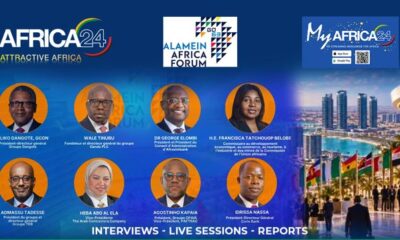
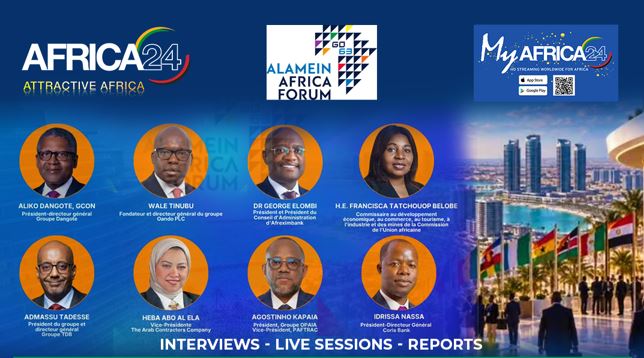
Alamein Africa Forum 2026: Live Coverage on Africa24

Published

on

AFRICA24 Group, the continent’s leading TV and digital media group, available in 120 million households, is deploying an optimal set-up to provide full coverage of the ALAMEIN AFRICA FORUM 2026

AFRICA24 Group (www.AFRICA24Group.com) brings you full coverage, live from Al Alamein (Egypt), from 2 to 4 October 2026, of the first edition of the Alamein Africa Forum, a biennial forum co-organised by the Government of Egypt, the African Export-Import Bank (Afreximbank) and the African Union Development Agency (AUDA-NEPAD).

Al Alamein, Egypt’s fourth new city, is hosting Heads of State and Government, senior political figures, leaders of financial institutions, private sector players and institutional investors, on the sidelines of the African Union’s second 2026 annual high-level coordination meeting.


The Alamein Africa Forum is a leading economic and political event for the continent and for entrepreneurial boldness. The vision of African sovereignty championed by the Afreximbank Group, a major partner, is reflected in plenary sessions, sector panels, closed-door roundtables and B2B/B2G meetings dedicated to the key drivers of Africa’s transformation: infrastructure, energy, digital transformation, manufacturing, critical minerals, health markets and intra-African trade.

AFRICA24 GROUP, TV MEDIA PARTNER AND LEADER OF THE AFRICAN NARRATIVE TOLD BY AFRICANS

In a rapidly changing global context marked by the promotion of the African narrative by Africans, AFRICA24 Group is the exclusive TV partner and a pillar of the Alamein Africa Forum. Through its unique coverage, AFRICA24 Group showcases a strategic continental platform designed to turn the African Union’s Agenda 2063 into tangible economic results.

360° continental and global broadcasting with AFRICA24

AFRICA24 Group, the continent’s leading TV and digital media group, available in 120 million households, is deploying an optimal set-up to provide full coverage of the ALAMEIN AFRICA FORUM 2026:

  • Live broadcasts of the opening ceremonies, economic forums and thematic panels, with our special correspondents;
  • Exclusive interviews with political decision-makers, leaders of financial institutions, investors and young African leaders attending in New Alamein;
  • Immersive reports from all sessions and side events.

With AFRICA24 Group, together, let’s transform Africa

Distributed by APO Group on behalf of AFRICA24 Group.


Continue Reading

Trending