

Business
Marketers are leaving value on the table by failing to measure the full impact of their marketing investments

| The Future of Measurement 2024, part of WARC’s Evolution of Marketing programme, explores major trends and emerging best practices in measurement |
| 18 April 2024 – As cookies are phased out and new measurement techniques come to the fore, 2024 will be a year defined by disruption, uncertainty and experimentation. According to WARC data, only a small fraction of marketers (2%) are using the following measurement techniques in combination – marketing mix modelling (MMM), experiments, attribution – to assess the full impact of their marketing. As measurement continues to evolve, WARC, the global authority on marketing effectiveness, has today released The Future of Measurement, a report examining the latest trends and emerging best practices of marketing measurement. The report focuses on four key areas: AI and the growth of synthetic data, the demise of third-party cookies, hurdles in holistic measurement and closing the sustainability gap. Paul Stringer, Managing Editor Research and Insights, WARC, says: “Amidst the swirl of excitement around Gen AI, another significant inflection point is fast approaching. In Q3 of this year, Google is finally due to phase out third-party cookies. While the threat of cookie deprecation has loomed for some time now, evidence suggests that advertisers are neither fully prepared or aware of the different solutions available. “With measurement continuing to evolve in several directions at once, marketers find themselves battling multiple headwinds: not only the demise of third-party cookies, but new regulations around sustainability reporting, and, of course, the growing influence and impact of AI. All of which we address in this report.” Key challenges and trends outlined in The Future of Measurement report, and what marketers can do to keep pace with emerging best practices in measurement are: Hurdles in holistic measurement: only 2% of marketers are using attribution, experiments and marketing mix modelling (MMM) in combination to measure marketing impact Most marketers are failing to use the full range of techniques that enable them to measure the full impact of their marketing activities. Data from WARC’s Marketer’s Toolkit survey shows only 2% of marketers are using attribution, experiments and marketing mix modelling (MMM) in combination for measurement, whilst a further 22% say they don’t use any modelling at all. Guidance highlights three techniques that are critical to holistic measurement. Each technique brings strengths that can offset the weaknesses of the other. Attribution: The process of assigning credit to the different touchpoints that are found on a user’s path to a conversion. Fast and easy to scale, it gives real-time insight into drivers of performance. But, it is limited to digital channels and is best for measuring short-term impact.Experiments: Uses randomised controlled experiments to compare the change in consumer behaviour between groups that are exposed or withheld from marketing activity while keeping all other factors constant. It is the gold standard to measure causality but can be difficult to scale.Marketing mix modelling (MMM): Utilises advanced statistics to give a holistic overview of all channels, sales, and external factors. Can provide a longer-term view of media impact, but can be expensive and requires at least two years of historical data. AI and the growth of synthetic data: 60% of data used to develop AI and analytics applications will be synthetically generated Unlike ‘real’ data, which is based on observations from the real world, synthetic data is produced artificially to emulate it using purpose-built mathematical models or algorithms. Synthetic data has a variety of applications in marketing, including pricing, customer journey planning, competitor analysis and new product development. It also negates customer privacy issues, as it has no personal information attached to it, and can conduct market research quicker and cheaper. By this year, Gartner has estimated that 60% of the data used in AI and analytics projects will be synthetically generated, and according to Straits Research, the global market for synthetic data generation is projected to grow by 37% between 2023 and 2031. However, AI-based insights bring new risks to marketing research. Generative AI tools can amplify bias, trigger privacy breaches and deliver inaccurate results. Marketers should develop clear ethics and best practices when working with these tools. Tim Geenen, CEO and co-founder, Rayn HQ, says: “There are many benefits to [producing synthetic data], from achieving more accurate results, to building new data sets that reflect our diverse society and opening the door to advanced ways of understanding audiences.” The third-party cookie countdown: Only half (51%) of marketers are prepared for the deprecation of third-party cookies The phasing out of cookies is due to take place in Q3 of 2024, severely limiting the ability of companies to track individuals online. Yet many marketers are still not prepared. According to a recent survey by IAB Europe, only half are prepared for the deprecation of third-party cookies. |
 |
| A lack of education and awareness of post-cookie alternatives are a barrier to progress. As advertisers look to combat signal loss, they will have to get comfortable testing a broad range of targeting and measurement solutions to discover what works best for their business. Proposed solutions include: contextual advertising, identity solutions, first party data, attention measurement, Google’s ‘Privacy Sandbox’, and predictive audiences using AI. Closing the sustainability gap: only a quarter (24%) of advertisers are measuring digital advertising emissions Over the last five years, sustainability has ranked as a top issue by respondents to WARC’s annual Marketer’s Toolkit survey. However, recent research by Scope3 concludes that there has been ‘no evidence of systemic behaviour change’ in the advertising industry to reduce carbon emissions, and according to IAB Europe, only a quarter (24%) of marketers said they are measuring emissions from digital advertising. The compound effect of these trends is that many marketers are failing to act on sustainability – in objective setting, asset development, supply chain management, consumer messaging, and the measurement of emissions from digital ads. New regulations and directives in both Europe and the United States coming in 2024 mean companies will need to provide more granular data on their carbon emissions – including those generated by advertising. Lack of standards is a major barrier to accurate and comparable carbon measurement, although work is underway by the Global Alliance for Responsible Media (GARM) and Ad Net Zero to create a common currency and methodology. Research by Magna, Lumen and Adelaide suggest that advertising in high quality media environments with higher engagement generate lower carbon emissions. Vicky Foster, VP Global Commercial Partnerships, Adform, said: “By working with the right partners, platforms, and practices, ones that have sustainability, transparency, and efficiency at their core and accept no compromise between these pillars, the industry as a whole can make the elimination of waste a reality rather than simply paying lip service.” Read a sample report of The Future of Measurement here. WARC subscribers can read the report in full. A podcast will be available from 23 April. The insights for The Future of Measurement report are based on a combination of exclusive data from WARC and external research studies and reports. It is part of WARC Strategy’s Evolution of Marketing, a content programme of in-depth forward-looking reports focusing on the future of the marketing discipline by drawing on the latest evidence, emerging trends, technologies, media, social influences and other drivers of change. |










Business
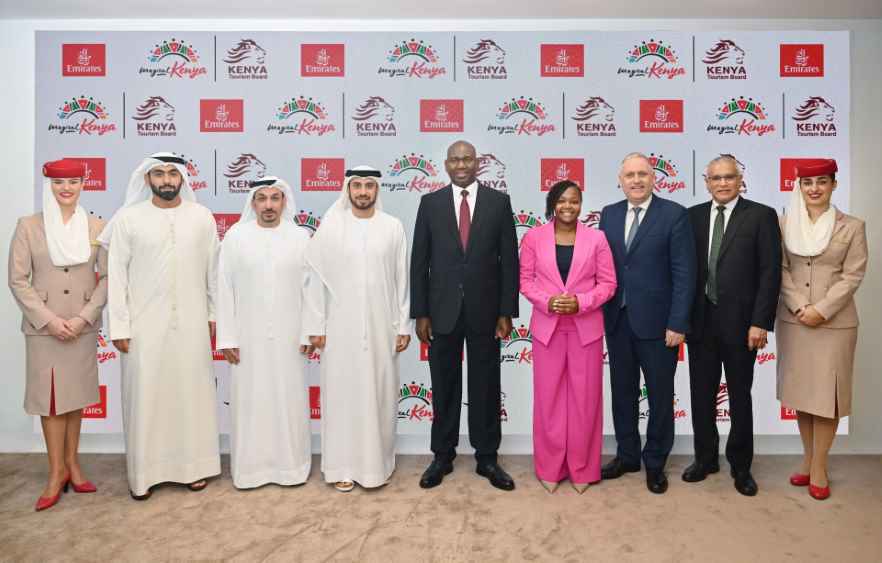
Emirates and the Kenya Tourism Board sign partnership agreement to drive inbound tourism
Business
Afreximbank and Development Bank of Southern Africa establish a Joint Project Preparation Facility to advance bankable projects in Southern Africa

Events
Advancing the Agentic World, Building a Solid Silicon Foundation

-

 Business4 days ago
APO Group Launches New Brand as Africa’s Only Strategic Communications Consultancy with Owned Distribution
-

 Tech4 days ago
Trusted voices, peer validation, and relatable customer situations drive commercial and brand success in B2B campaigns
-

 Events5 days ago
Hyperscalers Convergence Africa 2026 sets action agenda for Africa’s Digital Infrastructure Buildout
-

 Business3 days ago
Africa Women Innovation and Entrepreneurship Forum (AWIEF) Announces Keynote Speakers for 2026 Conference
-

 Energy5 days ago
One Month to Go: African Energy Week (AEW) 2026 Gears Up for Five Days of Deals, Dialogue and Energy Leadership
-

 Tech4 days ago
Canon Deepens Creative Collaboration with Nora Awolowo as Black Market Brings EOS C400 to a New Nollywood Feature
-

 Business4 days ago
Islamic Development Bank (IsDB) Group Day in Cameroon
-

 Energy5 days ago
Brazil’s Eneva Brings Gas-to-Power Expertise to Venezuela Energy Week 2027