Connect with us
Anglostratits

Business

Recap of the 6th Russian Energy Week International Forum

Published

on

Russian Energy Week

Organized in Moscow, Russian Energy Week (REW) International Forum generated high interest from the international community

JOHANNESBURG, South Africa, October 24, 2023/APO Group/ — 

The Russian Energy Week (REW) (www.RusEnergyWeek.com) International Forum took place for the sixth time on 11–13 October in Moscow. The Forum was attended by government officials from various countries, heads of major energy companies and organizations, scientists, and experts. This year’s central theme was ‘The New Reality of Global Energy: Building the Future’.

“REW features specialized, industry-specific, targeted discussions with experts from all over the world. It once again brought together everyone interested in the joint development of energy and people willing to work together for the future. It’s great that foreign countries were widely represented this year. I am confident that this platform will have a direct impact on international relations as a whole and on the energy sector in particular for many years to come,” Deputy Prime Minister of the Russian Federation Alexander Novak said in comments following the Forum.

“The Forum’s business programme and REW Youth Day included over 70 events that were attended by more than 225 speakers. In total, over 5,000 delegates from 84 countries and territories took part in REW 2023. Over 1,200 representatives of foreign and Russian businesses from more than 250 companies attended the Forum. There were also 36 heads of diplomatic corps. More than 2,000 participants took part in the Youth Day events,” Advisor to the President of the Russian Federation and Executive Secretary of the REW 2023 Organizing Committee Anton Kobyakov said.

A programme built on four pillars

The Forum programme was built on four pillars: ‘The International Agenda’, ‘The Development of the Fuel and Energy Sector’, ‘Scientific and Technological Development, and the Digital Transformation’, and ‘Sustainable Development and the Climate’. The Forum also included bilateral meetings, negotiations, and business breakfasts.

I am confident that this platform will have a direct impact on international relations as a whole and on the energy sector in particular for many years to come

The key event in the Forum’s business programme was the plenary session, which was attended by President of the Russian Federation Vladimir Putin and Prime Minister of Iraq Mohammed Shia’ Al Sudani. The discussion was moderated by Al Ghad TV journalist Amr Abdelhamid.

The session ‘The Global Oil and Gas Market: Navigating a Period of Turbulence’, with the participation of Deputy Prime Minister of the Russian Federation Alexander Novak, generated significant attention among participants. It was also attended by Caretaker Federal Minister of Energy of the Islamic Republic of Pakistan Muhammad Ali, Prime Minister of the Republic of Srpska Radovan Viskovic, Minister of Petroleum of the Islamic Republic of Iran Javad Owji, Executive Vice President of the Bolivarian Republic of Venezuela Delcy Eloina Rodriguez Gomez, and Minister of Energy of the Republic of Azerbaijan Parviz Shahbazov.

Another key event was the Global Energy Association’s ‘Building the City of the Future’ session, which was attended by Moscow Mayor Sergey Sobyanin, Sberbank CEO and Chairman of the Executive Board Herman Gref, as well as foreign guests: Deputy Director for Information Technology of China’s State Grid Corporation Jiye Wang and Point Systems Zrt Founder and CEO Laszlo Kovacs.

The Joint Intergovernmental Russian-Saudi Commission held a meeting during Russian Energy Week. In addition, Deputy Prime Minister and Minister of Industry and Trade of the Russian Federation Denis Manturov and Deputy Prime Minister of the Russian Federation Alexander Novak held a meeting of the Coordinating Council under the Government Commission on Import Substitution on ways to substitute imports of oil and gas equipment.

‘Global Energy’ and ‘Energy of the Pen’ Prizes

An official ceremony was held during REW 2023 to present the Global Energy Prize for outstanding scientific research and scientific-technical developments in the field of energy. This year, the prize was won by scientists from China. Beijing Institute of Nanoenergy and Nanosystems Founding Director Zhong Lin Wang was awarded in the Non-Conventional Energy category. Ruzhu Wang emerged as the laureate in the New Ways of Energy Application category. During the ceremony, an Honorary Diploma was presented to Ljubivoje Popovic on behalf of the Global Energy Association.

In addition, REW 2023 hosted an award ceremony for the winners of the ‘Energy of the Pen’ international media competition. A total of 262 applications from Russia and 23 other countries were received. The winners were selected by a panel of judges.

Distributed by APO Group on behalf of Russian Energy Week (REW) 2023.

Events

Wuzhen Summit Puts Spotlight on Tongxiang’s Expanding AI Industry

Published

on

Wuzhen Summit

TONGXIANG, CHINA – Media OutReach Newswire – 20 October 2026 – The 2026 World Internet Conference Wuzhen Summit will open on Nov. 2, bringing technology leaders, researchers and companies to the historic water town as Tongxiang firms expand AI applications from commercial cleaning and autonomous delivery to industrial control and data-center cooling.

For Tongxiang, long associated with the annual internet conference, the summit is also a chance to demonstrate how local companies are commercializing AI technologies for customers at home and abroad.


Ahead of the event, reporters visited seven Tongxiang-based companies working in robotics, intelligent vehicles, synthetic data, industrial automation, logistics and computing infrastructure.

Singapore Changi Airport earlier this year placed a fourth order for commercial cleaning robots from CenoBots, a Tongxiang-based company whose machines are used in airports, supermarkets, hospitals, factories and warehouses.

CenoBots has sold products in more than 40 countries and regions. Its customers include Changi Airport, British retailer Tesco, the University of Minnesota and pharmaceutical company Novo Nordisk. This year, the company supplied about 600 autonomous cleaning robots for Tesco Express stores across the United Kingdom.

“Cleaning robots are appearing in more and more settings,” said Shen Jizhong, CenoBots’ co-founder and vice president. “It is much like electric vehicles becoming a familiar sight on the roads — a trend that is gathering pace.”

The company’s machines are adapted to different settings. Hospital robots must move through busy corridors without disrupting patient care, while those used in supermarkets navigate around shoppers and carts. Factory robots operate near forklifts, and airport models must handle both fine debris in carpeted areas and small obstacles on smooth floors.

CenoBots continues to refine its robots through real-world testing, focusing on reliable operation and consistent cleaning performance across diverse environments. The company has expanded its research, development and production facilities in Tongxiang from approximately 3,000 square meters in its early years to more than 20,000 square meters. Local malls, hospitals and sports venues have also served as long-term testing sites.

While CenoBots focuses on service robots, TEEMO is developing the vehicle platforms that support autonomous mobility. The company makes drive-by-wire skateboard chassis and core components for autonomous vehicles used in last-mile delivery, patrols and logistics.

Its standardized chassis can be equipped with different vehicle bodies and hardware for specific uses. One of TEEMO’s strategic customers, autonomous delivery-vehicle maker Zelos, was selected for all lots in China Post’s centralized procurement program for 7,000 autonomous delivery vehicles.

TEEMO’s customers already span the United States, the Middle East, India and Russia, said Zhang Yongjian, the company’s director of operations.

“In some overseas markets, distances are long, populations are dispersed and last-mile delivery is difficult to staff,” Zhang said. “Autonomous delivery vehicles have strong potential there, and overseas business will become an important growth driver for us.”

Other Tongxiang companies are concentrating on the data and perception systems that allow machines to function in physical environments.

Dayan Technology, founded in Tongxiang in May 2025, provides synthetic-data and toolchain services for autonomous-driving and humanoid-robotics companies. It combines real-world data collection, digital twins and simulated training environments to help developers train robots before they are deployed.

Its wearable devices record human movement and interactions with objects. A haptic glove uses liquid-metal and pressure sensors to capture hand gestures, finger movements and contact force. A multi-camera headset records a user’s visual field, body posture, hand movements and the position of nearby objects.

Dayan said its tactile-perception model can process touch signals in milliseconds. The technology is intended to help robots do more than identify objects visually: They can learn how firmly to grip an item, recognize when it is slipping and apply force without causing damage.

Freetech is applying related sensing and decision-making capabilities to intelligent driving. The company develops intelligent-driving systems and 4D imaging radar for passenger and commercial vehicles, and said its technology has been selected for hundreds of vehicle programs.

Its ODIN AI platform supports products at different levels of driving automation. The radar is designed to complement cameras in heavy rain, fog, darkness and abrupt changes in light, including when vehicles enter or leave tunnels.

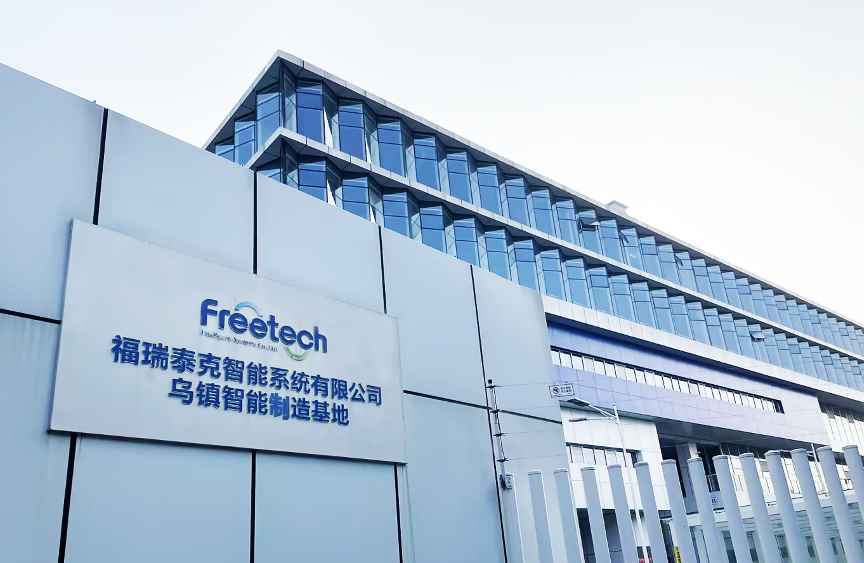
At its intelligent-manufacturing base in Wuzhen, Freetech is also using AI in production. An in-house system reads customer orders and calculates the components and materials needed for each production line before manufacturing begins. The company said the system has increased overall efficiency by more than 20%.

“Transportation combined with a specialized function will be an important direction for the future,” said Dr. Zhang Lin, Freetech’s founder and CEO.

Freetech sees potential applications beyond passenger vehicles, including robots, elder-care vehicles, mining equipment and agricultural machinery.

Beyond mobility, Tongxiang firms are using AI to address the complexity of industrial operations. Founded in 2019, Shuhan Technologies provides on-premises industrial AI for chemical plants, energy facilities and wastewater-treatment systems. Its AI-driven control layer continuously ingests data from central control systems and field sensors, identifies dynamic conditions and autonomously adjusts operating parameters in real time.

“Fundamentally, all industrial process challenges can be framed as control and optimization problems,” said Zhai Zhengjun, Shuhan’s Chief Technology Officer.

At a coal chemical plant with annual capacity of 1.2 million metric tons, Shuhan said its system reduced raw-material consumption by 6%. The company estimated that the deployment generated more than 176 million yuan, or about $26 million, in annualized economic benefits and reduced carbon emissions by more than 500,000 metric tons.

SENAD is targeting bottlenecks in logistics operations, including loading, unloading, sorting and pallet handling. It develops autonomous loading and unloading robots, as well as a multimodal logistics model called Robot Insight, for sectors including beverages, tobacco, consumer goods, pharmaceuticals and logistics.

Tongxiang’s AI sector also includes companies addressing the infrastructure needed to run increasingly powerful computing systems. SynthCool is tackling a basic constraint of the AI boom: heat.

SynthCool develops two-phase liquid-cooling systems to address the heat generated by increasingly powerful processors. Inadequate cooling can trigger thermal throttling, reducing performance and energy efficiency.

“Heat dissipation is infrastructure,” said Zhu Zhijiang, SynthCool’s general manager.

SynthCool’s two-phase cooling technology uses the latent heat of vaporization to remove heat from processors. The cooling fluid absorbs heat and boils into vapor, which is then condensed back into liquid and recirculated.

Depending on ambient conditions and system design, two-phase cooling can also support free cooling and reduce reliance on compressor-based refrigeration. Waste heat may be recovered where temperatures and local demand make reuse practical.

According to SynthCool, its technology supports heat dissipation of more than 3,000 watts per chip and heat flux above 250 watts per square centimeter. Under comparable cooling requirements, the system requires approximately one-third of the flow needed by conventional single-phase water-cooled cold plates, helping reduce piping requirements and pumping demand.

SynthCool’s portfolio includes two-phase direct-to-chip and immersion cooling solutions, along with distribution units and control systems for AI data centers.



Continue Reading

Business

GE Vernova secures order aimed to strengthen regional energy capacity in Côte d’Ivoire

Published

on

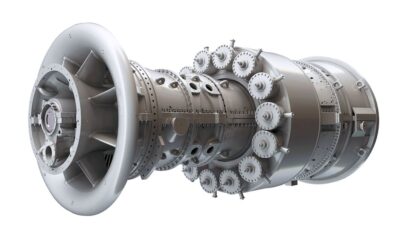
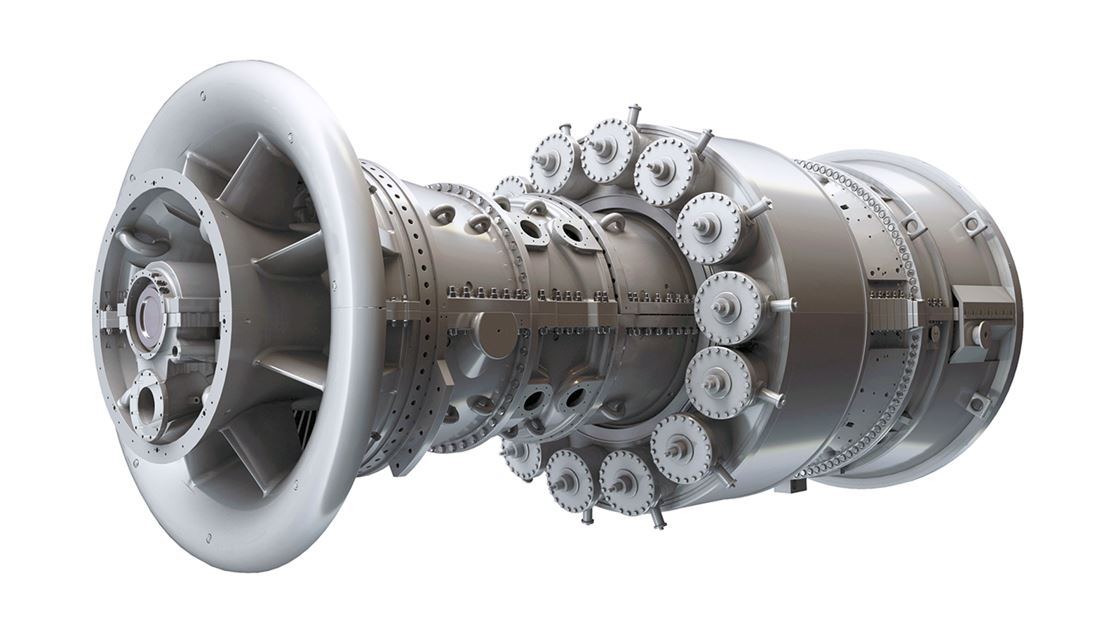
GE Vernova 9E turbine technology to support reliable power delivery for industrial growth and millions of households

We are honored to support Songon Energies with our proven 9E technology for this crucial infrastructure project

ABIDJAN, Ivory Coast, October 20, 2026/APO Group/ —

  • Developed by Songon Energies S.A., Songon power plant is built to strengthen energy security and support future growing electricity demand in Greater Abidjan
  • GE Vernova 9E turbine technology to support reliable power delivery for industrial growth and millions of households
  • Infrastructure development expected to create up to 1,400 new jobs and drive positive community impact


GE Vernova (https://www.GEVernova.com/) announced today that it will provide the gas power technology for the new Songon combined-cycle power plant, located in the Songon region near Abidjan, Côte d’Ivoire. Following the signing of financing agreements (https://apo-opa.co/3U5xBxI) last June, Songon Energies (https://apo-opa.co/483QKTX) – Ivorian development investment company focused on advancing energy infrastructure – selected GE Vernova to supply a 9E gas turbine and generator. The plant – to be built by the EPC contractor China Energy International Engineering Co., Ltd. – is expected to deliver 372 megawatts (MW), a capacity equal to the power needs of approximately 5 million Ivorian homes.


Download infographic: https://apo-opa.co/3UBqA7W


Supporting a growing national energy landscape. Côte d’Ivoire has made significant progress, reaching an electrification rate of 94.3 percent by 2024 through initiatives like the “Electricity for All Program” (PEPT), in line with the national goal to achieve universal electrification and improved power quality by 2030. Despite these gains, the nation faces an annual demand growth rate of 10 to 15 percent and rural areas still require expanded access. In this energy landscape, this new power plant will help fill a critical gap. The facility is projected to represent up to 12 percent of the country’s total installed base upon its scheduled 2029 operational launch, playing a vital role in meeting these ambitious development targets. Furthermore, the project is expected to generate up to 1,400 new jobs, creating economic opportunities for the local community.


“The Songon Energies project is designed to strengthen energy security and support future growing electricity demand growth in the Greater Abidjan region while reinforcing the country’s position as a regional energy hub in West Africa,” said Mr. Wang Xiaoming,  Deputy General Manager (Acting CEO) for Songon Energies. “The facility is expected to ease energy pressure on the Abidjan metropolitan area, providing a reliable foundation for the development of skilled workers, the growth of industrial zones, the expansion of small and medium-sized enterprises, and a tangible improvement in the daily lives of millions of Ivorian households. We selected to work with GE Vernova for this new power plant, because of our deep trust in their efficient technology and their constant, proven presence in Côte d’Ivoire, which gives us great confidence in the long-term success of this facility.”


“We are honored to support Songon Energies with our proven 9E technology for this crucial infrastructure project,” said Joseph Anis, CEO of Gas Power in Europe, Middle East, and Africa at GE Vernova. “Our commitment to power plant operators is rooted in delivering advanced gas power technology that provides the reliable, dispatchable energy necessary for long-term growth and positive community impact. Beyond the turbine island, we look forward to applying our expertise in powering the HV sub-station, providing digital software, and long-term services to support the broader energy system in its goal to enhance grid stability, operational efficiency, and local prosperity.”


GE Vernova’s commitment to Côte d’Ivoire remains steadfast, built upon a long history of supporting the nation’s electrification goals. The company’s footprint in the country centers on a large installed base, key power transmission hardware, digital software deployments, and long-term service contracts. GE Vernova utilizes its global expertise and local presence to help power plant operators increase power capacity, while supporting a more secure and reliable energy future.

Distributed by APO Group on behalf of GE Vernova.


Continue Reading

Energy

Algeria’s Hydrocarbons Minister Joins MSGBC 2026 as Sonatrach Eyes Senegal Partnerships

Published

on

Etu Energias

Algiers and Dakar are preparing an energy agreement as Sonatrach pursues partnerships across the MSGBC basin

DAKAR, Senegal, October 19, 2026/APO Group/ –Mohamed Arkab, Algeria’s Minister of State and Minister of Hydrocarbons, will join the speaker lineup at MSGBC Oil, Gas & Power 2026 in Dakar this December, bringing one of the continent’s most senior energy ministers to a forum focused on investment and regional cooperation. His confirmation serves as a bridge between one of Africa’s longest-standing oil and gas producers and one of its newest, paving the way for greater collaboration across upstream exploration, infrastructure and power.


Algerian cooperation with MSGBC nations has already gained momentum. Minister Arkab hosted Senegal’s Minister of Energy and Petroleum, Dr. El Hadji Abdourahmane Diouf, in Algiers on October 4. The two-day visit produced a cooperation agreement between Senegalese utility Senelec and Algeria’s Sonelgaz, while Petrosen and Sonatrach held discussions on a potential partnership spanning upstream exploration and infrastructure.

Senegal’s government has said the visit sets the stage for an intergovernmental agreement to be signed in Dakar during MSGBC Oil, Gas & Power 2026. The two national oil companies first signed a memorandum of understanding in 2022, and Minister Arkab discussed putting it into effect with Senegal’s Minister of Foreign Affairs Cheikh Niang in July.

The potential partnership comes as MSGBC countries look toward the next phase of upstream development following the start of production at Senegal’s Sangomar oil field and the cross-border Greater Tortue Ahmeyim (GTA) LNG project. Regional priorities are now shifting toward advancing the next generation of projects, including Senegal’s Yakaar-Teranga gas development and Mauritania’s BirAllah discovery, while attracting fresh exploration investment across the wider basin. Moving these opportunities toward development will require capital, technical expertise and partnerships with established producers – creating scope for deeper cooperation with countries such as Algeria and companies such as Sonatrach.

Minister Arkab’s participation at the upcoming conference also arrives as Algeria advances its own exploration strategy. The event convenes shortly after bidding closes for the Algeria Bid Round 2026, which the National Agency for the Valorization of Hydrocarbon Resources launched in April with seven exploration blocks on offer. Submissions are due November 26, and Sonatrach expects to finalize contracts with successful bidders by the end of January 2027. Exploration and production will absorb three-quarters of the $60 billion Sonatrach intends to spend between 2026 and 2030, as the company works toward lifting annual gas output to 200 billion cubic meters within five years.

With a bilateral agreement potentially headed for signature on the conference sidelines, Minister Arkab’s participation promises to be one of the defining moments of the 2026 edition and reinforces MSGBC Oil, Gas & Power’s standing as the region’s leading meeting point for governments and investors.

Organized by Energy Capital & Power and held under the High Patronage of Senegalese President Bassirou Diomaye Faye, MSGBC Oil, Gas & Power 2026 takes place December 1–3 in Dakar and will convene heads of state, ministers, investors, operators and development partners from Mauritania, Senegal, The Gambia, Guinea-Bissau and Guinea-Conakry. Explore opportunities and secure your participation at www.MSGBCOilGasandPower.com.


Distributed by APO Group on behalf of Energy Capital & Power.


Continue Reading

Trending