Connect with us

Business

Studia Inc strengthens its African expansion and concludes a strategic partnership with D.IA Advisory 

Published

on

Studia Inc

As the digital transformation of African states accelerates, Studia Inc confirms its core expertise in civil registration digitisation by announcing a strategic partnership with D.IA Advisory, dedicated to the local integration and deployment of its solutions
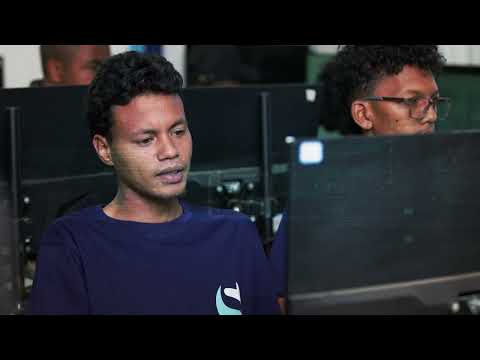
ANTANANARIVO, Madagascar, April 27, 2026/APO Group/ –Building on the digitisation of nearly 10 million civil registration records in Madagascar, Studia Inc (https://STD-Inc.mg) now possesses proven operational capacity to process, structure, and secure massive volumes of critical data — the indispensable foundation for any digital identity strategy. The modernisation of civil registration has become a priority for states. In this context, Studia Inc stands out through its complete mastery of its core business: the industrial digitisation of civil registers, including in complex environments characterised by degraded, dispersed, or difficult-to-use archives.

The figures are unambiguous: according to the UNICEF report The Right Start in Life (December 2024), only 51% of children under 5 are registered in sub-Saharan Africa — a region that alone accounts for half of the world’s 90 million children without legal identity. The situation is even more critical in East and Central Africa, where the rate falls to 41%. Without significant acceleration, the continent could have more than 100 million unregistered children by 2030. These individuals remain invisible to the state, without access to fundamental rights or public services.

Technological expertise at the service of data reliability

Studia Inc, specialised in high-volume data digitisation and indexing, is establishing itself as a leading player in this field. As part of the national EC-MADA programme in Madagascar, the company conducted the inventory, digitisation, and indexing of nearly 10 million civil registration records, mobilising 500 people over 7 months — 70,000 person-days — to cover 1,695 communes across 11 priority regions, reaching the most isolated areas of the territory through autonomous mobile units equipped with satellite connectivity and solar energy.

Studia Inc’s approach is built on the integration of artificial intelligence at the heart of digitisation processes. Its specialised OCR models enable the automated extraction of complex handwritten data and the intelligent segmentation of registers into exploitable records. A blind double-entry mechanism — combining algorithmic processing with independent human validation — guarantees a high level of reliability, consistent with the requirements of national identity systems. This combination of AI speed, human rigour, and mobile deployment makes it possible to operate at scale where the urgency is greatest, before this identity heritage disappears.


Our expertise is built on mastering large-scale digitisation of civil registration records, with exacting standards for data quality and reliability


A partnership built on complementary expertise

The partnership with D.IA Advisory, a digital services company based in Senegal, is built on a clear division of roles. Studia Inc retains full responsibility for digitisation and indexing operations — its core business. D.IA Advisory provides support on local integration and deployment: integrating data into existing information systems, ensuring interoperability with national platforms, adapting to regulatory frameworks and data sovereignty requirements, and supporting institutions. This structure ensures both a high level of technical expertise and effective execution close to local realities.

« Our expertise is built on mastering large-scale digitisation of civil registration records, with exacting standards for data quality and reliability. This partnership with D.IA Advisory strengthens our capacity to deploy our solutions across diverse local environments. » Jean-Claude Fioravanti — CEO, Studia Inc

« Our role is to ensure the fluid and lasting integration of solutions into existing systems, taking into account local institutional and regulatory specificities. » Abdoulaye Dia — Founder, D.IA Advisory

By combining core expertise, operational capacity, and local presence, this partnership aims to concretely support African governments in modernising their civil registers, while contributing to the development of reliable, inclusive, and sustainable digital identity infrastructures.

At the ID4Africa 2026 Summit (12–15 May 2026, Abidjan Exhibition Centre, Côte d’Ivoire), both partners will present their shared vision and the solutions developed for states and institutions across the continent.

Distributed by APO Group on behalf of Studia Inc..

Business

Vantage Capital Invests $45 Million in International Group for Modern Coatings (MIDO), a Leading Egypt-Based Specialty Paints and Coatings Manufacturer

Published

on

By unlocking MIDO’s production capacity, Vantage Capital’s investment will directly support the generation of hard currency inflows into Egypt while creating skilled employment across manufacturing, R&D, sales, and logistics, contributing to job creation and skills development in Alexandria and beyond

CAIRO, Egypt, April 26, 2026/APO Group/ –Vantage Capital (www.VantageCapital.co.za), Africa’s largest mezzanine debt fund manager, has provided $45 million of mezzanine debt funding to the International Group for Modern Coatings (“MIDO”), a leading Egyptian manufacturer of specialty paints and coatings. This transaction marks Vantage Capital’s third investment in Egypt and is among the largest mezzanine debt transactions in the country’s history. The proceeds will be used for debt refinancing and working capital funding, which will enable MIDO to unlock its production capacity.

Founded in 1979 by Dr. Aly Ghaly, MIDO has grown into one of the leading specialty coatings manufacturers in Africa. The company produces a highly diversified portfolio of over 1,200 SKUs spanning automotive refinish paints & coatings, wood coatings, unsaturated & saturated polyester resins, adhesives, and other industrial products, serving customers across Egypt and the rest of Africa. MIDO operates two state-of-the-art, vertically integrated manufacturing facilities in Alexandria, encompassing a total area of 47,100 sqm and a combined production capacity of over 100,000 tonnes per annum. These facilities include dedicated production lines for paints and coatings, proprietary in-house resin production and tin can packaging capabilities.

MIDO generates revenues across more than 50 countries, with Africa as its primary export market, complemented by a presence in the GCC, Europe, Asia, and the United States. The company benefits from deep, long-standing relationships with local and export distribution partners. MIDO has further strengthened its global credentials through private label and co-manufacturing partnerships with world-leading coatings players, including Nippon Paints, Kansai Paints, and Yatu Paints. Underpinning this broad commercial reach is a dynamic in-house R&D and quality control function.

MIDO’s management team will continue to lead the business following the transaction, combining deep institutional knowledge with broad functional expertise. Dr. Aly Ghaly, the company’s founder, having guided MIDO’s development from a small local workshop into a fully integrated, export-oriented industrial platform, continues to serve as Chairman. Ramy Galal, a member of the founding family and a 20-year veteran of the business, continues to serve as Chief Executive Officer.

Vantage Capital’s funding now gives us the firepower to unlock substantial latent capacity in our facilities and accelerate both our local and export growth ambitions

The transaction is expected to drive meaningful economic and social impact across Egypt and the broader African continent. By unlocking MIDO’s production capacity, Vantage Capital’s investment will directly support the generation of hard currency inflows into Egypt while creating skilled employment across manufacturing, R&D, sales, and logistics, contributing to job creation and skills development in Alexandria and beyond. By substituting imported specialty coatings with high-quality, locally manufactured alternatives, the transaction further supports Egypt’s industrial self-sufficiency and strengthens its position as a leading export-oriented manufacturer in the region.

“Over nearly five decades, we have built MIDO into a business that competes on technical complexity, product quality, and the breadth of its offering across a diverse range of markets,” said Ramy Galal, CEO of MIDO. “Our key differentiators are our manufacturing infrastructure, R&D capabilities, distribution relationships, and strong brand equity. Vantage Capital’s funding now gives us the firepower to unlock substantial latent capacity in our facilities and accelerate both our local and export growth ambitions. We are proud to partner with a firm that understood our business, shared our long-term vision, and delivered on very tight execution timelines.”


Omar Gharbawi, Associate Partner at Vantage Capital, noted, “MIDO is a case in point of a successful, homegrown pan-African industrial platform. Management has built the company from the ground up into one of Egypt’s top three specialty coatings players, with products now sold in more than 50 countries. Through some of the most challenging macroeconomic and geopolitical headwinds, the business has demonstrated remarkable resilience, underpinned by strong fundamentals and deep industry expertise. We believe MIDO is only beginning to realise its full potential, and we are delighted to back Ramy Galal, Dr. Aly Ghaly, and the wider leadership team as they embark on this next phase of growth.”


The transaction represents Vantage Capital’s 41st investment across four generations of mezzanine funds, with its portfolio now spread across 11 countries in Africa. Warren van der Merwe, Managing Partner at Vantage Capital, added, “Egypt is one of the most important markets on the African continent — a nation of over 120 million people with a deep industrial base, a highly educated workforce, and a growing role in African trade. This transaction, which is among the largest mezzanine debt deals ever completed in Egypt, reflects our conviction in the country’s potential and our commitment to backing its strongest entrepreneurs and businesses. MIDO exemplifies precisely the type of company we seek to support: founder-led, technically sophisticated, internationally oriented, and with a clear and executable growth agenda. We are proud to play a role in its continued success.”

Matouk Bassiouny and Werksmans acted as legal counsel to Vantage. Adsero acted as legal counsel to MIDO. PwC Middle East, Emerton, and SLR were also members of Vantage’s consortium of advisors.

Distributed by APO Group on behalf of Vantage Capital Group.


Continue Reading

Business

Marché des Arts et Spectacles Africains (MASA) 2026: ORUN lays the foundations for a sustainable African creative ecosystem

Published

on

The ceremony brought together decision-makers, investors, financial institutions, students, artists and the media with an steadfast belief: culture is not a secondary sector, it is a strategic economic vector for Africa

ABIDJAN, Ivory Coast, April 24, 2026/APO Group/ —

The ORUN Innovation Village (MASA 2026) (https://ORUN.Africa/)

As part of the Innovation Village set up by Orun at the Marché des Arts et Spectacles Africains (MASA), in the Palais de la Culture in Abidjan, Orun officially unveiled its pan-African programme to sustainably structure the creative industries in Africa on Friday 17 April.

The ceremony brought together decision-makers, investors, financial institutions, students, artists and the media with an steadfast belief: culture is not a secondary sector, it is a strategic economic vector for Africa, capable of generating productive and competitive value chains, sustainable jobs and a real tool of influence and international diplomacy for the continent.

In a context where Cultural and Creative Industries (CCIs) represent a catalyst that is still understructured, Orun offers a different mindset: make African creativity an infrastructure of sovereignty rooted in the heritage of its peoples.

INNOVATION VILLAGE HIGHLIGHTS

April 13th – Official opening by the First Lady of Côte d’Ivoire

On Monday 13 April, Ms Dominique Ouattara, First Lady of the Republic of Côte d’Ivoire, presided over the official opening ceremony of the village, together with Ms Françoise Remarck, Minister of Culture and Francophonie, and Mr Djibril Ouattara, Minister of Digital Transition and Technological Innovation of Côte d’Ivoire, sponsor of the MASA Innovation Village, as well as other government officials.

April 17th – Orun Day – Launch Ceremony

On 17 April, the Innovation Village served as a platform for the launch of Orun’s pan-African programme, a centre of creative and entrepreneurial excellence designed as a collaborative space bringing together craftsmen, designers, researchers, innovators and technology to modernise crafts, promote the transformation of African raw materials and enhance competitive and robust local industrial sectors in textiles, crafts and design.

With an ecosystem where designers, craftsmen and technologies can truly meet, Orun is opening a new path of an African creativity rooted in its heritage

This initiative will see light of day in Bouaké, the second largest city in Côte d’Ivoire, as Orun plans to partner with leading institutions, inspired by models such as the one developed by Morocco’s University Mohammed VI Polytechnic (UM6P).

This creative ecosystem will be a first in Côte d’Ivoire, the pilot country of this initiative, with the aim to deploy this model into other African countries.

The launch was attended by Mr Amadou Koné, Minister of Transport and Mayor of Bouaké.  Ms Françoise Remarck, Minister of Culture and FrancophonieHis Excellency Othman El Ferdaous, Ambassador of Morocco to Côte d’IvoireOlivia Yacé (Miss Côte d’Ivoire 2021 and Miss World Africa 2022) and several ambassadors from the diplomatic service.

Speaking at the launch ceremony, Mr Abdoulaye Diaw, Orun Managing Director, explained: “What we are building here goes beyond a single project: it is a movement that puts people, creativity and commitment at the heart of our development. In Bouaké and beyond, we are laying the foundations for an ecosystem where talent, know-how and innovation come together to create sustainable value. But such a village can never be built alone: it calls for collective mobilization.

In her speech as Orun’s Ambassador for the programme, Olivia Yacé stated: “We need to support cultural industries with ambition, not as a secondary sector, but as an engine for growth and job creation. With an ecosystem where designers, craftsmen and technologies can truly meet, Orun is opening a new path of an African creativity rooted in its heritage while also projecting itself into the future.”

In his speech, Mr Othman El Ferdaous, Ambassador of the Kingdom of Morocco, recalled his country’s exemplary leadership in valuing cultural heritage: “Today, the challenge for the continent is to strengthen its autonomy in creating and financing the cultural and creative industries, so as to no longer depend on external validation circuits. The border between crafts and industry is blurred, as exemplified by initiatives such as the Orun Innovation Village or the MASA.  This trend is fully in line with the current trajectory of Côte d’Ivoire’s cultural policy.”

The ceremony on 17 April was preceded by a high-level panel, dedicated to the structuring challenges faced by the value chains of the CCIs, which brought together leading institutional and financial figures, including Mr Paul-Harry Aithnard, Managing Director of Ecobank Côte d’Ivoire and Regional Executive Director for the WAEMU, Mr Jean-Arsène Yerima, Regional Director, French-speaking West Africa, Afreximbank, and Mr Omar Diop, UNESCO Representative in Côte d’Ivoire.  In addition, Mr Amine Tajeddine, UM6P representative, also took the floor to share the R&D work that the university is undertaking to modernise various crafts, including tapestry.

The event ended with the unveiling of the United States of Africa football jersey that Orun is launching for the FIFA World Cup 2026, as a symbol of continental unity in support of African teams.

ISO 20121-based and B. Corp-certified sustainable commitment

The Innovation Village is ISO 20121 certified, the same standard as for the Paris 2024 Olympic Games and the 2022 World Cup in Qatar.  This illustrates Orun’s commitment to apply a sustainable and holistic approach, aligned with international standards, and to build a sustainable economic model rooted in culture.

From 13 to 18 April, the Innovation Village offered an experience marked by various interactive and educational activities, combining immersive technology, heritage, arts and culture, embodying a continent where youth, creativity and innovation shape the future.

Distributed by APO Group on behalf of ORUN, part of African Currency Network (ACN).

Continue Reading

Business

African Petroleum Producers Organization (APPO) Pushes Regional Energy Hubs to Unlock Africa-Wide Investment Scale

Published

on

APPO’s Secretary General outlines integration strategy, gas potential and financing tools reshaping Africa’s energy investment landscape at IAE 2026

PARIS, France, April 24, 2026/APO Group/ –The African Petroleum Producers Organization (APPO) is promoting the development of regional energy hubs across the continent, aiming to remove trade barriers and strengthen infrastructure interconnections – from pipelines to refining and distribution networks.


Speaking at Invest in African Energy (IAE) 2026 in Paris, Farid Ghezali, Secretary General, APPO, said the initiative is central to repositioning Africa in the global energy system. The strategy signals a structural shift for investors: away from fragmented national markets toward a unified, high-growth regional bloc of 1.4 billion people.

“For investors, this changes everything,” Ghezali said. “You are no longer investing in isolated national markets, but in an integrated regional market with scale, demand growth and long-term potential.”

We need long-term partnerships that justify large-scale investments and create stability for both producers and buyers

Ghazali framed the push for integration as a response to a rapidly shifting global energy landscape marked by volatility and geopolitical uncertainty. “Recent events have shown that energy security is not just about supply – it is about reliability and resilience,” Ghazali noted. “The world is looking for diversification and stability,” he said. “Africa can offer both – but only if we organize ourselves as a connected and competitive energy market.”

A key part of APPO’s vision is addressing the continent’s infrastructure gap. Despite holding more than 600 trillion cubic feet of proven gas reserves, Africa continues to face constraints in monetizing its resources. “Resources in the ground are not enough,” Ghezali noted. “We need pipelines, LNG facilities, processing infrastructure – real assets that connect supply to demand.”

He emphasized that Africa must move beyond short-term, transactional energy deals, particularly in its engagement with Europe. “We cannot remain in the logic of short-term transactions,” he said. “We need long-term partnerships that justify large-scale investments and create stability for both producers and buyers.”

Financing remains a hurdle, especially as traditional capital sources become more cautious under ESG pressures. However, short-cycle exploration, near-field developments and optimization of existing assets offer immediate value, as recent successes in Namibia, MSGBC countries and Ivory Coast have shown. To support more projects, APPO has backed the creation of the African Energy Bank. At the same time, investors’ preferences are shifting toward integrated energy projects that combine upstream development with domestic power generation or LPG production. “The most attractive projects today are those that deliver both financial returns and development impact,” Ghazali said. “Gas-to-power projects respond to both energy security and sustainability.”

Ghazali underscored the need to boost intra-African energy trade. “We produce oil and gas, yet we import refined products,” he said. “This must change. Regional integration is the only path to a competitive and self-sufficient energy market.”

Distributed by APO Group on behalf of Energy Capital & Power.

Continue Reading

Trending

Exit mobile version