Connect with us

Energy

Starsight Energy Africa Group (“Starsight”) partners with British International Investment (“BII”) to advance clean energy growth in West Africa through US$15 million mezzanine funding

Published

on

Africa

The funding will drive clean energy growth in Starsight’s existing West African operations, with Nigeria earmarked to receive the majority of the funding

LAGOS, Nigeria, March 16, 2026/APO Group/ —
  • Capital will be deployed in Starsight’s existing West African operations to support growth, strengthen operations and scale energy solutions for commercial and industrial users.
  • Majority of the funds will assist in improving power security in Nigeria, where the unstable grid and reliance on diesel self-generation remain key characteristics of the energy sector.
  • The collaboration demonstrates BII’s confidence in Starsight’s long-term commitment to delivering reliable, affordable and sustainable power across the region.


Starsight Energy Africa Group (https://StarsightEnergy.com), a leading provider of clean energy solutions for commercial and industrial (C&I) customers across Sub-Saharan Africa, has secured USD15 million mezzanine debt funding from British International Investment (www.BII.co.uk), the UK’s development finance institution and impact investor.

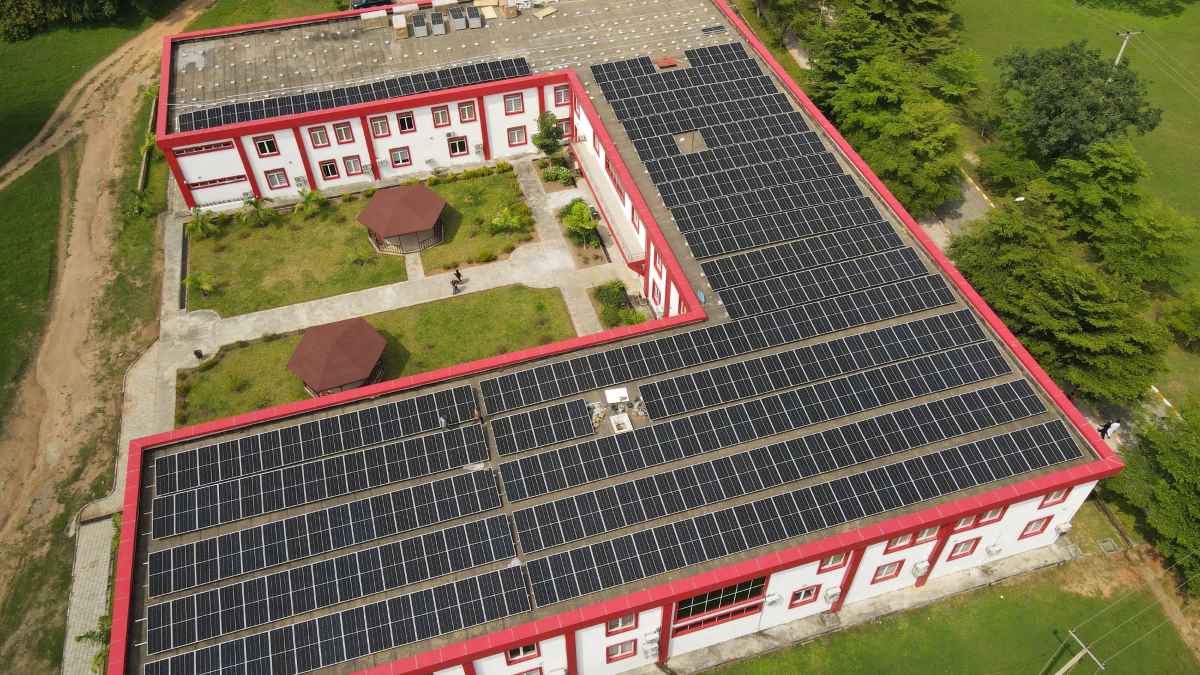
The funding will drive clean energy growth in Starsight’s existing West African operations, with Nigeria earmarked to receive the majority of the funding. It will finance a substantial growth pipeline of renewable solar energy projects whilst also ensuring best-in-class service is maintained to existing clients including asset replacement.

The deployment of the funding within Starsight fits well with BII’s strategic objectives to support productive, sustainable and inclusive development. The collaboration between Starsight and BII also underscores a shared commitment to advancing sustainable infrastructure, supporting private sector growth, and driving measurable climate impact across West Africa.

For our West African customers, this investment tangibly proves that Starsight is here to support their operations and provide energy certainty

It has been estimated that up to 40GW of electricity in Nigeria (https://apo-opa.co/4utGmik) is generated from diesel and petrol generators and Starsight’s funding round with BII is an important stride toward filling this vacuum with clean renewable energy for the C&I sector, says Paul van Zijl, Group CEO at Starsight.

“Partnering with BII marks a significant milestone for the Starsight Energy Africa Group. This funding strengthens our ability to scale more rapidly in Nigeria and Ghana (https://apo-opa.co/4sQSB7a), delivering reliable, clean energy solutions that support economic growth and improve energy resilience for our clients,” says Van Zijl.

“BII’s mission is to support sustainable socio-economic development in emerging markets. Their decision to partner with us is an endorsement of the role we play in increasing energy access within these markets, delivering affordable, low-carbon solutions while simultaneously uplifting the communities in which we operate,” adds Van Zijl.

British Deputy High Commissioner in Lagos, Jonny Baxter said: “The UK remains committed to supporting Nigeria’s transition to clean, reliable, and affordable energy. This investment by BII reflects that commitment in action. By expanding access to dependable renewable power for businesses across Nigeria, it will help unlock growth, strengthen energy resilience, and reduce dependence on costly and polluting diesel and petrol self-generation. It represents a practical step toward a greener, more sustainable future for both our countries.”

Benson Adenuga, West Africa Regional Director and Head of Office, Nigeria, at BII, says: “Nigeria’s businesses need dependable and affordable power to grow. We identified Starsight’s strong track record, combined with its clean energy model, as a strong fit with BII’s mandate. Starsight’s commercial and industrial solar solutions directly address this challenge by reducing dependence on refined petroleum products and improving reliability. By backing scalable distributed renewable platforms like Starsight, BII is supporting clean energy expansion in West Africa and demonstrating confidence in the region’s potential for sustainable, inclusive growth.”

Michael Chuchu, Group Commercial Director at Starsight, says that the BII funding will unlock new capacity in countries where energy stability has historically been a barrier to growth.

“Nigeria remains our second-largest market and a core focus area for expansion. For our West African customers, this investment tangibly proves that Starsight is here to support their operations and provide energy certainty through environmentally responsible solutions.

“With BII’s support, we’re set to pursue the next chapter of our growth journey,” Chuchu concludes.

Distributed by APO Group on behalf of Starsight Energy.


Energy

Geoex MCG Named Official Geosciences Partner of Venezuela Energy Week 2026 in Landmark Subsurface Collaboration

Published

on

Geoex MCG, a global subsurface geoscience and data solutions provider, has been appointed Official Geosciences Partner for Venezuela Energy Week, bringing technical depth and geological credibility to discussions surrounding one of Latin America’s most significant hydrocarbon resource bases

CARACAS, Venezuela, June 15, 2026/APO Group/ –Venezuela Energy Week 2026 has appointed Geoex MCG as its Official Geosciences Partner, in a move designed to strengthen the technical foundation of discussions around the country’s vast hydrocarbon basins as upstream activity and international engagement continue to evolve.

Geoex MCG holds a unique position in Venezuela’s upstream sector as the sole provider of offshore seismic data and the only company operating under a multi-client agreement with the Ministry of Hydrocarbons. Its newly reprocessed offshore datasets are currently available for licensing, with plans underway for new data acquisition from 2026 onward to further support exploration and development activities.

The partnership brings a leading subsurface geoscience and geophysical solutions provider into the core of the event’s technical program at a time when Venezuela is seeking to reframe its upstream narrative around data quality, geological certainty and investable resource definition.

“This partnership underscores the growing role of subsurface science in shaping investment decisions and operational strategy across Venezuela’s upstream sector,” said James Chester, CEO of Energy Capital & Power. “It brings greater geological and geophysical rigor at a pivotal moment for the industry, helping bridge the gap between resource potential and subsurface certainty.”

This partnership underscores the growing role of subsurface science in shaping investment decisions and operational strategy across Venezuela’s upstream sector


Geoex MCG’s participation is expected to enhance technical discussions on Venezuela’s basin evolution, seismic imaging quality, prospectivity assessment and development of offshore fields. With their newly reprocessed data, exploration in the underexplored frontier areas of the offshore can now be evaluated, as well as improved imaging of existing fields, namely Perla, Rio Caribe/Mejillones/Patao/Dragon and Loran/Cocuina.


“Venezuela represents a highly significant subsurface province, where geological potential is well established but increasingly dependent on modern, high-quality data to unlock value,” said Robert Sorley, President, Geoex MCG LLC. “Supported by our exclusive multi-client agreement with the Ministry of Hydrocarbons, a growing portfolio of datasets reprocessed in partnership with DUG Technology, and plans for new acquisition, our focus is to enable international explorers to evaluate offshore opportunities with confidence. We are pleased to support Venezuela Energy Week 2026 by strengthening the technical dialogue and bringing greater subsurface clarity to investment and development discussions.”


Geoex MCG specializes in the design and delivery of geoscientific surveys, subsurface data acquisition, seismic reprocessing and project management services, supporting exploration and development activities across oil and gas, CCUS, natural hydrogen and other energy sectors. Through its asset-light business model, the company works with selected contractors to deliver tailored subsurface solutions aligned with clients’ technical and commercial objectives.


As Venezuela seeks to attract renewed international investment, Venezuela Energy Week is positioning itself as a leading technical and commercial platform where geology, data and capital converge, supporting dialogue on investment frameworks, upstream development and the long-term future of one of the world’s largest hydrocarbon resource bases.

Distributed by APO Group on behalf of Energy Capital & Power.

Continue Reading

Energy

Dietsmann Brings its Energy Maintenance and Robotics Expertise to African Energy Week (AEW) 2026

Published

on

After decades keeping Africa’s oil, gas and power plants running, Dietsmann is bringing robotics and AI to the center of its work

CAPE TOWN, South Africa, June 12, 2026/APO Group/ –Dietsmann, the independent specialist in operation and maintenance (O&M) services for energy production facilities, will participate as a Bronze Sponsor at African Energy Week (AEW) 2026 – taking place from October 12-16 in Cape Town. The sponsorship deepens a presence in African energy that stretches back decades and reflects the company’s growing role in the policy conversation after it joined the African Energy Chamber (https://EnergyChamber.org) earlier this year.


Dietsmann’s participation at AEW 2026 reflects the growing role of specialist maintenance contractors in Africa’s energy industry. With much of the continent’s production now coming from mature fields, the contractors that keep those facilities running reliably and at lower cost have become more important than ever. Dietsmann has built its position over more than four decades, maintaining oil, gas and power plants across Angola, Nigeria, Gabon, Libya, Uganda and South Sudan, often in demanding offshore and remote environments.

The company’s expertise is also on display in the Republic of Congo, where industrial maintenance is its core business. There it maintains TotalEnergies’ offshore production facilities and services the 484 MW gas-fired Centrale Électrique du Congo, one of the country’s main power plants. In Angola, it has operated since 2000 through Sonadiets, a joint venture with Sonangol that was among the first of its kind between an African national oil company and a maintenance specialist.

Dietsmann knows that reliable operations are the foundation of energy security

Dietsmann also prioritizes workforce development in parallel to its technical work. The firm has organized local training programs in all its African host countries since the early 2000s, building maintenance skills among national employees through dedicated training centers and on-the-job campaigns. Its approach aligns closely with the local-content priorities that are defining this moment in African energy policy.

Maintenance itself is being reshaped by technology, and Dietsmann is among the contractors leading the shift across Africa. In partnership with the robotics firm Taurob, the company has deployed autonomous inspection robots, including ATEX-certified units built for hazardous environments, and is integrating drones and AI-based analytics to move maintenance from reactive repairs toward predictive monitoring.

The company’s CEO Cesare Canevese has carried a consistent message into African energy circles: reliable maintenance, digitalization and local skills are non-negotiables for continental energy security. He also notes that Dietsmann’s expertise travels across the energy transition, as the fundamentals of maintaining a facility change little whether it produces oil, gas or power – readying the company for work on Africa’s growing gas-to-power and LNG projects.

“Dietsmann knows that reliable operations are the foundation of energy security,” said NJ Ayuk, Executive Chairman of the African Energy Chamber. “Pairing decades of field experience with new technology and local skills development is how Africa keeps its existing assets producing for longer.”

As a Bronze Sponsor at AEW 2026, Dietsmann is expected to feature in discussions on operational reliability, local content and the digital technologies reshaping how Africa maintains its energy infrastructure.

Distributed by APO Group on behalf of African Energy Chamber.

Continue Reading

Energy

How Angola Made Local Content a Strategic Pillar of its Oil & Gas Sector

Published

on

NJ Ayuk’s latest book, “Crude Oil: Power, Turnaround and Transformation in Angola,” illustrates how embedding local content as a core policy priority can reshape an entire energy ecosystem – from finance to skills development and indigenous enterprise growth

Across Africa, local content has long been treated as a compliance requirement, added onto projects rather than built into them. Angola is charting a different course, positioning local participation as a central driver of long-term value. As NJ Ayuk explores in his newly released Crude Oil: Power, Turnaround and Transformation in Angola, the country is redefining the role of indigenous companies within its oil and gas sector – and, in doing so, reshaping the industry itself.


This shift is part of a broader reform agenda. After years of declining production and reduced upstream investment, Angola moved to restore competitiveness, not just through fiscal reforms, but by rethinking how value is created and retained domestically.

A turning point came with Presidential Decree 271/20 in October 2020. The law strengthened and expanded local content requirements, making Angolan participation fundamental to the sector’s future. As President João Lourenço emphasized, the framework is designed to “aid in wealth creation and the promotion of economic diversification” while increasing the role of Angolan-owned companies.

At the institutional level, regulators such as the National Agency for Petroleum, Gas and Biofuels (ANPG) and the Petroleum Derivatives Regulatory Institute (IRDP) have embedded local content provisions into contracts, ensuring that international operators integrate local firms into their core operations.

At the same time, a supporting ecosystem has taken shape. Industry bodies like Angolan Indigenous Oil & Gas Service Companies Association (ASSEA) and the Association of Service Providers of the Angolan Oil & Gas Industry (AECIPA) are helping indigenous companies scale and compete, while demand for local services continues to rise. As AECIPA President Bráulio de Brito puts it in the book, “rather than companies coming in and looking for people, they are looking for companies.” Angolan firms are no longer acting as intermediaries, but taking on a more direct and substantive role as essential service providers.

Rather than companies coming in and looking for people, they are looking for companies

State-owned Sonangol has reinforced this trajectory by prioritizing domestic supply chains and capacity-building. Across the sector, stakeholders – from regulators to operators – are aligning around a shared goal: building Angolan capability at scale.

The impact is increasingly visible. Local companies are securing contracts across the value chain, from chemical supply and offshore services to inspection and certification. These roles point to a growing presence of local companies in the core operations of the industry.

The role of finance is equally critical, as Ayuk notes in Crude Oil. By extending local content requirements to the banking sector, Angola has addressed one of the key barriers to participation: access to capital. Domestic banks can now co-finance projects and support oilfield service providers. Institutions such as Banco BCS are offering tailored solutions – from factoring to foreign currency payments – enabling local companies to compete more effectively.

Meanwhile, partnerships with international oil companies are increasingly focused on knowledge transfer. Training programs, STEM initiatives and workforce development efforts led by operators such as ExxonMobil and TotalEnergies are helping build a more skilled, inclusive talent base, ensuring local content extends beyond ownership to expertise.

As Angola’s Minister of Mineral Resources, Oil & Gas Diamantino Azevedo has emphasized, local content is about integrating Angolan businesses into the sector, promoting technology and fostering competitive markets. It is, in effect, a tool for broader economic diversification, with spillover effects across industries from logistics to construction.

According to Ayuk, the rise of companies like Etu Energias – Angola’s largest private oil company – underscores what this model can deliver. With ambitious growth targets and an expanding portfolio, it represents a new generation of indigenous firms moving from participation to leadership.

Angola’s experience offers a clear lesson: local content works best when it is intentional, enforced and backed by institutions and capital. By embedding it at the heart of its oil and gas strategy, Angola is not only strengthening its industry, but redefining who benefits from it.

Crude Oil: Power, Turnaround and Transformation in Angola is now available for purchase. Buy the book on Amazon (https://apo-opa.co/4olvqAF)

Distributed by APO Group on behalf of African Energy Chamber.

Continue Reading

Trending

Exit mobile version