



Business
South Africa needs more wind power now to tackle its energy crisis (By Janek Winand)


Investment in wind power is urgent and of strategic importance for the country’s sustainable present and future
JOHANNESBURG, South Africa, March 7, 2023/APO Group/ —
By Janek Winand, Managing Director for South Africa, Siemens Gamesa (https://www.SiemensGamesa.com)
“…Persistent load shedding is impeding our recovery… We know that without a reliable supply of electricity, businesses cannot grow, assembly lines cannot run, crops cannot be irrigated, and basic services are interrupted”, said H.E. President Cyril Ramaphosa in his State of the Nation Address recently. “Without a reliable supply of electricity our efforts to grow an inclusive economy that creates jobs and reduces poverty will not succeed”, he added.
There is no doubt that the South African power generation crisis is a tremendous challenge for the country and is endangering the country’s economy as a whole. As President Ramaphosa expressed in his speech, the trickle-down consequences of a delayed response in addressing these challenges will be dire for businesses, jobs and livelihoods.
As the second biggest economy in Sub-Saharan Africa, South Africa has been restricted for years in its development by constant power cuts, lasting hours at a time, undermining people’s ability to develop their lives, businesses to grow and services to function. However, the worsening of this situation over the past 12 months has made the situation unsustainable.
This is a particularly challenging reality to accept taking into consideration how rich South Africa is in energy resources, particularly renewable clean resources, that can help the country expand its power generation capacity and, in doing so, supporting its move towards a growing and greener economy.
Wind currently represents the best response to address the blackouts that are crippling the nation and mitigate the risk of a grid collapse. With the right incentives and policies, renewable energy sources, particularly wind power, could rapidly help to resolve some of the country’s most challenging energy problems. By investing in dispatchable power, grid expansion, grid stabilizers, and energy storage, South Africa will create a resilient foundation for clean energy expansion. These efforts will contribute to faster development and integration of new power generation plants into the national grid while addressing issues with the integration of intermittent power sources like solar and wind, while contributing to a reduction of the country’s dependence on coal-fired power generation, representing today still more than 80%.
Wind currently represents the best response to address the blackouts that are crippling the nation and mitigate the risk of a grid collapse


South Africa is endowed with tremendous potential for wind power generation, which is now the most economically competitive form of generation in the country, alongside photovoltaic solar power. Furthermore, it is the fastest to deploy. A wind project today, takes, from contract signed to production, just 24 months, compared to several years or even decades that nuclear or fossil-fuel power plants take to plan and develop, and at a fraction of the cost, and with much more flexibility. This technology is also consistently becoming more competitive.
We, at Siemens Gamesa, have seen this evolution happening in real time. In recent years we have built 855 MW of onshore wind power in South Africa installing wind turbines with a maximum power output of 2,3 MW per unit. Today, we already offer turbines in-country with an output of 6,6 MW per unit. To put it into perspective, to produce 150 MW of power, a wind power plant now requires only 23 turbines, in contrast to 61 just a few years ago. The levelized cost of energy (LCoE) at the end of the day is being decreased dramatically.
The future of the energy mix will inevitably be one of combined sources of power, and in a just transition scenario, we must consider all options available to ensure access to power and economic development for all, with sustainability as a central strategic objective. As solar produces its maximum output throughout the day and wind more energy in the mornings and the evenings, both sources are complementary by nature, to have a seamless flow of power into the grid.
Also, to be noted, is that while coal and nuclear power generation might still be of strategic importance to South Africa, they use a very substantial amount of water to operate, which is a relevant concern in a country that battles regularly with water shortages.
In our experience, wind power projects in South Africa have had a tremendously positive impact not only in generating low-cost electricity to the grid, but also directly and indirectly on the communities around the projects themselves, many of them quite remote. These projects require a number of services during development, many sourced from the local communities, thereby stimulating the local economy, with a trickle-down effect. The growth of the industry has also stimulated interest in Science, Technology, Engineering, and Mathematics (STEM) fields by young professionals eager to work with and within a transition to a greener energy landscape. There are multiple opportunities for synergies and collaborations with the local communities in these developments, which we promote to a great extent in the development of our windfarms.
In terms of funding, the willingness to invest is already there. South African banks have sufficient funds to invest in renewable energies and are also very motivated to do so. All that is needed is the political will to move forward. The announcement of Bid Window 7 is very welcome news, as well as the private Power Purchase Agreement (PPA) market picking up after the licensing cap has been lifted, but more needs to be done. Auctions need to happen more regularly and with an established short-, mid- and long-term pipeline that can provide companies with predictability and opportunities to plan ahead. The timeframes for approval processes and evaluations need to be shortened and simplified in order to accelerate development of new capacity.
In sum, it is imperative that we implement all the possible means to tackle the energy crisis head on as well as, in the words of President Ramaphosa, “undertake our just transition in a way that opens up the possibility of new investments, new industrialisation and that, above all, creates new jobs”.
The answer is right there, blowing in the wind.
Distributed by APO Group on behalf of Siemens Gamesa.












Business
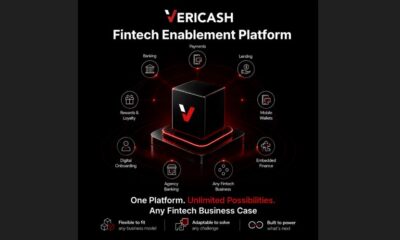
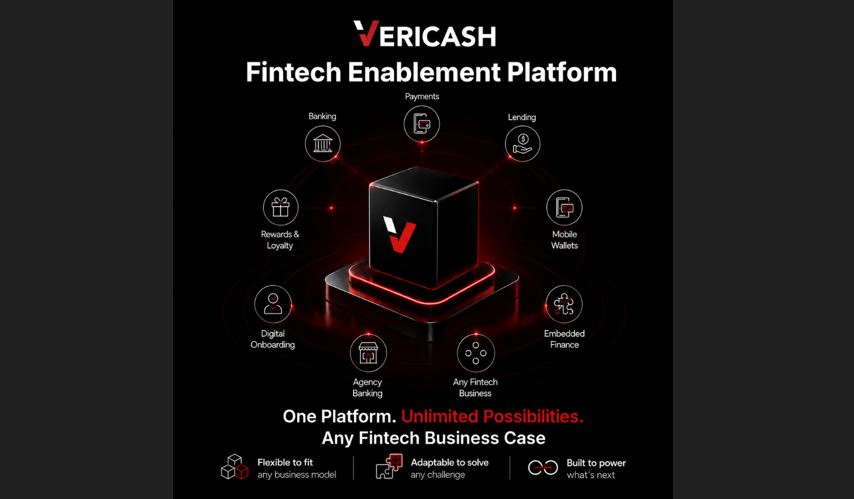
CIT VERICASH Recognized as Best Digital Financial Services Platform of 2026 by Global Business Outlook

Business
Comsol enters wholesale 5G home broadband market with backing from new shareholders

Business
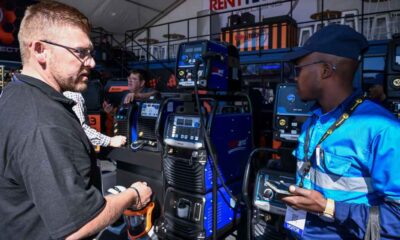
Electra Mining Africa: Showcasing the Technologies Shaping the Future of Industry

More than 1,000 exhibitors, technical seminars, industry forums and networking opportunities will bring together the people, products and ideas shaping industrial progress across Africa
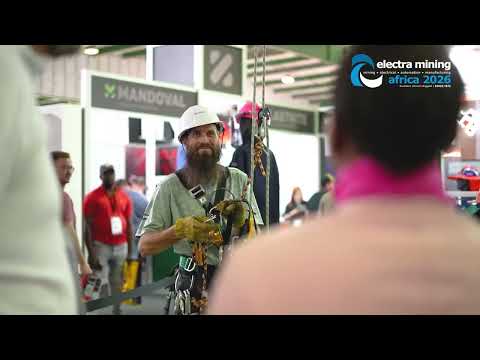

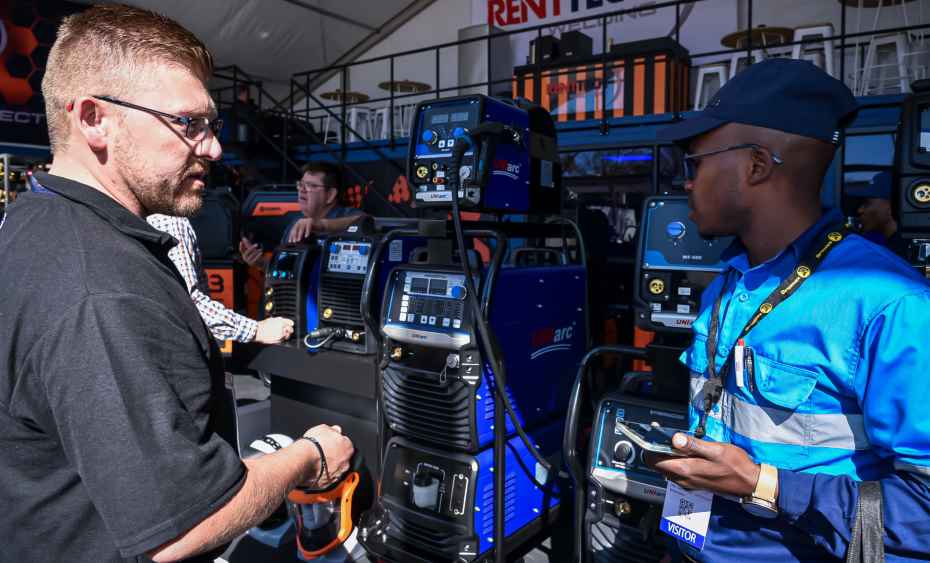
Taking place from 7-11 September at the Johannesburg Expo Centre in Nasrec, Johannesburg, Electra Mining Africa will once again provide a meeting place for industry. Recognised as one of Africa’s leading industrial exhibitions, the event will bring together more than 1,000 predominantly local exhibitors, together with international companies, country pavilions, industry organisations, technical specialists, business leaders and decision-makers from across mining, manufacturing and related industries.
By bringing together six complementary sectors—mining, manufacturing, automation, electrical and power, transport and related engineering sectors—under one roof, Electra Mining Africa enables visitors to explore how integrated technologies and solutions can improve productivity, safety and operational performance. The exhibition provides a unique opportunity to compare products, engage directly with technical experts and discover how innovations from different sectors are increasingly working together to support smarter industrial operations.
Reflecting continued industry confidence, Electra Mining Africa has expanded its footprint for the 2026 edition, growing by 4,000m² to a record 44,000m² of net exhibition space across six indoor exhibition halls and expanded outdoor display areas.
Visitors will have the opportunity to explore solutions ranging from large-scale mining equipment and industrial machinery to automation systems, artificial intelligence (AI), robotics, digital manufacturing, predictive maintenance technologies, power solutions and advanced engineering services. The exhibition also features pumps, valves, welding and fabrication equipment, safety solutions, personal protective equipment (PPE), tools, components and specialist industrial services.
Electra Mining Africa has become an important business platform for companies serving markets across Africa. At the previous edition, industry professionals from 58 countries were represented, reflecting the exhibition’s growing international reach and its role in connecting manufacturers, technology suppliers, distributors, buyers and decision-makers from across the continent and beyond. For many exhibitors, the exhibition provides opportunities to strengthen customer relationships, meet prospective buyers, appoint distribution partners and explore new business opportunities. For visitors, it offers access to both internationally recognised brands and locally developed technologies designed to address the operational requirements of African industry.
Electra Mining Africa brings together the technologies, expertise and industry relationships that help organisations make informed decisions
Beyond the exhibition floor
Electra Mining Africa offers an extensive programme of technical knowledge sharing, professional development and industry collaboration. Free-to-attend seminars hosted by the Southern African Institute of Mining and Metallurgy (SAIMM) will explore practical operational challenges and emerging technologies, while the Society for Automation Instrumentation Mechatronics and Computer Engineering (SAIMC) will present specialist workshops on advances in automation and mechatronics. WiMSA’s Women in Mining workshop will provide a forum for discussion around leadership, opportunity and professional development, and the Lifting Equipment Engineering Association of South Africa (LEEASA) will host its two-day National Conference, bringing together industry professionals to share knowledge and discuss developments affecting the sector.
New for 2026, the SA Institution of Mechanical Engineering (SAIMechE) Skills and Career Hub will strengthen collaboration between industry and the education and training sector, encouraging conversations around future workforce requirements, skills development and innovation. Visitors will also be able to experience the Geological Society of South Africa (GSSA) Explorers Pitch, where finalist student teams present their mineral exploration projects to an expert industry judging panel before the winning team is announced.
Also taking place during Electra Mining Africa are the New Products and Innovation Awards, which recognise outstanding achievements by both local and international exhibitors. Adjudicated by the South African Capital Equipment Export Council (SACEEC), entries are evaluated against a comprehensive set of criteria, including innovation, engineering excellence, research and development, product quality, technical expertise and the practical value each solution delivers to industry. The winners are announced during the exhibition, recognising companies whose products and innovations are advancing technology, performance and industrial application.
“Industrial businesses are facing increasingly complex challenges that cannot be solved in isolation. Electra Mining Africa brings together the technologies, expertise and industry relationships that help organisations make informed decisions, identify practical solutions and build partnerships that support long-term growth. That’s what makes the exhibition such an important meeting place for industry, not only in South Africa but for businesses operating across the African continent,” says Charlene Hefer, Portfolio Director at Montgomery Group, organisers of Electra Mining Africa..
Industry professionals wishing to attend Electra Mining Africa can register (https://apo-opa.co/4xthQPH) as a Standard Visitor free of charge. There is also an option to upgrade to a Diamond Select Visitor.
Distributed by APO Group on behalf of Montgomery Group Africa.