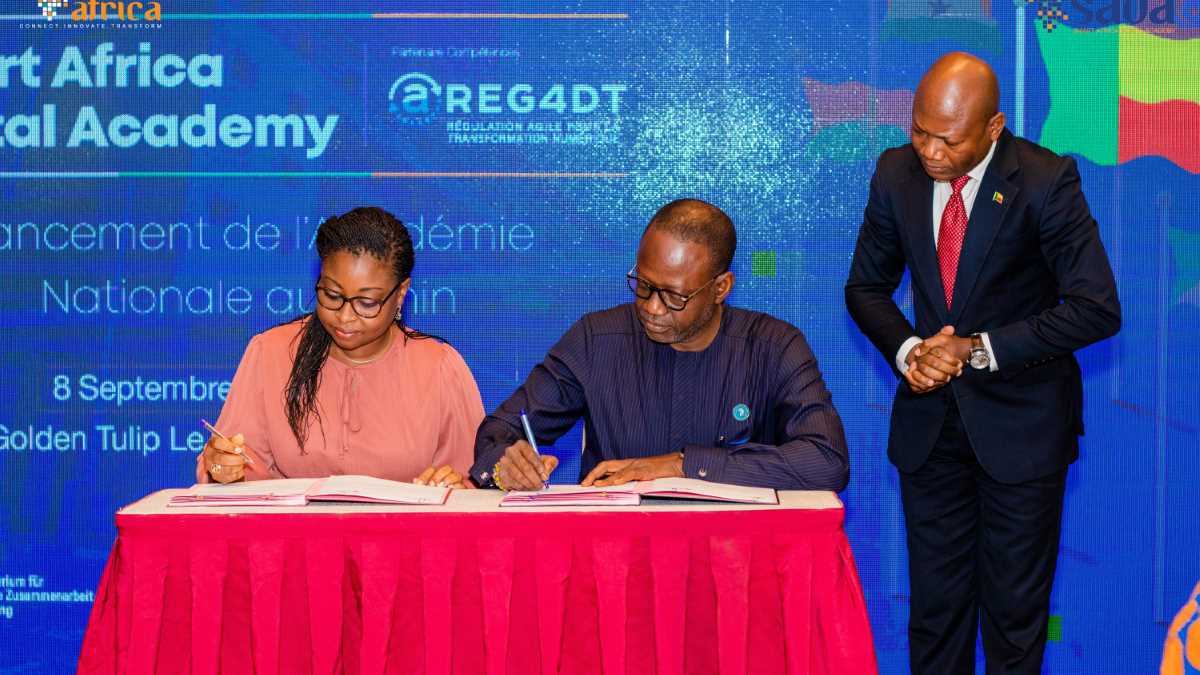
The launch concurred with the signing of a Memorandum of Understanding (MOU) between the Smart Africa Alliance Benin’s Ministry of Digital Affairs and Digitalisation
COTONOU, Benin, September 9, 2022/APO Group/ —
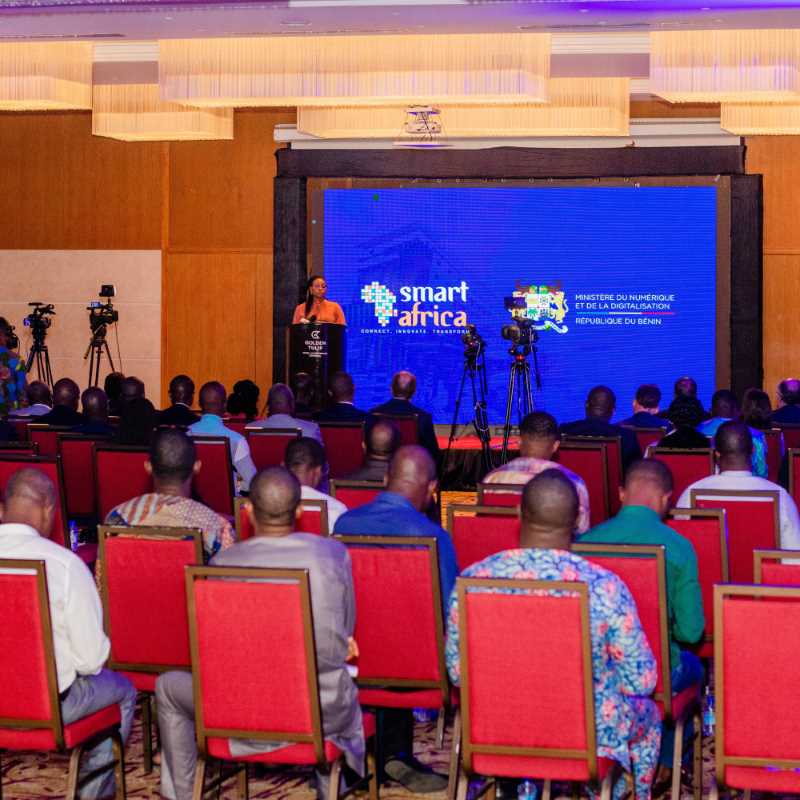
Smart Africa’s capacity building arm, the Smart Africa Digital Academy (SADA) (https://SADA.atingi.org/) in partnership with Benin’s Ministry of Digital Affairs and Digitalisation have launched a national digital academy in the country, demonstrating yet again the initiative’s unrelenting effort to boost digital skills on the African continent.
The launch concurred with the signing of a Memorandum of Understanding (MOU) between the Smart Africa Alliance Benin’s Ministry of Digital Affairs and Digitalisation, part of which is provision, by SADA, of specific capacity building interventions related to the country’s priorities in the ICT sector.
The launch of SADA in Benin follows launches in other countries namely: Rwanda, Ghana and The Republic of Congo. The creation and rollout of this initiative across the continent comes against the backdrop of an immense gap in digital skills in the midst of an ever-evolving digital world.
“SADA is a direct response to digital skills shortage with which Benin and Africa in general are confronted. As one of the most active countries of the Smart Africa alliance, we are extremely pleased to implement SADA in Benin and advance the nation digital skills, in close collaboration with our partners” commented Mr. Lacina Koné, the Director General and CEO of Smart Africa.
SADA is a direct response to digital skills shortage with which Benin and Africa in general are confronted
SADA initiative in Benin will be an essential backing to the country’s digital sector strategy, which is to transform Benin into West Africa’s digital services platform through means including human resources with the necessary capacities to drive Benin’s sustainable development. SADA Benin will encompass a range of initiatives such as advanced trainings in ICT through a training of trainer approach, executive training and teachers’ skills. As part of the SADA Benin framework, and in the same week of the SADA launch, 40 Master trainers will be trained in Artificial Intelligence and Cybersecurity and will train other local trainers as part of the extension of this initiative.
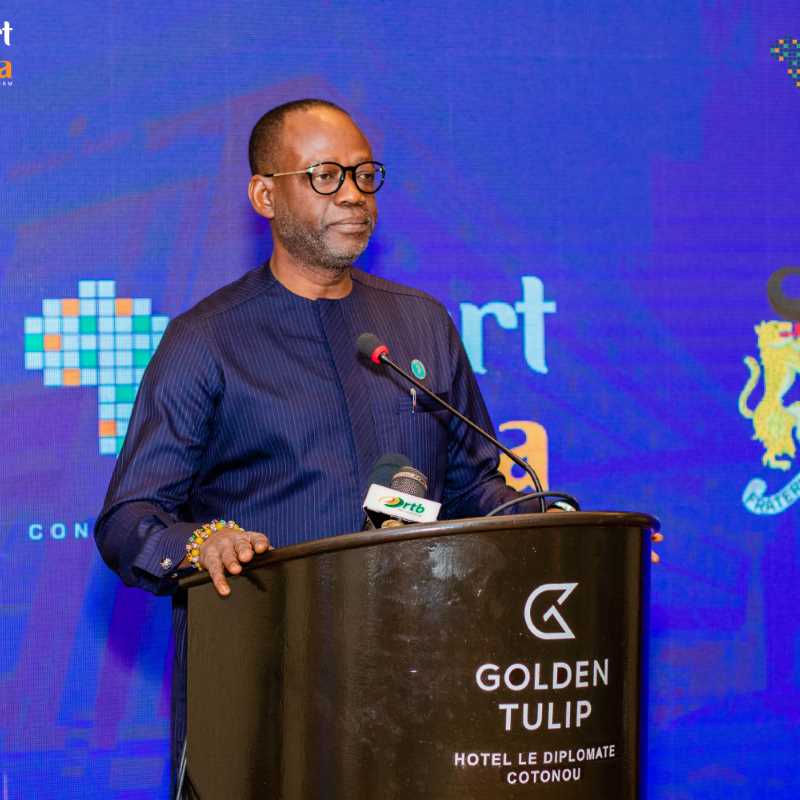
Hon. Aurélie Adam Soulé, Minister of Digital Affairs and Digitalisation said: “SADA is an instrument, a platform that will allow us to take new initiatives and strengthen the initiatives that have already been taken by the Republic of Benin within the framework of its action program and to open perspectives on other areas of cooperation and capacity building. This MoU signature is for me, a very important step to scale up.”
As a pan-African dynamic learning ecosystem, SADA aims to improve digital skills qualifications, employability, and meet the emerging talent needs of African citizens. The national digital academy will support the uniquely identified digital skills priority needs at the national level. Furthermore, such national digital academies will soon be rolled out in Côte d’Ivoire, Burkina Faso, Tunisia, Kenya and the Democratic Republic of Congo, Djibouti and Sierra Leone.
SADA is also embarking on two new programs to provide digital skills for African youth, entrepreneurs and citizens in general, for them to thrive in the global technology ecosystem. The SADA for youth and entrepreneurs will help increase the digital technology competence, reduce unemployment, and increase the digital entrepreneurship capabilities for youth in Africa; while the SADA Digital Literacy will help all African citizens to be digitally literate.
Since its start of operation in August 2020, focusing on the Capacity Building for Decision Makers (CBDM) and the National Digital Academy modules, SADA has trained about 3,000 policy and decision-makers across 26 countries in trending digital transformation and emerging technology related topics including Artificial Intelligence Use Cases, Digital Economy, 5G Connectivity, Data Protection & Privacy, Rural Broadband Policies, Security Technologies, Regulatory and Innovative Sandboxing Environments, Data Centers and Cloud, Digital Identity for Underserved, ePayment, etc. The objective is to reach over 22,000 trained beneficiaries by 2023, supported by the SADA In-country implementation wave.
Distributed by APO Group on behalf of Smart Africa Digital Academy.
The Africa Debate 2026 will provide a platform for this essential, era-defining discussion, convening leaders to explore how Africa and its partners can build more balanced, resilient and sustainable models of cooperation
LONDON, United Kingdom, February 5, 2026/APO Group/ –As African economies assert greater agency in a rapidly evolving global order, Invest Africa (www.InvestAfrica.com) is delighted to announce The Africa Debate 2026, its flagship investment forum, taking place at the historic Guildhall in London on 3 June 2026.
Now in its 12th year, The Africa Debate has established itself as London’s premier platform for African investment dialogue since launching in 2014, convening over 800 global decision-makers annually to shape the future of trade, finance, investment, and development across the continent.
Under the theme “Redefining Partnership: Navigating a World in Transition”, this year’s forum will focus on Africa’s response to global economic realignment with greater agency, ambition and economic sovereignty.
The Africa Debate puts Africa’s priorities at the centre of the conversation, moving beyond traditional narratives to focus on ownership, resilience and long-term value creation.
“Volatility is not new to Africa. What is changing is the opportunity to respond with greater agency and ambition,” says Invest Africa CEO Chantelé Carrington.
“This year’s edition of The Africa Debate asks how we strengthen economic sovereignty — from access to capital and investment to financial and industrial policy — so African economies can take greater ownership of their growth. Success will be defined by how effectively we turn disruption into leverage and partnership into shared value.”
The Africa Debate 2026 will provide a platform for this essential, era-defining discussion, convening leaders to explore how Africa and its partners can build more balanced, resilient and sustainable models of cooperation.
Key challenges driving the debate
Core focus areas for this year’s edition of The Africa Debate include:
This year’s edition of The Africa Debate asks how we strengthen economic sovereignty — from access to capital and investment to financial and industrial policy
Global Realignment & New Partnerships
How shifting geopolitical and economic power structures are reshaping Africa’s global partnerships, trade dynamics and investment landscape.
Financing Africa’s Future
The growing need to reform the global financial architecture, new approaches to development finance, as well as the strengthening of market access and financial resilience of African economies in a changing global system.
Strategic Value Chains
Moving beyond primary exports to build local value chains in critical minerals for the green economy. Also addressing Africa’s energy access gap and mobilising investment in renewable and transitional energy systems.
Digital Transformation & Technology
Unlocking growth in fintech, AI and digital infrastructure to drive productivity, inclusion, and the next phase of Africa’s economic transformation.
The Africa Debate 2026 offers a unique platform for high-level dialogue, deal-making, and strategic engagement. Attendees will gain actionable insights from leading policymakers, investors and business leaders shaping Africa’s economic future, while building strategic partnerships that define the continent’s next growth phase.
After a thorough internal and external investigation, along with a disciplinary hearing chaired by Sbongiseni Dube, CLG (https://CLGglobal.com) has made the decision to terminate Zion Adeoye due to serious personal and professional conduct violations. This process adhered to the Code of Good Practice of the Labour Relations Act, ensuring fairness, transparency, and compliance with South African law.
Mr. Adeoye has been held accountable for several serious offenses, including:
Making malicious and defamatory statements against colleagues
Extortion
Intimidation
Fraud
Misuse of company funds
Theft and misappropriation of funds
Breach of fiduciary duty
Mismanagement
His actions are in direct contradiction to our firm’s core values. We do not approve of attorneys spending time in a Gentleman’s Club. CLG deeply regrets the impact this situation has had on our colleagues and continues to provide full support to those affected.
We want to express our gratitude to those who spoke up and to reassure everyone at the firm of our unwavering commitment to maintaining a respectful workplace. Misconduct of any kind is unacceptable and will be addressed decisively.
We recognize the seriousness of this matter and have referred it to the appropriate law enforcement, regulatory, and legal authorities in Nigeria, Mauritius, and South Africa. We kindly ask that the privacy of the third party involved be respected.
The International Islamic Trade Finance Corporation (ITFC) Strengthens Partnership with the Republic of Djibouti through US$35 Million Financing Facility
This facility forms part of the US$600 million, three-year Framework Agreement signed in May 2023 between ITFC and the Republic of Djibouti, reflecting the strong and growing partnership between both parties
JEDDAH, Saudi Arabia, February 5, 2026/APO Group/ –The International Islamic Trade Finance Corporation (ITFC) (https://www.ITFC-IDB.org), a member of the Islamic Development Bank (IsDB) Group, has signed a US$35 million sovereign financing facility with the Republic of Djibouti to support the development of the country’s bunkering services sector and strengthen its position as a strategic regional maritime and trade hub.
The facility was signed at the ITFC Headquarters in Jeddah by Eng. Adeeb Yousuf Al-Aama, Chief Executive Officer of ITFC, and H.E. Ilyas Moussa Dawaleh, Minister of Economy and Finance in charge of Industry of the Republic of Djibouti.
The financing facility is expected to contribute to Djibouti’s economic growth and revenue diversification by reinforcing the competitiveness and attractiveness of the Djibouti Port as a “one-stop port” offering comprehensive vessel-related services. With Red Sea Bunkering (RSB) as the Executing Agency, the facility will support the procurement of refined petroleum products, thus boosting RSB’s bunkering operations, enhancing revenue diversification, and consolidating Djibouti’s role as a key logistics and trading hub in the Horn of Africa and the wider region.
We look forward to deepening this partnership, creating new opportunities, and leveraging collaborative programs to advance key sectors and drive sustainable economic growth
Commenting on the signing, Eng. Adeeb Yousuf Al-Aama, CEO of ITFC, stated:
“This financing reflects ITFC’s continued commitment to supporting Djibouti’s strategic development priorities, particularly in strengthening energy security, port competitiveness, and trade facilitation. We are proud to deepen our partnership with the Republic of Djibouti and contribute to sustainable economic growth and regional integration.”
H.E. Ilyas Moussa Dawaleh, Minister of Economy and Finance in charge of Industry of the Republic of Djibouti, commented: “Today’s signing marks an important milestone in the development of Djibouti’s bunkering services and reflects our strong and valued partnership with ITFC, particularly in the oil and gas sector. This collaboration supports our ambition to position Djibouti as a regional hub for integrated maritime and logistics services. We look forward to deepening this partnership, creating new opportunities, and leveraging collaborative programs to advance key sectors and drive sustainable economic growth.”
This facility forms part of the US$600 million, three-year Framework Agreement signed in May 2023 between ITFC and the Republic of Djibouti, reflecting the strong and growing partnership between both parties.
Since its inception in 2008, ITFC and the Republic of Djibouti have maintained a strong partnership, with a total of US$1.8 billion approved primarily supporting the country’s energy sector and trade development objectives.
Distributed by APO Group on behalf of International Islamic Trade Finance Corporation (ITFC).
We use cookies on our website to give you the most relevant experience by remembering your preferences and repeat visits. By clicking “Accept”, you consent to the use of ALL the cookies.
This website uses cookies to improve your experience while you navigate through the website. Out of these, the cookies that are categorized as necessary are stored on your browser as they are essential for the working of basic functionalities of the website. We also use third-party cookies that help us analyze and understand how you use this website. These cookies will be stored in your browser only with your consent. You also have the option to opt-out of these cookies. But opting out of some of these cookies may affect your browsing experience.
Necessary cookies are absolutely essential for the website to function properly. These cookies ensure basic functionalities and security features of the website, anonymously.
Cookie
Duration
Description
cookielawinfo-checkbox-analytics
11 months
This cookie is set by GDPR Cookie Consent plugin. The cookie is used to store the user consent for the cookies in the category "Analytics".
cookielawinfo-checkbox-functional
11 months
The cookie is set by GDPR cookie consent to record the user consent for the cookies in the category "Functional".
cookielawinfo-checkbox-necessary
11 months
This cookie is set by GDPR Cookie Consent plugin. The cookies is used to store the user consent for the cookies in the category "Necessary".
cookielawinfo-checkbox-others
11 months
This cookie is set by GDPR Cookie Consent plugin. The cookie is used to store the user consent for the cookies in the category "Other.
cookielawinfo-checkbox-performance
11 months
This cookie is set by GDPR Cookie Consent plugin. The cookie is used to store the user consent for the cookies in the category "Performance".
viewed_cookie_policy
11 months
The cookie is set by the GDPR Cookie Consent plugin and is used to store whether or not user has consented to the use of cookies. It does not store any personal data.
Functional cookies help to perform certain functionalities like sharing the content of the website on social media platforms, collect feedbacks, and other third-party features.
Performance cookies are used to understand and analyze the key performance indexes of the website which helps in delivering a better user experience for the visitors.
Analytical cookies are used to understand how visitors interact with the website. These cookies help provide information on metrics the number of visitors, bounce rate, traffic source, etc.
Advertisement cookies are used to provide visitors with relevant ads and marketing campaigns. These cookies track visitors across websites and collect information to provide customized ads.