Connect with us

Business

Saudi Arabia to Take Latest Giant LEAP into New World Economies with Multi-Sector Future Technology Event


Published

on

Saudi Arabia

The event will host over 700 billionaire investors, astronauts, technocrats, and sporting superstars turned tech investors across LEAP’s various stages housing 15 conferences

RIYADH, Kingdom of Saudi Arabia, January 16, 2023/APO Group/ — 

100,000-plus participants anticipated as world’s most visionary tech event gets even bigger with globe’s leading disruptors heading to Kingdom in February 2023; Billionaire investors, technocrats, tech integrators, and sporting royalty from 50 countries among stellar 700-plus talent line-up.

After breaking a host of industry records during its 2022 launch, LEAP – the world’s most visionary technology event – returns to Riyadh in February with an even bigger format promising to attract the greatest digital thinkers and doers to empower the entrepreneurs, ignite innovation and leap into new worlds.

An expected 100,000 global tech innovators and disruptors will gather at the Riyadh Front Exhibition & Conference Centre from February 6-9, 2023, to unveil and accelerate a huge platform of breakthrough products and ideas, and forge partnerships that will drive new worldwide collaborations leveraging technology’s limitless potential.

Taking place alongside LEAP, the inaugural DeepFest – in partnership with the Saudi Data & AI Authority (SDAIA) – will run from February 7-9 and gather drivers of the global Artificial Intelligence eco-system to unveil life-changing, multi-sector initiatives in a thought-leadership conference and sector-specific tracks, trainings, live-demos, start-up pitches and an exhibition featuring companies transforming the world we live and work in. Support comes from the Ministry of Communications and Information Technology (MCIT), which is powering LEAP in conjunction with Tahaluf – a strategic joint venture co-owned by Informa PLC and the SAFCSP.

Global business leaders, technocrats and experts will take to LEAP’s main stage to bring new perspectives to pressing world issues, including climate emergency and sustainable development, health crises, equality, inclusion, belonging and diversity. They will discuss the leadership strategies of tech giants and unicorns, explore web3’s business potential, and look to redefine governance paradigms for privacy, safety, and security.

The event will host over 700 billionaire investors, astronauts, technocrats, and sporting superstars turned tech investors across LEAP’s various stages housing 15 conferences.

With over 900 exhibitors confirmed for 2023, LEAP has drawn a powerful international line-up, some of which will take part in new mega tent displays and include world-leading names from throughout the USA, Middle East, Levant, North Africa, the Sub-continent, Europe, and Scandinavia. They include Saudi Arabian heavyweights STC, NEOM, Saudi Aramco, Mobily and ELM lining up alongside an international cadre of the biggest names in the tech business, including Snapchat, Google Cloud, Amazon Web Services, Visa, Alibaba cloud, Ericsson, Huawei, Dell, Nokia, SAP, Microsoft, Cisco, and IBM.

Some of LEAP’s speakers this year include football legend and tech investor Thierry Henry; billionaire venture capitalist Tim Draper; two-time World Boxing Heavyweight Champion Anthony Joshua; Pekka Lundmark, President and CEO of Nokia; Borje Ekholm, President and CEO of Ericsson; Steve Bartlett, the youngest Dragon’s Den investor, podcaster, and founder of Social Chain; Gitanjali Rao, the 17-year-old American inventor and TIME’s first-ever Kid of the Year; Susan Kilrain, NASA astronaut and the second woman and youngest person to pilot the Space Shuttle; and Sian Proctor, an explorer and mission pilot for the Inspiration4 all-civilian orbital mission to space. The scheduled investors control a combined and unprecedented US $1.6 trillion fund pool.

LEAP is the window to tomorrow’s world, an event which powers the future and empowers those looking to shape it

“Our rapidly changing world demands we keep pace with appropriate regulation and governance, and we need the best brains in the business to help us navigate a globally appropriate pathway,” said Faisal Al Khamisi, Chairman of the SAFCSP.
A series of precision-focused Orbital Talks at LEAP will lift the lid off new parameters impacting the creative economy, smart cities, 4IR, energy, sustainability, FinTech, HealthTech, retail, education, NFTs and space tech. The LEAP Investor Stage, meanwhile, will see the world’s most sought-after tech investors deep-mine emerging opportunities. Among those scouting potential at LEAP’s Investor Stage will be industry titans GV Ravishankar, Managing Partner of Sequoia Capital India; Tim Ringel, Investor & Advisory Board Member of Adit Ventures; and William Bao Bean, General Partner, SOSV, who will witness first-hand the exhilarating Rocket Fuel Start-up Pitch Competition, where 90 incredible start-ups will compete for a prize pool of more than US$1 million.  LEAP has also launched a Mentorship Scheme where up to 30 creative start-ups can connect with globally experienced experts before, during and after the event.

Themed ‘AI Beyond Imagination’, DeepFest will see thought-leaders, change-makers, big tech, data scientists, innovators, enterprises, academia, start-ups, and innovative business entrepreneurs unveil government AI initiatives and multi-sector innovations through a thought-leadership conference and sector-specific tracks, trainings, live-demos, and innovation sessions. The new conference program this year has tracks for clean tech, the Metaverse, , and women in technology, while the DeepFest exhibition will feature the world’s top tech companies and breakthrough stars.

The Future is Here and Now

Mingling with exhibitors and visitors will be robotic humanoids from Japan and Hong Kong, dancing robots from the USA,  the American innovators of the ‘Space 4 Girls’ weather balloon, which captures flight and low orbit images from space, and the team behind Roybi, the AI powered companions designed to tutor children. They will demo alongside Magic Keys augmented reality, which helps budding musicians learn to play instruments without reading music; the Stage11 music experience, which combines gaming, mixed reality and digital collectables; the South Korean haptic suit that has been integrated into VR games; Italy’s ‘Mirror’, which customises PINKO bags and mints them into NFTs; Interstellar Lab advanced farming technologies; and, from Estonia, the world’s first hydrogen-powered autonomous vehicle.

“These are the 21st century inventors who are presenting the world of living and work – but not as we currently know it,” said Michael Champion, Regional EVP, MEA at Informa Markets, which organises LEAP. “This is an unprecedented and universal exhibitor mix which will send technology advancement into a whole new world-living orbit. LEAP is the window to tomorrow’s world, an event which powers the future and empowers those looking to shape it.”

LEAP has garnered support from numerous leading government and private sector organisations. Strategic partners and sponsors for LEAP23 include NEOM, STC, Saudi Aramco, Mobily, IBM, Microsoft, Ericsson, Huawei, and Najm Insurance. The 2023 edition will also host country pavilions from the United Kingdom, Finland, Japan, Pakistan, Indonesia, Oman and India.  

For more information, please visit http://bit.ly/3kkG2mw

Read more: https://bit.ly/3w6H48j

Distributed by APO Group on behalf of Action Global Communications.

Energy

African Mining Week (AMW) to Unlock Zimbabwe’s $12B Mining Vision Through Direct Investor Partnerships

Published

on

A dedicated country spotlight at African Mining Week 2026 will showcase regulatory reforms and project developments across Zimbabwe’s mining value chain

CAPE TOWN, South Africa, June 25, 2026/APO Group/ –African Mining Week 2026 – The Most Influential Mining Conference in Africa – will connect Zimbabwean regulators and mining stakeholders with global investors to advance partnerships, as the country accelerates efforts to build a $12 billion mining industry by 2030.

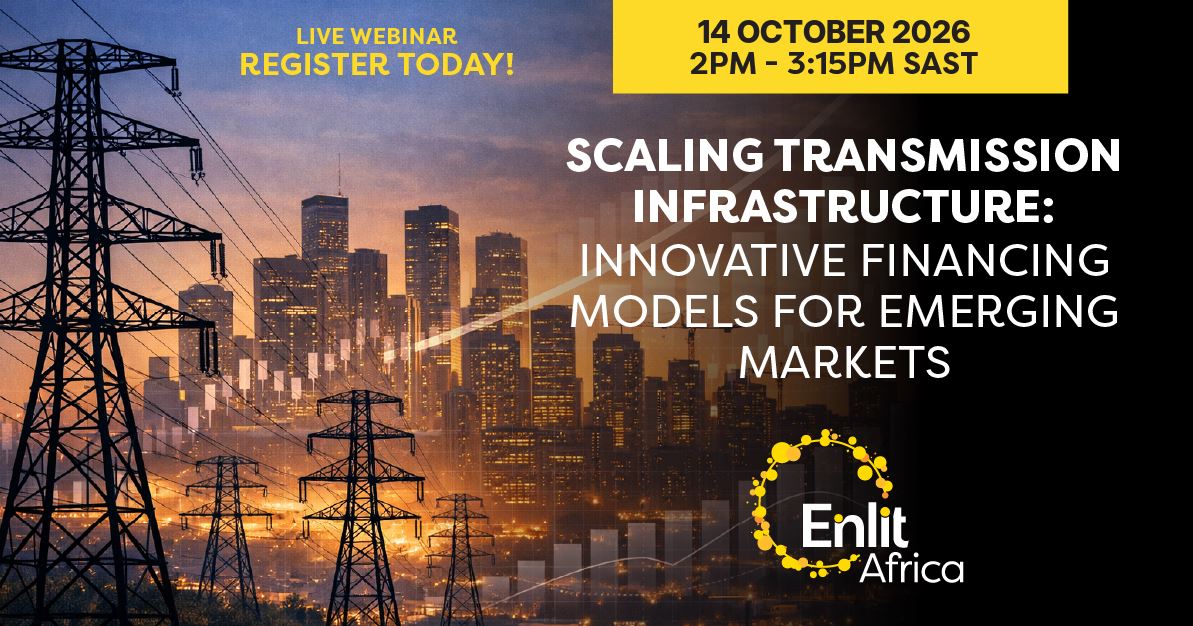
Taking place from October 14 – 16 in Cape Town, AMW 2026 will feature a dedicated Zimbabwe Country Spotlight, showcasing lucrative opportunities across the country’s mining value chain. The country spotlight will feature high-level panel discussions, exclusive networking sessions and project showcases, connecting global investors and service providers with senior decision-makers from the Ministry of Mines and Mining Development of Zimbabwe, the Chamber of Mines of Zimbabwe and leading mining companies operating across the country.

The spotlight comes at a pivotal moment for Zimbabwe, as the country seeks fresh capital to unlock value from more than 60 known mineral occurrences spanning gold, lithium, platinum group metals, chrome, coal and rare earths.

https://apo-opa.co/43Z71HR

In a major move to improve investment competitiveness, Zimbabwe reduced mining-related license and permit fees in May 2026, lowering operational costs for investors while streamlining market participation. Registration fees for dealing in precious stones have been reduced from $15,000 to $10,000, while export permit fees have been cut from $1,875 to $500. New licensing categories – including permits for gold jewellery manufacturing and lithium processing plants – have also been introduced as part of a broader strategy to promote investments across in-country value addition projects. The reduction in fees for beneficiation projects follows the April 2026 introduction of export quotas for lithium concentrates ahead of a planned 2027 ban on concentrate exports. The shift is already reshaping the country’s lithium industry, with Zhejiang Huayou Cobalt achieving Zimbabwe’s first export shipment of lithium sulphate salts in April 2026.

https://apo-opa.co/4w3X7R3

https://apo-opa.co/4uTlYpG


https://apo-opa.co/44ziVZ3


Coming into this picture, AMW 2026’s Zimbabwe Country Spotlight will provide investors with direct insights into these evolving regulatory frameworks, highlighting emerging investment and partnership prospects in lithium processing and across the mining value chain.

Zimbabwe’s gold sector is also positioned for renewed growth amid sustained high global gold prices (averaging $5,000 per ounce). In line with this momentum, Zimbabwe’s sovereign wealth fund, Mutapa Investment Fund, is seeking $250 million to expand gold mining operations. Against this backdrop, AMW 2026 offers a timely platform for investors to engage with one of Africa’s most prospective brownfield gold markets and explore opportunities across exploration, mine expansion and processing infrastructure.

https://apo-opa.co/4eCDMiU


AMW 2026’s strong emphasis on artisanal and small-scale mining (ASM) formalization also aligns closely with Zimbabwe’s national mining development strategy. In May 2026, Zimbabwe certified 300 small-scale miners following completion of training programs safety, compliance and productivity. Supported by funding from Mutapa Gold Resources – a subsidiary of Mutapa Investment Fund – the initiative aims to train and formalize 1,500 ASM players.


https://apo-opa.co/44rhsUH

As the official platform where Africa’s mining opportunities are discussed and maximized, AMW 2026 will provide stakeholders with market intelligence on Zimbabwe’s evolving mining landscape and investment outlook.

Distributed by APO Group on behalf of Energy Capital & Power.

Continue Reading

Business

Afreximbank Africa Trade Report shows Africa can turn geopolitical disruptions into long-term growth opportunity

Published

on

The report highlights Africa’s continued growth resilience despite significant headwinds occasioned by escalating geopolitical tensions and ensuing economic shifts

CAIRO, Egypt, June 24, 2026/APO Group/ –African Export-Import Bank (Afreximbank) (www.Afreximbank.com) has launched the 2026 edition of its flagship African Trade Report themed “Leveraging Geopolitics for Trade and Industrialisation in Global Africa.” The report presents a comprehensive review of trade and economic developments across Africa and globally in the context of the 2025 operating environment, while outlining available strategic options for Africa to transform ongoing geopolitical tensions and associated supply chain disruptions into long-term resilience for growth and shared prosperity across the continent.


The report highlights Africa’s continued growth resilience despite significant headwinds occasioned by escalating geopolitical tensions and ensuing economic shifts. Reflecting the continent’s growth resilience, the report shows that while global economic growth slowed to 3.4 percent in 2025 and is projected to further ease to 3.1 percent in 2026, Africa’s real GDP growth strengthened from 3.4 percent in 2024 to 4.5 percent in 2025. This performance not only surpasses the global average but also highlights the continent’s improving economic fundamentals in a fractured world economic order.

Africa’s merchandise trade also delivered strong performance, expanding by 6.1 percent to reach approximately US$1.5 trillion, while aggregate inflation declined sharply from 21.6 percent in 2024 to 13.1 percent 2025. These outcomes reflect the stabilising effects of prudent macroeconomic management, ongoing policy and institutional reforms, and the countercyclical interventions of development finance institutions across the continent.

Commenting on the Africa Trade Report’s findings, Dr Yemi Kale, Group Chief Economist and Managing Director of Research and Trade Intelligence at Afreximbank, said:

By strategically leveraging these shifts, Africa can build a more resilient, competitive and inclusive economic future

Africa stands at a critical juncture. Geopolitical tensions and economic fragmentation are reshaping global trade patterns, but they also present a historic opportunity for the continent. By strategically leveraging these shifts, Africa can build a more resilient, competitive and inclusive economic future.

“It is imperative for the continent to act decisively to strengthen regional value chains, deepen industrial capacity, expand access to trade finance, and accelerate continental integration. Through coordinated policy action, strategic infrastructure investment, and stronger development finance institutions, Africa can build a more resilient, inclusive, and value-added trade ecosystem. Africa cannot afford to delay.”

The report further highlights that Africa’s export performance remains constrained by a persistent trade finance gap, estimated at approximately US$74 billion in 2025. The challenge is exacerbated by limited foreign exchange liquidity and the continued decline in correspondent banking relationships, factors that restrict the continent’s capacity to fully realise its trade and industrial potential.

At the same time, evolving shipping routes and prolonged disruptions to global logistics networks continue to extend delivery timelines and increase freight and trading costs. These pressures are particularly acute for African economies that remain heavily reliant on imported inputs and external markets, even as global supply chains increasingly reconfigure toward resilience, diversification, and emergence of alternative production hubs.

The report also outlines several strategic priorities, including the accelerated implementation of the African Continental Free Trade Area (AfCFTA), the expansion of digital payments infrastructure through the Pan-African Payment and Settlement System (PAPSS), and coordinated reforms to the global financial architecture. It further underscores the growing role of African financial institutions in strengthening economic resilience. Afreximbank, a founding member of the Alliance of African Multilateral Financial Institutions (AAMFI), disbursed US$17.5 billion in 2024 and is working to double intra-African trade finance by 2026. Meanwhile, Pan African Payment and Settlement System (PAPSS) is already helping to reduce transaction costs and lessen reliance on foreign currencies across the continent.

As geopolitical tensions continue to reshape global supply chains and trade patterns, the continent’s ability to leverage these shifts will depend on strengthening industrial ecosystems, expanding intra-African trade, and sustaining coordinated financial support. Ultimately, a combination of adaptive policy frameworks, strategic trade positioning, and robust direct foreign investment interventions will be central to driving a resilient, inclusive, and sustainable industrialisation pathway for Global Africa. The imperative now is to act with ambition and urgency. This would require accelerating the implementation of the African Continental Free Trade Area (AfCFTA), expanding intra-African trade finance, strengthening transport and logistics infrastructure, and deepening digital payment systems through the Pan-African Payment and Settlement System (PAPSS).

The full report can be downloaded here:  https://apo-opa.co/4xNkbFx

Distributed by APO Group on behalf of Afreximbank.


Continue Reading

Business

Islamic Development Bank (IsDB) Institute Strengthens Global Partnerships through Strategic Bilateral Engagements at 2026 Group Annual Meetings

Published

on

The meetings reaffirmed IsDBI’s commitment to advancing Islamic economics and finance as a catalyst for sustainable development, innovation, financial inclusion, and economic transformation across Member Countries and beyond

BAKU, Azerbaijan, June 24, 2026/APO Group/ –The Islamic Development Bank Institute (IsDBI) (https://IsDBInstitute.org/) successfully conducted a series of bilateral meetings with government institutions, multilateral organizations, financial regulators, academic institutions, development agencies, and industry leaders on the sidelines of the 2026 IsDB Group Annual Meetings in Baku, Azerbaijan.


The meetings reaffirmed IsDBI’s commitment to advancing Islamic economics and finance as a catalyst for sustainable development, innovation, financial inclusion, and economic transformation across Member Countries and beyond.

The engagements covered a wide spectrum of strategic themes, including Islamic finance ecosystem development, regulatory and legislative reform, capacity building, sukuk market development, Islamic social finance, digital transformation, fintech, sustainable finance, waqf innovation, and knowledge partnerships.

Among the key engagements were discussions with representatives from the Governments of Tajikistan, Libya, Maldives, Türkiye, Ethiopia, and Sierra Leone on strengthening Islamic finance ecosystems through technical assistance, regulatory enhancement, and institutional capacity development.

The Institute also met with leading international organizations and standard-setting bodies, including the Islamic Financial Services Board (IFSB), AAOIFI, the Eurasian Development Bank, and the Islamic Microfinance Development Fund (FDMI). The meetings explored avenues for collaboration in research, standards development, capacity building, and strategic initiatives aimed at broadening the global reach and impact of Islamic finance.

Several meetings focused on innovation and emerging opportunities, including discussions with Rosatom State Corporation on sustainable financing solutions and sukuk structures, Islamic Money Australia on digital Islamic banking models, and INCEIF University on Islamic social finance data, waqf tokenization, and applied research collaboration.

The Institute also explored partnerships with organizations from Brazil, Palestine, Somalia, Senegal, Djibouti, and the private sector to advance knowledge dissemination, capacity-building programs, blended Islamic finance solutions, cash waqf digitalization initiatives, and investment-related research.

Commenting on the outcomes of the engagements, the Institute’s team, led by Acting Director General, Dr. Sami Al-Suwailem, noted that the meetings reflected the growing global interest in leveraging Islamic economics and finance to address contemporary development challenges and unlock new opportunities for inclusive and sustainable growth.

The discussions generated a pipeline of follow-up initiatives, including technical assistance programs, joint research projects, capacity-building activities, policy advisory support, and collaborative knowledge-sharing platforms.

The 2026 IsDB Group Annual Meetings provided a valuable platform for strengthening existing partnerships, establishing new strategic relationships, and advancing the Institute’s mission of promoting innovative, impactful, and development-oriented Islamic economics and finance solutions worldwide.

Distributed by APO Group on behalf of Islamic Development Bank Institute (IsDBI).


Continue Reading

Trending

Exit mobile version