Connect with us

Business

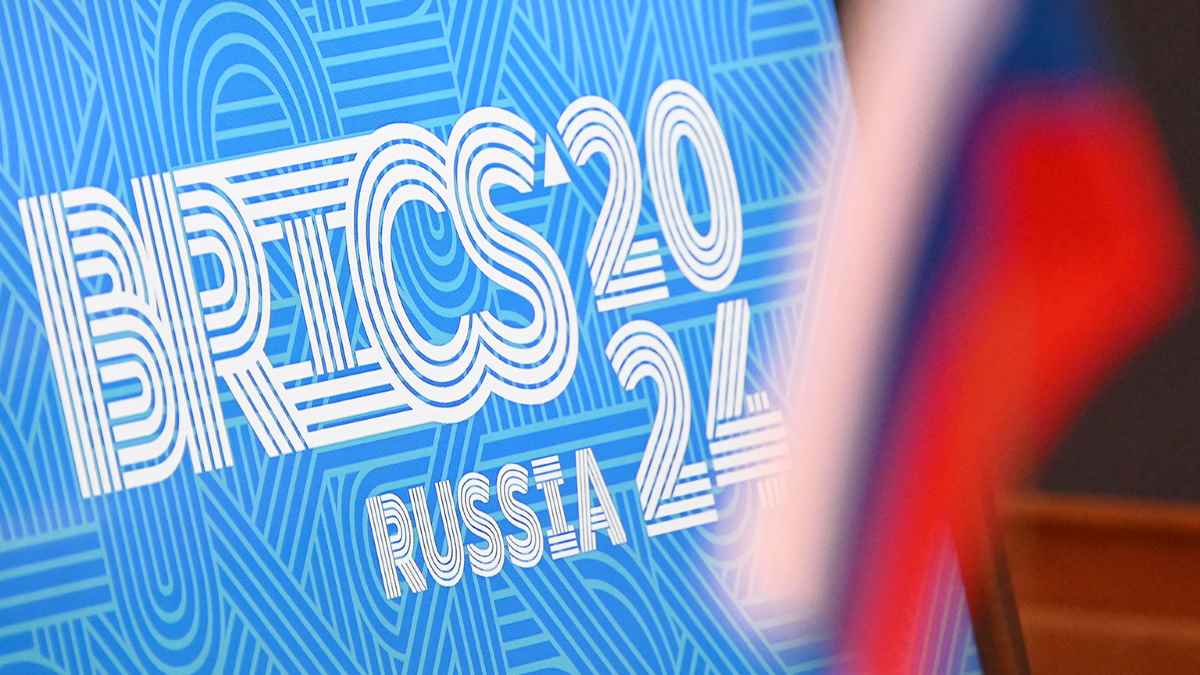
Nornickel’s Palladium Centre Proposed Initiatives for Public-Private Partnerships in Brazil, Russia, India, China, and South Africa (BRICS) Countries

Published

on

BRICS

Nornickel’s Palladium Centre is a leading innovation centre engaged in researching and developing new palladium-based materials for the green economy of the future

MOSCOW, Russia, September 6, 2024/APO Group/ — 

Moscow hosted the BRICS Climate Agenda in Modern Conditions Forum focused on the development of public-private and inter-country partnerships within the BRICS climate agenda. More than 250 delegates took part in the forum, including members of government authorities, the corporate sector, and expert and scientific communities from BRICS countries. The event was held under the auspices of Russia’s chairmanship of BRICS.

One of the key discussion tracks was the role of business in implementing climate projects and developing effective public-private partnership instruments. The discussion participants believe that close interaction between the scientific community, business, and the state is vital to implementing large-scale cross-industry projects, as is cross-country collaboration.

“The BRICS countries have all it takes to lead the global climate agenda: the scientific capabilities and the demand for green technologies. Currently, we have the support of relevant ministries in coordinating interaction with leading scientific teams from BRICS countries to launch joint developments. In addition to Russia, we engage with scientific teams from China and the UAE and plan to further expand the geography of our collaboration. For its part, the Palladium Centre is willing to serve as a pilot platform for testing new initiatives and tools,” said Dmitry Izotov, Head of Nornickel’s Palladium Centre.

The BRICS countries have all it takes to lead the global climate agenda: the scientific capabilities and the demand for green technologies

During the discussion, the Palladium Centre pointed out potential focus areas for promoting public-private collaborations within BRICS. Key initiatives proposed by the Centre include:

– aligning state programmes devoted to scientific research with the current technology needs of the private sector so as to increase the share of in-demand developments

– developing universities by setting up new specialised departments and equipping laboratories to promote competition in the scientific sphere

– promoting interaction between businesses and foreign universities to accelerate the development of applied sciences overall across BRICS countries.

Nornickel’s Palladium Centre is a leading innovation centre engaged in researching and developing new palladium-based materials for the green economy of the future. Its project portfolio includes new technologies for energy transition sectors such as hydrogen, solar, and biofuels. Nornickel plans to leverage the Centre’s capabilities to bring over 100 new materials to market by 2030.

Distributed by APO Group on behalf of Nornickel’s Palladium Centre.

Business

International Oil Companies (IOCs) Build the Case for Mauritania, Senegal, Gambia, Bissau, and Conakry (MSGBC) as Global Gas Hotspot

Published

on

The CEO Regional Leadership Panel at MSGBC Oil, Gas & Power 2026 will examine what is driving investment into the basin’s gas sector and how countries can compete for a larger share of global capital

DAKAR, Senegal, September 28, 2026/APO Group/ –The MSGBC basin is moving from frontier exploration toward commercial gas production, and the investment conversation is shifting with it. The CEO Regional Leadership Panel at MSGBC Oil, Gas & Power 2026 – “Is MSGBC the Next Global Gas Hotspot?” – will bring together senior executives from international oil companies and energy investors to examine the forces driving capital into the region’s gas sector. The panel will also explore how MSGBC countries can compete for a larger share of global investment by monetizing the basin’s emerging gas resources.


The basin now has a producing track record to support its monetization ambitions. The Greater Tortue Ahmeyim (GTA) LNG project, located on the maritime border between Mauritania and Senegal, reached commercial operations in mid-2025, with production ramping up to approximately 2.4 million tons per annum. The milestone marked Senegal’s entry into the global LNG market and established the basin as an emerging source of LNG for international markets.

Mauritania’s gas trajectory shows how the country is pursuing multiple routes to monetization. In July 2026, Saudi developer ACWA Power signed agreements for the 230 MW N’Diago combined-cycle gas turbine plant, the country’s first large-scale gas-fired independent power project, which is expected to use domestic gas from GTA to supply the national grid. Meanwhile, the BirAllah field, estimated to contain around 50 trillion cubic feet of gas resources, remains one of Mauritania’s major undeveloped gas opportunities as the country seeks to advance its development. Together, these projects illustrate Mauritania’s strategy of pursuing both export revenues and domestic industrialization – a dual approach that will be examined by investors at MSGBC 2026.

The basin’s southern frontier will also feature prominently in the discussion. Chevron has entered Guinea-Bissau with exploration interests in offshore Blocks 5B and 6B, while Eni signed an exploration license for The Gambia’s offshore Block A1 and secured reconnaissance permits covering 15 blocks offshore Guinea. Apus Energy, meanwhile, is advancing the Sinapa and Esperança licenses in Guinea-Bissau. The entry and expansion of international and independent operators across the southern MSGBC reinforce the investment case for early positioning across the wider basin.

Anchoring the panel’s discussion will be the development of regional gas infrastructure, including the African Atlantic Gas Pipeline, which is advancing toward an intergovernmental agreement between Nigeria and Morocco targeted for Q4 2026. The approximately 6,900-km pipeline, with planned capacity of up to 30 billion cubic meters per year, would pass through the five MSGBC countries and provide producers with a pipeline-based complement to LNG exports and domestic gas-to-power strategies.

For investors attending MSGBC Oil, Gas & Power 2026, the panel will offer an opportunity to assess how these converging developments are translating into bankable opportunities across the basin – and where the next wave of gas investment could emerge.

Explore opportunities, foster partnerships and stay at the forefront of the MSGBC region’s oil, gas and power sectors. Visit www.MSGBCOilGasAndPower.com to secure your participation at the MSGBC Oil, Gas & Power 2026 conference, December 1-3, Dakar. To sponsor or participate as a delegate, please contact sales@energycapitalpower.com.

Distributed by APO Group on behalf of Energy Capital & Power.


Continue Reading

Business

African Energy Week (AEW) 2026 to Spotlight Venezuela’s New Investment Framework as Global Capital Returns

Published

on

The Venezuela Global Investment Forum at African Energy Week 2026 will examine how regulatory reform, new production participation structures and international partnerships are reshaping the country’s investment landscape

CAPE TOWN, South Africa, September 28, 2026/APO Group/ –Venezuela’s energy sector is entering a period of significant commercial change, with a reworked hydrocarbons framework beginning to translate into new agreements with international energy companies. At African Energy Week (AEW) 2026, the Venezuela Global Investment Forum: Shaping the Renaissance of a Hydrocarbon Giant will bring Venezuelan policymakers, national oil company executives and international investors together to examine the opportunities emerging from that transition.


The forum comes as Venezuela moves from regulatory reform toward implementation. In January 2026, the country enacted a reform of its Organic Hydrocarbons Law, introducing new contractual mechanisms for primary hydrocarbon activities and establishing a framework intended to give private operators greater responsibility for project development. The reform also incorporated Production Participation Contracts (PPCs), creating a structure under which private companies can assume operational and financial responsibility for projects.

Recent transactions show how quickly that framework is being put into practice. In September, Eni signed a 25-year Hydrocarbon PPC with PDVSA for the development of the giant Junín 5 field in the Orinoco Belt, becoming the project’s exclusive operator with responsibility for its technical, financial and commercial management.

Venezuela is demonstrating that regulatory reform has to be matched by real investment, real projects and opportunities for companies to participate across the energy value chain

GeoPark has likewise entered Venezuela through a 25-year PPC covering the Bare Block. The agreement, announced in September, is valued at approximately $1.2 billion and involves an asset with more than 15.7 billion barrels of oil originally in place and more than 1,100 existing wells.

Chevron has also expanded its position. On September 2, the company announced updated terms for its Venezuelan joint ventures, including additional acreage in the Orinoco Belt and plans to invest more than $7 billion over five years. Chevron said the investment program is expected to more than double production from its Venezuelan operations to approximately 600,000 barrels per day compared with 2026 levels.

These developments give the Venezuela Global Investment Forum a timely commercial focus. Delegates will examine the details of the reformed hydrocarbons law, PPC structures, fiscal incentives, mechanisms for international arbitration and other provisions designed to improve the conditions for international capital. The broader investment opportunity is substantial: Venezuela holds more than 300 billion barrels of proven oil reserves and more than 195 trillion cubic feet of natural gas, while the rehabilitation of its energy sector is expected to require substantial investment in production, infrastructure and refining.

The forum will also highlight the South-South dimension of Venezuela’s reopening. For African energy producers, the country’s experience offers areas of potential cooperation around mature-field rehabilitation, infrastructure development, technology transfer, workforce development and investment frameworks for resource monetization. The African Energy Chamber (AEC) has already engaged with Venezuelan institutions on investment promotion, technical knowledge transfer and cooperation across the energy value chain.

“Venezuela is demonstrating that regulatory reform has to be matched by real investment, real projects and opportunities for companies to participate across the energy value chain,” said NJ Ayuk, AEC Executive Chairman. “The Venezuela Global Investment Forum gives investors an opportunity to understand the new framework directly from Venezuelan leaders and to look at where capital, technology and expertise can support the country’s energy recovery while creating stronger South-South partnerships.”

As Venezuela seeks to restore production and rehabilitate infrastructure, the forum will provide a platform for investors to assess the commercial structures underpinning that effort and engage directly with the institutions and companies shaping the next stage of the country’s energy industry.


Distributed by APO Group on behalf of African Energy Chamber.


Continue Reading

Events

RobotPlusPlus Advances Industrial Maintenance with HighMate Series Demonstrated at SMM 2026

Published

on

The systems, presented at SMM 2026 in Hamburg, cut workers’ exposure to hazardous work at height while improving cleaning and surface-treatment efficiency and consistency

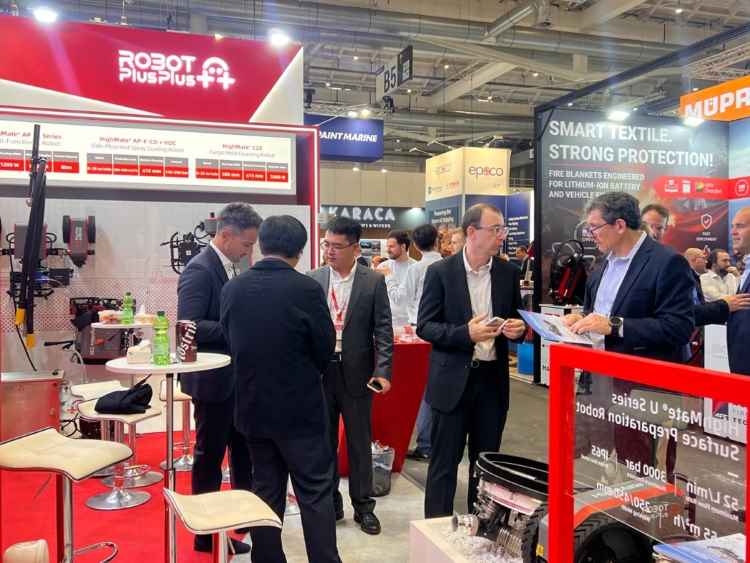
HAMBURG, Germany, September 28, 2026/APO Group/ –RobotPlusPlus (ROBOT++) (https://apo-opa.co/4z56C4f), an engineering-led developer of working-at-height robots, is extending automation across industrial maintenance with its HighMate Series for industrial cleaning and corrosion control, led by the HighMate AP-F-CO Coating Robot+VOC Recovery System. The systems, presented at SMM 2026 in Hamburg, cut workers’ exposure to hazardous work at height while improving cleaning and surface-treatment efficiency and consistency.


We’re excited to show how the HighMate Series is taking on more demanding work in industrial settings

On ships, storage tanks, bridges, and other large steel structures, manual coating often struggles with harmful particles, high paint loss, and reliance on the painter’s skill. The HighMate AP-F-CO Coating Robot+VOC Recovery System handle exactly that. It attaches by permanent magnet, adapts to curvatures as tight as a 3m radius, and carries two spray nozzles with spacing, and travel speed. The flexibility supports even coating that avoids defects like orange peel and sagging, with overspray kept nearly negligible, at a production rate of 300 to 500 square meters per hour. The robot also features a recovery system that collects overspray of the paint during operation, keeping the worksite clean and reducing environmental impact.

The company also demonstrated the HighMate AP Ex Series (https://apo-opa.co/4zn1wR5), an ATEX Zone 1-certified robot with a universal magnetic carrier and interchangeable hydro blasting, cleaning, coating, and abrasive blasting modules delivering 40+ m²/h with over 99% wastewater recovery. Rounding out the display were the C20 Cargo Hold Cleaning Robot (https://apo-opa.co/3VzHBQ0), built for confined cargo-hold spaces, and the HighMate Ultra Series Surface Preparation Robot (https://apo-opa.co/4yZkcWH), whose flexible four-wheel magnetic crawler adapts to complex curved surfaces like ship hulls.

“We’re excited to show how the HighMate Series is taking on more demanding work in industrial settings,” said Dr. Hua-Yang Xu, Founder and CEO of RobotPlusPlus. “With the HighMate AP-F-CO Coating Robot +VOC Recovery System entering international markets for the first time, RobotPlusPlus looks forward to bringing more automation and efficiency to work in high-risk environments.”

Distributed by APO Group on behalf of RobotPlusPlus.


Continue Reading

Trending

Exit mobile version