Connect with us

Business

New Alliance for Special Agro-Industrial Processing Zones commits $3 bn investment to boost African agriculture and food production

Published

on

investment

The Alliance will raise funds through various investment windows for project preparation, project development and construction, and financing for tenant companies

MARRAKECH, Morocco, November 10, 2023/APO Group/ — 

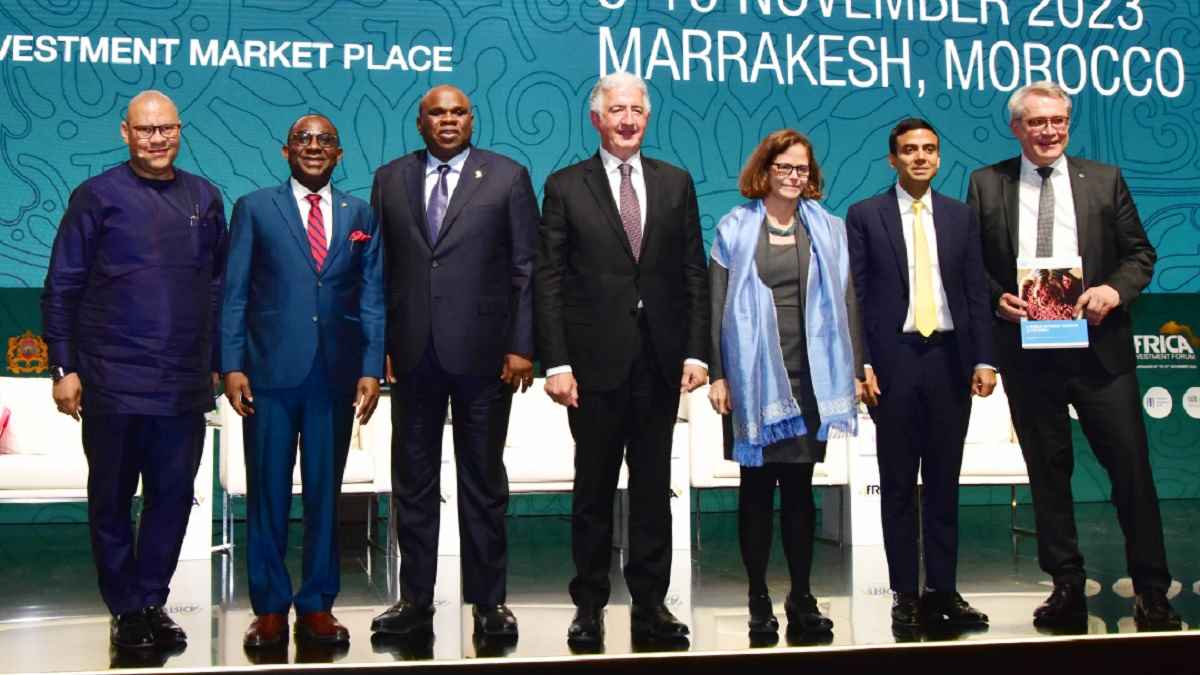
The African Development Bank Group (www.AfDB.org), Afreximbank, Arise Integrated Industrial Platforms, the Islamic Development Bank Group and the United Nations Industrial Development Organization launched at the 2023 Africa Investment Forum Market Days a new private sector-focused Alliance to bridge the critical financing gap in agriculture.

Founding members of a new private-sector focused Alliance for Special Agro-Industrial Processing Zones (SAPZ) have announced $3 billion in new investment to transform Africa’s underdeveloped rural areas into agro-industrial corridors of prosperity.

The Alliance, comprising development financial institutions, the private sector and development-oriented technical partners, will also help streamline the development and delivery of SAPZ projects.

The new commitments consist of $1.1 billion by the African Development Bank Group, $1 billion by Afreximbank, $300 million by the Islamic Development Bank Group (IsDB) and $600 million from Arise Integrated Industrial Platforms (Arise IIP) and its partners.

Dr. Akinwumi A. Adesina, President of the African Development Bank Group, said, “The Alliance will raise funds through various investment windows for project preparation, project development and construction, and financing for tenant companies.”

“By doing so, the Alliance will bridge the critical financing gap, complement existing initiatives, and mobilise resources towards our common goal of enhancing agricultural value addition in Africa”, Adesina added.

The Alliance was launched at the 2023 Africa Investment Forum Market Days¾the continent’s premier investment marketplace¾in Marrakech, Morocco on Wednesday. During the launch session, founding members discussed how the SAPZ model could impact Africa’s agro-industrialisation process.

“The beauty of this Alliance is that it brings together a lot of different, diverse players¾this is just a start and others will join us,” said Dr. Beth Dunford, African Development Bank Vice President for Agriculture, Human and Social Development.

Special Agro-Industrial Processing Zones stimulate structural transformation in agriculture by connecting rural and urban development through the zone’s ecosystem. These zones integrate smallholder farmers into value chains through logistics and infrastructure, linking them to agro-industrial processors and consumer markets.

Across the continent, the African Development Bank has already committed $853 million to develop more than two dozen Special Agro-Industrial Processing Zones in 11 countries

Prof. Benedict Oramah, President and Chairman of the Board of Directors of Afreximbank, welcomed the emergence of the Alliance and suggested that, to attract the private sector, the creation of continental regulatory bodies that countries could respect should be considered. “Projects of this nature are very visible,” he explained.

According to the Alliance members, meeting this financing goal will deliver an additional 15 to 20 SAPZ projects in various countries across the continent and improve administrative, policy and investment incentives.

“Financing alone has never been enough to develop,” said Eng. Hani Sonbol, CEO of the International Islamic Trade Finance Corporation and acting CEO of the Islamic Corporation for the Development of the Private Sector, representing IsDB President Dr. Muhammad Al Jasser. “Strengthening food sovereignty in Africa will require us to think differently in terms of investment. We look for self-sufficiency, climate change and adaptation, and how to attract private sector involvement”, he said.

Arise IIP CEO Gagan Gupta underlined the need for infrastructure around the zones that reflects the need of these communities, including housing, transportation, health and extension services. “These zones rely on the governments for policy frameworks, supporting infrastructure, and training and vocational centres,” he said.

The United Nations Industrial Development Organization (UNIDO) brings on its part to the Alliance a wealth of technical assistance knowledge, practical experience, tools and methodologies.

“We have a lot of experience in developing, planning and implementing industrial parks and special economic zones,” said Gunther Beger, UNIDO Managing Director of the Directorate for Sustainable Development Goals, Innovation and Economic Transformation. “The Alliance presents a completely new approach to transform Africa’s agro-food system. This is a much-needed partnership of financial institutions, public and private sector players,” he added.

Across the continent, the African Development Bank has already committed $853 million to develop more than two dozen Special Agro-Industrial Processing Zones in 11 countries. This investment has attracted $661 million in cofinancing from Bank partners.

Professor Oyebanji Oyelaran-Oyeyinka, Senior Special Advisor to Dr. Adesina, concluded: “SAPZ is a tool designed to achieve the twin objectives of structural transformation and rural development through agro-industrialisation.”

Prior to the panel discussion, Mr. Ryad Mezzour, Minister of Industry and Trade, Kingdom of Morocco, called on large private sector companies to become tenants in SAPZ. “You need a company that can bring the others – that integrates this area.”

Rwanda’s Minister of State for Treasury, Richard Tusabe, said: “Special Agro-Industrial Processing Zones will give us a chance to mass produce the food we need to feed our population. We need to feed our people¾there is no shortcut.”

The Africa Investment Forum draws African heads of government, investors, transaction sponsors and development financial institutions. The Forum also includes boardroom sessions that showcase billions of dollars in agribusiness, transport and energy deals, among other critical sectors, to investors. To learn more about the Africa Investment Forum, click here (www.AfricaInvestmentForum.com/en).

Distributed by APO Group on behalf of African Development Bank Group (AfDB).

Events

As global power structures shift, Invest Africa convenes The Africa Debate 2026 to redefine partnership in a changing world

Published

on

The Africa Debate 2026 will provide a platform for this essential, era-defining discussion, convening leaders to explore how Africa and its partners can build more balanced, resilient and sustainable models of cooperation

LONDON, United Kingdom, February 5, 2026/APO Group/ –As African economies assert greater agency in a rapidly evolving global order, Invest Africa (www.InvestAfrica.com) is delighted to announce The Africa Debate 2026, its flagship investment forum, taking place at the historic Guildhall in London on 3 June 2026.

Now in its 12th year, The Africa Debate has established itself as London’s premier platform for African investment dialogue since launching in 2014, convening over 800 global decision-makers annually to shape the future of trade, finance, investment, and development across the continent.

Under the theme “Redefining Partnership: Navigating a World in Transition”, this year’s forum will focus on Africa’s response to global economic realignment with greater agency, ambition and economic sovereignty.

The Africa Debate puts Africa’s priorities at the centre of the conversation, moving beyond traditional narratives to focus on ownership, resilience and long-term value creation.

“Volatility is not new to Africa. What is changing is the opportunity to respond with greater agency and ambition,” says Invest Africa CEO Chantelé Carrington.

“This year’s edition of The Africa Debate asks how we strengthen economic sovereignty — from access to capital and investment to financial and industrial policy — so African economies can take greater ownership of their growth. Success will be defined by how effectively we turn disruption into leverage and partnership into shared value.”

The Africa Debate 2026 will provide a platform for this essential, era-defining discussion, convening leaders to explore how Africa and its partners can build more balanced, resilient and sustainable models of cooperation.

Key challenges driving the debate

Core focus areas for this year’s edition of The Africa Debate include:

This year’s edition of The Africa Debate asks how we strengthen economic sovereignty — from access to capital and investment to financial and industrial policy

Global Realignment & New Partnerships

How shifting geopolitical and economic power structures are reshaping Africa’s global partnerships, trade dynamics and investment landscape.

Financing Africa’s Future

The growing need to reform the global financial architecture, new approaches to development finance, as well as the strengthening of market access and financial resilience of African economies in a changing global system.

Strategic Value Chains

Moving beyond primary exports to build local value chains in critical minerals for the green economy. Also addressing Africa’s energy access gap and mobilising investment in renewable and transitional energy systems.

Digital Transformation & Technology

Unlocking growth in fintech, AI and digital infrastructure to drive productivity, inclusion, and the next phase of Africa’s economic transformation.

The Africa Debate 2026 offers a unique platform for high-level dialogue, deal-making, and strategic engagement. Attendees will gain actionable insights from leading policymakers, investors and business leaders shaping Africa’s economic future, while building strategic partnerships that define the continent’s next growth phase.

Registration is now open (http://apo-opa.co/46b19gj).

Distributed by APO Group on behalf of Invest Africa.

Continue Reading

Business

Zion Adeoye terminated as Chief Executive Officer (CEO) of CLG due to serious personal and professional conduct violations

Published

on

After a thorough internal and external investigation, along with a disciplinary hearing chaired by Sbongiseni Dube, CLG (https://CLGglobal.com) has made the decision to terminate Zion Adeoye due to serious personal and professional conduct violations. This process adhered to the Code of Good Practice of the Labour Relations Act, ensuring fairness, transparency, and compliance with South African law.

Mr. Adeoye has been held accountable for several serious offenses, including:

  • Making malicious and defamatory statements against colleagues
  • Extortion
  • Intimidation
  • Fraud
  • Misuse of company funds
  • Theft and misappropriation of funds
  • Breach of fiduciary duty
  • Mismanagement

His actions are in direct contradiction to our firm’s core values. We do not approve of attorneys spending time in a Gentleman’s Club. CLG deeply regrets the impact this situation has had on our colleagues and continues to provide full support to those affected.

We want to express our gratitude to those who spoke up and to reassure everyone at the firm of our unwavering commitment to maintaining a respectful workplace. Misconduct of any kind is unacceptable and will be addressed decisively.

We recognize the seriousness of this matter and have referred it to the appropriate law enforcement, regulatory, and legal authorities in Nigeria, Mauritius, and South Africa. We kindly ask that the privacy of the third party involved be respected.

Distributed by APO Group on behalf of CLG.


Continue Reading

Business

The International Islamic Trade Finance Corporation (ITFC) Strengthens Partnership with the Republic of Djibouti through US$35 Million Financing Facility

Published

on

This facility forms part of the US$600 million, three-year Framework Agreement signed in May 2023 between ITFC and the Republic of Djibouti, reflecting the strong and growing partnership between both parties

JEDDAH, Saudi Arabia, February 5, 2026/APO Group/ –The International Islamic Trade Finance Corporation (ITFC) (https://www.ITFC-IDB.org), a member of the Islamic Development Bank (IsDB) Group, has signed a US$35 million sovereign financing facility with the Republic of Djibouti to support the development of the country’s bunkering services sector and strengthen its position as a strategic regional maritime and trade hub.

The facility was signed at the ITFC Headquarters in Jeddah by Eng. Adeeb Yousuf Al-Aama, Chief Executive Officer of ITFC, and H.E. Ilyas Moussa Dawaleh, Minister of Economy and Finance in charge of Industry of the Republic of Djibouti.

The financing facility is expected to contribute to Djibouti’s economic growth and revenue diversification by reinforcing the competitiveness and attractiveness of the Djibouti Port as a “one-stop port” offering comprehensive vessel-related services. With Red Sea Bunkering (RSB) as the Executing Agency, the facility will support the procurement of refined petroleum products, thus boosting RSB’s bunkering operations, enhancing revenue diversification, and consolidating Djibouti’s role as a key logistics and trading hub in the Horn of Africa and the wider region.

We look forward to deepening this partnership, creating new opportunities, and leveraging collaborative programs to advance key sectors and drive sustainable economic growth

Commenting on the signing, Eng. Adeeb Yousuf Al-Aama, CEO of ITFC, stated:

“This financing reflects ITFC’s continued commitment to supporting Djibouti’s strategic development priorities, particularly in strengthening energy security, port competitiveness, and trade facilitation. We are proud to deepen our partnership with the Republic of Djibouti and contribute to sustainable economic growth and regional integration.”

H.E. Ilyas Moussa Dawaleh, Minister of Economy and Finance in charge of Industry of the Republic of Djibouti, commented: “Today’s signing marks an important milestone in the development of Djibouti’s bunkering services and reflects our strong and valued partnership with ITFC, particularly in the oil and gas sector. This collaboration supports our ambition to position Djibouti as a regional hub for integrated maritime and logistics services. We look forward to deepening this partnership, creating new opportunities, and leveraging collaborative programs to advance key sectors and drive sustainable economic growth.”

This facility forms part of the US$600 million, three-year Framework Agreement signed in May 2023 between ITFC and the Republic of Djibouti, reflecting the strong and growing partnership between both parties.

Since its inception in 2008, ITFC and the Republic of Djibouti have maintained a strong partnership, with a total of US$1.8 billion approved primarily supporting the country’s energy sector and trade development objectives.

Distributed by APO Group on behalf of International Islamic Trade Finance Corporation (ITFC).

Continue Reading

Trending

Exit mobile version