The company’s ongoing focus on the SME segment continues to pay off, delivering significant growth in UAE SME signings, up 20% year on year
Our new market entry and expansion is progressing well with major new client wins in Saudi Arabia and strong interest for our newly launched direct-to-merchant services in Egypt
CAPE TOWN, South Africa, March 29, 2024/APO Group/ —
Revenue up 15% (CCY[1]) y/y to USD 490 million in 2023, supported by a 30% (CCY[1]) rise in the total value of consumer payments processed by merchant customers (TPV) across the MEA; Very strong performance in the UAE driven by growing consumer confidence and tourism; payments processed at UAE merchants from domestic consumers[5] up 24% y/y and international payments[6] from UAE tourists and visitors up 55% y/y; Significant growth at SME merchants, with UAE SME merchant volumes up 53% y/y; Excellent new business wins, with the addition of major new UAE merchant customers including Talabat, Moncler and additional branches of Carrefour and Lulu; Underlying EBITDA up 13% to USD 200 million reflecting revenue growth and cost discipline; Merchant signups for newly launched direct-to-merchant services in Egypt reached over 2,000.
Group Financial Summary(USD‘000)
FY 2023
FY 2022[7]
y/y change
Total revenue
490,132
435,535
12.5% (15% ccy[1])
Merchant Services
231,942
180,511
28.5% (31% ccy[1])
Outsourced Payment Services
250,719
242,510
3.4% (5% ccy[1])
Other revenue
7,471
12,514
(40.3)%
Underlying EBITDA[2]
200,330
177,653
12.8%
Underlying EBITDA margin[2]
40.9%
40.8%
10bps
Profit for the period
66,507
79,154
(16.0)%
Underlying free cash flow[2]
95,623
81,779
16.9%
Cash flow from operating activities
181,347
119,202
52.1%
Leverage[3]
0.6x
0.7x
(0.1)x
Network International Holdings Plc (LSE:NETW) (“Network” or the “Company”) today announced its financial results for the year ended 31 December 2023. The full Annual Report can be found at https://apo-opa.co/3IXLncr
Nandan Mer, Chief Executive Officer, commented:
“Network delivered a robust performance in 2023. Network’s revenue in 2023 increased 15% in constant currency, demonstrating the resilience of our business as well as the very strong underlying growth of our home market in the UAE, despite challenging macro-economic conditions in some of our markets across Africa which impacted consumer spending and customer outsourcing.
We continued to make strides with our strategic focus on high-growth segments such as SME, online and hospitality, enabled by targeted technology investments and industry breadth of payment acceptance. Our new market entry and expansion is progressing well with major new client wins in Saudi Arabia and strong interest for our newly launched direct-to-merchant services in Egypt.”
Strong financial performance
Network delivered revenue of USD 490 million in 2023 up 13% (15% in constant currency) compared to the same period last year, driven by stellar performance from the Middle East, with Merchant Services up 28% (31% in constant currency) and Outsourced Payment Services up 3% (5% in constant currency). The Middle East witnessed significant growth in the value of merchant payments processed from domestic consumers and international visitors, increasing 24% and 55% year on year respectively, reflecting the UAE’s resilient domestic consumer spending and strong influx of tourists in addition to the strength of Network International’s competitive offering. Across the group, which includes African markets, the total value of consumer payments processed with merchants grew 29% (30% in constant currency) year on year, supported by Network International’s strategic focus on the high-growth SME, online and hospitality sectors.
The company’s robust performance despite the challenging macro environment in Africa stemming from a combination of softening economic growth, currency instability and rising inflation, demonstrates Network’s ability to navigate and deliver value in complex market conditions.
Underlying EBITDA increased 13% to USD 200 million in 2023, compared to the same period last year, with an attractive margin of 41%. This reflects Network’s strong revenue performance and cost control, while it continued investing in its product capabilities and future growth.
Profit for the period was USD 67 million, down 16% year on year, impacted by increasing interest rates, higher depreciation and amortisation from increased investments and a higher effective tax rate due to growing profits across Africa. Network generated robust underlying free cash flow of USD 96 million, up 17% year on year.
Significant UAE SME signings and strong momentum in KSA
Major merchant sign-ups and strong SME performance:
Network International continued to attract a significant number of key account and SME merchants, with major new wins during the year including Talabat, Moncler and additional branches of Carrefour and Lulu.
The company’s ongoing focus on the SME segment continues to pay off, delivering significant growth in UAE SME signings, up 20% year on year. The company’s success was supported by additional investments in its sales team and the launch of new capabilities including its digital onboarding process and sector-specific solutions.
Financial institution (FI) wins:
Network secured 16 new customers across acquirer and issuer processing. It also continues to rapidly expand its customer base in Saudi Arabia signing six new financial institutions, taking the company’s total processing customers in the Kingdom to 12.
Growth in newly launched direct-to-merchant services in Egypt
Having successfully launched direct-to-merchant services in Egypt at the start of 2023, Network’s offering continues to receive a strong reception, having secured over 2,000 merchants. The entry into direct-to-merchant services in Egypt builds on Network’s already well-established presence as a processing services provider in the country.
[1] Ccy – In Constant currency terms. [2] This is an Alternative Performance Measure (APM), financial definitions and further details on financial disclosures are available in the company’s regulated RNS on the London Stock Exchange. [3] Leverage ratio computation and reconciliations are available in the company’s regulated RNS on the London Stock Exchange. [4] TPV: Total Processed Volumes – the aggregate monetary volume of purchases processed by the Group within its Merchant Services business line. [5] Domestic TPV represents spending from consumers domiciled in the region. [6] International TPV represents consumer spending by overseas visitors. [7] Certain comparative figures have been restated, further details on financial disclosures are available in the company’s regulated RNS on the London Stock Exchange.
Distributed by APO Group on behalf of Network International.
Register as a commercial partner at Venezuela Energy Week 2027 to connect with Venezuelan operators, projects and strategic energy opportunities
CARACAS, Venezuela, October 23, 2026/APO Group/ —
International operators, oilfield service companies and strategic partners are invited to register as commercial partners for the Venezuela Energy Week (VEW) 2027 Deal Room, where companies can pursue joint ventures, service agreements, technology deployments, offtake arrangements and other commercial opportunities.
Taking place February 22–25 at the Simón Bolívar Convention Center in Caracas, the Deal Room will bring international companies into direct discussions with local operators, project developers, asset owners and regional leadership. As international companies re-engage with Venezuela’s oil and gas industry, the platform aims to facilitate project-level discussions and establish commercial relationships spanning upstream development, infrastructure, technology and energy supply.
For international operators and investors, the Deal Room provides an opportunity to identify assets and local counterparties for joint development. Venezuela’s push to increase oil production to 1.3 million barrels per day (bpd) in 2026 and 1.5 million bpd in 2027 is creating potential openings for companies with the technical expertise, operational capacity and financial resources to participate in field rehabilitation, enhanced oil recovery, drilling and production expansion. Partnerships with Venezuelan operators can provide a route to developing assets and sharing project responsibilities.
Recent agreements demonstrate how partnerships have already begun to take shape. In September, Chevron secured expanded development rights in the Orinoco Belt, underpinning plans by its Venezuelan joint ventures to invest more than $7 billion over five years. Eni also signed a 25-year contract with PDVSA to assume operatorship of the Junín 5 heavy-oil field, giving the company responsibility for its technical, financial and commercial development.
Oilfield service companies and technology providers can pursue commercial agreements supporting these activities. Demand spans drilling and workover equipment, artificial lift, engineering, digital production systems, reservoir technologies, power solutions and other services required to restore production and improve the performance of existing infrastructure.
Commercial partnerships are advancing this area. In September, Halliburton signed separate agreements with Eneva and WESCA covering development opportunities, field evaluation and technical planning, while SLB signed a framework agreement with PDVSA in June spanning field development, digital technologies and workforce training.
The commercial opportunity extends beyond upstream operations. Companies can explore technology and service partnerships supporting gas processing and transportation, refinery rehabilitation, power generation, grid infrastructure and energy logistics, creating multiple routes for international suppliers and specialist firms to establish a presence in the market and for Venezuelan companies seeking to strengthen their portfolios.
Recent agreements reflect growing momentum in these areas. In September, GE Vernova signed a strategic alliance with PDVSA to rehabilitate electrical infrastructure serving Venezuela’s oil industry. More recently, Baker Hughes partnered with PDVSA, Venezuelan engineering company Lindsayca and Fulcrum LNG to pursue gas processing, transportation and commercialization projects.
Offtake and supply agreements offer another route for strategic participation. Companies can negotiate arrangements linked to specific oil, gas or refined-product assets, while international trading and downstream partners can explore supply relationships connected to Venezuela’s expanding production and processing capacity. Trading companies Vitol and Trafigura have already secured agreements to purchase and market Venezuelan oil, while international refiners are increasingly pursuing direct supply relationships with PDVSA.
The Deal Room will also provide direct access to the institutions shaping project development and commercial activity, including the Ministry of Hydrocarbons, PDVSA and its operating leadership. These relationships can help companies identify counterparties, clarify project requirements and develop commercial frameworks around specific opportunities.
As international activity accelerates across Venezuela’s energy sector, the Deal Room offers companies a focused setting to identify partners and convert market interest into concrete commercial relationships.
International operators, service companies and strategic partners can register to engage as commercial partners at the Venezuela Energy Week 2027 Deal Room. To engage as a commercial partner email info@venezuelaenergyweek.com or visit https://apo-opa.co/4z16kLV for more information.
Distributed by APO Group on behalf of Energy Capital & Power.
Guinea-Bissau Natural Resources Minister to Join Petroguin Delegation at Mauritania, Senegal, The Gambia, Guinea-Bissau, and Guinea-Conakry (MSGBC) 2026
The former head of the Senegal-Guinea-Bissau joint zone agency returns to Dakar as Chevron’s arrival and fresh seismic work are lifting interest in Guinea-Bissau’s deepwater
DAKAR, Senegal, October 23, 2026/APO Group/ –Júlio Mamadu Baldé, Guinea-Bissau’s Minister of Natural Resources, will attend MSGBC Oil, Gas & Power 2026 in Dakar at the invitation of Senegal’s Minister of Energy and Petroleum, Dr. El Hadji Abdourahmane Diouf. National oil company Petroguin will accompany him with a delegation of its own, giving the conference a strong Bissau-Guinean presence during the most active period for the country’s offshore in nearly two decades.
Chevron’s entry in November 2025 brought a supermajor into Guinea-Bissau’s deepwater for the first time. The company operates Blocks 5B and 6B with a 90% interest in each, while Petroguin holds the remaining 10%. In April 2026, Petroguin formed a joint venture with Tender Oil & Gas covering Blocks 5C and 6C, with plans for new seismic surveys aimed at advancing the acreage toward exploration drilling.
As a longstanding participant in this important event, it will be a great pleasure for us to attend once again
Apus Energy’s Atum-1X well, spudded on the Sinapa license in September 2024 in roughly 890 meters of water, was Guinea-Bissau’s first deepwater exploration well. The project re-opened the country’s offshore acreage and reignited global interest in Guinea-Bissau’s potential as a producer in the MSGBC region. In the two years since, Petroguin has expanded the data available to explorers. On October 15, at African Energy Week in Cape Town, the company signed an agreement with Norwegian geoscience firm TGS to reprocess more than 11,000 km² of 3D seismic data, with final products expected in the fourth quarter of 2027.
Baldé took office in April 2026 after nearly two decades as Secretary General of the Agence de Gestion et de Coopération (AGC), which oversees the maritime zone jointly administered by Senegal and Guinea-Bissau. “As a longstanding participant in this important event, it will be a great pleasure for us to attend once again,” said Minister Baldé.
In Dakar, Minister Baldé and the Petroguin delegation will join Senegal’s government leadership and the international companies now evaluating acreage across the basin. The conference will also host its inaugural Data Room, offering investors direct access to regional acreage, subsurface data and partnership opportunities, as MSGBC Oil, Gas & Power 2026 positions Guinea-Bissau’s frontier blocks for global investment.
Organized by Energy Capital & Power (ECP), MSGBC Oil, Gas & Power 2026 takes place December 1–3 at the Centre International de Conférences Abdou Diouf in Dakar, under the High Patronage of President Bassirou Diomaye Faye and in partnership with Senegal’s Ministry of Energy and Petroleum. For more information and registration, visit www.MSGBCOilGasandPower.com.
Distributed by APO Group on behalf of Energy Capital & Power.
The facility is expected to become Côte d’Ivoire’s largest solar plant when operational in 2027
LONDON, October 23, 2026/APO Group/ –Côte d’Ivoire’s Poro Power solar project has received international recognition for a pioneering investment structure led by Africa Finance Corporation (AFC) (www.AfricaFC.org/), demonstrating how African capital can be mobilised to develop essential infrastructure and accelerate the transition to cleaner energy. The facility is expected to become Côte d’Ivoire’s largest solar plant when operational in 2027.
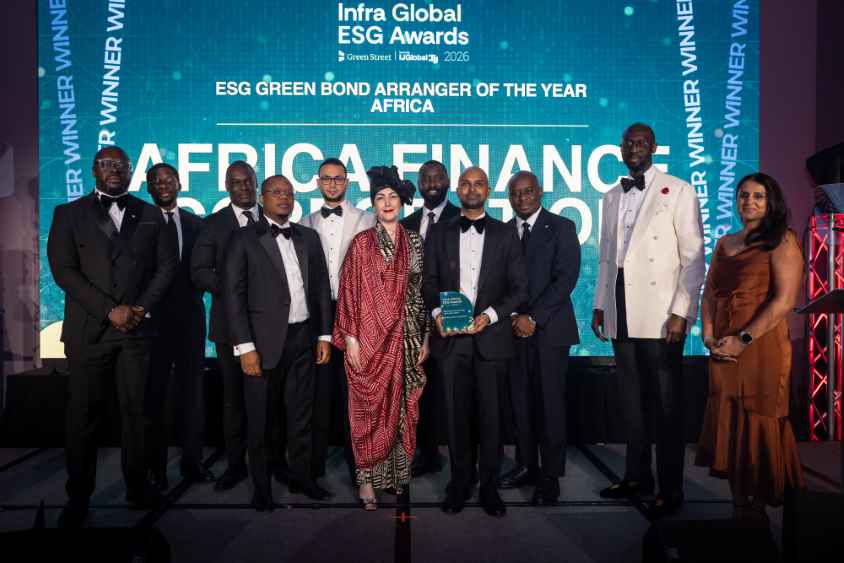
The project won ESG Green Bond Deal of the Year for Africa at the recent Infra Global ESG Awards 2026 in London, while AFC received ESG Green Bond Arranger of the Year for Africa. The double honours recognise the innovation behind the Poro Power transaction and AFC’s role in structuring and mobilising investment for sustainable infrastructure.
Developed by Ivorian entrepreneurs, the 66-megawatt solar plant is under construction in northern Côte d’Ivoire near the city of Korhogo. It is projected to generate approximately 136 gigawatt-hours (GWh) of electricity annually, meeting the needs of more than 100,000 households and benefiting an estimated half a million people.
Beyond providing homes, public services and businesses with reliable power, the project will help Côte d’Ivoire towards meeting its target of increasing renewable energy’s share of electricity generation to 45% by 2030. The Government of Côte d’Ivoire is enabling projects such as Poro Power through its initiative to encourage local private-sector participation in large-scale renewable energy projects, led by the Ministry of Mines, Petroleum and Energy under Minister Mamadou Sangafowa-Coulibaly.
“These awards are a tremendous recognition for an Ivorian project developed to meet the needs of our own communities,” said Jean-Marc Aie, Chairman and CEO of Poro Power 1 S.A. “Our ambition is not simply to generate clean electricity, but to support businesses, create opportunities and contribute to the development of Côte d’Ivoire. The Ministry’s strategy to empower local private developers to undertake large-scale renewable energy projects, together with AFC’s investment and innovative financing structure, has been instrumental in bringing Poro Power to this stage.”
Poro Power demonstrates that African financial institutions have both the capital and the expertise to finance large-scale renewable energy infrastructure through our own markets
The €65 million financing package, equivalent to approximately FCFA 42.6 billion, was raised through a green bond — an investment instrument that enables institutions to lend money to projects delivering environmental benefits. It was the first project-finance green bond in both Côte d’Ivoire and the West African Economic and Monetary Union (WAEMU), establishing a precedent for French-speaking West Africa, and was led, structured and fully funded by African institutions. The transaction allowed investors to participate in both euros and CFA francs, making it also Côte d’Ivoire’s first dual-currency green bond. Together, these features demonstrate how African financial institutions can mobilise their own capital for major infrastructure projects, using financing structures suited to African markets.
AFC invested €43 million (approximately FCFA 28.2 billion) in February 2026 and acted as anchor investor, lead underwriter and co-arranger. The equivalent of a further €22 million was raised from African investors, including local and regional banks, pension funds, insurance companies and high-net worth investors.
The bond has a 15-year term, a fixed interest rate of 8.75%, and quarterly repayments following a two-year construction grace period.The financing combines the flexibility of a bond with safeguards normally used in project finance, including first-ranking security, dedicated revenue accounts and contractual protections that separate the project’s cash flows from other activities. These measures help protect investors and align repayments with the plant’s expected revenues.
By bringing together AFC’s investment alongside capital from other African institutions through a structure that accommodates both local and international currencies, the transaction offers a potential model for financing further renewable energy and infrastructure projects across the region. Its significance extends beyond Poro Power, providing a practical example of African money financing African projects and a structure that could be replicated across the continent.
“Poro Power demonstrates that African financial institutions have both the capital and the expertise to finance large-scale renewable energy infrastructure through our own markets,” said Sameh Shenouda, Executive Board Member and Chief Investment Officer of AFC. “By combining the protections required for long-term project finance with the flexibility of capital markets, we have created a structure that can attract a broader range of African investors. This is an important model for mobilising the investment needed to expand reliable electricity supply, support industry and accelerate the energy transition across the region.”
Once operational, the plant is projected to avoid approximately 72,000 tonnes of carbon dioxide emissions annually — equivalent to taking around 15,600 petrol-powered cars off the road for a year.
The project includes a commitment to allocate €0.01 for every megawatt-hour of electricity generated towards to initiatives intended to benefit local communities.
Distributed by APO Group on behalf of Africa Finance Corporation (AFC).
We use cookies on our website to give you the most relevant experience by remembering your preferences and repeat visits. By clicking “Accept”, you consent to the use of ALL the cookies.
This website uses cookies to improve your experience while you navigate through the website. Out of these, the cookies that are categorized as necessary are stored on your browser as they are essential for the working of basic functionalities of the website. We also use third-party cookies that help us analyze and understand how you use this website. These cookies will be stored in your browser only with your consent. You also have the option to opt-out of these cookies. But opting out of some of these cookies may affect your browsing experience.
Necessary cookies are absolutely essential for the website to function properly. These cookies ensure basic functionalities and security features of the website, anonymously.
Cookie
Duration
Description
cookielawinfo-checkbox-analytics
11 months
This cookie is set by GDPR Cookie Consent plugin. The cookie is used to store the user consent for the cookies in the category "Analytics".
cookielawinfo-checkbox-functional
11 months
The cookie is set by GDPR cookie consent to record the user consent for the cookies in the category "Functional".
cookielawinfo-checkbox-necessary
11 months
This cookie is set by GDPR Cookie Consent plugin. The cookies is used to store the user consent for the cookies in the category "Necessary".
cookielawinfo-checkbox-others
11 months
This cookie is set by GDPR Cookie Consent plugin. The cookie is used to store the user consent for the cookies in the category "Other.
cookielawinfo-checkbox-performance
11 months
This cookie is set by GDPR Cookie Consent plugin. The cookie is used to store the user consent for the cookies in the category "Performance".
viewed_cookie_policy
11 months
The cookie is set by the GDPR Cookie Consent plugin and is used to store whether or not user has consented to the use of cookies. It does not store any personal data.
Functional cookies help to perform certain functionalities like sharing the content of the website on social media platforms, collect feedbacks, and other third-party features.
Performance cookies are used to understand and analyze the key performance indexes of the website which helps in delivering a better user experience for the visitors.
Analytical cookies are used to understand how visitors interact with the website. These cookies help provide information on metrics the number of visitors, bounce rate, traffic source, etc.
Advertisement cookies are used to provide visitors with relevant ads and marketing campaigns. These cookies track visitors across websites and collect information to provide customized ads.

















 Business5 days ago
 Business4 days ago
 Business4 days ago
 Events5 days ago
 Business4 days ago
 Business4 days ago
 Business5 days ago
 Tech3 days ago