Connect with us
Anglostratits

Business

Navigating Congo’s 2025 Financial Law: What It Means for You

Published

on

Financial Law

The 2025 Financial Law is not just a set of rules—it’s a framework that reflects economic priorities and challenges

JOHANNESBURG, South Africa, February 5, 2025/APO Group/ — 

The Financial Law for 2025, promulgated as Law No. 47 – 2024 on December 20, 2024, introduces significant changes that could shape the future of businesses in the Republic of Congo. These adjustments impact corporate tax obligations, compliance standards, and business operations. At CLG (https://CLGGlobal.com/), we believe these updates go beyond legal texts—they affect people, livelihoods, and opportunities.

What’s Changing and Why It Matters

1. Corporate Income Tax Rates:
The general corporate income tax rate rises from 28% to 30%, reflecting the government’s intent to increase fiscal contributions while retaining incentives for microfinance, education, and key sectors like mining and oil exploration. This increase may influence operational costs and profit margins, urging businesses to reassess financial strategies.

2. Digital Transformation in Financial Reporting:
Businesses must now produce financial statements in electronic formats, a move that modernizes compliance but requires investment in technology. For many, this marks a shift in how transparency and accountability are managed.

3. Enhanced Tax Sanctions and Compliance:
Stricter penalties are introduced for late filings, non-compliance, and improper declarations for companies benefiting from tax advantages. Monetary fines now go up to 10,000,000 CFA francs, underscoring the importance of timely and accurate reporting. These changes are designed to foster greater fiscal discipline, but they also demand careful planning to avoid penalties.

4. Tax dispute: Institutionalization of Hierarchical Recourse in Congolese Tax Law
The financial law for 2025 formalizes hierarchical recourse previously used in practice. Taxpayers can now appeal to the superior officer of the inspecting auditor to suspend collection by tax authorities until re-examination by that officer occurs.

5. VAT Adjustments and Exemptions:
The VAT landscape is evolving. Exemptions on items like mineral water, butane gas, and photovoltaic panels promote sustainability and local production. However, higher VAT rates on agricultural inputs could increase costs for farmers and impact food production.

6. VAT: Obligation to use certified invoices issued via the EFCS
The use of certified electronic invoicing system (SFEC) will be compulsory for any individual or legal entity in all their transactions with suppliers.

Any action that violates the obligation to use the SFEC is punishable by a fine of 50,000,000 FCFA and VAT incurred on invoices that do not comply with this obligation is not deductible.

7. Excise Duties on Key Products:
Excise duty rates have risen for tobacco, alcohol, and sweetened beverages, reflecting public health priorities. This could lead to higher retail prices, potentially altering the consumer behaviour and market dynamics.

How CLG Can Support You

We understand that these legislative changes affect more than just numbers—they impact people’s businesses, families, and communities. At CLG, we’re here to help you navigate these complexities. Our team of legal and tax experts offers:

  • Tailored Compliance Solutions: Stay ahead of new requirements with expert guidance.
  • Strategic Tax Planning: Minimize the impact of rate increases and take advantage of exemptions.
  • Workshops and Consultations: Gain clarity on implementation instructions as they become available.

Preparing for the Future

The 2025 Financial Law is not just a set of rules—it’s a framework that reflects economic priorities and challenges. Whether you’re a multinational company or a local entrepreneur, these changes demand proactive adaptation.

At CLG, we are committed to making this transition seamless for you. Together, we can turn challenges into opportunities and ensure your business thrives amidst change.

For more tailored advice or to discuss how these changes affect your business, please don’t hesitate to reach out.

Distributed by APO Group on behalf of CLG.

Business

Nigeria and Senegal Must Follow Ghana and Mozambique Against Exclusionary Practices

Published

on

African Energy Chamber

African private sector leaders call for withdrawal from Frontier Energy events that marginalize local talent, championing inclusion, fair contracting and the Alliance model of partnership

JOHANNESBURG, South Africa, April 10, 2026/APO Group/ –The African private sector is raising the alarm over Frontier Energy Network’s policies that systematically exclude African professionals and service providers from meaningful roles in major energy forums. Such exclusionary practices threaten decades of progress in African energy development, including local capacity building, knowledge transfer and economic participation.

Frontier’s approach, framed as a global platform for Africa, is in practice a system that extracts value from the continent while denying Africans the opportunities to lead, participate and benefit. Marginalizing the very people who build, operate and sustain energy projects is not partnership – it is structural exclusion masquerading as opportunity.

African businesses – particularly in Nigeria and Senegal, which drive regional growth – must reassess their participation in platforms that perpetuate these policies. African capital, sponsorship and attendance cannot continue to legitimize forums where local stakeholders are systematically sidelined. Market access must be earned and mutually respected.

Mozambique and Ghana have already set a precedent. In March 2026, Mozambique’s oil and gas industry withdrew from the Africa Energies Summit in London, citing repeated failures by the organizers to improve diversity, transparency and inclusion of Black professionals in leadership, contracting and deal-making roles. In early April 2026, the Ghana Energy Chamber followed suit, formally pulling out of the same summit over discriminatory hiring practices that sidelined African professionals, executives and service providers. These coordinated actions send a clear message: Africa will no longer support platforms that deny its talent the right to lead, contribute and benefit.

Africa will no longer sit quietly while its talent is excluded from opportunities on its own continent

The gold standard for companies to thrive in Africa is robust collaboration with international partners while building local capacity – exemplified by Senegal-based energy services company Alliance Energy. Alliance has advanced African expertise in the sector, notably supporting the launch of the National Institute for Petroleum and Gas in Senegal to train young professionals for leadership roles, while backing diverse energy initiatives across power, solar, gas and wind that strengthen Senegal’s position as a regional energy hub.

This success demonstrates that African companies flourish when local talent, leadership, contracting and workforce development are central to execution, alongside strategic partnerships with the US, UK and Europe. Any entity attempting to operate in Africa without a commitment to hiring or contracting local professionals threatens not only the ecosystem that nurtured companies like Alliance Energy but also the continent’s broader ambition to grow regional capability, ownership and sustainable energy development.

“The message is simple,” says Dr. Ndjuga Dieng, Managing Director of Alliance Energy. “Africa will no longer sit quietly while its talent is excluded from opportunities on its own continent. Nigeria, Senegal and all African nations must follow the lead of Ghana and Mozambique by standing against platforms that discriminate. Protect your people, your companies and your energy future. Inclusion is not optional – it is the foundation of growth.”

African energy markets have historically thrived on collaboration, both within the continent and with international partners. Events such as the Offshore Technology Conference (OTC) and the Invest in African Energy (IAE) Forum exemplify this model, integrating African executives, policymakers and service providers into core programming, deal-making and knowledge transfer.

African stakeholders must prioritize platforms that respect local content, equitable hiring and fair contracting. Strategic withdrawal from exclusionary events is not isolationism – it is a stand for principle, economic logic, and the future of Africa’s energy sector. The continent defines its own trajectory and will engage only with partners that recognize African talent as integral, not optional, to the industry’s future.

The position advanced by Alliance Energy aligns with broader advocacy across the continent, including that of the African Energy Chamber, which has consistently called for stronger local content policies, fair contracting practices and greater inclusion of African professionals across the energy value chain. This alignment underscores a growing consensus among African private sector leaders that sustainable industry growth depends on meaningful participation by local companies and talent, not their exclusion.

Distributed by APO Group on behalf of African Energy Chamber.

Continue Reading

Business

Sheraton Nouakchott marks the entry of Marriott International in Mauritania

Published

on

Nouakchott

As Mauritania’s cultural and economic heart, Nouakchott offers visitors a glimpse into the serene beauty and rich heritage that define this remarkable Northwest African nation

We are proud to have brought Marriott International to Mauritania with the opening of Sheraton Nouakchott, the first internationally operated and branded hotel in the country

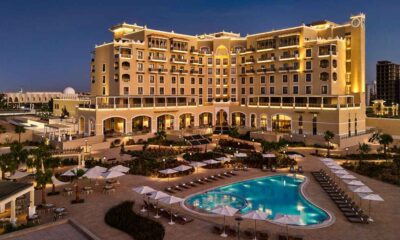
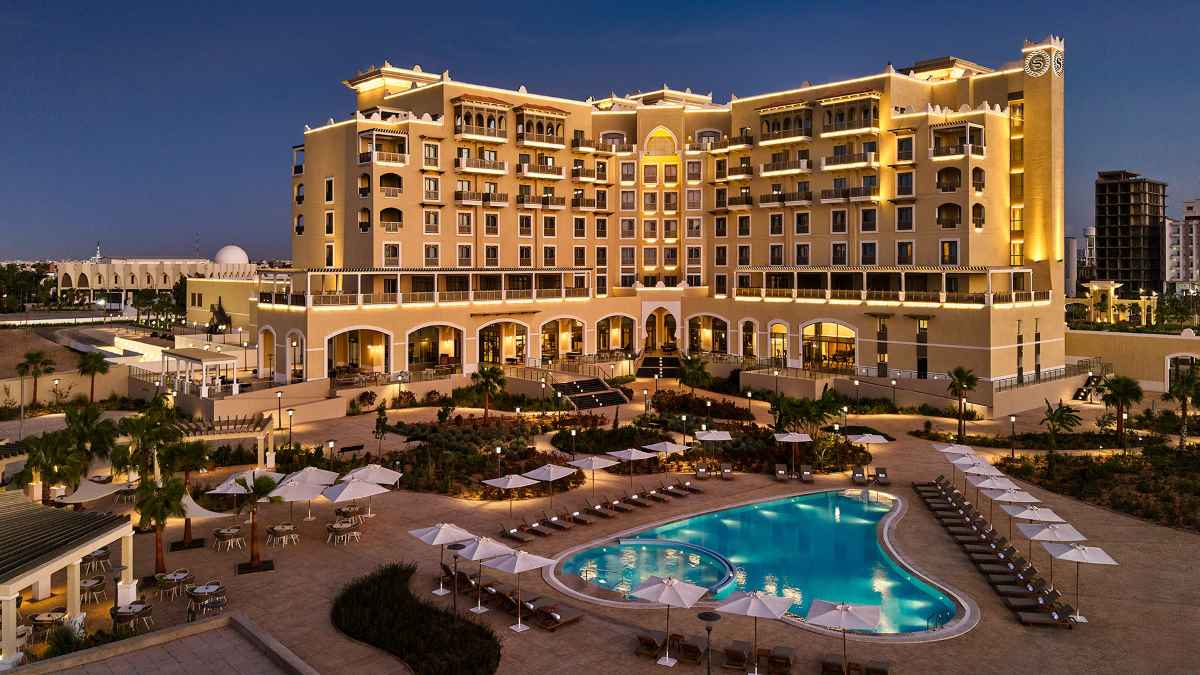
NOUAKCHOTT, Mauritania, April 10, 2026/APO Group/ –Sheraton Hotels & Resorts, part of Marriott Bonvoy’s (www.Marriott.com) portfolio of more than 30 hotel brands, recently celebrated the opening of Sheraton Nouakchott Hotel (https://apo-opa.co/4t3YGO4), marking the entry of Marriott International into a new territory, Mauritania. Since opening its doors, Sheraton Nouakchott has, positioned itself as a new hub for business, events and leisure in the Mauritanian capital.


Nouakchott, the capital of Mauritania, is a coastal city where tradition and modernity meet. Nestled between the vast Sahara and the Atlantic Ocean, it serves as a gateway to the country’s breathtaking natural landscapes, from golden dunes and tranquil oases to rugged coastlines and untouched desert plains. As Mauritania’s cultural and economic heart, Nouakchott offers visitors a glimpse into the serene beauty and rich heritage that define this remarkable Northwest African nation.

Ideally located near iconic landmarks such as the Marché Capitale and the National Museum of Mauritania, as well as Nouakchott’s beaches and fishing port — and just a short distance from the desert — Sheraton Nouakchott offers an ideal base from which to discover the destination.

“We are proud to have brought Marriott International to Mauritania with the opening of Sheraton Nouakchott, the first internationally operated and branded hotel in the country. Since welcoming our first guests, the hotel has quickly established itself as a destination for both travellers and the local community. This milestone underscores our commitment to delivering exceptional hospitality experiences in emerging markets, while celebrating the culture and character of each destination,” said Sandra Schulze‑Potgieter, Vice President, Premium, Select & Midscale Brands, Europe, Middle East & Africa, Marriott International.

Local design inspiration

Traditional crafts, from wood carving to metalwork, are woven throughout the hotel’s materials and furnishings, creating spaces that feel both rooted and refined. Every detail tells a story of local artistry, heritage and place, offering guests an immersive experience inspired by Mauritania’s cultural and natural beauty.

Inspired by the legendary landmarks along the Trans‑Saharan trade route, the hotel’s design blends regional heritage with contemporary elegance. The circular ceiling of Feast restaurant draws inspiration from the Richat Structure, also known as the Eye of Africa. Earthy tones and organic materials reference the dramatic landscapes of the Adrar Mountains, while patterns inspired by Chinguetti and Oualata are reinterpreted throughout guest rooms, public spaces and Bene restaurant.

Meeting spaces echo the stone architecture of Tichitt, one of West Africa’s oldest towns and a historic caravan hub.

Guest rooms and suites with local charm

Sheraton Nouakchott features 200 spacious guest rooms and suites, including two Presidential Suites, combining contemporary comfort with subtle local touches. All rooms are equipped with the latest technology and Sheraton signature amenities, including the iconic Sheraton Sleep Experience.

The Sheraton Club offers Marriott Bonvoy Elite members and Club guests an elevated, all‑day experience, with curated food and beverage offerings, premium amenities, enhanced connectivity and a private environment designed for both productivity and relaxation.

Local flavours meet international influence

The hotel features two restaurants, a Lobby Bar and a Pool Bar. Feast, the all‑day dining restaurant, serves locally inspired and international dishes made with seasonal ingredients. Bene offers an immersive Italian dining experience in a warm, inviting setting. The Lobby Bar provides a relaxed meeting point from morning coffee to evening gatherings, while the Pool Bar offers refreshing drinks and light bites by the outdoor pool.


Facilities offering a resort feel in the heart of the city

Despite its central urban location, Sheraton Nouakchott delivers a resort‑like atmosphere, centred around an expansive outdoor pool. Guests can maintain their fitness routines in the fully equipped fitness centre — featuring separate floors for women and men, hammam and sauna — or enjoy the outdoor tennis court. The Sheraton Spa features three treatment rooms, offering a peaceful retreat after a day of exploration or meetings.

Meetings & events curated to perfection

Sheraton Nouakchott offers more than 2,600 square metres of flexible Meetings & Events space, including a Grand Ballroom, a Ballroom and four additional meeting rooms. A signature Sheraton Community Table sits at the heart of the hotel, providing a welcoming space for informal meetings, remote work and collaboration. A dedicated events team ensures seamless delivery from concept to execution.

Gatherings by Sheraton

In line with Sheraton’s global community‑centred approach, Sheraton Nouakchott hosts Gatherings by Sheraton, curated weekly experiences designed around enrichment, renewal and local stories. Guests and locals can take part in Mauritanian mixology sessions using local mint tea and fruits, or storytelling evenings inspired by Saharan traditions.

Distributed by APO Group on behalf of Marriott International, Inc..

Continue Reading

Business

African Energy Chamber (AEC) Supports Perenco Partnership to Advance Industry 4.0 Skills in Central Africa

Published

on

African Energy Chamber

The African Energy Chamber welcomes Perenco Cameroon and Perenco Gabon’s partnership with UCAC-ICAM to launch an Industry 4.0 lab, advancing local skills development and strengthening Africa’s industrial future

JOHANNESBURG, South Africa, April 9, 2026/APO Group/ –A new partnership between Perenco Cameroon, Perenco Gabon and the UCAC-ICAM Institute in Douala to establish an Industry 4.0 laboratory marks a significant step toward aligning academic training with the evolving needs of the energy and industrial sectors. The facility will give students access to advanced automation, digital simulation and smart production technologies, helping close the gap between academic learning and the practical, industry-ready skills required across Central Africa’s industrial landscape.


As the voice of Africa’s energy sector, the African Energy Chamber (AEC) welcomes the initiative as a scalable model for local content development. By equipping students with Industry 4.0 capabilities, the laboratory directly supports the Chamber’s mandate to ensure greater in-country value creation and workforce participation across Africa’s energy value chain. The initiative also addresses critical skills shortages, enabling operators to increasingly rely on locally trained talent.


Developing local skills is fundamental to building a competitive and sustainable energy sector in Africa

The partnership underscores Perenco’s long-term commitment to sustainable development and capacity building in Cameroon and Gabon. Designed as a mini-factory, the UCAC-ICAM laboratory enables students to engage with real-world industrial tools and processes. This hands-on approach will support the development of engineers and technicians capable of contributing to key projects, including operations in the Rio del Rey Basin and infrastructure developments such as the Cap Lopez LNG terminal in Gabon.


Students across multiple disciplines will benefit from hands-on exposure to the lab’s advanced technologies. General Engineering students will train using robotic systems and virtual reality simulations, while Computer Science Engineering students will focus on industrial IoT and smart technologies. Process Engineering students will gain experience in automated production systems, and Petroleum program students will develop expertise in energy systems and instrumentation control. Graduates from UCAC-ICAM are being actively recruited by leading companies operating in Douala, reflecting growing demand for locally trained, industry-ready talent.

“Developing local skills is fundamental to building a competitive and sustainable energy sector in Africa,” says NJ Ayuk, Executive Chairman of the AEC. “This partnership demonstrates how industry and academia can work together to create a highly skilled workforce that will drive Africa’s industrialization and energy future. It is exactly the type of initiative needed to ensure Africans play a leading role in developing the continent’s resources.”

The UCAC-ICAM laboratory represents a strategic investment in Africa’s industrial and energy future. By strengthening local capacity, advancing technology adoption and supporting independent operators, the initiative aligns with the AEC’s broader vision of a self-sufficient and globally competitive African energy sector.

Distributed by APO Group on behalf of African Energy Chamber.

Continue Reading

Trending