Connect with us
Anglostratits

Business

Nature, Carbon and Climate Are Becoming Core Investment Themes – with Africa at the Centre

Published

on

finance

Private finance for nature has increased more than tenfold in recent years, rising from USD 9.4 billion to over USD 100 billion, and could reach up to USD 1.45 trillion by 2030 if current the momentum continues

CAPE TOWN, South Africa, February 9, 2026/APO Group/ –Climate change, biodiversity loss and ecosystem degradation are no longer just environmental challenges; they are now central to how investors assess resilience and long-term returns.

Nature underpins large parts of the global economy, from water security and food systems to infrastructure and climate resilience. Yet according to the United Nations Environment Programme (UNEP) the global biodiversity finance gap is estimated to reach USD 942 billion per year by 2030. Current finance flows into nature total around USD 200 billion annually, with just USD 35 billion coming from private capital.

At the same time, capital markets are shifting. Private finance for nature has increased more than tenfold in recent years, rising from USD 9.4 billion to over USD 100 billion, and could reach up to USD 1.45 trillion by 2030 if current the momentum continues.

Alongside this, carbon markets, nature-based solutions and resilience infrastructure are increasingly being treated as linked investment themes, with new asset classes emerging across carbon, biodiversity and climate adaptation. This convergence is reshaping how investors assess risk, returns and long-term resilience, particularly in emerging markets.

Investing in Africa’s adaptation and mitigation projects is not an act of generosity; it is an investment in our common future

The economic stakes are already clear. In South Africa alone, healthy ecosystems contribute over R275 billion (around USD 14 billion) per year, equivalent to at least 7% of GDP.

Across Africa, natural capital accounts for an estimated 30%-50% of total wealth in many countries, underlining how closely economic growth, stability and development prospects are tied to climate and nature outcomes. In many African economies, natural capital makes up a far larger share of national wealth than factories or infrastructure, meaning that damage to nature can quickly translate into pressure on public finances and long- term economic stability.

Recent flooding in parts of Kruger National Park and ongoing water stress in the Western Cape have reinforced how climate and ecosystem risks translate directly into economic losses, infrastructure damage and pressure on public finances. These are no longer peripheral sustainability issues; they are core financial and investment risks.

Against this backdrop, Africa’s Green Economy Summit (AGES) 2026 will open with the Climate, Carbon & Nature Financing Academy on Monday, 24 February 2026 in Cape Town, ahead of the main Summit from 25 – 27 February 2026. The Academy will focus on how climate, carbon and nature can be translated into bankable projects and investable asset classes, including through instruments such as carbon markets, green, blue and wildlife bonds, debt-for-nature swaps and performance-linked finance.

“The escalating impact of climate change in Africa calls for the global community and private sector to recognise that a climate-resilient Africa is essential for global stability, prosperity, and shared security. Investing in Africa’s adaptation and mitigation projects is not an act of generosity; it is an investment in our common future,” said Harsen Nyambe, Director, Sustainable Environment and Blue Economy at the African Union Commission.

By foregrounding climate, carbon and nature finance at the start of 2026, AGES reflects a broader market reality: these are no longer side conversations in sustainable finance, they are becoming central pillars of Africa’s investment future.

Distributed by APO Group on behalf of VUKA Group.

Business

Learning curves: Addressing the skills shortage in African mining

Published

on

mining

The discussion will unpack key factors contributing to the skills shortage and examine how stronger collaboration between mining companies, universities and Technical and Vocational Education and Training (TVET) institutions can help bridge the gap

CAPE TOWN, South Africa, March 23, 2026/APO Group/ –The African mining industry is undergoing rapid transformation, driven by technological advancements, increasing sustainability demands, and rising global demand for critical minerals. However, a widening skills gap continues to pose a significant challenge to the sector’s growth and long-term competitiveness.


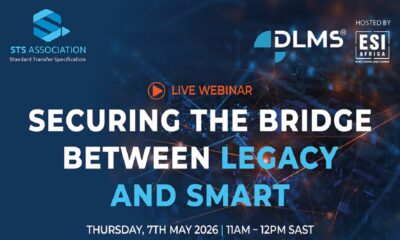
To address this pressing issue, an upcoming webinar hosted by Vuka group’s Mining Review Africa will bring together industry experts to explore practical solutions for building a skilled and future-ready mining workforce across the continent.

The discussion will unpack key factors contributing to the skills shortage and examine how stronger collaboration between mining companies, universities and Technical and Vocational Education and Training (TVET) institutions can help bridge the gap. It will also consider how digitalisation and automation are reshaping workforce requirements, and what this means for the next generation of mining professionals.

Participants can expect insights on:

  • Key causes of the mining skills shortage across Africa
  • Strengthening collaboration between industry, universities, and TVET institutions
  • The impact of digitalisation and automation on workforce requirements
  • Strategies for developing the next generation of mining professionals
  • Practical solutions for upskilling and workforce development
  • How regional collaboration can develop a skilled workforce
  • Preventing the brain drain in African mining as skilled workers seek greener pastures


Event details:
Date: 7 May 2026
Time: 14:00 (SAST)

To register for the webinar, visit: https://apo-opa.co/4brnadB

Distributed by APO Group on behalf of VUKA Group.

Continue Reading

Business

Mining Review Africa Introduces French and Portuguese Website Translation

Published

on

vukagroup

By enabling multilingual access, Mining Review Africa aims to better serve its diverse readership, including industry professionals, policymakers and investors who rely on timely mining news and insights

CAPE TOWN, South Africa, March 20, 2026/APO Group/ –VUKA Group’s (https://WeAreVUKA.com/Mining Review Africa has introduced French and Portuguese translations on its website, responding to growing demand from readers across the continent.


This allows users to access content in multiple languages, improving accessibility for audiences in regions where English is not widely used.

We recognise that language should not be a barrier to information, especially in a sector that plays such a critical role in the continent’s economic growth

The move follows insights gathered by VUKA Group during its flagship mining events held across Africa, including DRC Mining Week, Angola International Mining Conference and Nigeria Mining Week The organisers noted a clear need for more inclusive communication, particularly in countries where French and Portuguese are dominant languages in business and industry engagement.

By enabling multilingual access, Mining Review Africa aims to better serve its diverse readership, including industry professionals, policymakers and investors who rely on timely mining news and insights.

“This development is part of our ongoing commitment to making mining content more accessible across Africa,” Mining Review Africa’s Editor-In-Chief, Gerard Peter said. “We recognise that language should not be a barrier to information, especially in a sector that plays such a critical role in the continent’s economic growth.”

The translation feature is now live and available to all users on the Mining Review Africa website.

Distributed by APO Group on behalf of VUKA Group.

Continue Reading

Business

Qianhai Launches OPC Mavericks Program to Empower Global AI Solopreneurs

Published

on

QianHai

SHENZHEN, CHINA – Media OutReach Newswire – 20 March 2026 – On March 18, Qianhai, a flagship hub for institutional opening-up, high-end services and technological innovation in southern China, officially opened the application portal for the Qianhai OPC (One-Person Company) International Community and launched its global OPC Mavericks Program. Adhering to the philosophy of “All Innovation, Zero Distraction”, the initiative aims to build the world’s leading ecosystem for AI-driven one-person companies.

Widely recognized as a pioneering zone for China’s institutional opening-up and a key innovation node in the Guangdong-Hong Kong-Macao Greater Bay Area, Qianhai leads the country in piloting cross-border cooperation, regulatory innovation and business-friendly reforms. It has grown into a highland for advanced services, tech research and development, and entrepreneurial ecosystems, connecting global talents, capital and technologies with the massive market of the Greater Bay Area.

The OPC Mavericks Program targets six elite groups: academic pioneers, tech veterans, global AI competition winners, elite prodigies, influential open-source contributors, and outstanding graduates in AI and computer science. Eligible projects should leverage generative AI, large language models, AI agents and automation to build sustainable closed-loop businesses.

As the world’s first vertical accelerator dedicated to OPCs, the community provides a tailor-made AI launchpad with the SENSE ecosystem and the “Eight Zeros” guarantee to remove startup barriers: supported office space up to 200㎡ for two years, talent housing up to 50㎡ per person, annual free computing power up to 50P, free LLM trials, Greater Bay Area market access, collateral-free loans, high-risk-tolerance seed funding, annual talent rewards up to 600,000 RMB, and one-stop services for visas, finance, IP, taxation and global internet access.

To help global innovators experience opportunities in the region, Qianhai offers the Shenzhen-Hong Kong 72-Hour Experience Pass, which was officially launched in 2025. This pass provides streamlined entry arrangements, guided visits to tech platforms, enterprises and research institutions in both cities, and on-site insights into the OPC entrepreneurship environment. It serves as a key channel for global talents to fully explore cooperation and development prospects in the Greater Bay Area.

The program supports AI solopreneurs to turn ideas into scalable businesses. Qualified applicants can submit core founder resumes and project pitch decks to inqianhai@qhidg.com to join the program and embrace new opportunities in the Greater Bay Area.

Continue Reading

Trending