Connect with us

Business

Melrose Arch: Where Business Thrives Amid Unmatched Efficiency in Johannesburg

Published

on

Melrose Arch

The place where everything works so you can, too

JOHANNESBURG, South Africa, September 2, 2024/APO Group/ — 

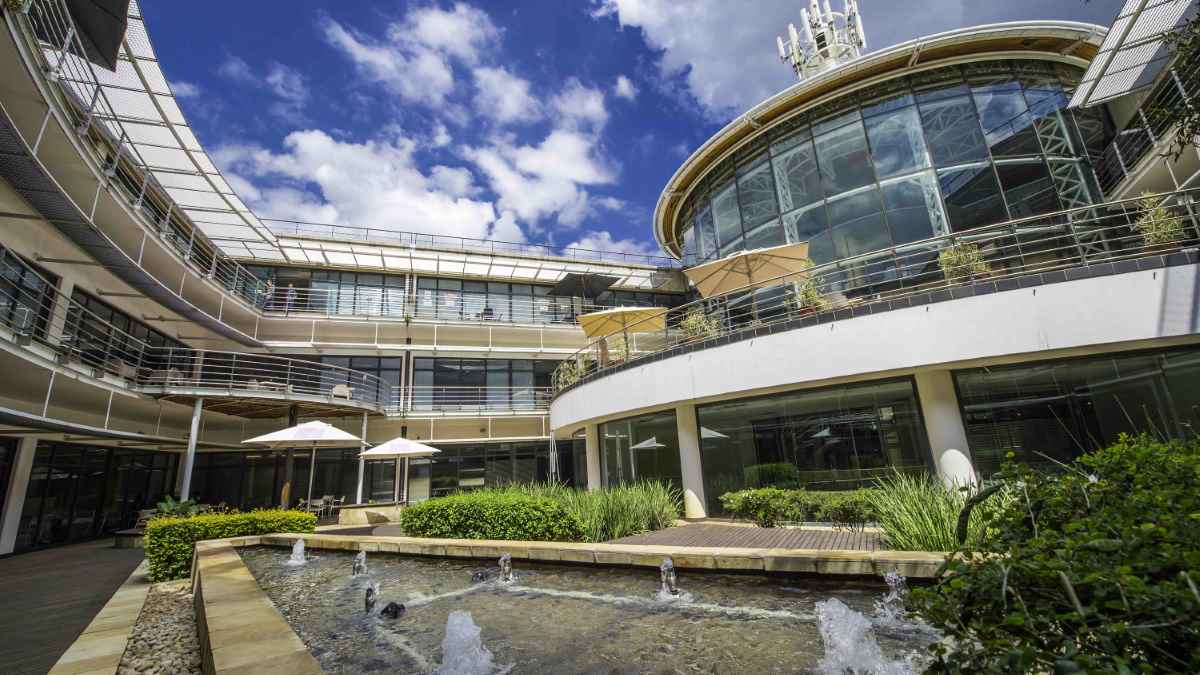
Located at the heart of Johannesburg, Melrose Arch (www.MelroseArch.co) is the city’s premier mixed-use precinct, seamlessly integrating business, leisure, and living. Perfectly positioned between Sandton and Rosebank, and with easy access to the M1 highway, it offers unparalleled infrastructure, including uninterrupted power, a dependable water supply, and eco-friendly systems. 

In Johannesburg’s dynamic landscape, Melrose Arch stands as a beacon of modern urbanism. This exceptional mixed-use precinct harmoniously combines work, leisure, and living spaces, presenting a distinctive blend of convenience and sophistication. 

Melrose Arch is synonymous with self-sufficiency and seamless operation. In a city often challenged by power outages, water shortages, and utility inefficiencies, it offers a refreshing alternative. Solar energy ensures an uninterrupted power supply, while a reliable backup water system guarantees consistent availability. The precinct’s advanced water chiller system maintains a comfortable indoor climate, complemented by an eco-friendly waste recycling system that underscores its commitment to sustainability. The verdant gardens and clean air further elevate the quality of life, while the expansive super-basement network offers ample parking and ease of access across the precinct. 

The Ideal Business Environment 
Melrose Arch is the perfect locale for businesses seeking modern, adaptable office spaces. The precinct features a range of commercial properties tailored to various business needs. For instance, 34 Melrose Boulevard boasts a central atrium that floods the space with natural light, while 39 Melrose Boulevard, offers a four-star green rating and state-of-the-art conferencing facilities. This seven-story structure, prominently situated on the M1 highway, provides excellent visibility for corporate branding and ample parking options. 

At 10 High Street, the top floors offer breathtaking views of the internal gardens and uninterrupted views of the city skyline. The building has direct access to the vibrant retail galleria and lush green spaces. The building is conveniently located near the Johannesburg Marriott Hotel Melrose Arch and The Protea Fire and Ice hotel. 

All buildings within the precinct benefit from a robust fibre optic network, ensuring uninterrupted connectivity with dual-source redundancy. The building management system includes advanced access control and intercoms, with telephony and data services available on-site if required. 

Why Choose Melrose Arch? 
Businesses at Melrose Arch enjoy direct access to landlords, enabling swift decision-making and on-site management. The precinct boasts 24/7 security, a dedicated control room, and secure parking with panic buttons. With its uninterrupted solar-powered electricity and backup water systems, Melrose Arch ensures seamless business continuity. 

Centrally located with easy access to the M1 highway via Corlett Drive and Athol Oaklands off-ramps, Melrose Arch is a coveted address for blue-chip companies such as South 32, Glencore, and Pepsi Co. It’s also conveniently close to the Rosebank Gautrain station and regular Gautrain commuter bus routes. 

Hotels and conferencing on the property  
Melrose Arch has four world-class hotels, with a total of over 700 rooms. The five-star Johannesburg Marriott Hotel Melrose Arch and the Marriott Executive Apartments Melrose Arch connect discerning international business travellers to one of the most sought-after long-stay destinations in Johannesburg. The African Pride Melrose Arch Hotel, Autograph Collection, and contemporary four-star Protea Hotel Fire & Ice! by Marriott Melrose Arch offer ideal accommodation, whether one is conferencing, meeting or simply looking for a leisure stay.   

The Venue Melrose Arch offers a complete events solution with a fresh, modern approach. With emphasis on exceptional service, sensational food & in-house technical equipment this facility has conference rooms to host events for 25-800 people, and provide an unforgettable experience.  

A Commitment to Sustainability 
Leading the way in Johannesburg’s sustainability efforts, Melrose Arch operates an eco-centre for waste sorting and recycling, and a district cooling system that conserves energy.  Year to date, it has recycled 89% of its waste, saved significant quantities of CO2, water, trees, and electricity, and generates 3.2MW of clean solar energy annually. 

Beyond its business appeal, Melrose Arch offers a vibrant lifestyle with over 100 local and international retail brands, diverse dining options, luxury hotels, and state-of-the-art health clubs. Tree-lined streets and green spaces create a delightful environment for work and relaxation. 

Distributed by APO Group on behalf of Melrose Arch.

Business

Kenya’s Oil Ambitions Meet a New Refining Push at African Energy Week (AEW) 2026

Published

on

Kenya is positioning itself for a larger role in East Africa’s energy market, with Cabinet Secretary for Energy and Petroleum James Opiyo Wandayi set to participate in African Energy Week 2026

CAPE TOWN, South Africa, September 22, 2026/APO Group/ –Kenya’s energy story is no longer confined to developing its nascent oil industry or expanding its already substantial renewable power base. In 2026, the country has emerged as a potential hub for both upstream and downstream investment, while continuing to build out the electricity infrastructure needed to support a growing economy, with Cabinet Secretary for Energy and Petroleum James Opiyo Wandayi set to bring Kenya’s evolving energy agenda to African Energy Week 2026.


At the center of that shift is the proposed 700,000-barrel-per-day refinery in Lamu, which Dangote Industries plans to develop at a cost of around $15-16 billion. The company expects to break ground later this month and complete the project by 2030, with the facility intended to supply refined products to Kenya and neighboring East African markets.

The project would give Kenya a much larger role in regional fuel supply, but it also highlights the infrastructure and supply questions facing the country’s petroleum ambitions. Kenya does not yet have commercial crude production, meaning the proposed refinery will need to secure feedstock from domestic production as it develops or from producers elsewhere in the region and international markets. Reuters has reported that potential sources include South Sudan and Uganda, although infrastructure and geopolitical considerations complicate those options.

That makes Kenya’s upstream progress particularly relevant. In May, Wandayi said the country expected to begin commercial oil production in Turkana by the end of 2026, marking a significant step beyond the small-scale early oil program that has operated in the South Lokichar Basin.

Kenya is entering an important period for its energy sector, with opportunities emerging across the petroleum value chain as well as geothermal, renewables and power infrastructure

The petroleum push is unfolding alongside an ambitious electricity strategy. Kenya recently raised its planned additional generation capacity from 1,500 MW to 5,500 MW, with the revised pipeline incorporating geothermal, hydropower and nuclear generation. The country already produces approximately 93% of its electricity from renewable sources, with geothermal playing a particularly important role.

The challenge now extends beyond adding generation. Kenya is also examining the cost and structure of its electricity market, including power-purchase agreements, transmission and distribution infrastructure. The government has been under pressure to address electricity costs even as it seeks to attract the investment needed for new capacity.

For Wandayi, whose portfolio encompasses both petroleum and the wider energy sector, those developments converge around a common question: how to turn major energy projects into infrastructure, investment and industrial growth.

“Kenya is entering an important period for its energy sector, with opportunities emerging across the petroleum value chain as well as geothermal, renewables and power infrastructure,” said NJ Ayuk, Executive Chairman of the African Energy Chamber. “The proposed Lamu refinery, the development of Kenya’s oil resources and the country’s expanding power ambitions demonstrate the breadth of investment opportunities available. What matters now is creating the conditions for capital and technical expertise to move these projects from ambition into execution.”

Wandayi’s participation at AEW 2026 will put that broader agenda before investors, developers, financiers and energy companies from across Africa and beyond. His portfolio places him at the intersection of Kenya’s efforts to develop domestic petroleum resources, build new downstream infrastructure and expand a power system increasingly dominated by renewable generation.

AEW 2026 takes place in Cape Town from October 12-16, bringing together African governments, energy companies, investors and financiers for discussions spanning oil and gas, power, renewables, infrastructure, critical minerals and energy finance.

Distributed by APO Group on behalf of African Energy Chamber.


Continue Reading

Business

African Energy Week (AEW) 2026 Technical Sessions Put Technology Behind Africa’s Next Energy Projects in Focus

Published

on

Day 2 technical sessions at African Energy Week 2026 will examine frontier exploration, major gas developments, project economics and the technologies supporting Africa’s expanding oil, gas and LNG sectors

CAPE TOWN, South Africa, September 22, 2026/APO Group/ –African Energy Week (AEW) 2026’s Day 2 Technical Stages will put the technology and technical expertise behind Africa’s next wave of energy projects in focus, with sessions covering subsurface interpretation, deepwater exploration, gas development, project economics, digitalization, offshore operations and infrastructure.


The program will unfold across two exhibition-hall stages, with the Drill Room focusing on practical applications across exploration, gas development, offshore operations and LNG, while the Innovation Hub will examine frontier exploration, energy markets, digital technologies and infrastructure. Together, the sessions connect project-level technologies with the wider investment and development challenges facing Africa’s energy industry.

The day opens with GeoEnergy Petroleum Director Maged Fahim, who will examine how legacy and newly acquired subsurface datasets can be integrated with modern technologies to identify additional upstream opportunities. TGS Principal Exploration Advisor Felicia Winter will then focus on Angola’s deepwater basins, examining how modern seismic acquisition and imaging can be used to reinterpret existing data and evaluate frontier plays.

The discussions come as Angola seeks to build on renewed offshore activity. TotalEnergies announced in September that it plans to invest $10 billion in Angola over the next five years, including in exploration, while advancing its $6 billion Kaminho deepwater development.

Gas development will take center stage through two presentations by TotalEnergies. Alexandre Depiesse, GPI Venus, will address appraisal strategies and commercial viability for Orange Basin discoveries, while Mozambique LNG Operations and Project Director Nicolas Cambefort will examine development and optimisation of the Rovuma Basin gas resources. Mozambique LNG, a 13.1-million-ton-per-year project in Area 1 led by TotalEnergies, resumed activities in January 2026 following the lifting of force majeure, putting development of Mozambique’s major offshore gas resources back into focus.

AEW 2026 reflects the practical challenges facing Africa’s energy industry as projects move from resource potential toward development and production

The Republic of Congo National Showcase will provide another perspective on Africa’s expanding LNG industry. The country’s Congo LNG project reached a new stage in February 2026 with the start of commercial production from its second phase. The addition of the Nguya FLNG unit brought total liquefaction capacity to 3 million tons per year, expanding Congo’s ability to monetize its offshore gas resources.

The program will then broaden from individual projects to the continent-wide investment outlook with the launch of The State of African Energy 2027. AEC Senior Vice President Verner Ayukegba and S&P Global Energy Executive Director Max Pietzsch will present the outlook, covering upstream oil and gas, LNG, downstream markets, power, renewables and critical minerals against changing demand, trade flows and energy security requirements.

Project decision-making will remain under examination as S&P Global Energy Technical Research Analyst Tasnika Goorhoo presents “From Limited Data to Better Decisions: How Benchmarking Strengthens Upstream Project Outcomes.” The session will examine how comparative project data can help operators assess performance, costs and development outcomes.

NOV Vice President Mats Anderson will address offshore optimization through high-speed downhole connectivity and real-time distributed measurements, examining how faster access to downhole information can improve operational visibility and decision-making.

Infrastructure will also feature prominently, with Kenyon International West Africa CEO Victor Ekpenyong examining asset integrity and pipeline infrastructure through the company’s CACTUS and FlexSteel technologies. Honeywell Technologies Africa will close the technology-focused sessions with its end-to-end LNG offering, while SLB, InSwitch, the Petroleum Directorate of Sierra Leone and PETROSEN will bring additional perspectives on technology, digitalization and energy services.

“AEW 2026 reflects the practical challenges facing Africa’s energy industry as projects move from resource potential toward development and production,” said NJ Ayuk, Executive Chairman of the AEC. “From subsurface interpretation and deepwater exploration to LNG development, project benchmarking, digitalization and infrastructure, these technical sessions highlight the expertise and technologies needed to develop Africa’s resources efficiently and create lasting value across the energy value chain.”

AEW 2026 takes place from October 12–16 in Cape Town, bringing together governments, investors, operators and technology providers to discuss investment, project development and the future of Africa’s energy sector.

Distributed by APO Group on behalf of African Energy Chamber.


Continue Reading

Business

Rising power costs put energy strategy at the centre of industrial competitiveness

Published

on

C&I Energy + Storage Summit Johannesburg to focus on the procurement, cost and investment decisions facing South Africa’s large energy users

JOHANNESBURG, South Africa, September 22, 2026/APO Group/ –The cost of electricity is no longer only an energy issue for South African businesses. It is increasingly a question of competitiveness, investment and long-term operational resilience.

Recent figures show the pressure on large power users. Business Day reported on 7 September that South Africa’s mining and industrial majors paid Eskom R115 billion for electricity in the 2025/26 financial year. According to Eskom’s annual report, industrial electricity demand fell by more than 22% over the same period as high power costs weighed on energy-intensive operations.


At the same time, major businesses are moving to alternative supply. Reuters reported on 26 August that South African mining companies are accelerating investment in renewable energy to cut costs, diversify supply and meet decarbonisation targets.

For commercial and industrial energy users, the question is no longer simply how to secure power. It is how to buy it, what to invest in, and which energy strategy makes the strongest commercial sense.

Energy procurement is becoming more complex

Businesses are now weighing several procurement options at once. Should they sign a long-term PPA? Buy through an electricity trader? Wheel renewable power across the grid? Invest in behind-the-meter generation? Add battery storage? Each option carries different implications for cost, risk, contracting and long-term flexibility.

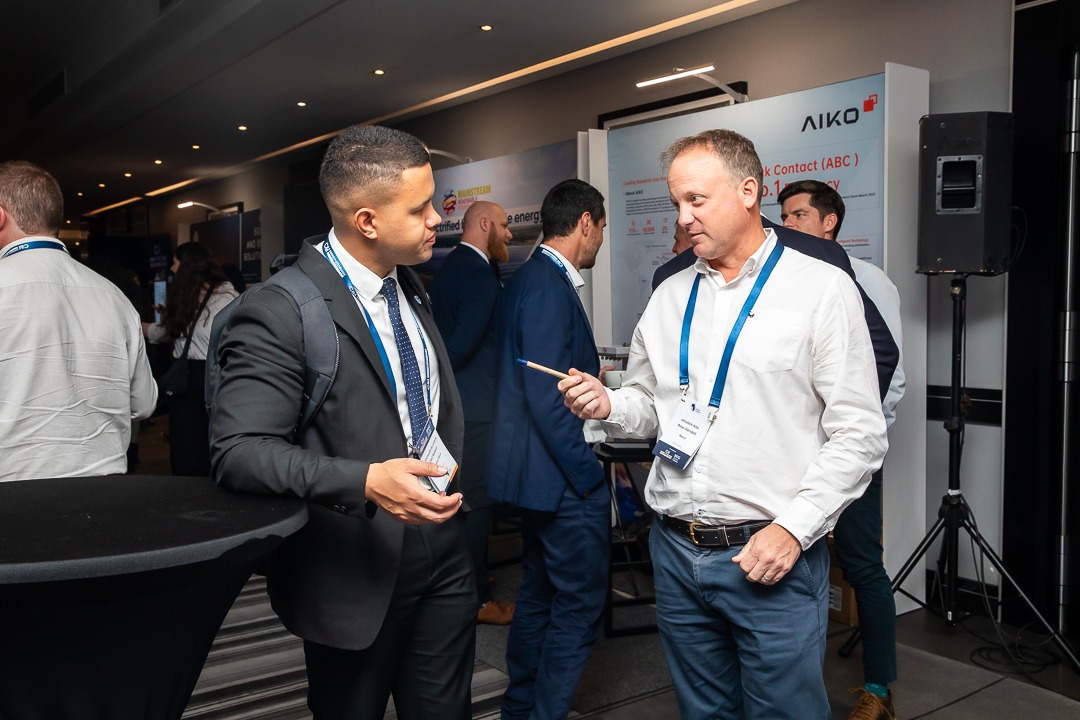
These decisions will take centre stage at the C&I Energy + Storage Summit Johannesburg, taking place on 28–29 October 2026 at The Maslow Hotel, Sandton. The programme is built around the practical challenges facing energy buyers today, with a focus on real projects, commercial models and implementation rather than technology in isolation.

A programme built around the buyer’s decisions

The summit closes with the C&I Decision Clinic: Ask the Experts, a masterclass where attendees submit real project challenges in advance and receive practical, anonymised responses from experts. Questions on the table include whether to build onsite PV or sign a wheeled PPA, how much battery storage makes commercial sense, what a bankable project preparation pack should contain, and what financiers require before term sheet stage.

It follows The C&I Energy Playbook: Five decisions business leaders need to make now, a closing panel in which the moderators of key summit sessions distil the programme into the priorities C&I businesses should act on.

Other sessions address the questions buyers are asking now:

  • Energy storage beyond backup power: unlocking commercial value examines peak shaving, demand charge management, energy arbitrage and hybrid PV-plus-storage business models, along with the operational realities of dispatch, degradation and warranties.
  • Making public-private engagement work for you unpacks how wheeling agreements are structured in practice, where interface risks arise, and how businesses can engage utilities and municipalities early.
  • Reducing energy costs without building new generation is a case-study-led workshop on energy efficiency, operational optimisation, demand response and digital energy management.
  • Projects Spotlight gives energy users the floor to share the strategies they have implemented, the lessons learned and the outcomes achieved.

The programme opens with the keynote panel Threats and opportunities in South Africa’s industrial future, bringing together policymakers, industrial leaders, financiers, and energy and water experts.

Bringing energy buyers into the conversation

The summit’s Hosted Buyer Programme is designed for qualified end-user energy buyers across sectors including mining, manufacturing, property, agriculture and other energy-intensive industries. Hosted buyers take part in the full programme and receive curated engagement with solution providers across energy procurement, storage deployment and project development.

Four events, one venue

The summit is co-located with the EIUG Conference, Water Security Africa and the Data Centre Summit, bringing the energy, water and digital infrastructure communities together in Sandton. It is brought to you by Enlit Africa, with ESI Africa as host media, and is accredited by the SAIEE.

Qualified commercial and industrial energy users can apply for the Hosted Buyer Programme at https://apo-opa.co/4yPnXOg, and bring their project questions to the Decision Clinic.

Full programme: https://apo-opa.co/4xK2ANv


Distributed by APO Group on behalf of VUKA Group.


Continue Reading

Trending

Exit mobile version