Connect with us

Events

Leveraging CICPE Yacht Sub-Venue, Sanya Accelerates Development as Asia-Pacific Yachting Capital

Published

on

CICPE

HAIKOU, CHINA – Media OutReach Newswire – 20 April 2026 – On April 15, the Sanya International Yacht Sub-Venue of the 6th China International Consumer Products Expo (CICPE) officially kicked off. The event has brought together brands from leading global yacht-producing countries, such as France, Italy, the United Kingdom, Germany, and the United States. Over 90 yacht manufacturers and supporting companies have participated in the event, with 200 yachts of various types being showcased at the exhibition.

As a core featured exhibition area of the CICPE, the Sanya International Yacht Sub-Venue covers a total exhibition area of over 160,000 square meters, including a sprawling 148,800-square-meter on-water section. The exhibition is divided into six specialized sections, covering green vessel innovation, China debuts of international brands, and intelligent water sports equipment, among others. While top-tier global luxury yacht brands remain a major draw, the industry’s most compelling highlights this year lie elsewhere: the rapid rise of domestic yacht manufacturing, the commercial deployment of green new energy technologies, and the growing integration of yachting into everyday lifestyle.

International luxury yacht brands made a strong showing at the event, with renowned names like France’s Lagoon, Italy’s Azimut, the United Kingdom’s Sunseeker, Canada’s Bombardier, Germany’s Bavaria, and the United States’ Sea Ray unveiling their latest models. Five superyachts, each exceeding 80 feet in length, docked at the marina, becoming a highlight of the event.

China’s sustained release of high-end leisure consumption potential has made it a core growth driver for the global yachting industry. At the exhibition, 24 products made their China debut, including the United Kingdom’s Princess S72, as well as yachts from international brands like Germany’s Bavaria and Poland’s Delphia. Notably, a purchase intent for the Princess S72 was reached immediately following its debut.

Meanwhile, Chinese yacht manufacturers are stepping up their game, with nine yachts making their global debuts. These new models span a diverse range of categories, including small- and medium-sized luxury yachts, electric leisure vessels, and fishing vessels. Featuring designs tailored to Chinese consumer preferences and competitively priced, they have drawn significant attention on the show floor.

Green and low-carbon development stands as a central theme of this year’s exhibition. A dedicated new energy yacht zone showcases eco-friendly vessels, including pure electric, hybrid, and hydrogen-powered yachts. Among these, electric yachts powered by lithium batteries achieve zero-emission navigation. Their noise levels and operating costs are significantly lower than those of traditional fuel-powered yachts, perfectly aligning with the global shift toward low-carbon consumption.

Furthermore, the exhibition strives to shatter the long-held stereotype of yachts as an exclusive, high-end niche. To that end, it has created immersive consumption scenarios that integrate yachting with gourmet food, lure fishing, and camping. Services such as yacht license consultations and second-hand yacht trading are also being offered, all aimed at making water-based leisure more accessible to the public.

Sanya, the host city of the exhibition and known as the “City of a Thousand Yachts,” is actively building itself into the “Asia-Pacific Yachting Capital.” The city has already completed five yacht marinas, and last year hit a record high of 225,600 yacht departures. Concurrently, the Sanya Central Business District (CBD) has attracted 124 companies along the yacht industry chain, covering full-chain services such as design and R&D, manufacturing and maintenance, berth operations, and high-end supporting facilities.

Leveraging its exceptional marine resources and the policy backing of the Hainan Free Trade Port, Sanya is accelerating the construction of an ecosystem that integrates yacht display and trading, consumption experiences, and industrial agglomeration. This, in turn, provides a vital platform for global yacht brands to expand their presence in the Chinese market.


Energy

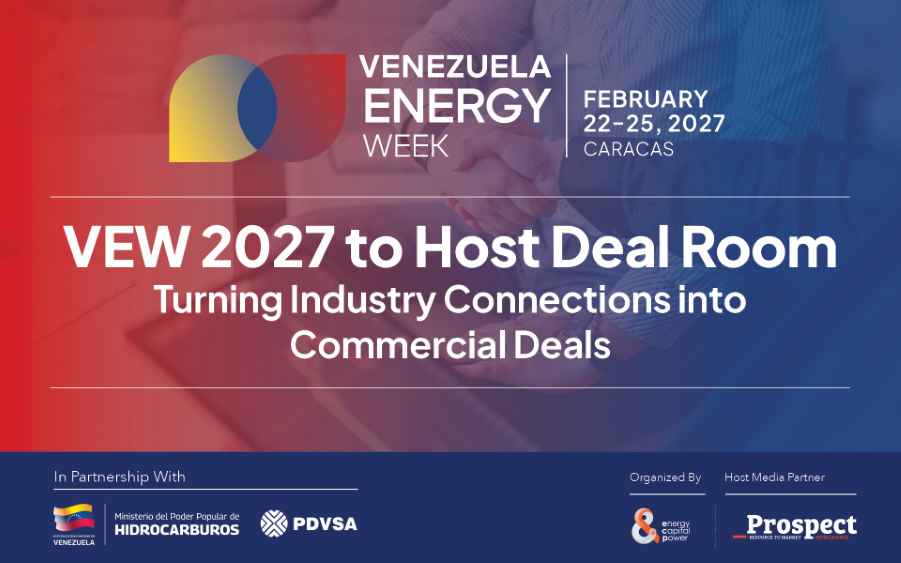
Venezuela Energy Week (VEW) 2027 Deal Room Targets Joint Ventures, Service Agreements and Offtake Partnerships

Published

on

Register as a commercial partner at Venezuela Energy Week 2027 to connect with Venezuelan operators, projects and strategic energy opportunities

International operators, oilfield service companies and strategic partners are invited to register as commercial partners for the Venezuela Energy Week (VEW) 2027 Deal Room, where companies can pursue joint ventures, service agreements, technology deployments, offtake arrangements and other commercial opportunities.


Taking place February 22–25 at the Simón Bolívar Convention Center in Caracas, the Deal Room will bring international companies into direct discussions with local operators, project developers, asset owners and regional leadership. As international companies re-engage with Venezuela’s oil and gas industry, the platform aims to facilitate project-level discussions and establish commercial relationships spanning upstream development, infrastructure, technology and energy supply.

For international operators and investors, the Deal Room provides an opportunity to identify assets and local counterparties for joint development. Venezuela’s push to increase oil production to 1.3 million barrels per day (bpd) in 2026 and 1.5 million bpd in 2027 is creating potential openings for companies with the technical expertise, operational capacity and financial resources to participate in field rehabilitation, enhanced oil recovery, drilling and production expansion. Partnerships with Venezuelan operators can provide a route to developing assets and sharing project responsibilities.

Recent agreements demonstrate how partnerships have already begun to take shape. In September, Chevron secured expanded development rights in the Orinoco Belt, underpinning plans by its Venezuelan joint ventures to invest more than $7 billion over five years. Eni also signed a 25-year contract with PDVSA to assume operatorship of the Junín 5 heavy-oil field, giving the company responsibility for its technical, financial and commercial development.

Oilfield service companies and technology providers can pursue commercial agreements supporting these activities. Demand spans drilling and workover equipment, artificial lift, engineering, digital production systems, reservoir technologies, power solutions and other services required to restore production and improve the performance of existing infrastructure.

Commercial partnerships are advancing this area. In September, Halliburton signed separate agreements with Eneva and WESCA covering development opportunities, field evaluation and technical planning, while SLB signed a framework agreement with PDVSA in June spanning field development, digital technologies and workforce training.

The commercial opportunity extends beyond upstream operations. Companies can explore technology and service partnerships supporting gas processing and transportation, refinery rehabilitation, power generation, grid infrastructure and energy logistics, creating multiple routes for international suppliers and specialist firms to establish a presence in the market and for Venezuelan companies seeking to strengthen their portfolios.

Recent agreements reflect growing momentum in these areas. In September, GE Vernova signed a strategic alliance with PDVSA to rehabilitate electrical infrastructure serving Venezuela’s oil industry. More recently, Baker Hughes partnered with PDVSA, Venezuelan engineering company Lindsayca and Fulcrum LNG to pursue gas processing, transportation and commercialization projects.

Offtake and supply agreements offer another route for strategic participation. Companies can negotiate arrangements linked to specific oil, gas or refined-product assets, while international trading and downstream partners can explore supply relationships connected to Venezuela’s expanding production and processing capacity. Trading companies Vitol and Trafigura have already secured agreements to purchase and market Venezuelan oil, while international refiners are increasingly pursuing direct supply relationships with PDVSA.

The Deal Room will also provide direct access to the institutions shaping project development and commercial activity, including the Ministry of Hydrocarbons, PDVSA and its operating leadership. These relationships can help companies identify counterparties, clarify project requirements and develop commercial frameworks around specific opportunities.

As international activity accelerates across Venezuela’s energy sector, the Deal Room offers companies a focused setting to identify partners and convert market interest into concrete commercial relationships.

International operators, service companies and strategic partners can register to engage as commercial partners at the Venezuela Energy Week 2027 Deal Room. To engage as a commercial partner email info@venezuelaenergyweek.com or visit https://apo-opa.co/4z16kLV for more information.

Distributed by APO Group on behalf of Energy Capital & Power.


Continue Reading

Business

Africa50’s Nabil Saimi Joins MSGBC 2026 as Senegal’s Project Pipeline Draws Infrastructure Capital

Published

on

Africa50 invests in projects at their earliest stage, with power and midstream gas among its priority sectors

DAKAR, Senegal, October 22, 2026/APO Group/ –Nabil Saimi, Senior Investment Director for the Project Development Fund at Africa50, will speak at MSGBC Oil, Gas & Power 2026 in December. His confirmation brings one of the continent’s leading infrastructure investors to the Dakar conference, with a focus on the earliest and most decisive phase of the project cycle: when concepts become bankable assets. Africa50’s model is built around carrying projects from development through to financing, an approach well matched to the basin’s expanding pipeline of gas, power and infrastructure projects.


Africa50 was set up by the African Development Bank (AfDB) alongside African governments and now has 33 shareholder states, with Senegal, Mauritania and The Gambia among them. The platform has mobilized close to $9 billion in investment across the continent, according to Senegal’s Presidency. Its Project Development business invests equity at the preparation stage to ready projects for financiers, generally targeting developments worth more than $100 million, with power, transport, midstream gas and information and communications technology as priority sectors.

Senegal has been central to Africa50’s power portfolio. At its 2017 shareholders meeting in Dakar, Africa50 partnered with national utility Senelec under a joint agreement to develop the 120 MW Malicounda combined cycle power plant and select its strategic sponsor. The €154 million plant entered commercial operation in August 2022, adding 8% to Senegal’s generation capacity, and was built with the ability to run on the country’s own gas once supply is available. In April 2026, an Africa50 delegation met President Bassirou Diomaye Faye in Dakar and reaffirmed its support for Senegal’s development priorities.

Project development is gathering momentum across the organization. In September 2026, Africa50 appointed former International Finance Corporation (IFC) regional director Cheick-Oumar Sylla as CEO of its Project Development Fund, a key appointment under its 2030 roadmap. Separately, the Alliance for Green Infrastructure in Africa Project Development Fund (AGIA-PD), managed by Africa50, secured $50 million from Italy’s Cassa Depositi e Prestiti and France’s Proparco in 2026, adding to the $118 million raised at its first close in August 2025 as the fund targets $400 million.

Africa50’s reach now extends deeper into gas and grid infrastructure across the continent. In 2026, the platform unveiled partnerships in Tanzania covering LNG and electricity transmission, while a $20 million commitment from British International Investment took its Infrastructure Acceleration Fund to roughly $330 million in total commitments. Both areas carry weight in the MSGBC basin, where LNG exports and gas-to-power plans are shaping the region’s next phase of development.

Plants such as Malicounda were built with domestic gas in mind, and the basin’s next generation of power and gas infrastructure will depend on capital committed early in development. Saimi’s participation strengthens MSGBC 2026’s focus on connecting the region’s project pipeline with the investors able to advance it.

Organized by Energy Capital & Power (ECP) and held under the High Patronage of Senegalese President Bassirou Diomaye Faye, MSGBC Oil, Gas & Power 2026 takes place December 1-3 in Dakar and will convene heads of state, ministers, investors, operators and development partners from Mauritania, Senegal, The Gambia, Guinea-Bissau and Guinea-Conakry. Explore opportunities and secure your participation at www.MSGBCOilGasAndPower.com.

Distributed by APO Group on behalf of Energy Capital & Power.


Continue Reading

Energy

Dangote Refinery Chief Executive Officer (CEO) Joins South Sudan Oil & Power (SSOP) 2026 as $1.8B Kenya Expansion Opens Regional Distribution Opportunities

Published

on

David Bird’s participation comes as Dangote advances its East African refining and distribution strategy, anchored by a 700,000-bpd Lamu Refinery and 25% stake in KPC

JUBA, South Sudan, October 22, 2026/APO Group/ –Dangote Petroleum Refinery and Petrochemicals is expanding its footprint across East Africa, with a $16 billion refinery planned in Kenya and a $335 million investment in Kenya Pipeline Company (KPC). As these developments open new opportunities for regional petroleum trade, the company’s CEO and Managing Director David Bird has joined the South Sudan Oil & Power (SSOP) 2026 conference as a speaker.


Taking place in Juba on November 24-25, SSOP returns for its seventh edition as the nation’s premier platform for investment, dealmaking and policy. Bird’s participation comes as South Sudan looks to translate its resource potential into renewed exploration, higher production and greater participation in regional petroleum value chains. With major downstream investment reshaping East Africa’s energy market, SSOP 2026 offers an opportunity for producers, refiners and investors to establish the partnerships needed to advance regional energy trade and unlock new commercial opportunities.

The event arrives at a strategic time for Dangote. On September 30, the company officially broke ground on a 700,000-barrel-per-day (bpd) refinery in Lamu, Kenya. Set to come online in 2029, the facility is designed to supply gasoline, diesel and jet fuel to East African markets, with regional governments offered a combined 30% stake in the project. The project aims to replicate Dangote’s 650,000-bpd Nigerian facility, which is currently operating at full capacity and is set to expand to 1.2 million bpd. A delegation from South Sudan attended the Lamu groundbreaking ceremony, underscoring the country’s commitment to strengthening regional petroleum ties.

https://apo-opa.co/4zQaHcU

Beyond the Lamu facility, Dangote is strengthening its footprint across East Africa’s distribution networks. Just this month, the company acquired a 25% stake in KPC, securing access to established infrastructure transporting petroleum products from Kenya’s coast to regional markets, including Uganda, Rwanda, South Sudan and the Democratic Republic of the Congo. Following the $335 million transaction, Dangote plans to invest an additional $1.5 billion to expand KPC’s approximately 1,300-km pipeline network, bringing its total planned investment to $1.8 billion.

https://apo-opa.co/4zS8fCN

For South Sudan, East Africa’s only established commercial crude oil producer, Dangote’s expansion introduces new opportunities for regional petroleum integration. The country holds approximately 3.5 billion barrels of proven oil reserves and is seeking to increase production through new exploration, redevelopment of mature fields and investment in supporting infrastructure. While no crude supply agreement between South Sudan and Dangote has been announced, the development of additional regional refining capacity could create opportunities for future feedstock supply arrangements, subject to commercial viability, infrastructure and crude compatibility.

Bird brings extensive experience across refining, petrochemicals and integrated energy infrastructure to SSOP 2026. Before joining Dangote in 2025, he served as CEO of OQ8, the $9.5 billion Duqm refinery joint venture in Oman, overseeing the development and commissioning of major refining, pipeline and terminal infrastructure. He also held senior leadership positions at Shell, spanning upstream production, downstream operations and global energy supply chains. His participation at SSOP 2026 will bring expertise in large-scale refining investment, project delivery and regional petroleum market development to discussions on South Sudan’s next phase of growth.

https://apo-opa.co/3WotMnT

As the country’s official energy event, held in partnership with the Ministry of Petroleum, SSOP 2026 provides a platform for advancing discussions around regional trade, refining and infrastructure investment. The conference brings together international and national oil companies, refiners, trading companies, infrastructure developers, financiers and technology providers to negotiate partnerships, mobilize investment and connect South Sudan’s petroleum resources with regional and international markets.

Register for SSOP 2026: https://apo-opa.co/3WGMyXJ

Distributed by APO Group on behalf of Energy Capital & Power.


Continue Reading

Trending

Exit mobile version